
Ezekiel 3:5
in Ezekiel 3For you are not being sent to a people of unfamiliar speech or difficult language, but to the house of Israel—
BSB
The same verse in ASV and KJV ▾
ASV
For thou art not sent to a people of a strange speech and of a hard language, but to the house of Israel;
KJV
For thou art not sent to a people of a strange speech and of an hard language, but to the house of Israel;
⋯
This verse in Ezekiel 3
Commentary
4 notes on this verseon Ezekiel 3:5-6
(Verse 5, 6.) For you are not being sent to the people of deep and difficult (unknown in the Vulgate) language, to the house of Israel, nor to many people of unknown language, whose language you cannot understand. And if I were to send you to them, they would listen to you. Because they do not want to come to you, you go to them. For they do not have a need for a healthy doctor, but for ones who are sick (Luke 5:31 ).
This site's exposition
get thee unto the house of Israel
on Ezekiel 3:4-6
The command is repeated from chapter two with one clarification added: Ezekiel is not sent to a foreign people whose language he could not understand, but to his own house of Israel, who speak his tongue and share his history. Wesley observes the argument moves from harder to easier only on the surface; a stranger might have listened precisely because the message would carry no weight of shared memory to resist. The next verse presses the point to its most uncomfortable edge: had the Lord sent him to a genuinely foreign people, they would have heard him, which leaves Israel's coming refusal without the excuse of language.
The record, by era
The Puritans and the Awakening1 voice
For thou art not sent to a people of a strange speech,.... "Deep of lip" (g), or "speech"; difficult to be got at and understood: and of a hard language: or "heavy of tongue" (h) of a barbarous and unknown language, whom he could not understand, nor they him; and so would have been barbarians to one another; and consequently it could not be thought his prophesying among them, could have been of any use.
The Nineteenth Century1 voice
Thou art not sent to a people of a strange speech - I neither send thee to thy adversaries, the Chaldeans, nor to the Medes and Persians, their enemies. Even these would more likely have hearkened unto thee than thy own countrymen.
The words behind it
13 Hebrew wordsEvery Hebrew word of this verse in the order it stands, with what it means and the door to its own study. The last column counts the times a word stands in the whole Bible: the rarer the word, the more the places it appears belong together.
| Hebrew | Sound | Meaning | Word study | In the Bible |
|---|---|---|---|---|
| כִּ֡י | ki | for | H3588 → | 4482 times |
| לֹא֩ | lo' | not | H3808 → | 5168 times |
| אֶל־ | ʾel- | to | H413 → | 5510 times |
| עַ֨ם | ʾam | a people | H5971 → | 1873 times |
| עִמְקֵ֥י | ʾimkei | deep of | H6012 → | |
| שָׂפָ֛ה | safah | lip | H8193 → | 176 times |
| וְכִבְדֵ֥י | vekhivdei | and heavy of | H3515 → | |
| לָשׁ֖וֹן | lashon | tongue | H3956 → | 117 times |
| אַתָּ֣ה | ʾatah | you | H859 → | 1094 times |
| שָׁל֑וּחַ | shaluach | [are] being sent | H7971 → | 845 times |
| אֶל־ | ʾel- | to | H413 → | 5510 times |
| בֵּ֖ית | beit | [the] house of | H1004 → | 2046 times |
| יִשְׂרָאֵֽל׃ | yisrael | Israel | H3478 → | 2507 times |
כִּ֡יfor
kiH3588 →4482 times
לֹא֩not
lo'H3808 →5168 times
אֶל־to
ʾel-H413 →5510 times
עַ֨םa people
ʾamH5971 →1873 times
עִמְקֵ֥יdeep of
ʾimkeiH6012 →
שָׂפָ֛הlip
safahH8193 →176 times
וְכִבְדֵ֥יand heavy of
vekhivdeiH3515 →
לָשׁ֖וֹןtongue
lashonH3956 →117 times
אַתָּ֣הyou
ʾatahH859 →1094 times
שָׁל֑וּחַ[are] being sent
shaluachH7971 →845 times
אֶל־to
ʾel-H413 →5510 times
בֵּ֖ית[the] house of
beitH1004 →2046 times
יִשְׂרָאֵֽל׃Israel
yisraelH3478 →2507 times
A shaded row is a word that stands 400 times or fewer in the Bible.
The walk
8 stopsEach card is a verse this one points to, and under it the verses that one points to in turn. Where several paths arrive at the same place, that place is listed first: the text keeps returning to it.
Through
Isaiah 28:11Indeed, with mocking lips and foreign tongues, He will speak to this people
it leads to
- Jeremiah 5:15
Behold, I am bringing a distant nation against you, O house of Israel,” declares the LORD. “It is an established nation, an ancient nation, a nation whose language you do not know and whose…
Reached by 2 separate paths from here.
- 1 Corinthians 14:21
It is written in the Law: “By strange tongues and foreign lips I will speak to this people, but even then they will not listen to Me, says the Lord.”
- Deuteronomy 28:49
The LORD will bring a nation from afar, from the ends of the earth, to swoop down upon you like an eagle—a nation whose language you will not understand,
- Isaiah 33:19
You will no longer see the insolent, a people whose speech is unintelligible, who stammer in a language you cannot understand.
- Jeremiah 5:15
Through
Jonah 1:2“Get up! Go to the great city of Nineveh and preach against it, because its wickedness has come up before Me.”
it leads to
- Genesis 18:20–21
Then the LORD said, “The outcry against Sodom and Gomorrah is great. Because their sin is so grievous,
- Genesis 10:11
From that land he went forth into Assyria, where he built Nineveh, Rehoboth-Ir, Calah,
- Genesis 18:20–21
Through
Isaiah 33:19You will no longer see the insolent, a people whose speech is unintelligible, who stammer in a language you cannot understand.
it leads to
- Isaiah 28:11
Indeed, with mocking lips and foreign tongues, He will speak to this people
- Deuteronomy 28:49–50
The LORD will bring a nation from afar, from the ends of the earth, to swoop down upon you like an eagle—a nation whose language you will not understand,
- Isaiah 28:11
Where this verse is studied
On this page
About Ezekiel
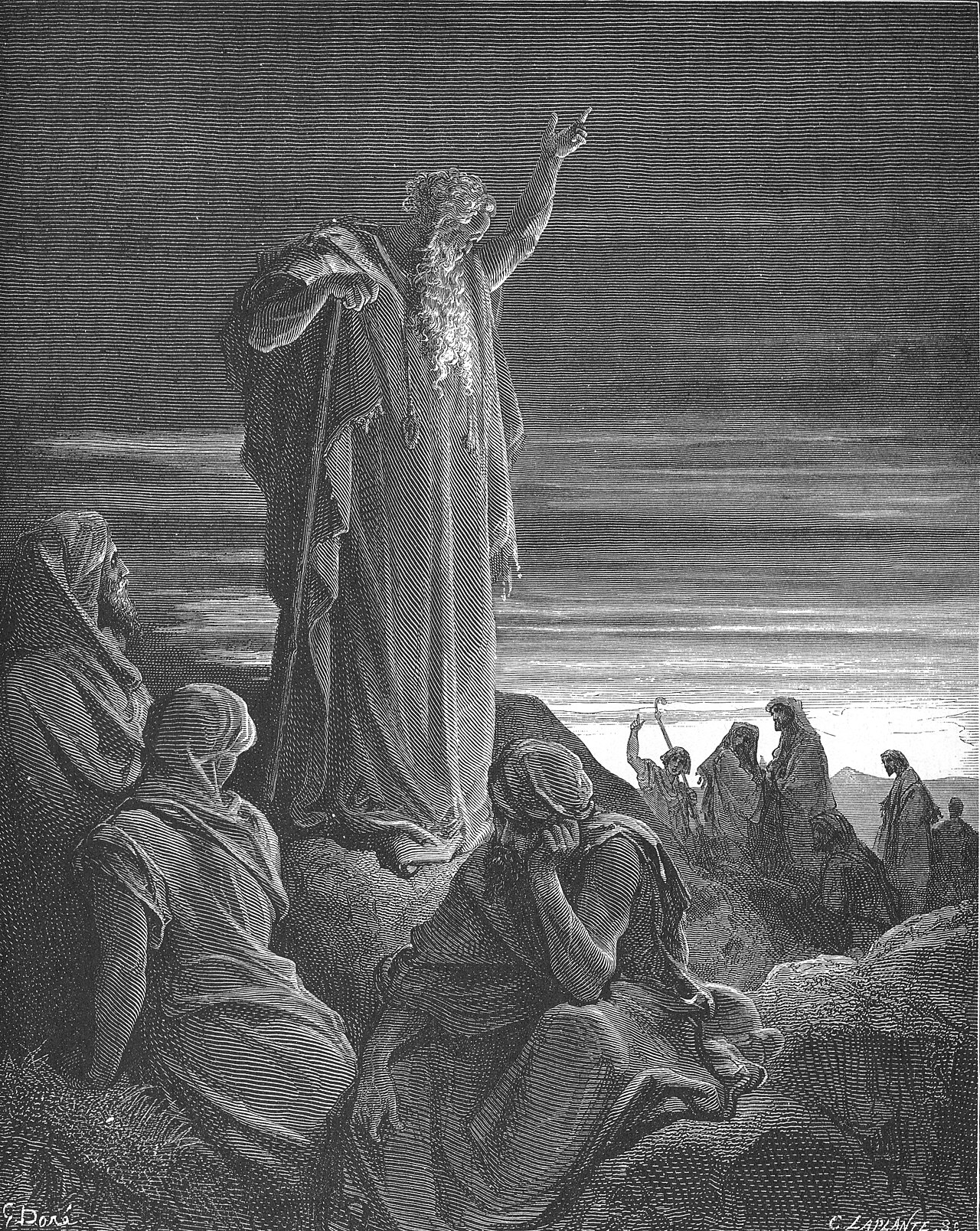
This page draws on Adam Clarke, Commentary on the Bible; Jerome, Commentary on Ezekiel; John Gill, Exposition of the Old Testament (1748-1763) and John Wesley, Explanatory Notes upon the Old Testament.