
Ezekiel 3:27
in Ezekiel 3But when I speak with you, I will open your mouth, and you are to tell them, ‘This is what the Lord GOD says.’ Whoever listens, let him listen; and whoever refuses, let him refuse, for they are a rebellious house.
BSB
The same verse in ASV and KJV ▾
ASV
But when I speak with thee, I will open thy mouth, and thou shalt say unto them, Thus saith the Lord Jehovah: He that heareth, let him hear; and he that forbeareth, let him forbear: for they are a rebellious house.
KJV
But when I speak with thee, I will open thy mouth, and thou shalt say unto them, Thus saith the Lord God; He that heareth, let him hear; and he that forbeareth, let him forbear: for they are a rebellious house.
⋯
This verse in Ezekiel 3
Commentary
4 notes on this verse(Verse 27.) But when I speak to you, I will open your mouth, and you shall say to them: Thus says the Lord God: Let him who hears, hear; and let him who remains quiet, remain quiet; for the house is rebellious. What we read in Ecclesiastes: A time to be silent, and a time to speak (Ecclesiastes 3), is also supported in prophetic speech: that it is wise to both be silent and speak in due time, and to give food to our fellow servants at the appointed time.
This site's exposition
they shall put bands upon thee
on Ezekiel 3:25-27
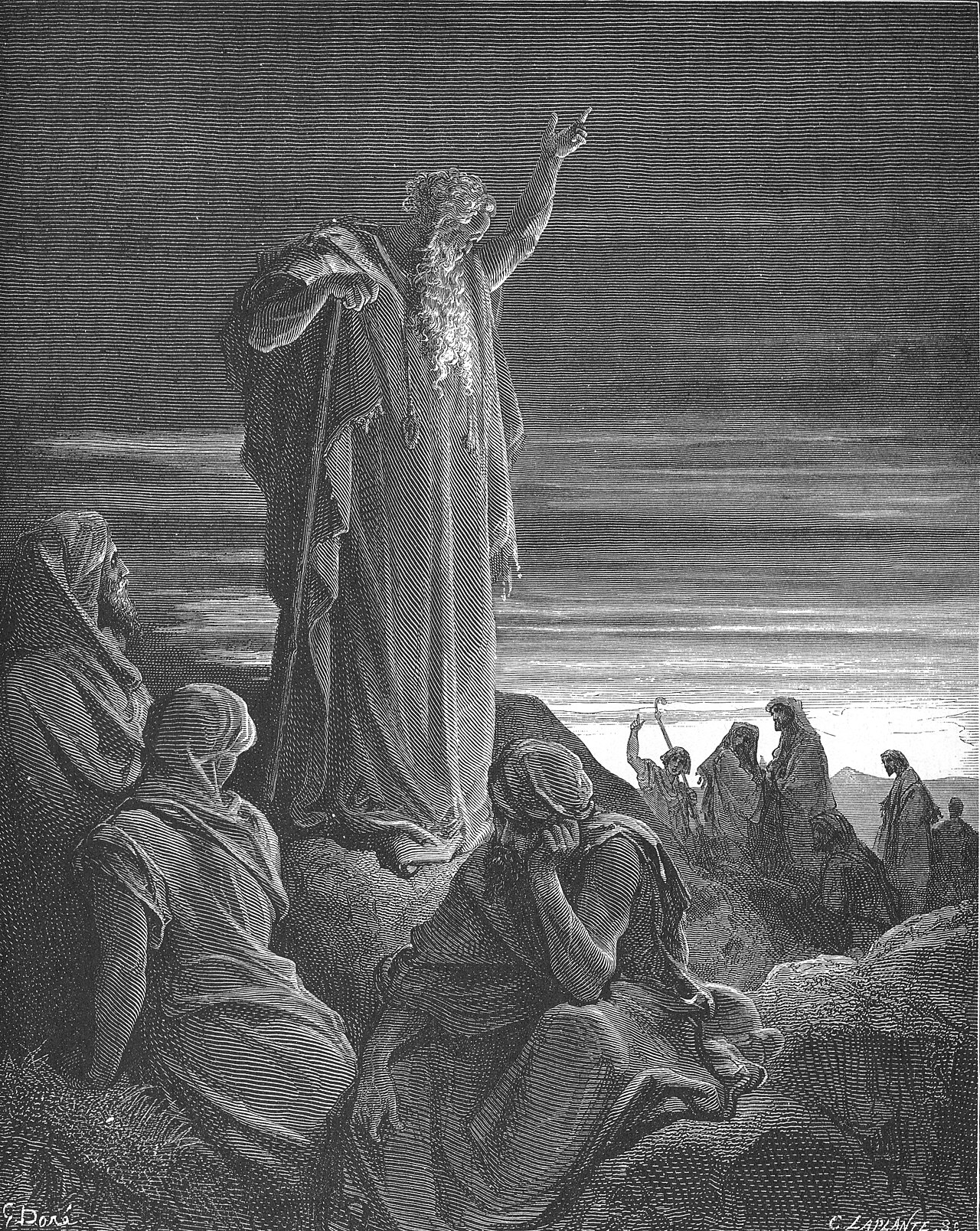
The chapter ends with two sign-acts that will govern Ezekiel's ministry for years rather than a single day: bands that confine him, whether literal or the felt restraint the commentators debate, and a tongue made to cleave to the roof of his mouth so he cannot act as the people's reprover at will. Gill reads the enforced silence as itself a message, a prophet visibly unable to argue or negotiate says something to onlookers that speech could not. His mouth opens only when the Lord speaks with him, and even then the outcome is left exactly where chapter two left it, he that heareth, let him hear, and he that forbeareth, let him forbear.
The record, by era
The Nineteenth Century2 voices
A commentator
Albert Barnes1798–1870
Notes, Explanatory and Practical, on the Old and New Testaments (1832-1869)
He that heareth ... - The judicial blindness of which Ezekiel speaks had already fallen upon the great body of the nation (Eze 14:4. Compare Rev 2:7; Rev 22:11).
A commentator
Jamieson, Fausset & Brown1802–1910
Commentary Critical and Explanatory on the Whole Bible (1871)
After the interval of silence has awakened their attention to the cause of it, namely, their sins, they may then hearken to the prophecies which they would not do before. He that heareth, let him hear . . . forbear--that is, thou hast done thy part, whether they hear or forbear.
The words behind it
19 Hebrew wordsEvery Hebrew word of this verse in the order it stands, with what it means and the door to its own study. The last column counts the times a word stands in the whole Bible: the rarer the word, the more the places it appears belong together.
| Hebrew | Sound | Meaning | Word study | In the Bible |
|---|---|---|---|---|
| וּֽבְדַבְּרִ֤י | uvedaberi | and when speak I | H1696 → | 1141 times |
| אֽוֹתְךָ֙ | ʾotkha | with you | H854 → | 929 times |
| אֶפְתַּ֣ח | ʾeftach | I will open | H6605 → | 144 times |
| אֶת־ | ʾet- | <obj.> | H853 → | 10935 times |
| פִּ֔יךָ | pikha | mouth your | H6310 → | 498 times |
| וְאָמַרְתָּ֣ | veamarta | and you will say | H559 → | 5305 times |
| אֲלֵיהֶ֔ם | ʾaleihem | to them | H413 → | 5510 times |
| כֹּ֥ה | koh | thus | H3541 → | 577 times |
| אָמַ֖ר | ʾamar | he says | H559 → | 5305 times |
| אֲדֹנָ֣י | ʾadonai | [the] Lord | H136 → | 440 times |
| יְהֹוִ֑ה | yahweh | Yahweh | H3069 → | 306 times |
| הַשֹּׁמֵ֤עַ׀ | hashomea' | the [one who] hears | H8085 → | 1159 times |
| יִשְׁמָע֙ | yishma' | let him hear | H8085 → | 1159 times |
| וְהֶחָדֵ֣ל׀ | vehechadel | and the [person] who refrains | H2310 → | |
| יֶחְדָּ֔ל | yechdal | let him refrain | H2308 → | 58 times |
| כִּ֛י | ki | for | H3588 → | 4482 times |
| בֵּ֥ית | beit | [are] a house of | H1004 → | 2046 times |
| מְרִ֖י | meri | rebellion | H4805 → | 23 times |
| הֵֽמָּה׃ ס | hemah | they | H1992 → | 553 times |
וּֽבְדַבְּרִ֤יand when speak I
uvedaberiH1696 →1141 times
אֽוֹתְךָ֙with you
ʾotkhaH854 →929 times
אֶפְתַּ֣חI will open
ʾeftachH6605 →144 times
אֶת־<obj.>
ʾet-H853 →10935 times
פִּ֔יךָmouth your
pikhaH6310 →498 times
וְאָמַרְתָּ֣and you will say
veamartaH559 →5305 times
אֲלֵיהֶ֔םto them
ʾaleihemH413 →5510 times
כֹּ֥הthus
kohH3541 →577 times
אָמַ֖רhe says
ʾamarH559 →5305 times
אֲדֹנָ֣י[the] Lord
ʾadonaiH136 →440 times
יְהֹוִ֑הYahweh
yahwehH3069 →306 times
הַשֹּׁמֵ֤עַ׀the [one who] hears
hashomea'H8085 →1159 times
יִשְׁמָע֙let him hear
yishma'H8085 →1159 times
וְהֶחָדֵ֣ל׀and the [person] who refrains
vehechadelH2310 →
יֶחְדָּ֔לlet him refrain
yechdalH2308 →58 times
כִּ֛יfor
kiH3588 →4482 times
בֵּ֥ית[are] a house of
beitH1004 →2046 times
מְרִ֖יrebellion
meriH4805 →23 times
הֵֽמָּה׃ סthey
hemahH1992 →553 times
A shaded row is a word that stands 400 times or fewer in the Bible.
The walk
8 stopsEach card is a verse this one points to, and under it the verses that one points to in turn. Where several paths arrive at the same place, that place is listed first: the text keeps returning to it.
Through
Matthew 11:15He who has ears, let him hear.
it leads to
- Matthew 13:9
He who has ears, let him hear.”
- Luke 8:8
Still other seed fell on good soil, where it sprang up and produced a crop—a hundredfold.” As Jesus said this, He called out, “He who has ears to hear, let him hear.”
- Mark 4:23
If anyone has ears to hear, let him hear.”
- Matthew 13:43
Then the righteous will shine like the sun in the kingdom of their Father. He who has ears, let him hear.
- Mark 4:9
Then Jesus said, “He who has ears to hear, let him hear.”
- Matthew 13:9
Through
Ezekiel 29:21In that day I will cause a horn to sprout for the house of Israel, and I will open your mouth to speak among them. Then they will know that I am the LORD.”
it leads to
- Luke 21:15
For I will give you speech and wisdom that none of your adversaries will be able to resist or contradict.
Reached by 2 separate paths from here.
- Psalms 132:17
There I will make a horn grow for David; I have prepared a lamp for My anointed one.
- Luke 21:15
Through
Ezekiel 24:27On that day your mouth will be opened to him who has escaped; you will speak and no longer be mute. So you will be a sign to them, and they will know that…
it leads to
- Ezekiel 33:22
Now the evening before the fugitive arrived, the hand of the LORD was upon me, and He opened my mouth before the man came to me in the morning. So my mouth was opened…
Reached by 2 separate paths from here.
- Ezekiel 33:22
Where this verse is studied
On this page
About Ezekiel
This page draws on Albert Barnes, Notes, Explanatory and Practical, on the Old and New Testaments (1832-1869); Jamieson, Fausset & Brown, Commentary Critical and Explanatory on the Whole Bible; Jerome, Commentary on Ezekiel; John Gill, Exposition of the Old Testament and Matthew Henry, Commentary on the Whole Bible.