
Ezekiel 3:16
in Ezekiel 3At the end of seven days the word of the LORD came to me, saying,
BSB
The same verse in ASV and KJV ▾
ASV
And it came to pass at the end of seven days, that the word of Jehovah came unto me, saying,
KJV
And it came to pass at the end of seven days, that the word of the Lord came unto me, saying,
⋯
This verse in Ezekiel 3
Commentary
4 notes on this verse(Verse 16, 17.) But after seven days, the word of the Lord came to me, saying: Son of man, I have made you a watchman for the house of Israel, and you will hear a word from my mouth and will declare it to them from me. The watchman, who is to be the messenger of God's words to the people, must rest for a long time and be sorrowful for the things he sees. And he must have no personal guilt for the sins he will rebuke in others.
This site's exposition
astonished among them seven days
on Ezekiel 3:15-16
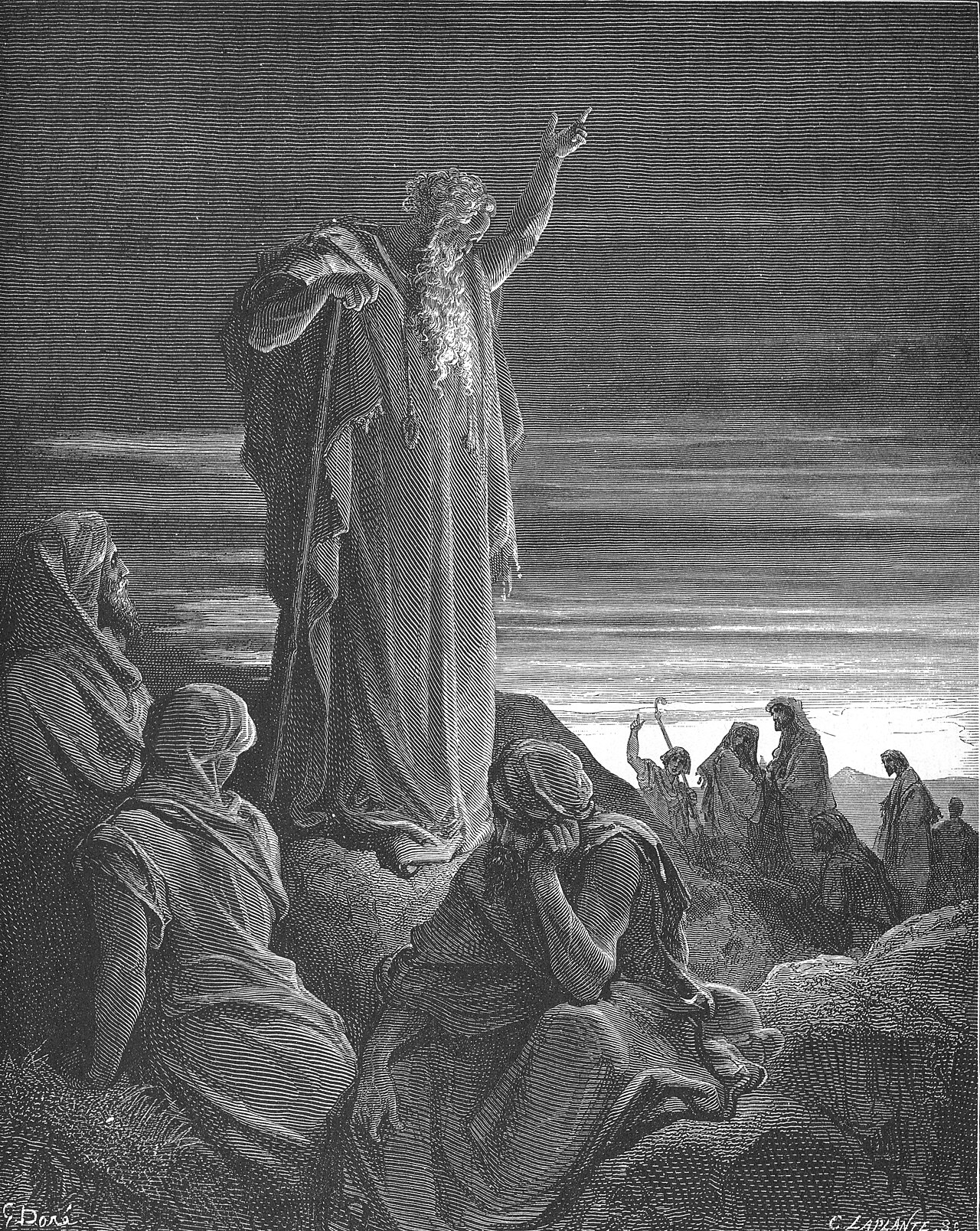
Ezekiel's first act among his own people is silence: he sits where they sit and stays astonished for seven days, matching the traditional week of mourning rather than rushing to preach. Gill and Clarke both take the seven days as deliberate identification with the exiles' grief before a single word of judgment is spoken to them. Only at the end of that week does the word of the Lord come again, the pattern of the whole book repeating in miniature, a season of silence before every fresh commission.
The record, by era
The Puritans and the Awakening1 voice
And it came to pass at the end of seven days,.... Some think it was on the sabbath day he had the following declaration made to him, and instructions given him; but this is not certain; nor does it follow, or to be concluded, from such a way of speaking: that the word of the Lord came unto me, saying; the Targum is, "the word of prophecy from before the Lord.''
The Nineteenth Century1 voice
A commentator
Albert Barnes1798–1870
Notes, Explanatory and Practical, on the Old and New Testaments (1832-1869)
The Lord guards both Ezekiel and his countrymen from dwelling exclusively on the national character of his mission. In the midst of the general visitations, each individual was to stand as it were alone before Him to render account of his doings, and to be judged according to his works.
The words behind it
9 Hebrew wordsEvery Hebrew word of this verse in the order it stands, with what it means and the door to its own study. The last column counts the times a word stands in the whole Bible: the rarer the word, the more the places it appears belong together.
| Hebrew | Sound | Meaning | Word study | In the Bible |
|---|---|---|---|---|
| וַיְהִ֕י | vayhi | and it was | H1961 → | 3559 times |
| מִקְצֵ֖ה | miktzeh | from [the] end of | H7097 → | 97 times |
| שִׁבְעַ֣ת | shivat | seven | H7651 → | 394 times |
| יָמִ֑ים פ | yamim | days | H3117 → | 2304 times |
| וַיְהִ֥י | vayhi | and it came | H1961 → | 3559 times |
| דְבַר־ | devar- | [the] word of | H1697 → | 1440 times |
| יְהוָ֖ה | yahweh | Yahweh | H3068 → | 6520 times |
| אֵלַ֥י | ʾelai | to me | H413 → | 5510 times |
| לֵאמֹֽר׃ | lemor | <to> saying | H559 → | 5305 times |
וַיְהִ֕יand it was
vayhiH1961 →3559 times
מִקְצֵ֖הfrom [the] end of
miktzehH7097 →97 times
שִׁבְעַ֣תseven
shivatH7651 →394 times
יָמִ֑ים פdays
yamimH3117 →2304 times
וַיְהִ֥יand it came
vayhiH1961 →3559 times
דְבַר־[the] word of
devar-H1697 →1440 times
יְהוָ֖הYahweh
yahwehH3068 →6520 times
אֵלַ֥יto me
ʾelaiH413 →5510 times
לֵאמֹֽר׃<to> saying
lemorH559 →5305 times
A shaded row is a word that stands 400 times or fewer in the Bible.
The walk
3 stopsEach card is a verse this one points to, and under it the verses that one points to in turn. Where several paths arrive at the same place, that place is listed first: the text keeps returning to it.
Through
Jeremiah 42:7After ten days the word of the LORD came to Jeremiah,
it leads to
- Psalms 27:14
Wait patiently for the LORD; be strong and courageous. Wait patiently for the LORD!
- Isaiah 28:16
So this is what the Lord GOD says: “See, I lay a stone in Zion, a tested stone, a precious cornerstone, a sure foundation; the one who believes will never be shaken.
- Habakkuk 2:3
For the vision awaits an appointed time; it testifies of the end and does not lie. Though it lingers, wait for it, since it will surely come and will not delay.
- Psalms 27:14
Where this verse is studied
On this page
About Ezekiel
This page draws on Adam Clarke, Commentary on the Bible; Albert Barnes, Notes, Explanatory and Practical, on the Old and New Testaments (1832-1869); Jerome, Commentary on Ezekiel; John Gill, Exposition of the Old Testament and John Gill, Exposition of the Old Testament (1748-1763).