
Ezekiel 12:18
in Ezekiel 12“Son of man, eat your bread with trembling, and drink your water with quivering and anxiety.
BSB
The same verse in ASV and KJV ▾
ASV
Son of man, eat thy bread with quaking, and drink thy water with trembling and with fearfulness;
KJV
Son of man, eat thy bread with quaking, and drink thy water with trembling and with carefulness;
⋯
This verse in Ezekiel 12
Commentary
7 notes on this verseSon of man, eat thy bread with quaking,.... As one in surprise or fear, or that has got an ague upon him: and drink thy water with trembling and with carefulness; fearing want of it, or as apprehensive of danger of its being taken away; see Eze 4:16.
This site's exposition
Moreover the word of the Lord came to me
on Ezekiel 12:17-20
A second sign follows the first, Ezekiel is told to eat his bread with quaking and drink his water with trembling and with care, his own body acting out the anxiety the whole land is about to feel. The same fear is then named for the people directly, they shall eat their bread with carefulness and drink their water with astonishment, because the land will be stripped bare on account of the violence of everyone who dwells in it. The cities are laid waste and the land made desolate, and once more the unit closes on the recognition formula, ye shall know that I am the Lord. Henry notes that the sign is chosen precisely because eating and drinking are the most everyday acts a person performs, so that the coming siege is made to touch even the most ordinary hours of the day.
The record, by era
The Church Fathers1 voice
(Verse 17 and following) And the word of the Lord came to me, saying: Son of man, eat your bread with agitation (Vulgate adds but); and drink your water with haste and sorrow. And say (Vulgate says you shall say) to the people of the land: Thus says the Lord God to those who dwell in Jerusalem, in the land of Israel: They shall eat their bread with solicitude, and drink their water in desolation, so that the land may be desolate because of the multitude of its inhabitants, because of the wickedness of all who dwell in it.
The Puritans and the Awakening2 voices
A message is sent from God to the people, to assure them that all these predictions should have their accomplishment very shortly, and not be deferred, as they flattered themselves they would be,
Note, When ministers speak of the ruin coming upon impenitent sinners they must endeavour to speak feelingly, as those that know the terrors of the Lord; and they must be content to endure hardness, so that they may but do good.
The Nineteenth Century2 voices
Eat thy bread with quaking - Assume the manner of a person who is every moment afraid of his life, who has nothing but a morsel of bread to eat, and a little water to drink. Thus signifying the siege, and the straits to which they should be reduced. See this explained, Eze 12:19 (note).
A commentator
Albert Barnes1798–1870
Notes, Explanatory and Practical, on the Old and New Testaments (1832-1869)
proposed
Here the sign is the exhibition of such terror as the danger of a siege creates.
The words behind it
9 Hebrew wordsEvery Hebrew word of this verse in the order it stands, with what it means and the door to its own study. The last column counts the times a word stands in the whole Bible: the rarer the word, the more the places it appears belong together.
| Hebrew | Sound | Meaning | Word study | In the Bible |
|---|---|---|---|---|
| בֶּן־ | ben- | O son of | H1121 → | 4930 times |
| אָדָ֕ם | ʾadam | humankind | H120 → | 551 times |
| לַחְמְךָ֖ | lachmekha | food your | H3899 → | 298 times |
| בְּרַ֣עַשׁ | beraash | in quaking | H7494 → | 17 times |
| תֹּאכֵ֑ל | tokhel | you will eat | H398 → | 810 times |
| וּמֵימֶ֕יךָ | umeimeikha | and water your | H4325 → | 581 times |
| בְּרָגְזָ֥ה | beragezah | in trembling | H7269 → | |
| וּבִדְאָגָ֖ה | uvidagah | and in anxiety | H1674 → | 6 times |
| תִּשְׁתֶּֽה׃ | tishteh | you will drink | H8354 → | 217 times |
בֶּן־O son of
ben-H1121 →4930 times
אָדָ֕םhumankind
ʾadamH120 →551 times
לַחְמְךָ֖food your
lachmekhaH3899 →298 times
בְּרַ֣עַשׁin quaking
beraashH7494 →17 times
תֹּאכֵ֑לyou will eat
tokhelH398 →810 times
וּמֵימֶ֕יךָand water your
umeimeikhaH4325 →581 times
בְּרָגְזָ֥הin trembling
beragezahH7269 →
וּבִדְאָגָ֖הand in anxiety
uvidagahH1674 →6 times
תִּשְׁתֶּֽה׃you will drink
tishtehH8354 →217 times
A shaded row is a word that stands 400 times or fewer in the Bible.
The walk
8 stopsEach card is a verse this one points to, and under it the verses that one points to in turn. Where several paths arrive at the same place, that place is listed first: the text keeps returning to it.
Through
Lamentations 5:9We get our bread at the risk of our lives because of the sword in the wilderness.
it leads to
- Ezekiel 4:16–17
Then He told me, “Son of man, I am going to cut off the supply of food in Jerusalem. They will anxiously eat bread rationed by weight, and in despair they will drink water…
Reached by 2 separate paths from here.
- Jeremiah 40:9–12
Gedaliah son of Ahikam, the son of Shaphan, swore an oath to them and their men, assuring them, “Do not be afraid to serve the Chaldeans. Live in the land and serve the king…
- Ezekiel 12:18–19
“Son of man, eat your bread with trembling, and drink your water with quivering and anxiety.
- Judges 6:11
Then the angel of the LORD came and sat down under the oak in Ophrah that belonged to Joash the Abiezrite, where his son Gideon was threshing wheat in a winepress to hide it…
- Ezekiel 4:16–17
Through
Psalms 80:5You fed them with the bread of tears and made them drink the full measure of their tears.
it leads to
- Isaiah 30:20
The Lord will give you the bread of adversity and the water of affliction, but your Teacher will no longer hide Himself—with your own eyes you will see Him.
- Psalms 42:3
My tears have been my food both day and night, while men ask me all day long, “Where is your God?”
- Psalms 102:9
For I have eaten ashes like bread and mixed my drink with tears
- Job 6:7
My soul refuses to touch them; they are loathsome food to me.
- Isaiah 30:20
About Ezekiel
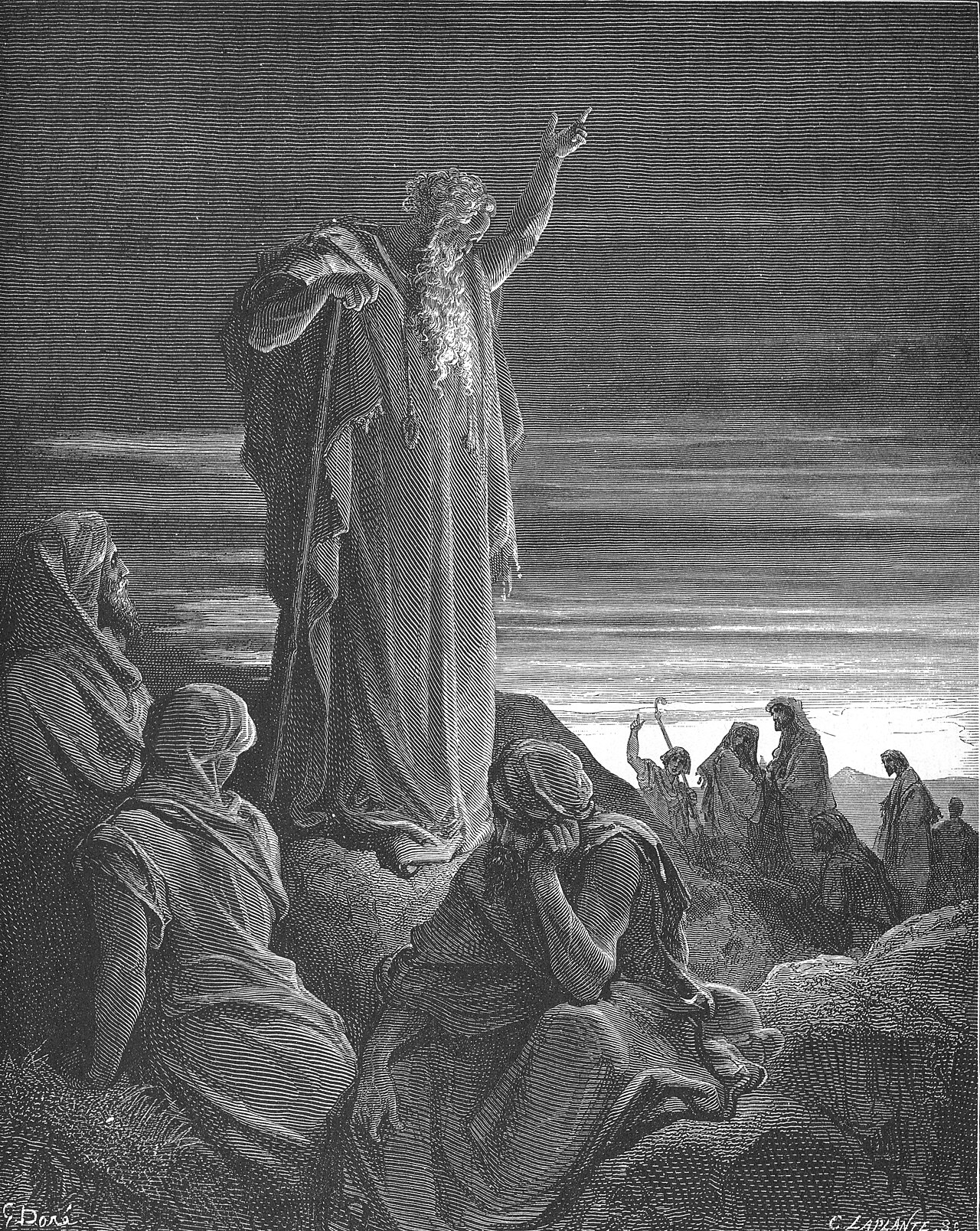
This page draws on Adam Clarke, Commentary on the Bible; Albert Barnes, Notes, Explanatory and Practical, on the Old and New Testaments (1832-1869); Jerome, Commentary on Ezekiel; John Gill, Exposition of the Old Testament (1748-1763); John Gill, Exposition of the Old Testament and Matthew Henry, Commentary on the Whole Bible.