
Exodus 25:30
in Exodus 25And place the Bread of the Presence on the table before Me at all times.
BSB
The same verse in ASV and KJV ▾
ASV
And thou shalt set upon the table showbread before me alway.
KJV
And thou shalt set upon the table shewbread before me alway.
⋯
This verse in Exodus 25
Commentary
6 notes on this verseAnd thou shall set upon the table shewbread before me always. Which consisted of twelve cakes loaves, set in two rows upon the table, and stood there a whole week, and every sabbath were renewed; and when the old ones were took away, which were eaten by the priests, new ones were set, so that they were always before the Lord; and being continually before him, were called shewbread, or "bread of faces", being always before the face of God.
This site's exposition
You are also to make the plates and dishes
on Exodus 25:29-30
Pitchers and bowls “for pouring drink offerings” are named, so drink offerings stood beside the bread. The “Bread of the Presence” is set before God “at all times,” and Leviticus 24:5 to 24:9 gives the detail of twelve loaves renewed each sabbath. David eats them at 1 Samuel 21:6, and Jesus cites the scene at Matthew 12:4 when his disciples are accused.
The record, by era
The Puritans and the Awakening2 voices
This bread was designed to be, a thankful acknowledgment of God's goodness to them in giving them their daily bread, a token of their communion with God; this bread on God's table being made of the same corn as the bread on their own tables. And a type of the spiritual provision which is made in the church, by the gospel of Christ, for all that are made priests to our God.
(3.) A type of the spiritual provision which is made in the church, by the gospel of Christ, for all that are made priests to our God. In our Father's house there is bread enough and to spare, a loaf for every tribe.
The Nineteenth Century2 voices
Shew-bread - לחם פנים lechem panim literally, bread of faces; so called, either because they were placed before the presence or face of God in the sanctuary, or because they were made square, as the Jews will have it.
A commentator
Jamieson, Fausset & Brown1802–1910
Commentary Critical and Explanatory on the Whole Bible (1871)
proposed
showbread--literally, presence bread, so called because it was constantly exhibited before the Lord, or because the bread of His presence, like the angel of His presence, pointed symbolically to Christ.
quarantine:debris (2026-07-29) — starts-lowercase
The words behind it
7 Hebrew wordsEvery Hebrew word of this verse in the order it stands, with what it means and the door to its own study. The last column counts the times a word stands in the whole Bible: the rarer the word, the more the places it appears belong together.
| Hebrew | Sound | Meaning | Word study | In the Bible |
|---|---|---|---|---|
| וְנָתַתָּ֧ | venatata | and you will put | H5414 → | 2011 times |
| עַֽל־ | ʾal- | on | H5921 → | 5755 times |
| הַשֻּׁלְחָ֛ן | hashulchan | the table | H7979 → | 71 times |
| לֶ֥חֶם | lechem | bread of | H3899 → | 298 times |
| פָּנִ֖ים | panim | presence | H6440 → | 2123 times |
| לְפָנַ֥י | lefanai | <to> before me | H6440 → | 2123 times |
| תָּמִֽיד׃ פ | tamid | continually | H8548 → | 104 times |
וְנָתַתָּ֧and you will put
venatataH5414 →2011 times
עַֽל־on
ʾal-H5921 →5755 times
הַשֻּׁלְחָ֛ןthe table
hashulchanH7979 →71 times
לֶ֥חֶםbread of
lechemH3899 →298 times
פָּנִ֖יםpresence
panimH6440 →2123 times
לְפָנַ֥י<to> before me
lefanaiH6440 →2123 times
תָּמִֽיד׃ פcontinually
tamidH8548 →104 times
A shaded row is a word that stands 400 times or fewer in the Bible.
The walk
8 stopsEach card is a verse this one points to, and under it the verses that one points to in turn. Where several paths arrive at the same place, that place is listed first: the text keeps returning to it.
Through
2 Chronicles 13:11Every morning and every evening they present burnt offerings and fragrant incense to the LORD. They set out the rows of showbread on the ceremonially clean table, and every evening they light the lamps…
it leads to
- 2 Chronicles 2:4
Behold, I am about to build a house for the Name of the LORD my God to dedicate to Him for burning fragrant incense before Him, for displaying the showbread continuously, and for making…
- Leviticus 24:2–9
“Command the Israelites to bring you pure oil of pressed olives for the light, to keep the lamps burning continually.
- Exodus 27:20–21
And you are to command the Israelites to bring you pure oil of pressed olives for the light, to keep the lamps burning continually.
- Exodus 29:38
This is what you are to offer regularly on the altar, each day: two lambs that are a year old.
- Exodus 25:30–39
And place the Bread of the Presence on the table before Me at all times.
- 2 Chronicles 2:4
Through
Matthew 12:4He entered the house of God, and he and his companions ate the consecrated bread, which was not lawful for them to eat, but only for the priests.
it leads to
- Leviticus 24:5–9
You are also to take fine flour and bake twelve loaves, using two-tenths of an ephah for each loaf,
- Leviticus 24:5–9
Through
Numbers 4:7Over the table of the Presence they are to spread a blue cloth and place the plates and cups on it, along with the bowls and pitchers for the drink offering. The regular bread…
it leads to
- Leviticus 24:5–8
You are also to take fine flour and bake twelve loaves, using two-tenths of an ephah for each loaf,
- Leviticus 24:5–8
Through
Exodus 39:36the table with all its utensils and the Bread of the Presence;
it leads to
- 1 Kings 7:48
Solomon also made all the furnishings for the house of the LORD: the golden altar; the golden table on which was placed the Bread of the Presence;
- 1 Kings 7:48
Where this verse is studied
On this page
Studies11
About Exodus
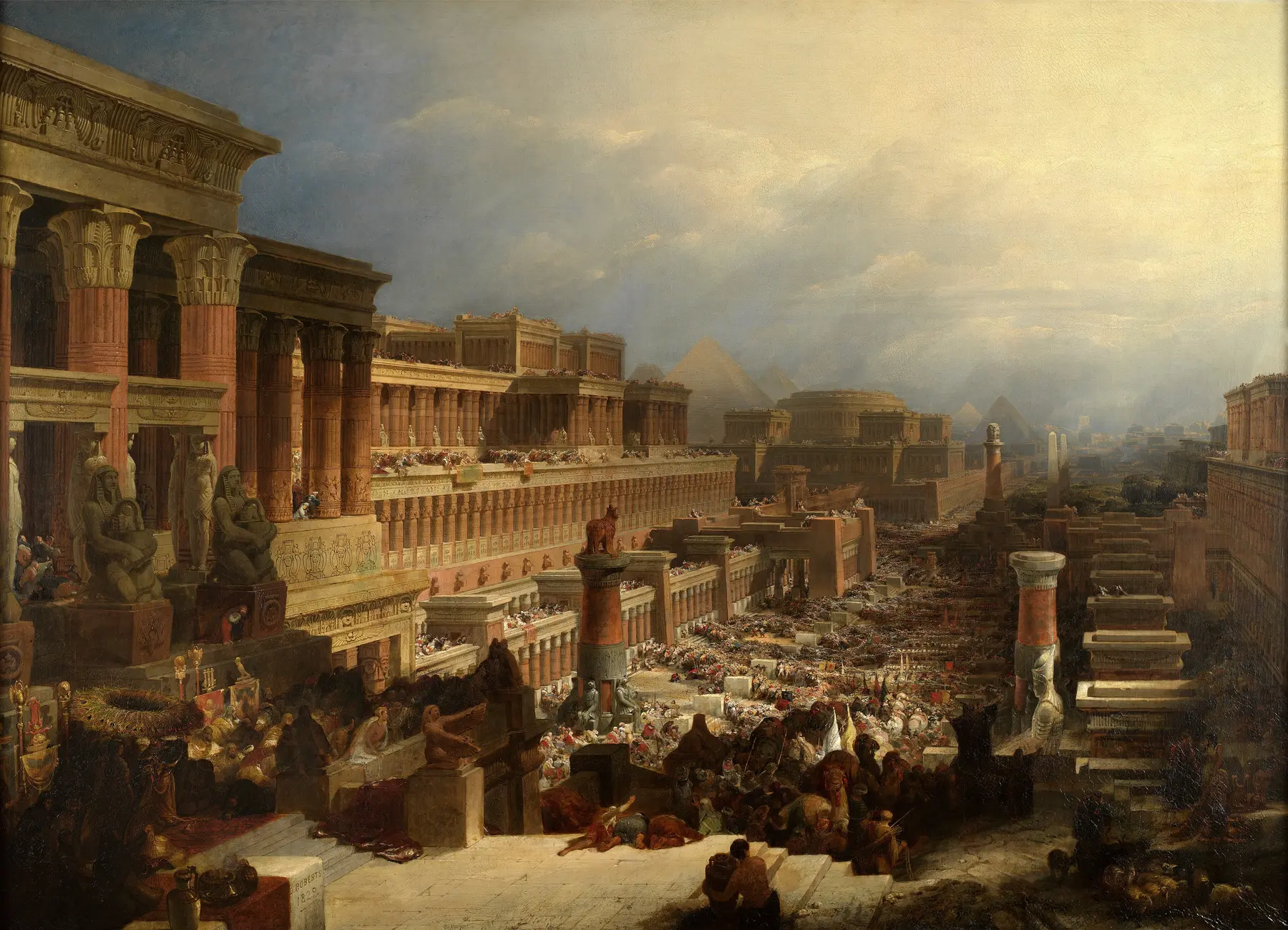
This page draws on Adam Clarke, Commentary on the Bible; Alfred Edersheim, The Temple: Its Ministry and Services; Jamieson, Fausset & Brown, Commentary Critical and Explanatory on the Whole Bible; John Gill, Exposition of the Old Testament (1748-1763); John Wesley, Explanatory Notes upon the Old Testament and Matthew Henry, Commentary on the Whole Bible.