
Esther 4:11
in Esther 4“All the royal officials and the people of the king’s provinces know that one law applies to every man or woman who approaches the king in the inner court without being summoned—that he be put to death. Only if the king extends the gold scepter may that person live. But I have not been summoned to appear before the king for the past thirty days.”
BSB
The same verse in ASV and KJV ▾
ASV
All the king’s servants, and the people of the king’s provinces, do know, that whosoever, whether man or woman, shall come unto the king into the inner court, who is not called, there is one law for him, that he be put to death, except those to whom the king shall hold out the golden sceptre, that he may live: but I have not been called to come in unto the king these thirty days.
KJV
All the king’s servants, and the people of the king’s provinces, do know, that whosoever, whether man or woman, shall come unto the king into the inner court, who is not called, there is one law of his to put him to death, except such to whom the king shall hold out the golden sceptre, that he may live: but I have not been called to come in unto the king these thirty days.
⋯
This verse in Esther 4
Commentary
8 notes on this verseA commentator
Albert Barnes1798–1870
Notes, Explanatory and Practical, on the Old and New Testaments (1832-1869)
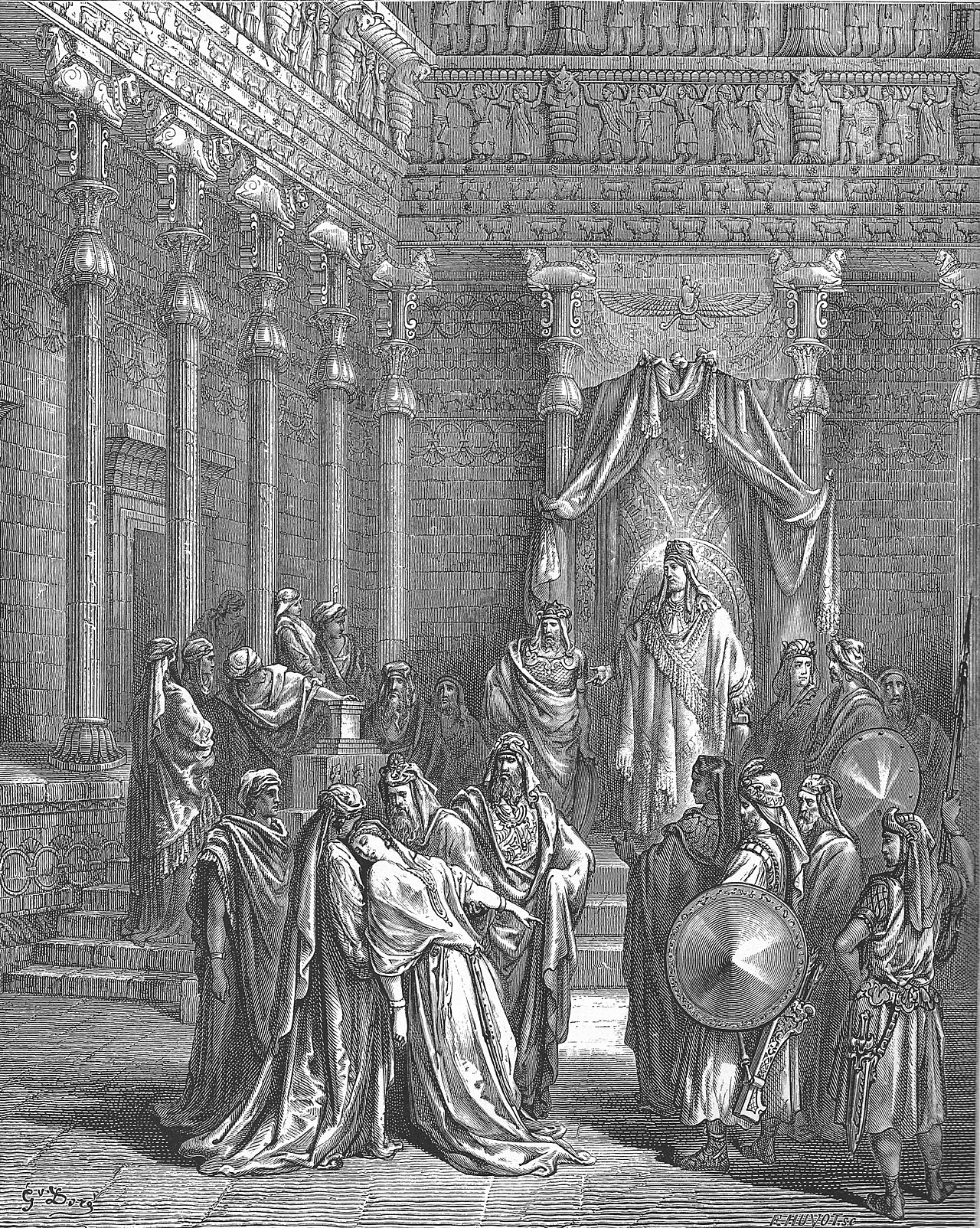
The golden scepter - In all the numerous representations of Persian kings at Persepolis the monarch holds a long tapering staff (probably the scepter of Esther) in his right hand. It was death to intrude on the privacy of the Persian king uninvited.
This site's exposition
Then Esther spoke to Hathach
on Esther 4:10-12
The excavated palace at Susa gives the scene a real setting. Esther's last clause is the confession that matters: "I have not been summoned to appear before the king for the past thirty days". The favor that won her the crown at 2:17 may have cooled.
This site's exposition
“All the royal officials and the people
Wesley gives two purposes for the law, the king’s majesty and his safety, and adds that it kept access in the hands of his officers. Clarke suspects that Haman had drawn the king away from Esther for those thirty days. Barnes finds the gold scepter in the Persepolis reliefs.
The record, by era
The Puritans and the Awakening3 voices
It is not thus in the court of the King of kings; to the footstool of his throne of grace we may at any time come boldly, and may be sure of an answer of peace to the prayer of faith. We are welcome, not only into the inner court, but even into the holiest, through the blood of Jesus.
Inner court - Within which, the king's residence and throne was. Not called - This was decreed, to maintain both the majesty, and the safety of the king's person; and by the contrivance of the greater officers of state, that few or none might have access to the king but themselves and their friends.
All the king's servants and the people of the king's provinces do know,....
The Nineteenth Century2 voices
A commentator
Jamieson, Fausset & Brown1802–1910
Commentary Critical and Explanatory on the Whole Bible (1871)
proposed
whosoever, whether man or woman, shall come unto the king into the inner court, who is not called--The Persian kings surrounded themselves with an almost impassable circle of forms.
quarantine:debris (2026-07-29) — starts-lowercase
Into the inner court - We have already seen that the Persian sovereigns affected the highest degree of majesty, even to the assuming of Divine honors. No man nor woman dared to appear unveiled before them, without hazarding their lives; into the inner chamber of the harem no person ever entered but the king, and the woman he had chosen to call thither. None even of his courtiers or ministers dared to appear there; nor the most beloved of his concubines, except led thither by himself, or ordered to come to him. Here was Esther’s difficulty; and that difficulty was now increased by the circumstance of her not having been sent for to the king’s bed for thirty days. In the last verse of the preceding chapter we find that the king and Haman sat down to drink. It is very likely that this wicked man had endeavored to draw the king’s attention from the queen, that his affection might be lessened, as he must have known something of the relationship between her and Mordecai; and consequently viewed her as a person who, in all probability, might stand much in the way of the accomplishment of his designs. I cannot but think that he had been the cause why Esther had not seen the king for thirty days.
The words behind it
42 Hebrew wordsEvery Hebrew word of this verse in the order it stands, with what it means and the door to its own study. The last column counts the times a word stands in the whole Bible: the rarer the word, the more the places it appears belong together.
| Hebrew | Sound | Meaning | Word study | In the Bible |
|---|---|---|---|---|
| כָּל־ | kol- | all | H3605 → | 5413 times |
| עַבְדֵ֣י | ʾavdei | [the] servants of | H5650 → | 799 times |
| הַמֶּ֡לֶךְ | hamelekh | the king | H4428 → | 2525 times |
| וְעַם־ | veam- | and [the] people of | H5971 → | 1873 times |
| מְדִינ֨וֹת | medinot | [the] provinces of | H4082 → | 53 times |
| הַמֶּ֜לֶךְ | hamelekh | the king | H4428 → | 2525 times |
| יֽוֹדְעִ֗ים | yodim | [are] knowing | H3045 → | 945 times |
| אֲשֶׁ֣ר | ʾasher | that | H834 → | 5497 times |
| כָּל־ | kol- | every | H3605 → | 5413 times |
| אִ֣ישׁ | ʾish | man | H376 → | 1663 times |
| וְאִשָּׁ֡ה | veishah | and woman | H802 → | 781 times |
| אֲשֶׁ֣ר | ʾasher | who | H834 → | 5497 times |
| יָבֽוֹא־ | yavo'- | he goes | H935 → | 2568 times |
| אֶל־ | ʾel- | to | H413 → | 5510 times |
| הַמֶּלֶךְ֩ | hamelekh | the king | H4428 → | 2525 times |
| אֶל־ | ʾel- | into | H413 → | 5510 times |
| הֶחָצֵ֨ר | hechatzer | the court | H2691 → | 191 times |
| הַפְּנִימִ֜ית | hapenimit | <the> inner | H6442 → | |
| אֲשֶׁ֣ר | ʾasher | who | H834 → | 5497 times |
| לֹֽא־ | lo'- | not | H3808 → | 5168 times |
| יִקָּרֵ֗א | yikare' | he is summoned | H7121 → | 733 times |
| אַחַ֤ת | ʾachat | [is] one | H259 → | 971 times |
| דָּתוֹ֙ | dato | law his | H1881 → | 22 times |
| לְהָמִ֔ית | lehamit | to put to death | H4191 → | |
| לְ֠בַד | levad | <to> apart | H905 → | 200 times |
| מֵאֲשֶׁ֨ר | measher | from that | H834 → | 5497 times |
| יֽוֹשִׁיט־ | yoshit- | he extends | H3447 → | 3 times |
| ל֥וֹ | lo | to him | ||
| הַמֶּ֛לֶךְ | hamelekh | the king | H4428 → | 2525 times |
| אֶת־ | ʾet- | <obj.> | H853 → | 10935 times |
| שַׁרְבִ֥יט | sharvit | [the] scepter of | H8275 → | 4 times |
| הַזָּהָ֖ב | hazahav | <the> gold | H2091 → | 389 times |
| וְחָיָ֑ה | vechayah | and he will live | H2421 → | |
| וַאֲנִ֗י | vaani | and I | H589 → | 874 times |
| לֹ֤א | lo' | not | H3808 → | 5168 times |
| נִקְרֵ֙אתי֙ | nikreti | I have been summoned | H7121 → | 733 times |
| לָב֣וֹא | lavo' | to go | H935 → | 2568 times |
| אֶל־ | ʾel- | to | H413 → | 5510 times |
| הַמֶּ֔לֶךְ | hamelekh | the king | H4428 → | 2525 times |
| זֶ֖ה | zeh | this | H2088 → | 1180 times |
| שְׁלוֹשִׁ֥ים | sheloshim | thirty | H7970 → | |
| יֽוֹם׃ | yom | day[s] | H3117 → | 2304 times |
כָּל־all
kol-H3605 →5413 times
עַבְדֵ֣י[the] servants of
ʾavdeiH5650 →799 times
הַמֶּ֡לֶךְthe king
hamelekhH4428 →2525 times
וְעַם־and [the] people of
veam-H5971 →1873 times
מְדִינ֨וֹת[the] provinces of
medinotH4082 →53 times
הַמֶּ֜לֶךְthe king
hamelekhH4428 →2525 times
יֽוֹדְעִ֗ים[are] knowing
yodimH3045 →945 times
אֲשֶׁ֣רthat
ʾasherH834 →5497 times
כָּל־every
kol-H3605 →5413 times
אִ֣ישׁman
ʾishH376 →1663 times
וְאִשָּׁ֡הand woman
veishahH802 →781 times
אֲשֶׁ֣רwho
ʾasherH834 →5497 times
יָבֽוֹא־he goes
yavo'-H935 →2568 times
אֶל־to
ʾel-H413 →5510 times
הַמֶּלֶךְ֩the king
hamelekhH4428 →2525 times
אֶל־into
ʾel-H413 →5510 times
הֶחָצֵ֨רthe court
hechatzerH2691 →191 times
הַפְּנִימִ֜ית<the> inner
hapenimitH6442 →
אֲשֶׁ֣רwho
ʾasherH834 →5497 times
לֹֽא־not
lo'-H3808 →5168 times
יִקָּרֵ֗אhe is summoned
yikare'H7121 →733 times
אַחַ֤ת[is] one
ʾachatH259 →971 times
דָּתוֹ֙law his
datoH1881 →22 times
לְהָמִ֔יתto put to death
lehamitH4191 →
לְ֠בַד<to> apart
levadH905 →200 times
מֵאֲשֶׁ֨רfrom that
measherH834 →5497 times
יֽוֹשִׁיט־he extends
yoshit-H3447 →3 times
ל֥וֹto him
lo
הַמֶּ֛לֶךְthe king
hamelekhH4428 →2525 times
אֶת־<obj.>
ʾet-H853 →10935 times
שַׁרְבִ֥יט[the] scepter of
sharvitH8275 →4 times
הַזָּהָ֖ב<the> gold
hazahavH2091 →389 times
וְחָיָ֑הand he will live
vechayahH2421 →
וַאֲנִ֗יand I
vaaniH589 →874 times
לֹ֤אnot
lo'H3808 →5168 times
נִקְרֵ֙אתי֙I have been summoned
nikretiH7121 →733 times
לָב֣וֹאto go
lavo'H935 →2568 times
אֶל־to
ʾel-H413 →5510 times
הַמֶּ֔לֶךְthe king
hamelekhH4428 →2525 times
זֶ֖הthis
zehH2088 →1180 times
שְׁלוֹשִׁ֥יםthirty
sheloshimH7970 →
יֽוֹם׃day[s]
yomH3117 →2304 times
A shaded row is a word that stands 400 times or fewer in the Bible.
The walk
8 stopsEach card is a verse this one points to, and under it the verses that one points to in turn. Where several paths arrive at the same place, that place is listed first: the text keeps returning to it.
Through
Esther 8:4The king extended the gold scepter toward Esther, and she arose and stood before the king.
it leads to
- Esther 5:2
As soon as the king saw Queen Esther standing in the court, she found favor in his sight. The king extended the gold scepter in his hand toward Esther, and she approached and touched…
- Esther 5:2
Through
Esther 1:19So if it pleases the king, let him issue a royal decree, and let it be recorded in the laws of Persia and Media so that it cannot be repealed, that Vashti shall never…
it leads to
- 1 Samuel 15:28
So Samuel said to him, “The LORD has torn the kingdom of Israel from you today and has given it to your neighbor who is better than you.
- Esther 8:8
Now you may write in the king’s name as you please regarding the Jews, and seal it with the royal signet ring. For a decree that is written in the name of the king…
- Esther 8:5
“If it pleases the king,” she said, “and if I have found favor in his sight, and the matter seems proper to the king, and I am pleasing in his sight, may an order…
- Daniel 6:8–15
Therefore, O king, establish the decree and sign the document so that it cannot be changed—in accordance with the law of the Medes and Persians, which cannot be repealed.”
- Esther 3:9
If it pleases the king, let a decree be issued to destroy them, and I will deposit ten thousand talents of silver into the royal treasury to pay those who carry it out.”
- 1 Samuel 15:28
Through
Daniel 2:9If you do not tell me the dream, there is only one decree for you. You have conspired to speak before me false and fraudulent words, hoping the situation will change. Therefore tell me…
it leads to
- Daniel 2:21
He changes the times and seasons; He removes kings and establishes them. He gives wisdom to the wise and knowledge to the discerning.
- Daniel 7:25
He will speak out against the Most High and oppress the saints of the Most High, intending to change the appointed times and laws; and the saints will be given into his hand for…
- Daniel 2:21
Where this verse is studied
On this page
About Esther
This page draws on Adam Clarke, Commentary on the Bible; Albert Barnes, Notes, Explanatory and Practical, on the Old and New Testaments (1832-1869); Jamieson Fausset and Brown, Commentary Critical and Explanatory on the Whole Bible; Jamieson, Fausset & Brown, Commentary Critical and Explanatory on the Whole Bible; John Gill, Exposition of the Old Testament (1748-1763); John Wesley, Explanatory Notes upon the Old Testament; Keil, The Books of Ezra, Nehemiah, and Esther and Matthew Henry, Commentary on the Whole Bible.