
Esther 4:4
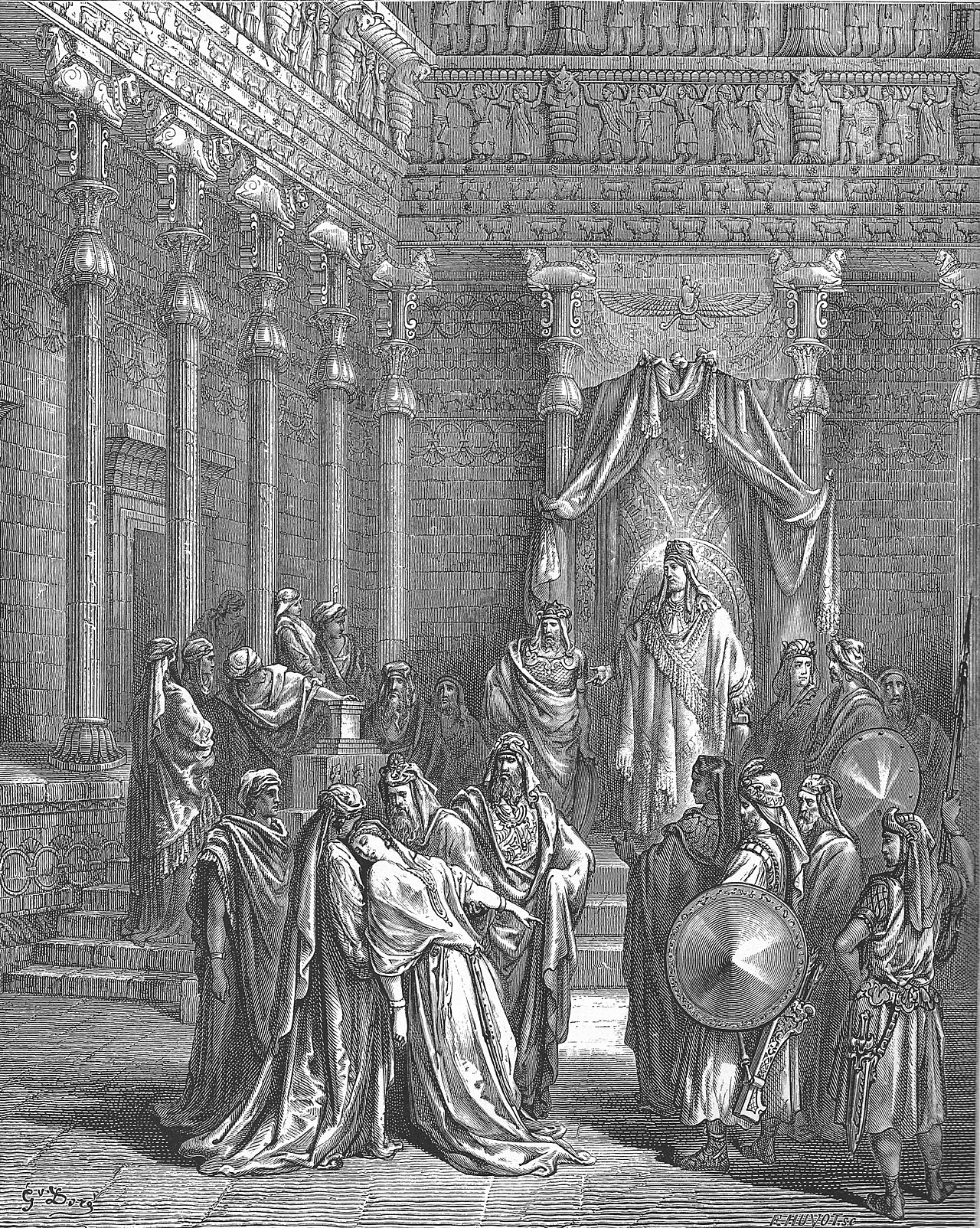
in Esther 4When Esther’s maidens and eunuchs came and told her about Mordecai, the queen was overcome with distress. She sent clothes for Mordecai to wear instead of his sackcloth, but he would not accept them.
BSB
The same verse in ASV and KJV ▾
ASV
And Esther’s maidens and her chamberlains came and told it her; and the queen was exceedingly grieved: and she sent raiment to clothe Mordecai, and to take his sackcloth from off him; but he received it not.
KJV
So Esther’s maids and her chamberlains came and told it her. Then was the queen exceedingly grieved; and she sent raiment to clothe Mordecai, and to take away his sackcloth from him: but he received it not.
⋯
This verse in Esther 4
Commentary
7 notes on this verseA commentator
Jamieson, Fausset & Brown1802–1910
Commentary Critical and Explanatory on the Whole Bible (1871)
Then was the queen . . . grieved; and . . . sent raiment to . . . Mordecai--Her object in doing so was either to qualify him for resuming his former office, or else, perhaps, of fitting him to come near enough to the palace to inform her of the cause of such sudden and extreme distress.
This site's exposition
When Esther’s maidens and eunuchs came
on Esther 4:4-6
Esther's first response is clothing, and "he would not accept them": comfort is refused until the truth is faced. The queen must learn of her people's death sentence through Hathach, because the palace has sealed her off from the city's news. Every message in these verses passes through a go-between.
The record, by era
The Medieval Church1 voice
When Mordecai heard about the destruction of the Jews which had been sanctioned with an imperial decree, he put on clothes for mourning and proceeded to the gates of the palace with bitterness in his soul and grief in his voice. In the same way, …
The Puritans and the Awakening2 voices
Esther Resolves to Petition the King. 5 Then called Esther for Hatach, one of the king's chamberlains, whom he had appointed to attend upon her, and gave him a commandment to Mordecai, to know what it was, and why it was. 6 So Hatach went forth to Mordecai unto the street of the city, which was before the king's gate.
quarantine:scripture (2026-07-29) — scripture-overlap:95%@v4-6
So Esther's maids and her chamberlains came and told it her,....
The Nineteenth Century2 voices
Sent raiment - She supposed that he must have been spoiled of his raiment by some means; and therefore sent him clothing.
A commentator
Albert Barnes1798–1870
Notes, Explanatory and Practical, on the Old and New Testaments (1832-1869)
proposed
Esther’s maids ... told it her - Esther’s nationality and her relationship to Mordecai were probably by this time known to her attendants, though still concealed from the king. See Est 7:4.
The words behind it
19 Hebrew wordsEvery Hebrew word of this verse in the order it stands, with what it means and the door to its own study. The last column counts the times a word stands in the whole Bible: the rarer the word, the more the places it appears belong together.
| Hebrew | Sound | Meaning | Word study | In the Bible |
|---|---|---|---|---|
| וַ֠תָּבֹאינָה | vatevoeinah | and they came | H935 → | 2568 times |
| נַעֲר֨וֹת | naarot | [the] maids of | H5291 → | 63 times |
| אֶסְתֵּ֤ר | ʾester | Esther | H635 → | 55 times |
| וְסָרִיסֶ֙יהָ֙ | vesariseiha | and eunuchs her | H5631 → | 42 times |
| וַיַּגִּ֣ידוּ | vaiyagidu | and they told | H5046 → | 370 times |
| לָ֔הּ | lah | to her | ||
| וַתִּתְחַלְחַ֥ל | vatitchalchal | and she agonized | H2342 → | |
| הַמַּלְכָּ֖ה | hamalkah | the queen | H4436 → | 35 times |
| מְאֹ֑ד | meod | exceedingly | H3966 → | |
| וַתִּשְׁלַ֨ח | vatishlach | and she sent | H7971 → | 845 times |
| בְּגָדִ֜ים | begadim | garments | H899 → | |
| לְהַלְבִּ֣ישׁ | lehalbish | to clothe | H3847 → | 110 times |
| אֶֽת־ | ʾet- | <obj.> | H853 → | 10935 times |
| מָרְדֳּכַ֗י | maredokhai | Mordecai | H4782 → | 60 times |
| וּלְהָסִ֥יר | ulehasir | and to remove | H5493 → | 299 times |
| שַׂקּ֛וֹ | sako | sackcloth his | H8242 → | 49 times |
| מֵעָלָ֖יו | mealav | from on <the> him | H5921 → | 5755 times |
| וְלֹ֥א | velo' | and not | H3808 → | 5168 times |
| קִבֵּֽל׃ | kibel | he accepted [them] | H6901 → | 13 times |
וַ֠תָּבֹאינָהand they came
vatevoeinahH935 →2568 times
נַעֲר֨וֹת[the] maids of
naarotH5291 →63 times
אֶסְתֵּ֤רEsther
ʾesterH635 →55 times
וְסָרִיסֶ֙יהָ֙and eunuchs her
vesariseihaH5631 →42 times
וַיַּגִּ֣ידוּand they told
vaiyagiduH5046 →370 times
לָ֔הּto her
lah
וַתִּתְחַלְחַ֥לand she agonized
vatitchalchalH2342 →
הַמַּלְכָּ֖הthe queen
hamalkahH4436 →35 times
מְאֹ֑דexceedingly
meodH3966 →
וַתִּשְׁלַ֨חand she sent
vatishlachH7971 →845 times
בְּגָדִ֜יםgarments
begadimH899 →
לְהַלְבִּ֣ישׁto clothe
lehalbishH3847 →110 times
אֶֽת־<obj.>
ʾet-H853 →10935 times
מָרְדֳּכַ֗יMordecai
maredokhaiH4782 →60 times
וּלְהָסִ֥ירand to remove
ulehasirH5493 →299 times
שַׂקּ֛וֹsackcloth his
sakoH8242 →49 times
מֵעָלָ֖יוfrom on <the> him
mealavH5921 →5755 times
וְלֹ֥אand not
velo'H3808 →5168 times
קִבֵּֽל׃he accepted [them]
kibelH6901 →13 times
A shaded row is a word that stands 400 times or fewer in the Bible.
The walk
8 stopsEach card is a verse this one points to, and under it the verses that one points to in turn. Where several paths arrive at the same place, that place is listed first: the text keeps returning to it.
Through
Psalms 77:2In the day of trouble I sought the Lord; through the night my outstretched hands did not grow weary; my soul refused to be comforted.
it leads to
- Isaiah 26:9
My soul longs for You in the night; indeed, my spirit seeks You at dawn. For when Your judgments come upon the earth, the people of the world learn righteousness.
- Psalms 50:15
Call upon Me in the day of trouble; I will deliver you, and you will honor Me.”
- Isaiah 26:16
O LORD, they sought You in their distress; when You disciplined them, they poured out a quiet prayer.
- Genesis 37:35
All his sons and daughters tried to comfort him, but he refused to be comforted. “No,” he said. “I will go down to Sheol mourning for my son.” So his father wept for him.
- Hebrews 5:7
During the days of Jesus’ earthly life, He offered up prayers and petitions with loud cries and tears to the One who could save Him from death, and He was heard because of His…
- Isaiah 26:9
Through
Isaiah 56:3Let no foreigner who has joined himself to the LORD say, “The LORD will utterly exclude me from His people.” And let the eunuch not say, “I am but a dry tree.”
it leads to
- 1 Corinthians 6:17
But he who unites himself with the Lord is one with Him in spirit.
- Acts 10:34
Then Peter began to speak: “I now truly understand that God does not show favoritism,
- Matthew 19:12–30
For there are eunuchs who were born that way; others were made that way by men; and still others live like eunuchs for the sake of the kingdom of heaven. The one who can…
- 1 Corinthians 6:17
Where this verse is studied
On this page
About Esther
Who and where
1 name in this verse with a page on the site.
This page draws on Adam Clarke, Commentary on the Bible; Albert Barnes, Notes, Explanatory and Practical, on the Old and New Testaments (1832-1869); Jamieson, Fausset & Brown, Commentary Critical and Explanatory on the Whole Bible; John Gill, Exposition of the Old Testament (1748-1763); Matthew Henry, Commentary on the Whole Bible; Rabanus Maurus, EXPLANATION ON THE BOOK OF ESTHER 7 and W. F. Adeney, Ezra, Nehemiah and Esther (Expositor's Bible).