
Daniel 7:12
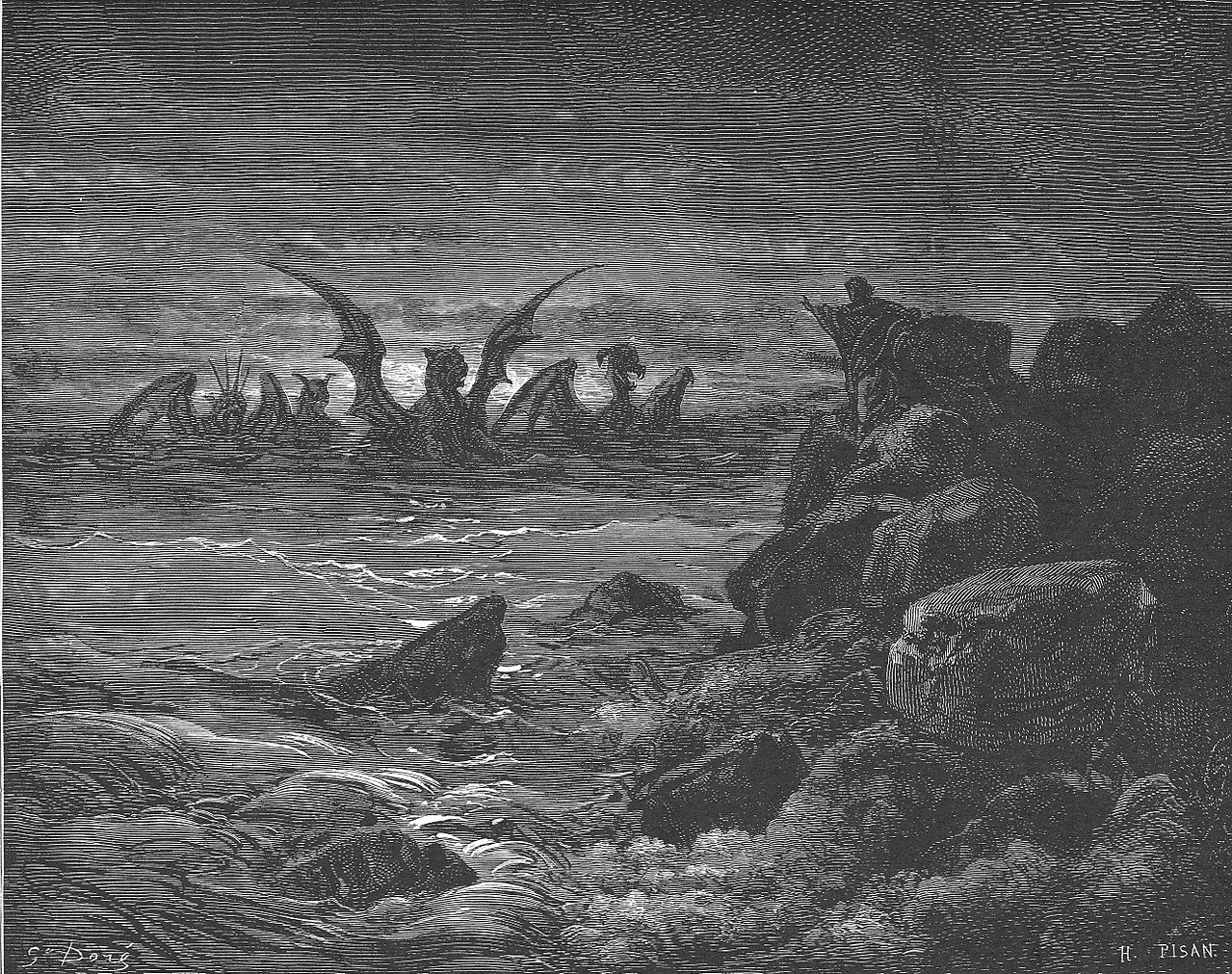
in Daniel 7As for the rest of the beasts, their dominion was removed, but they were granted an extension of life for a season and a time.
BSB
The same verse in ASV and KJV ▾
ASV
And as for the rest of the beasts, their dominion was taken away: yet their lives were prolonged for a season and a time.
KJV
As concerning the rest of the beasts, they had their dominion taken away: yet their lives were prolonged for a season and time.
⋯
This verse in Daniel 7
Commentary
11 notes on this verseA commentator
Jamieson, Fausset & Brown1802–1910
Commentary Critical and Explanatory on the Whole Bible (1871)
The reason is: Christ's kingdom now is not of this world (Joh 18:36); and only at the second advent of Christ does it become an external power of the world. Hence Daniel, whose province it was to prophesy of the world powers, does not treat of Christianity until it becomes a world power, namely, at the second advent.
This site's exposition
the beast was slain
on Daniel 7:11-12
The fourth beast is slain and its body destroyed, given to the burning flame, for the great words its horn spoke, while the other three beasts have their dominion taken away yet their lives are prolonged for a season and time. Barnes reads the distinction as a picture of how empires actually end in the historical record, absorbed into their successors rather than annihilated outright, Babylon's people and institutions surviving under Persia, Persia's under Greece, in a way the fourth kingdom's own destruction does not share. The fourth beast alone meets total judgment, which the traditional line reads as fitting a kingdom that will not simply be conquered by the next in a normal succession but be replaced by the kingdom of verse 14 and verse 27 directly.
The record, by era
The Church Fathers4 voices
A commentator
Hippolytus of RomeHippolytus Exegetical Fragments - Of the visions of Daniel and Nebuchadnezzar · Written before 235.
proposed
1. In speaking of a "lioness from the sea," he meant the rising of the kingdom of Babylon, and that this was the "golden head of the image." And in speaking of its "eagle wings," be meant that king Nebuchadnezzar was exalted and that his glory was lifted up against God. Then he says "its wings were plucked off," i.e., that his glory was destroyed; for he was driven out of his kingdom. And the words, "A man's heart was given it, and it was made stand upon the feet of a man," mean that he came to himself again, and recognised that he was but a man, and gave the glory to God. Then after the lioness he sees a second beast, "like a bear," which signified the Persians. For after the Babylonians the Persians obtained the power. And in saying that "it had three ribs in its mouth," he pointed to the three nations, Persians, Medes, and Babylonians, which were expressed in the image by the silver after the gold. Then comes the third beast, "a leopard," which means the Greeks; for after the Persians, Alexander of Macedon had the power, when Darius was overthrown, which was also indicated by the brass in the image. And in saying that the beast "had four wings of a fowl, and four heads," he showed most clearly how the kingdom of Alexander was parted into four divisions. For in speaking of four heads, he meant the four kings that arose out of it. For Alexander, when dying, divided his kingdom into four parts. Then he says, "The fourth beast (was) dreadful and terrible: it had iron teeth, and claws of brass." Who, then, are meant by this but the Romans, whose kingdom, the kingdom that still stands, is expressed by the iron? "for," says he, "its legs are of iron." 2. After this, then, what remains, beloved, but the toes of the feet of the image, in which "part shall be of iron and part of clay mixed together? […]
This refers to the kingdoms of the Medes, Persians and Chaldeans. "But their lives were prolonged for a season and a time," that is, the kings of the nations mentioned above would have not been completely powerless.
But if so great a power is shown to have followed and to be still following the dispensation of His suffering, how great shall that be which shall follow His glorious advent! For He shall come on the clouds as the Son of man, so Daniel foretold, and His angels shall come with Him. These are the words: [quotes Daniel 7:9-28]
The dominion of the other beasts had fallen, although they had spent a period of many years ruling; to each kingdom there was a certain definite time given to rule. When these things have taken place, since all the other kingdoms had been destroyed earlier, …
The Puritans and the Awakening1 voice
He himself died of a miserable disease, his family was rooted out, the kingdom wasted by the Parthians and Armenians, and at length made a province of the Roman empire by Pompey. And the Roman empire itself (if we take that for the fourth beast), after it began to persecute Christianity, declined and wasted away, and the body of it was destroyed.
4 more voices on this verse
The Puritans and the Awakening3 voices
As concerning the rest of the beasts.....
To him are given glory and a kingdom, and they are given by him who has an unquestionable right to give them, which, some think with an eye to these words, our Savior teaches us to acknowledge in the close of the Lord's prayer, For thine is the kingdom, the power, and the glory.
We may allude to this in describing the remainders of sin in the hearts of good people; they have corruptions in them, the lives of which are prolonged, so that they are not perfectly free from sin, but the dominion of them is taken away, so that sin does not reign in their mortal bodies.
The Nineteenth Century1 voice
A commentator
Albert Barnes1798–1870
Notes, Explanatory and Practical, on the Old and New Testaments (1832-1869)
proposed
As concerning the rest of the beasts - They had been superseded, but not destroyed. It would seem that they were still represented in vision to Daniel, as retaining their existence, though their power was taken away, and their fierceness subdued, or that they still seemed to remain alive for a time, or while the vision was passing. They were not cut down, destroyed, and consumed as the fourth beast was. They had their dominion taken away - They were superseded, or they no longer exercised power. They no more appeared exerting a control over the nations.
How the passage was read
What the Jewish commentators add
But as for the other beasts, their dominion was removed And from the other kingdoms, their dominion was removed by Heaven.
1 more on this passage, in their own words ▾
from the sound of the arrogant words From the sound of the haughty words that the horn was speaking, the wrath of the Ancient of Days was aroused.
This section is reception history: how the passage was read and kept in the Jewish tradition. Where a reading parts from an essential of the Christian faith, the section says so at that point.
Texts and citation data: Sefaria; each excerpt follows its version’s licence. 4 further sources are cited on this chapter that carry no English text this site may quote or only restate the verse.
The words behind it
11 Hebrew wordsEvery Hebrew word of this verse in the order it stands, with what it means and the door to its own study. The last column counts the times a word stands in the whole Bible: the rarer the word, the more the places it appears belong together.
| Hebrew | Sound | Meaning | Word study | In the Bible |
|---|---|---|---|---|
| וּשְׁאָר֙ | ushear | and [the] rest of | H7606 → | 12 times |
| חֵֽיוָתָ֔א | cheivata' | beasts the | H2423 → | 20 times |
| הֶעְדִּ֖יו | he'div | they removed | H5709 → | 9 times |
| שָׁלְטָנְה֑וֹן | shaltanehon | dominion their | H7985 → | 14 times |
| וְאַרְכָ֧ה | vearkhah | and a prolonging | H754 → | |
| בְחַיִּ֛ין | vechaiyin | in life<s> | H2417 → | 7 times |
| יְהִ֥יבַת | yehivat | it was given | H3052 → | 28 times |
| לְה֖וֹן | lehon | to them | ||
| עַד־ | ʾad- | until | H5705 → | 35 times |
| זְמַ֥ן | zeman | a time | H2166 → | 11 times |
| וְעִדָּֽן׃ | veidan | and a time | H5732 → | 13 times |
וּשְׁאָר֙and [the] rest of
ushearH7606 →12 times
חֵֽיוָתָ֔אbeasts the
cheivata'H2423 →20 times
הֶעְדִּ֖יוthey removed
he'divH5709 →9 times
שָׁלְטָנְה֑וֹןdominion their
shaltanehonH7985 →14 times
וְאַרְכָ֧הand a prolonging
vearkhahH754 →
בְחַיִּ֛יןin life<s>
vechaiyinH2417 →7 times
יְהִ֥יבַתit was given
yehivatH3052 →28 times
לְה֖וֹןto them
lehon
עַד־until
ʾad-H5705 →35 times
זְמַ֥ןa time
zemanH2166 →11 times
וְעִדָּֽן׃and a time
veidanH5732 →13 times
A shaded row is a word that stands 400 times or fewer in the Bible.
The walk
4 stopsEach card is a verse this one points to, and under it the verses that one points to in turn. Where several paths arrive at the same place, that place is listed first: the text keeps returning to it.
Through
Daniel 8:7I saw him approach the ram in a rage against him, and he struck the ram and shattered his two horns. The ram was powerless to stand against him, and the goat threw him…
it leads to
- Daniel 7:7
After this, as I watched in my vision in the night, suddenly a fourth beast appeared, and it was terrifying—dreadful and extremely strong—with large iron teeth. It devoured and crushed; then it trampled underfoot…
- Daniel 11:11
In a rage, the king of the South will march out to fight the king of the North, who will raise a large army, but it will be delivered into the hand of his…
- Joshua 8:20
When the men of Ai turned and looked back, the smoke of the city was rising into the sky. They could not escape in any direction, and the troops who had fled to the…
- Leviticus 26:37
They will stumble over one another as before the sword, though no one is behind them. So you will not be able to stand against your enemies.
- Daniel 7:7
Where this verse is studied
On this page
Studies21
On this verse
On this chapter
- The Son of Man in 1 Enoch
- Angelology
- Antichrist (the Word and the Figure)
- Apocalyptic Literature
- The Beast and the False Prophet
- The Major Prophets
- Revelation, the Canon's Closing Scroll
- Fire
- Jesus: Titles & Roles
- John on Patmos, Revelation 1
- Rome
- The Fourth Man in the Fire: Daniel 3
- The Ascension: Acts 1:1-11 · Luke 24:50-53
- The Horn
- The Throne
- The Throne Room
About Daniel
This page draws on 10 works. Open the list of works
This page draws on Albert Barnes, Notes on the Book of Daniel; Albert Barnes, Notes, Explanatory and Practical, on the Old and New Testaments (1832-1869); Ephrem the Syrian, COMMENTARY ON DANIEL 7:12; Hippolytus of Rome, Hippolytus Exegetical Fragments - Of the visions of Daniel and Nebuchadnezzar; Jamieson, Fausset & Brown, Commentary Critical and Explanatory on the Whole Bible; John Gill, Exposition of the Old Testament; John Gill, Exposition of the Old Testament (1748-1763); Justin Martyr, Dialogue with Trypho, Chapter XXXI; Matthew Henry, Commentary on the Whole Bible and Theodoret of Cyrus, COMMENTARY ON DANIEL 7:12.