
Daniel 1:7
in Daniel 1The chief official gave them new names: To Daniel he gave the name Belteshazzar; to Hananiah, Shadrach; to Mishael, Meshach; and to Azariah, Abednego.
BSB
The same verse in ASV and KJV ▾
ASV
And the prince of the eunuchs gave names unto them: unto Daniel he gave the name of Belteshazzar; and to Hananiah, of Shadrach; and to Mishael, of Meshach; and to Azariah, of Abed-nego.
KJV
Unto whom the prince of the eunuchs gave names: for he gave unto Daniel the name of Belteshazzar; and to Hananiah, of Shadrach; and to Mishael, of Meshach; and to Azariah, of Abed–nego.
⋯
This verse in Daniel 1
Commentary
8 notes on this verseVerse 7. "And the overseer of the eunuchs imposed names upon them, calling Daniel Belteshazzar (Balthasar), and Hananiah Shadrach, and Mishael Meshach, and Azariah Abednego." It was not only the overseer or master of the eunuchs (as others have rendered it, the "chief-eunuch") who changed the names of saints, but also Pharaoh called Joseph in Egypt Somtonphanec (Genesis 41:45), for neither of them wished them to have Jewish names in the land of captivity. Wherefore the prophet says in the Psalm: "How shall we sing the Lord's song in a strange land?" (Psalm 137:4).
This site's exposition
children of Judah
on Daniel 1:6-7
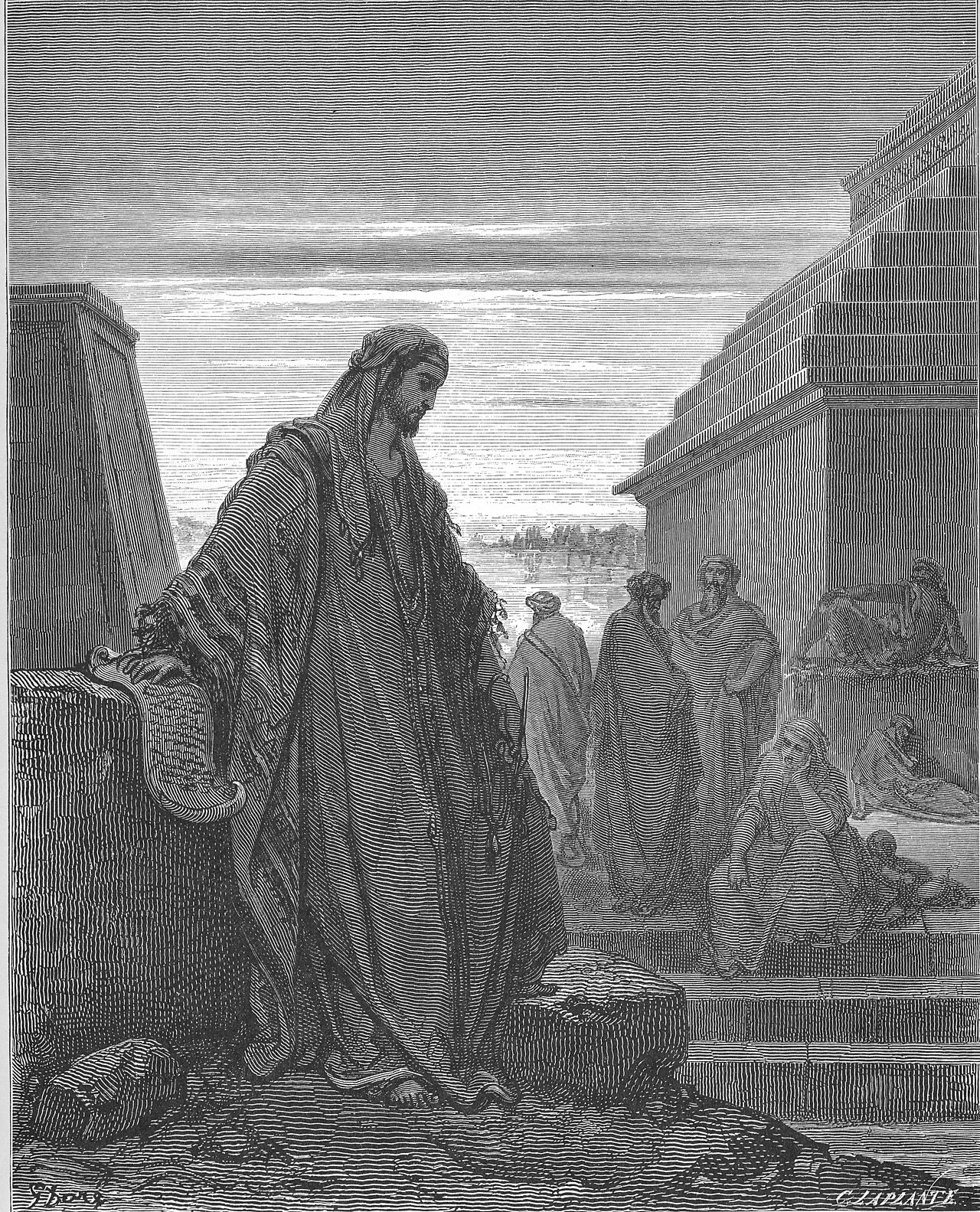
Among the children of Judah brought in stand the four the book will follow, Daniel, Hananiah, Mishael, and Azariah, each carrying a name that confesses the God of Israel in some form of El or Jah. The prince of the eunuchs renames every one of them after the gods of Babylon, Belteshazzar honoring Bel by the bench's reading, an act of empire as old as conquest itself. Clarke and Henry both read the renaming as Babylon's claim on the men's very identity, the first assault the narrative records, quieter than the meat and wine but aimed at the same surrender.
The record, by era
The Church Fathers1 voice
And Scripture says, "And the king told Ashpenaz the chief of the eunuchs to bring in some of those from the sons of the captivity of Israel and from the seed of the king and from the princes, young men, who have no blemish, who are beautiful in appearance and are understanding in all wisdom, being well versed in knowledge, disposed to prudence, and who have in themselves the strength to stand in the house of the king, and to teach them the letters and the tongue of the Chaldeans. And the king appointed them on that very day to be nourished from the table of the king and from the wine which he drank in order for them to be nourished three years, and after these things to stand before the king. And there was among them from the sons of Judah, Daniel and Hanniah, Mishael, and Azariah." [Daniel 1:3-7] It is necessary that those who love learning to not read these things cursorily, but to prepare the mind for the things that lie before us. For the divine writings do not idly preach to us, but their admonition is meant for us and also the blessing of these prophets and the demonstration of all the things which are spoken by them are for us as well. For when Hezekiah king of Judah was sick unto death, then "Isaiah the prophet came to him and told him 'Set in order your sons and your daughters and your father's house, for you will die and you will not live.'" [2 Kings 20:1, also see Isaiah 38:1] Having been grieved at this word, "Hezekiah turned his face to the wall and prayed to the Lord saying, 'Lord remember me just as I have walked before you in truth and in faith and with a full heart and I have done what is pleasing in your presence.' And Hezekiah wept with great weeping." [2 Kings 20:1-3] After this occurred, Isaiah was sent to him a second time and he said to him, "The Lord the God of David your father says this, 'I have heard your prayer and have seen your tears. […]
The Puritans and the Awakening2 voices
Gave names - That is, other names, relating to the idol-gods. Belteshazzar - So Daniel had the name of Belteshazzar, from the great Babylonian idol Baal or Bell. This was by the king's command, and herein he put forth an act: of his sovereignty.
Unto whom the prince of the eunuchs gave names,....
The Nineteenth Century2 voices
A commentator
Jamieson, Fausset & Brown1802–1910
Commentary Critical and Explanatory on the Whole Bible (1871)
proposed
To the last the three youths were consigned when refusing to worship the golden image (Da 3:12). The Chaldee version translates "Lucifer," in Isa 14:12, Nogea, the same as Nego. The names thus at the outset are significant of the seeming triumph, but sure downfall, of the heathen powers before Jehovah and His people.
Unto whom the prince of the eunuchs gave names - This change of names, Calmet properly remarks, was a mark of dominion and authority. It was customary for masters to impose new names upon their slaves; and rulers often, on their ascending the throne, assumed a name different from that which they had before. דניאל Daniel signifies “God is my Judge.” This name they changed into בלטשאצר Belteshatstsar; in Chaldee, “The treasure of Bel,” or “The despository of the secrets (or treasure) of Bel.” הנניה Hananiah signifies, “The Lord has been gracious to me,” or “He to whom the Lord is gracious.” This name was changed into שדרך Shadrach, Chaldee, which has been variously translated: “The inspiration of the sun;” “God the author of evil, be propitious to us;” “Let God preserve us from evil.” מישאל Mishael signifies “He who comes from God.” Him they called מישך Meshach, which in Chaldee signifies, “He who belongs to the goddess Sheshach,” a celebrated deity of the Babylonians, mentioned by Jeremiah, Jer 25:26. עזריה Azariah, which signifies “The Lord is my Helper,” they changed into אבד נגו Abed-Nego, which in Chaldee is “the servant of Nego,” who was one of their divinities; by which they meant either the sun, or the morning star; whether Jupiter or Venus. The vicious pronunciation of this name should be carefully avoided; I mean that which lays the accent on the first syllable, and hurries so the end, without attending to the natural division of the word Abed-Nego.
1 more voice on this verse
The Nineteenth Century1 voice
A commentator
Albert Barnes1798–1870
Notes, Explanatory and Practical, on the Old and New Testaments (1832-1869)
proposed
Unto whom the prince of the eunuchs gave names - This practice is common in Oriental courts. “The captive youths referred to in the notes on Dan 1:5, in the Turkish court also receive new names, that is, Mahometan names, their former names being Christian.” - “Pict. Bible.” It is “possible” that this changing of their names may have been designed to make them forget their country, and their religion, and to lead them more entirely to identify themselves with the people in whose service they were now to be employed, though nothing of this is intimated in the history.
The words behind it
15 Hebrew wordsEvery Hebrew word of this verse in the order it stands, with what it means and the door to its own study. The last column counts the times a word stands in the whole Bible: the rarer the word, the more the places it appears belong together.
| Hebrew | Sound | Meaning | Word study | In the Bible |
|---|---|---|---|---|
| וַיָּ֧שֶׂם | vaiyasem | and he assigned | H7760 → | 584 times |
| לָהֶ֛ם | lahem | to them | ||
| שַׂ֥ר | sar | [the] chief of | H8269 → | 421 times |
| הַסָּרִיסִ֖ים | hasarisim | the officials | H5631 → | 42 times |
| שֵׁמ֑וֹת | shemot | names | H8034 → | 864 times |
| וַיָּ֨שֶׂם | vaiyasem | and he assigned | H7760 → | 584 times |
| לְדָֽנִיֵּ֜אל | ledaniyel | to Daniel | H1840 → | 24 times |
| בֵּ֣לְטְשַׁאצַּ֗ר | beleteshatzar | Belteshazzar | H1095 → | |
| וְלַֽחֲנַנְיָה֙ | velachananyah | and to Hananiah | H2608 → | 29 times |
| שַׁדְרַ֔ךְ | shadrakh | Shadrach | H7714 → | |
| וּלְמִֽישָׁאֵ֣ל | ulemishael | and to Mishael | H4332 → | 7 times |
| מֵישַׁ֔ךְ | meishakh | Meshach | H4335 → | |
| וְלַעֲזַרְיָ֖ה | velaazaryah | and to Azariah | H5838 → | 49 times |
| עֲבֵ֥ד | ʾaved | Abed- | H5664 → | |
| נְגֽוֹ׃ | nego | -nego | H5664 → |
וַיָּ֧שֶׂםand he assigned
vaiyasemH7760 →584 times
לָהֶ֛םto them
lahem
שַׂ֥ר[the] chief of
sarH8269 →421 times
הַסָּרִיסִ֖יםthe officials
hasarisimH5631 →42 times
שֵׁמ֑וֹתnames
shemotH8034 →864 times
וַיָּ֨שֶׂםand he assigned
vaiyasemH7760 →584 times
לְדָֽנִיֵּ֜אלto Daniel
ledaniyelH1840 →24 times
בֵּ֣לְטְשַׁאצַּ֗רBelteshazzar
beleteshatzarH1095 →
וְלַֽחֲנַנְיָה֙and to Hananiah
velachananyahH2608 →29 times
שַׁדְרַ֔ךְShadrach
shadrakhH7714 →
וּלְמִֽישָׁאֵ֣לand to Mishael
ulemishaelH4332 →7 times
מֵישַׁ֔ךְMeshach
meishakhH4335 →
וְלַעֲזַרְיָ֖הand to Azariah
velaazaryahH5838 →49 times
עֲבֵ֥דAbed-
ʾavedH5664 →
נְגֽוֹ׃-nego
negoH5664 →
A shaded row is a word that stands 400 times or fewer in the Bible.
The walk
8 stopsEach card is a verse this one points to, and under it the verses that one points to in turn. Where several paths arrive at the same place, that place is listed first: the text keeps returning to it.
Through
Daniel 5:12did this because Daniel, the one he named Belteshazzar, was found to have an extraordinary spirit, as well as knowledge, understanding, and the ability to interpret dreams, explain riddles, and solve difficult problems. Summon…
it leads to
- Daniel 5:14
I have heard that the spirit of the gods is in you, and that you have insight, intelligence, and extraordinary wisdom.
Reached by 2 separate paths from here.
- Daniel 6:3
Soon, by his extraordinary spirit, Daniel distinguished himself among the administrators and satraps. So the king planned to set him over the whole kingdom.
- Daniel 5:16
But I have heard about you, that you are able to give interpretations and solve difficult problems. Therefore, if you can read this inscription and give me its interpretation, you will be clothed in…
- Proverbs 12:26
A righteous man is cautious in friendship, but the ways of the wicked lead them astray.
- Daniel 5:14
Through
Daniel 1:3Then the king ordered Ashpenaz, the chief of his court officials, to bring in some Israelites from the royal family and the nobility—
it leads to
- Isaiah 39:7
And some of your descendants, your own flesh and blood, will be taken away to be eunuchs in the palace of the king of Babylon.”
- 2 Kings 20:17–18
The time will surely come when everything in your palace and all that your fathers have stored up until this day will be carried off to Babylon. Nothing will be left, says the LORD.
- Isaiah 39:7
Through
2 Kings 24:17Then the king of Babylon made Mattaniah, Jehoiachin’s uncle, king in his place and changed his name to Zedekiah.
it leads to
- Jeremiah 37:1
Nebuchadnezzar king of Babylon made Zedekiah son of Josiah the king of Judah, and he reigned in place of Coniah son of Jehoiakim.
- Jeremiah 37:1
Through
Daniel 2:49And at Daniel’s request, the king appointed Shadrach, Meshach, and Abednego to manage the province of Babylon, while Daniel remained in the king’s court.
it leads to
- Esther 2:19
When the virgins were assembled a second time, Mordecai was sitting at the king’s gate.
- Esther 2:19
Where this verse is studied
On this page
About Daniel
Who and where
1 name in this verse with a page on the site.
This page draws on Adam Clarke, Commentary on the Bible; Albert Barnes, Notes, Explanatory and Practical, on the Old and New Testaments (1832-1869); Hippolytus of Rome, Commentary on Daniel 1.7.1-10.1; Jamieson, Fausset & Brown, Commentary Critical and Explanatory on the Whole Bible; Jerome, St. Jerome, Commentary on Daniel, CHAPTER ONE; John Gill, Exposition of the Old Testament (1748-1763); John Wesley, Explanatory Notes upon the Old Testament and Matthew Henry, Commentary on the Whole Bible.