

Susanna · Featured Study · A Labeled Study Resource, Not Canon
Susanna and the Two Judges
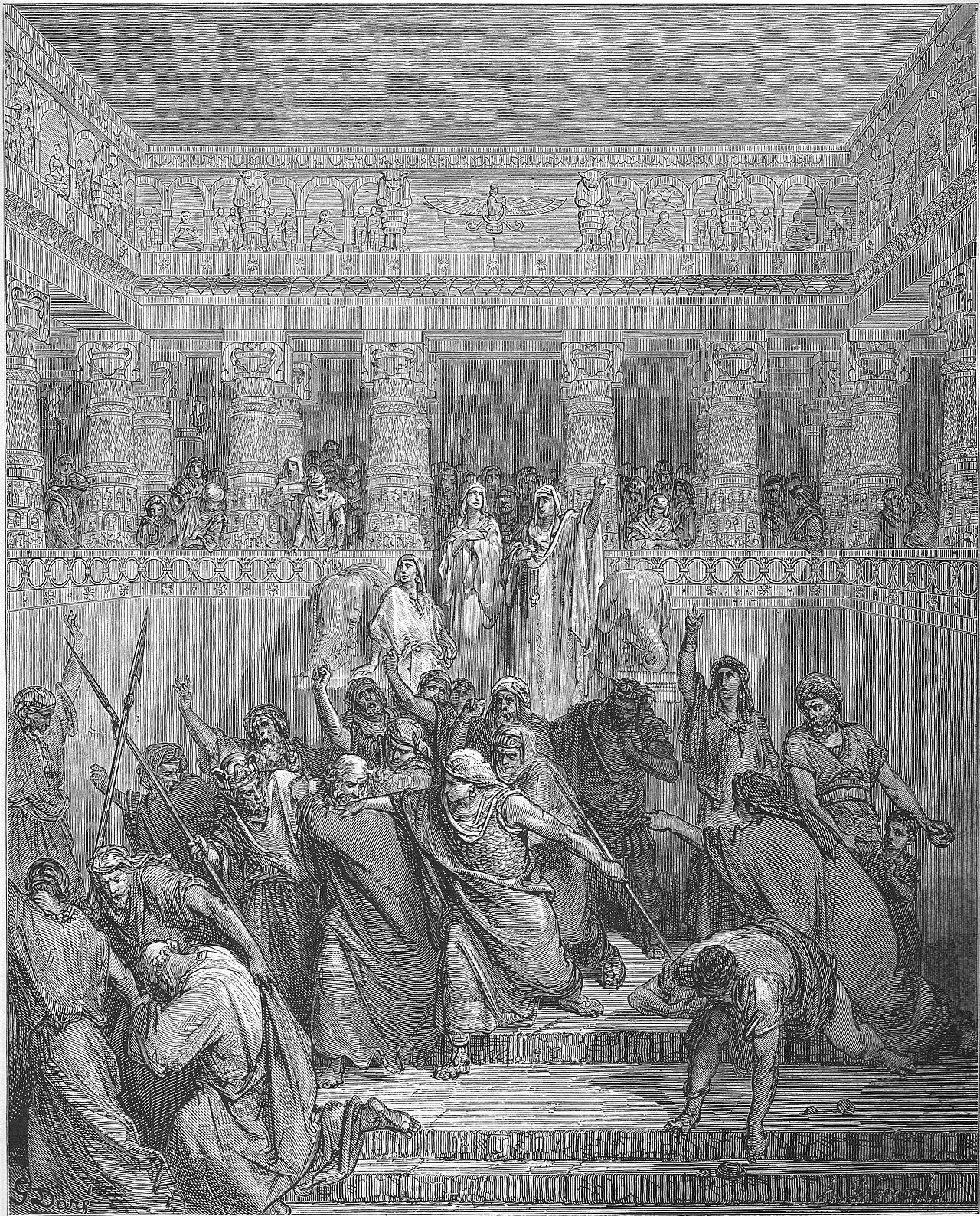
Two elders of Israel — judges, trusted men — corner a beautiful, God-fearing woman alone in her garden and hand her a sentence disguised as a choice: yield to us, or we will swear we caught you with a young man, and you will die. Susanna’s answer is the whole tale in one breath: “It is better for me to fall into your hands, and not do it, than to sin in the sight of the Lord.”She is convicted on their word and led out to die — until a young man named Daniel stops the procession with the one demand no liar survives: separate the witnesses. This page tells the trial whole, opens the famous wordplay at its center honestly — and lands where Susanna herself stood: fearing God above every hand that can kill.
Artemisia Gentileschi, Susanna and the Elders, 1610. Public domain.
Summary
Two judges threaten Susanna with death unless she sins with them, and she chooses death over sin. A young Daniel separates the two liars and questions them apart, exposing their story with one contradiction.
- Two judges corner Susanna and threaten a false charge unless she yields
- Susanna chooses to fall into their hands rather than sin against God, Susanna 22 to 23
- Daniel separates the witnesses and asks each which tree the sin happened under; they answer differently and are exposed
- The tale's puns in Greek are the standard argument that Susanna was composed in Greek, though this page names the counter-position too
- The story points to Matthew 10:28, fearing the one who can destroy soul and body over those who can only kill the body
The Choice, and the Cross-Examination
the tale's two hinges: verbatim
“Then Susanna sighed, and said, I am straitened on every side: for if I do this thing, it is death unto me: and if I do it not I cannot escape your hands. It is better for me to fall into your hands, and not do it, than to sin in the sight of the Lord.”Susanna 22–23 (KJV Apocrypha) — a labeled study resource, not canon
The court believes its judges; Susanna is condemned unheard. And then: “the Lord raised up the holy spirit of a young youth whose name was Daniel” (v. 45), who refuses the verdict and demands the one procedure corrupt witnesses cannot survive — questioning them apart. Asked under which tree the sin happened, one says a mastick tree, the other a holm tree — two trees, one lie, two exposed liars, and the law of false witness (Deut 19:18–19) falls on their own heads. The tale is the ancient world’s classic lesson in cross-examination, and synagogue and church alike have used it to teach exactly that: testimony must be TESTED, because authority can lie.
- 2 judgesone lie, told separately
- v. 23her choice: God over survival
- 1st caseDaniel's, in the Greek ordering
- Deut 19:19the false-witness law lands
Two Trees, Two Puns
the wordplay at the tale's center: the standard datum, named honestly
Mastick and holm: what the Greek is doingthe composition question, both positions
Daniel’s two sentences pun in Greek: under the mastick tree (schinos) the angel will cut you in two (schisei); under the holm oak (prinos) he waits to saw you in two (prisai). Since Julius Africanus pressed the point on Origen in the third century, the puns have been the classic argument that Susanna was composed in Greek rather than translated from Hebrew, the standard datum (Metzger; the APOT introduction). The counter-position is as old as Origen’s reply: a translator can craft puns of his own. This page takes no side; it shows the reader the actual evidence both sides argue from, which is what this shelf is for.
Whom She Feared
where Susanna's choice points
“Do not be afraid of those who kill the body but cannot kill the soul. Instead, fear the One who can destroy both soul and body in hell.” Matthew 10:28 (BSB)
Susanna’s calculus in verse 23 is Matthew 10:28 lived a century or two early: she feared the right Judge more than the two wrong ones, and chose the death men could give over the sin God sees. The tale remains a labeled study resource beside the sixty-six books; its two lessons remain permanently biblical: test every testimony, and fear God more than any court, and its heroine keeps her place among the era’s portraits of a conscience that would not bend.
The Voices on the Trial
with the work named
An Introduction to the Apocrypha (Oxford University Press, 1957)
The standard introduction to the Daniel additions: Susanna's placement (before Daniel 1 in some Greek texts, as Daniel's first case), and the wordplay question this page lays out honestly.
Daniel (Koinonia House commentary)
Marcus Brown's formative teacher on the canonical Daniel: the young man whose God-given discernment this tale delights to show in its first exercise.
Preface to Daniel (c. AD 407)
Public domain. Jerome marked the Greek additions to Daniel with critical signs and reported the church's questions about them: the honest boundary drawn at the church's own scholarly beginning.
The Apocrypha and Pseudepigrapha of the Old Testament, vol. I (Oxford, 1913)
The standard critical edition: the Susanna introduction, its two Greek text-forms, and the famous puns.
Marcus Brown's own commentary leads above all; within a tier, all voices are equal.
Read the Great Books
the works this study is built on
Susanna
a Greek addition to Daniel: a labeled study resource, not canon
The whole trial, sixty-four verses, in MannaFest’s own reader.
READ IT →Daniel 1–2
Scripture: read it in MannaFest’s own reader
The canonical Daniel: the discernment this tale delights to show in its first exercise.
READ IT →The Apocrypha and Pseudepigrapha of the Old Testament, vol. I
R. H. Charles, ed. · 1913
The standard critical edition: Susanna’s two Greek text-forms and the famous puns.
READ IT FREE →Keep studying
On this page