
2 Kings 11:13
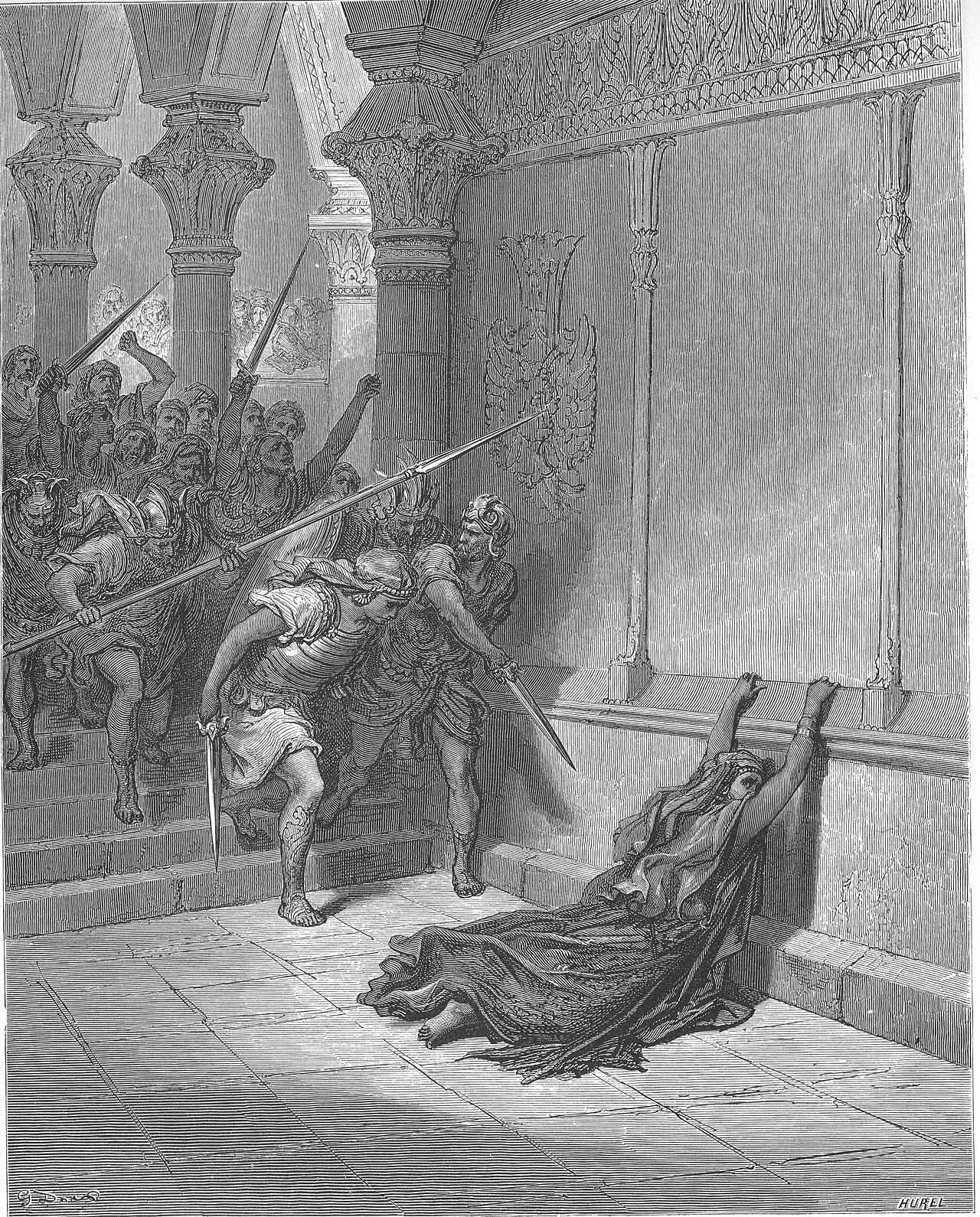
in 2 Kings 11When Athaliah heard the noise from the guards and the people, she went out to the people in the house of the LORD.
BSB
The same verse in ASV and KJV ▾
ASV
And when Athaliah heard the noise of the guard and of the people, she came to the people into the house of Jehovah:
KJV
And when Athaliah heard the noise of the guard and of the people, she came to the people into the temple of the Lord.
⋯
This verse in 2 Kings 11
Commentary
4 notes on this verseIt seems, Athaliah was little regarded, else she would have had intelligence brought her of this daring attempt before with her own ears she heard the noise; had the design been discovered before it was perfected, it might have been quashed, but now it was too late.
This site's exposition
she came to the people
on 2 Kings 11:13-14
Six years of hiddenness end the moment Athaliah hears the noise and comes into her own temple court to find the throne she thought empty occupied by the boy she meant to kill. She sees the king standing by the pillar, the customary coronation station, and rends her clothes with the cry Treason, Treason, the Hebrew word for conspiracy turned back on the one whose own reign began in exactly that conspiracy. Clarke names the Hebrew as kesher, the same root behind the charge.
The record, by era
The Church Fathers1 voice
While these things were happening in the temple, Athaliah, being alarmed by the shouts of the gathering people and by the noise of the crowds, ran to the temple. But while she was trying to restrain the riot with her presence and voice, she was …
The Puritans and the Awakening1 voice
And when Athaliah heard the noise of the guard, and of the people,....
How the passage was read
What the Jewish commentators add
On the verses either side of this one
[Placed] the crown on him and [gave him] the Testimony. The Torah Scroll, as it is written, “And it shall be with him, and he shall read in it all the days of his life.” 17 Devorim:19.
1 more on this passage, in their own words ▾
On the pedestal. That is the king’s platform in the Beis [Hamikdosh] of Adonoy. 20 Alternatively, עַמּוּד merely refers to a location in that area that was set aside for the king.
This section is reception history: how the passage was read and kept in the Jewish tradition. Where a reading parts from an essential of the Christian faith, the section says so at that point.
Texts and citation data: Sefaria; each excerpt follows its version’s licence. 6 further sources are cited on this chapter that carry no English text this site may quote or only restate the verse.
The words behind it
11 Hebrew wordsEvery Hebrew word of this verse in the order it stands, with what it means and the door to its own study. The last column counts the times a word stands in the whole Bible: the rarer the word, the more the places it appears belong together.
| Hebrew | Sound | Meaning | Word study | In the Bible |
|---|---|---|---|---|
| וַתִּשְׁמַ֣ע | vatishma' | and she heard | H8085 → | 1159 times |
| עֲתַלְיָ֔ה | ʾatalyah | Athaliah | H6271 → | 17 times |
| אֶת־ | ʾet- | <obj.> | H853 → | 10935 times |
| ק֥וֹל | kol | [the] sound of | H6963 → | 506 times |
| הָֽרָצִ֖ין | haratzin | the runners | H7323 → | 103 times |
| הָעָ֑ם | haam | the people | H5971 → | 1873 times |
| וַתָּבֹ֥א | vatavo' | and she went | H935 → | 2568 times |
| אֶל־ | ʾel- | to | H413 → | 5510 times |
| הָעָ֖ם | haam | the people | H5971 → | 1873 times |
| בֵּ֥ית | beit | [the] house of | H1004 → | 2046 times |
| יְהוָֽה׃ | yahweh | Yahweh | H3068 → | 6520 times |
וַתִּשְׁמַ֣עand she heard
vatishma'H8085 →1159 times
עֲתַלְיָ֔הAthaliah
ʾatalyahH6271 →17 times
אֶת־<obj.>
ʾet-H853 →10935 times
ק֥וֹל[the] sound of
kolH6963 →506 times
הָֽרָצִ֖יןthe runners
haratzinH7323 →103 times
הָעָ֑םthe people
haamH5971 →1873 times
וַתָּבֹ֥אand she went
vatavo'H935 →2568 times
אֶל־to
ʾel-H413 →5510 times
הָעָ֖םthe people
haamH5971 →1873 times
בֵּ֥ית[the] house of
beitH1004 →2046 times
יְהוָֽה׃Yahweh
yahwehH3068 →6520 times
A shaded row is a word that stands 400 times or fewer in the Bible.
About 2 Kings
Who and where
1 name in this verse with a page on the site.
This page draws on Adam Clarke, Commentary on the Bible; Ephrem the Syrian, ON THE SECOND BOOK OF KINGS 11:13; John Gill, Exposition of the Old Testament (1748-1763) and Matthew Henry, Commentary on the Whole Bible.