
1 Samuel 8:6
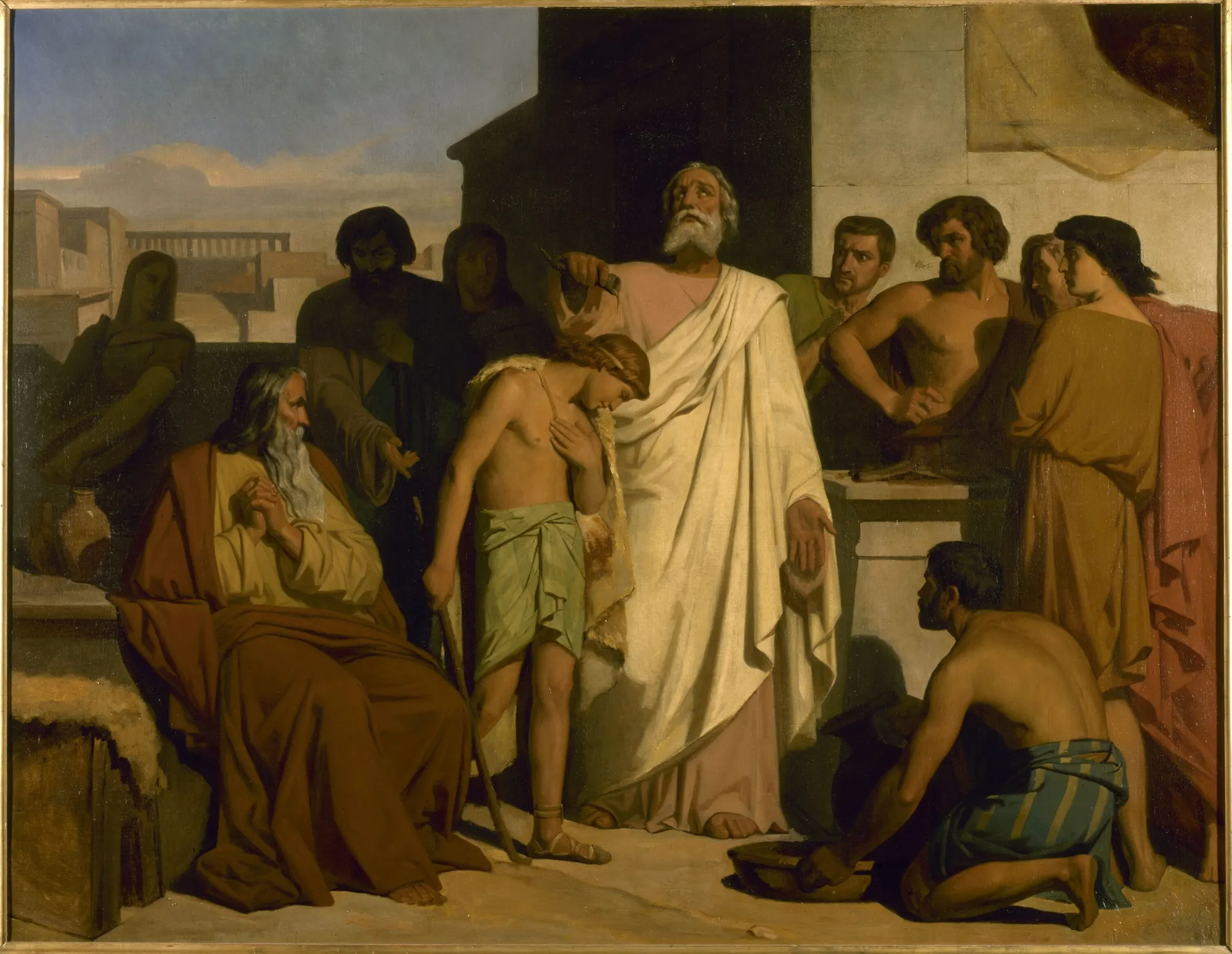
in 1 Samuel 8But when they said, “Give us a king to judge us,” their demand was displeasing in the sight of Samuel; so he prayed to the LORD.
BSB
The same verse in ASV and KJV ▾
ASV
But the thing displeased Samuel, when they said, Give us a king to judge us. And Samuel prayed unto Jehovah.
KJV
But the thing displeased Samuel, when they said, Give us a king to judge us. And Samuel prayed unto the Lord.
⋯
This verse in 1 Samuel 8
Commentary
10 notes on this verseThe thing displeased Samuel - Because he saw that this amounted to a formal renunciation of the Divine government. Samuel prayed unto the Lord - He begged to know his mind in this important business.
This site's exposition
all the elders of Israel gathered together
on 1 Samuel 8:4-6
The elders come to Ramah and ask, “Now appoint a king to judge us like all the other nations”, the words Deuteronomy 17:14 foretold Israel would one day say. The complaint against his sons is real, yet the demand asks for the form every nation around Israel had. Samuel takes it as a personal grievance and prays, and the Lord's answer in verse 7 corrects him.
This site's exposition
But when they said
Samuel answers the elders' demand with prayer. Adam Clarke traces his displeasure to a demand that amounted to a formal rejection of God as king. Albert Barnes hears Samuel's own hurt in it, and the LORD answers that hurt in verse 7 by naming whom the people have rejected.
The record, by era
The Medieval Church2 voices
The speech was displeasing to the eyes of Samuel, etc. The infidelity of the Jews was displeasing before the wise in Christ, who are the eyes of the Church, because in choosing the lowest for the highest, although ignorant, they said to the Lord, "Give …
A commentator
Gregory the DialogistCommentary on 1 Kings, Book 4, Chapter 1 · Written before 604.
proposed
Yet when holy men see that they are despised by their subjects, what displeases them is not so much that they are despised, but that those who despise them do not please God. For by the contempt shown to them, they see that increases are given to their own interior glory; but they groan that their merits are increased by the failings of their subjects, whom they would rather have advance in merits, so that in the eternal reward of merits they might have been able to have with them those over whom they preside.
The Puritans and the Awakening3 voices
But the thing displeased Samuel,....
Samuel was a man much in prayer, and we are encouraged in every thing to make our requests known to God, Phil. iv. When any thing disturbs us, it is our interest, as well as our duty, to show before God our trouble, and he gives us leave to be humbly free with him.
Samuel was a man much in prayer, and we are encouraged in every thing to make our requests known to God, Phil. iv. When any thing disturbs us, it is our interest, as well as our duty, to show before God our trouble, and he gives us leave to be humbly free with him.
2 more voices on this verse
The Nineteenth Century2 voices
The thing displeased Samuel - Because he saw that this amounted to a formal renunciation of the Divine government. Samuel prayed unto the Lord - He begged to know his mind in this important business.
A commentator
Albert Barnes1798–1870
Notes, Explanatory and Practical, on the Old and New Testaments (1832-1869)
proposed
See the margin which implies that the thing spoken of caused anger, indignation, or some revulsion of feeling (see Gen 21:11-12). The answer of the Lord 1Sa 8:7 shows that Samuel’s personal feelings had been hurt. They were soothed by being reminded of the continued ingratitude of the people to God Himself, upon whom, in fact, a greater slight was put by this very request for a king “like all the nations,” than upon Samuel (compare Mat 10:24; Joh 15:18, Joh 15:20). For a comment on this transaction, see Hos 13:9-11; Act 13:21-22.
The words behind it
14 Hebrew wordsEvery Hebrew word of this verse in the order it stands, with what it means and the door to its own study. The last column counts the times a word stands in the whole Bible: the rarer the word, the more the places it appears belong together.
| Hebrew | Sound | Meaning | Word study | In the Bible |
|---|---|---|---|---|
| וַיֵּ֤רַע | vaiyera' | and it was displeasing | H7489 → | 107 times |
| הַדָּבָר֙ | hadavar | the matter | H1697 → | 1440 times |
| בְּעֵינֵ֣י | beeinei | in [the] eyes of | H5869 → | 887 times |
| שְׁמוּאֵ֔ל | shemuel | Samuel | H8050 → | 141 times |
| כַּאֲשֶׁ֣ר | kaasher | just when | H834 → | 5497 times |
| אָמְר֔וּ | ʾameru | they said | H559 → | 5305 times |
| תְּנָה־ | tenah- | give ! | H5414 → | 2011 times |
| לָּ֥נוּ | lanu | to <the> us | ||
| מֶ֖לֶךְ | melekh | a king | H4428 → | 2525 times |
| לְשָׁפְטֵ֑נוּ | leshafetenu | to judge us | H8199 → | 202 times |
| וַיִּתְפַּלֵּ֥ל | vaiyitpalel | and he prayed | H6419 → | 84 times |
| שְׁמוּאֵ֖ל | shemuel | Samuel | H8050 → | 141 times |
| אֶל־ | ʾel- | to | H413 → | 5510 times |
| יְהוָֽה׃ פ | yahweh | Yahweh | H3068 → | 6520 times |
וַיֵּ֤רַעand it was displeasing
vaiyera'H7489 →107 times
הַדָּבָר֙the matter
hadavarH1697 →1440 times
בְּעֵינֵ֣יin [the] eyes of
beeineiH5869 →887 times
שְׁמוּאֵ֔לSamuel
shemuelH8050 →141 times
כַּאֲשֶׁ֣רjust when
kaasherH834 →5497 times
אָמְר֔וּthey said
ʾameruH559 →5305 times
תְּנָה־give !
tenah-H5414 →2011 times
לָּ֥נוּto <the> us
lanu
מֶ֖לֶךְa king
melekhH4428 →2525 times
לְשָׁפְטֵ֑נוּto judge us
leshafetenuH8199 →202 times
וַיִּתְפַּלֵּ֥לand he prayed
vaiyitpalelH6419 →84 times
שְׁמוּאֵ֖לSamuel
shemuelH8050 →141 times
אֶל־to
ʾel-H413 →5510 times
יְהוָֽה׃ פYahweh
yahwehH3068 →6520 times
A shaded row is a word that stands 400 times or fewer in the Bible.
The walk
8 stopsEach card is a verse this one points to, and under it the verses that one points to in turn. Where several paths arrive at the same place, that place is listed first: the text keeps returning to it.
Through
James 1:5Now if any of you lacks wisdom, he should ask God, who gives generously to all without finding fault, and it will be given to him.
it leads to
- Proverbs 2:3–6
if you truly call out to insight and lift your voice to understanding,
- John 15:7
If you remain in Me and My words remain in you, ask whatever you wish, and it will be done for you.
- Jeremiah 29:12–13
Then you will call upon Me and come and pray to Me, and I will listen to you.
- Proverbs 3:5–7
Trust in the LORD with all your heart, and lean not on your own understanding;
- 1 John 5:14–15
And this is the confidence that we have before Him: If we ask anything according to His will, He hears us.
- Proverbs 2:3–6
Through
1 Samuel 15:11“I regret that I have made Saul king, for he has turned away from following Me and has not carried out My instructions.” And Samuel was distressed and cried out to the LORD all…
it leads to
- Genesis 6:6
And the LORD regretted that He had made man on the earth, and He was grieved in His heart.
- 1 Samuel 13:13
“You have acted foolishly,” Samuel declared. “You have not kept the command that the LORD your God gave you; if you had, the LORD would have established your kingdom over Israel for all time.
- Genesis 6:6
Through
Numbers 16:46Moses said to Aaron, “Take your censer, place fire from the altar in it, and add incense. Go quickly to the congregation and make atonement for them, because wrath has come out from the…
it leads to
- Numbers 8:19
And I have given the Levites as a gift to Aaron and his sons from among the Israelites, to perform the service for the Israelites at the Tent of Meeting and to make atonement…
- Numbers 8:19
Where this verse is studied
On this page
Studies1
About 1 Samuel
Who and where
1 name in this verse with a page on the site.
This page draws on Adam Clarke, Commentary on the Bible; Albert Barnes, Notes, Explanatory and Practical, on the Old and New Testaments (1832-1869); Bede, Commentary on Samuel; Gregory the Dialogist, Commentary on 1 Kings, Book 4, Chapter 1; John Gill, Exposition of the Old Testament (1748-1763) and Matthew Henry, Commentary on the Whole Bible.