
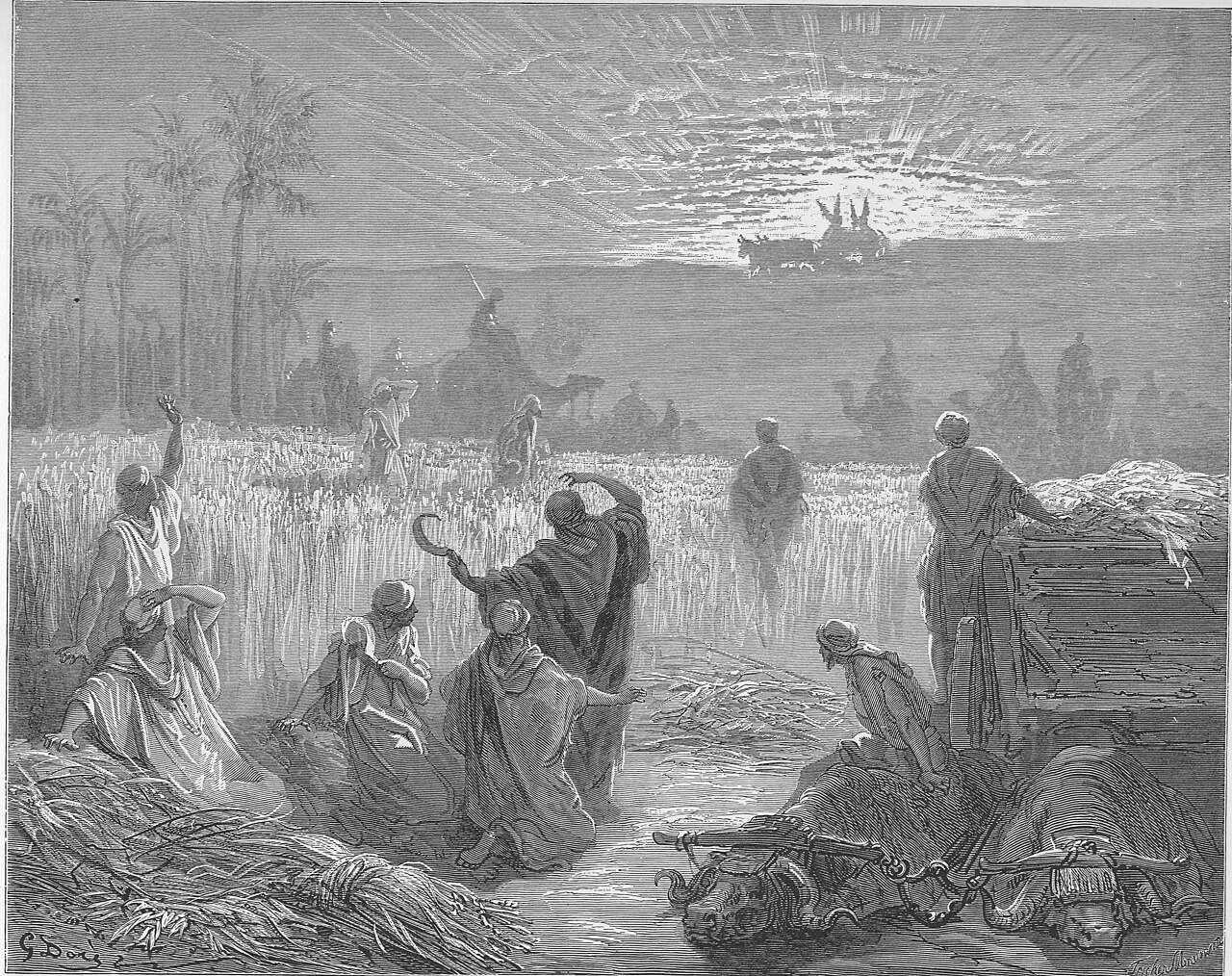
1 Samuel 6:9
in 1 Samuel 6but keep watching it. If it goes up the road to its homeland, toward Beth-shemesh, it is the LORD who has brought on us this great disaster. But if it does not, then we will know that it was not His hand that punished us and that it happened by chance.”
BSB
The same verse in ASV and KJV ▾
ASV
And see; if it goeth up by the way of its own border to Beth-shemesh, then he hath done us this great evil: but if not, then we shall know that it is not his hand that smote us; it was a chance that happened to us.
KJV
And see, if it goeth up by the way of his own coast to Beth–shemesh, then he hath done us this great evil: but if not, then we shall know that it is not his hand that smote us; it was a chance that happened to us.
⋯
This verse in 1 Samuel 6
Commentary
4 notes on this verseA commentator
Albert Barnes1798–1870
Notes, Explanatory and Practical, on the Old and New Testaments (1832-1869)
Bethshemesh was the first Israelite town they would come to, being on the border of Judah. (See the marginal reference.)
This site's exposition
make a new cart
on 1 Samuel 6:7-9
A new cart with two milch kine that have never worn a yoke is the priests' test, and the same two words return in Scripture only twice more, both times for David's own first attempt to bring the ark up in 2 Samuel six, verse three. The choice is not reverence but a controlled trial: cows fresh from calving would by every natural instinct turn back for their young rather than hold a strange road alone. Numbers four and seven had assigned the ark to Kohathite shoulders and forbidden the touch that later killed Uzzah, and the men who devise this cart do not know it; David will copy their expedient before he learns the same lesson.
The record, by era
The Puritans and the Awakening1 voice
His own coast - Or Border, that is, the way that leadeth to his coast, or border, namely, the country to which it belongs. Then he, &c. - Which they might well conclude, if such heifers should against their common use, and natural instinct, go into a strange path, and regularly and constantly proceed in it, without any man's conduct.
The Nineteenth Century1 voice
A commentator
Jamieson, Fausset & Brown1802–1910
Commentary Critical and Explanatory on the Whole Bible (1871)
on 1 Samuel 6:9-12
Beth-shemesh--that is, "house of the sun," now Ain Shems [ROBINSON], a city of priests in Judah, in the southeast border of Dan, lying in a beautiful and extensive valley.
The words behind it
26 Hebrew wordsEvery Hebrew word of this verse in the order it stands, with what it means and the door to its own study. The last column counts the times a word stands in the whole Bible: the rarer the word, the more the places it appears belong together.
| Hebrew | Sound | Meaning | Word study | In the Bible |
|---|---|---|---|---|
| וּרְאִיתֶ֗ם | ureitem | and you will see | H7200 → | 1300 times |
| אִם־ | ʾim- | if | H518 → | 1069 times |
| דֶּ֨רֶךְ | derekh | [the] way of | H1870 → | 707 times |
| גְּבוּל֤וֹ | gevulo | own territory its | H1366 → | 240 times |
| יַֽעֲלֶה֙ | yaaleh | it will go up | H5927 → | 890 times |
| בֵּ֣ית | beit | Beth | H1053 → | 42 times |
| שֶׁ֔מֶשׁ | shemesh | Shemesh | H1053 → | 42 times |
| ה֚וּא | hu' | he | H1931 → | 1879 times |
| עָ֣שָׂה | ʾasah | he has done | H6213 → | 2628 times |
| לָ֔נוּ | lanu | to <the> us | ||
| אֶת־ | ʾet- | <obj.> | H853 → | 10935 times |
| הָרָעָ֥ה | haraah | the harm | H7451 → | 662 times |
| הַגְּדוֹלָ֖ה | hagedolah | <the> great | H1419 → | 526 times |
| הַזֹּ֑את | hazot | <the> this | H2063 → | 603 times |
| וְאִם־ | veim- | and if | H518 → | 1069 times |
| לֹ֗א | lo' | not | H3808 → | 5168 times |
| וְיָדַ֙עְנוּ֙ | veyada'nu | and we will know | H3045 → | 945 times |
| כִּ֣י | ki | that | H3588 → | 4482 times |
| לֹ֤א | lo' | not | H3808 → | 5168 times |
| יָדוֹ֙ | yado | hand his | H3027 → | 1618 times |
| נָ֣גְעָה | nageah | it touched | H5060 → | 150 times |
| בָּ֔נוּ | banu | <in> <the> us | ||
| מִקְרֶ֥ה | mikreh | chance | H4745 → | |
| ה֖וּא | hu' | it | H1931 → | 1879 times |
| הָ֥יָה | hayah | it happened | H1961 → | 3559 times |
| לָֽנוּ׃ | lanu | to <the> us |
וּרְאִיתֶ֗םand you will see
ureitemH7200 →1300 times
אִם־if
ʾim-H518 →1069 times
דֶּ֨רֶךְ[the] way of
derekhH1870 →707 times
גְּבוּל֤וֹown territory its
gevuloH1366 →240 times
יַֽעֲלֶה֙it will go up
yaalehH5927 →890 times
בֵּ֣יתBeth
beitH1053 →42 times
שֶׁ֔מֶשׁShemesh
shemeshH1053 →42 times
ה֚וּאhe
hu'H1931 →1879 times
עָ֣שָׂהhe has done
ʾasahH6213 →2628 times
לָ֔נוּto <the> us
lanu
אֶת־<obj.>
ʾet-H853 →10935 times
הָרָעָ֥הthe harm
haraahH7451 →662 times
הַגְּדוֹלָ֖ה<the> great
hagedolahH1419 →526 times
הַזֹּ֑את<the> this
hazotH2063 →603 times
וְאִם־and if
veim-H518 →1069 times
לֹ֗אnot
lo'H3808 →5168 times
וְיָדַ֙עְנוּ֙and we will know
veyada'nuH3045 →945 times
כִּ֣יthat
kiH3588 →4482 times
לֹ֤אnot
lo'H3808 →5168 times
יָדוֹ֙hand his
yadoH3027 →1618 times
נָ֣גְעָהit touched
nageahH5060 →150 times
בָּ֔נוּ<in> <the> us
banu
מִקְרֶ֥הchance
mikrehH4745 →
ה֖וּאit
hu'H1931 →1879 times
הָ֥יָהit happened
hayahH1961 →3559 times
לָֽנוּ׃to <the> us
lanu
A shaded row is a word that stands 400 times or fewer in the Bible.
The walk
8 stopsEach card is a verse this one points to, and under it the verses that one points to in turn. Where several paths arrive at the same place, that place is listed first: the text keeps returning to it.
Through
Ecclesiastes 9:11I saw something else under the sun: The race is not to the swift, nor the battle to the strong; neither is the bread to the wise, nor the wealth to the intelligent, nor…
it leads to
- Jeremiah 9:23
This is what the LORD says: “Let not the wise man boast in his wisdom, nor the strong man in his strength, nor the wealthy man in his riches.
- Proverbs 21:30–31
There is no wisdom, no understanding, no counsel that can prevail against the LORD.
- Lamentations 3:37–38
Who has spoken and it came to pass, unless the Lord has ordained it?
- Job 5:11–14
He sets the lowly on high, so that mourners are lifted to safety.
- Ecclesiastes 3:17
I said in my heart, “God will judge the righteous and the wicked, since there is a time for every activity and every deed.”
- Jeremiah 9:23
Through
Joshua 15:10The border curled westward from Baalah to Mount Seir, ran along the northern slope of Mount Jearim (that is, Chesalon), went down to Beth-shemesh, and crossed to Timnah.
it leads to
- Judges 14:1
One day Samson went down to Timnah, where he saw a young Philistine woman.
- Judges 14:1
Through
1 Samuel 6:3They replied, “If you return the ark of the God of Israel, do not send it away empty, but by all means return it to Him with a guilt offering. Then you will be…
it leads to
- Deuteronomy 16:16
Three times a year all your men are to appear before the LORD your God in the place He will choose: at the Feast of Unleavened Bread, the Feast of Weeks, and the Feast…
- Deuteronomy 16:16
Through
2 Samuel 1:6“I happened to be on Mount Gilboa,” he replied, “and there was Saul, leaning on his spear, with the chariots and the cavalry closing in on him.
it leads to
- 1 Samuel 28:4
The Philistines came together and camped at Shunem, while Saul gathered all Israel and camped at Gilboa.
- 1 Samuel 28:4
Where this verse is studied
On this page
Studies1
About 1 Samuel
This page draws on Albert Barnes, Notes, Explanatory and Practical, on the Old and New Testaments (1832-1869); Albert Barnes, Notes on the Old Testament; Jamieson, Fausset & Brown, Commentary Critical and Explanatory on the Whole Bible and John Wesley, Explanatory Notes upon the Old Testament.