
1 Samuel 28:12
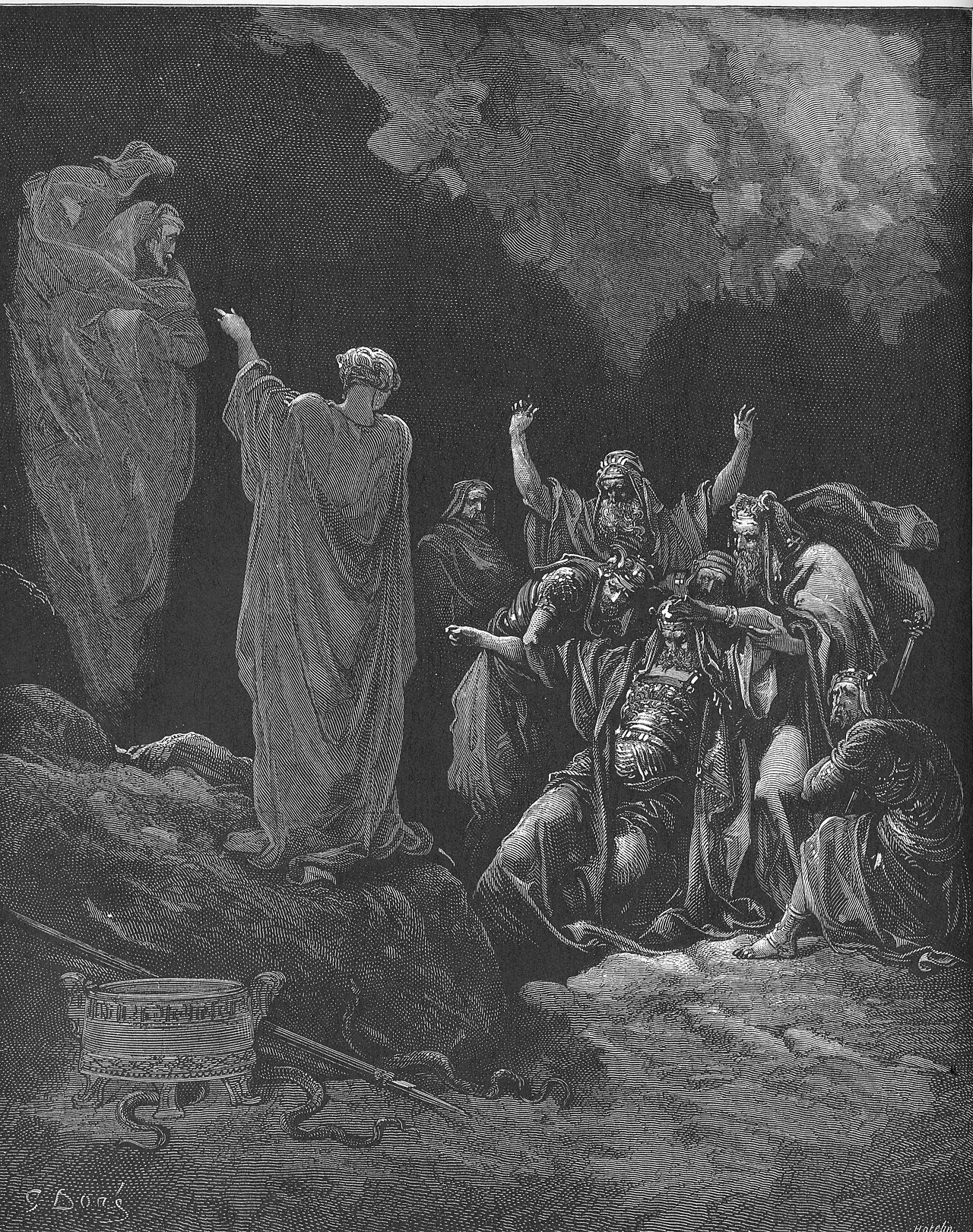
in 1 Samuel 28But when the woman saw Samuel, she cried out in a loud voice and said to Saul, “Why have you deceived me? You are Saul!”
BSB
The same verse in ASV and KJV ▾
ASV
And when the woman saw Samuel, she cried with a loud voice; and the woman spake to Saul, saying, Why hast thou deceived me? for thou art Saul.
KJV
And when the woman saw Samuel, she cried with a loud voice: and the woman spake to Saul, saying, Why hast thou deceived me? for thou art Saul.
⋯
This verse in 1 Samuel 28
Commentary
9 notes on this verseWhen the woman saw Samuel - That Samuel did appear on this occasion, is most evident from the text; nor can this be denied from any legitimate mode of interpretation: and it is as evident that he was neither raised by the power of the devil nor the incantations of the witch, for the appearances which took place at this time were such as she was wholly unacquainted with.
This site's exposition
Whom shall I bring up for you
on 1 Samuel 28:11-14
Wesley, Clarke and Barnes read her terror as a sign that what appeared was nothing her art was used to raising. She describes an old man wearing a robe. Samuel wore a robe when Saul tore it at 15:27 and heard that the kingdom was torn from him.
This site's exposition
when the woman saw Samuel, she cried out
How she knew her client was Saul is left unstated. Albert Barnes suggests she reasoned that Samuel would answer the call of no one less than the king. Matthew Henry thinks her familiar spirit told her, and John Wesley stresses that the text says she saw Samuel.
The record, by era
The Puritans and the Awakening4 voices
Saw Samuel - The words are express, the woman saw Samuel, instead of the spirit whom she expected to see, God ordering it so for his own glory. She cried with a loud voice - Terrified and astonished, and thence easily conjectured, whom she had been talking with.
It has been said of the books of some of the popish confessors that, by their descriptions of sin, they have taught men to commit it; but the scripture conceals sinful art, that we may be simple concerning evil, Rom. xvi. The witch, upon sight of the apparition, was aware that her client was Saul, her familiar spirit, it is likely, informing her of it (
quarantine:debris (2026-07-29) — unbalanced-parens
And when the woman saw Samuel,....
Had she believed that it was really Samuel whom she saw, she would have had more reason to be afraid of him, who was a good prophet, than of Saul, who was a wicked king.
The Nineteenth Century1 voice
A commentator
Jamieson, Fausset & Brown1802–1910
Commentary Critical and Explanatory on the Whole Bible (1871)
On the other hand, many eminent writers (considering that the apparition came before her arts were put in practice; that she herself was surprised and alarmed; that the prediction of Saul's own death and the defeat of his forces was confidently made), are of opinion that Samuel really appeared.
1 more voice on this verse
The Nineteenth Century1 voice
A commentator
Albert Barnes1798–1870
Notes, Explanatory and Practical, on the Old and New Testaments (1832-1869)
proposed
It is manifest both that the apparition of Samuel was real, and also that the woman was utterly unprepared for it. Why hast thou deceived me ... - She perhaps inferred that Samuel would have answered the call of none inferior to the king. Or it may be the presence of an inhabitant of the world of spirits brought a sudden illumination to her mind.
How the passage was read
What the Jewish commentators add
She screamed loudly. For she saw him ascending not in the usual manner. Radak suggests that the moment the woman saw the manner in which Shmuel came up, she realized that the man who had come to her was Shaul, and that is why she screamed.
This section is reception history: how the passage was read and kept in the Jewish tradition. Where a reading parts from an essential of the Christian faith, the section says so at that point.
Texts and citation data: Sefaria; each excerpt follows its version’s licence. 5 further sources are cited on this chapter that carry no English text this site may quote or only restate the verse.
The words behind it
16 Hebrew wordsEvery Hebrew word of this verse in the order it stands, with what it means and the door to its own study. The last column counts the times a word stands in the whole Bible: the rarer the word, the more the places it appears belong together.
| Hebrew | Sound | Meaning | Word study | In the Bible |
|---|---|---|---|---|
| וַתֵּ֤רֶא | vatere' | and she saw | H7200 → | 1300 times |
| הָֽאִשָּׁה֙ | haishah | the woman | H802 → | 781 times |
| אֶת־ | ʾet- | <obj.> | H853 → | 10935 times |
| שְׁמוּאֵ֔ל | shemuel | Samuel | H8050 → | 141 times |
| וַתִּזְעַ֖ק | vatizak | and she cried out | H2199 → | 73 times |
| בְּק֣וֹל | bekol | with a voice | H6963 → | 506 times |
| גָּד֑וֹל | gadol | great | H1419 → | 526 times |
| וַתֹּאמֶר֩ | vatomer | and she said | H559 → | 5305 times |
| הָאִשָּׁ֨ה | haishah | the woman | H802 → | 781 times |
| אֶל־ | ʾel- | to | H413 → | 5510 times |
| שָׁא֧וּל | shaul | Saul | H7586 → | 402 times |
| לֵאמֹ֛ר | lemor | <to> saying | H559 → | 5305 times |
| לָ֥מָּה | lamah | <to> why? | H4100 → | 752 times |
| רִמִּיתָ֖נִי | rimitani | have you deceived me | H7411 → | |
| וְאַתָּ֥ה | veatah | and you | H859 → | 1094 times |
| שָׁאֽוּל׃ | shaul | [are] Saul | H7586 → | 402 times |
וַתֵּ֤רֶאand she saw
vatere'H7200 →1300 times
הָֽאִשָּׁה֙the woman
haishahH802 →781 times
אֶת־<obj.>
ʾet-H853 →10935 times
שְׁמוּאֵ֔לSamuel
shemuelH8050 →141 times
וַתִּזְעַ֖קand she cried out
vatizakH2199 →73 times
בְּק֣וֹלwith a voice
bekolH6963 →506 times
גָּד֑וֹלgreat
gadolH1419 →526 times
וַתֹּאמֶר֩and she said
vatomerH559 →5305 times
הָאִשָּׁ֨הthe woman
haishahH802 →781 times
אֶל־to
ʾel-H413 →5510 times
שָׁא֧וּלSaul
shaulH7586 →402 times
לֵאמֹ֛ר<to> saying
lemorH559 →5305 times
לָ֥מָּה<to> why?
lamahH4100 →752 times
רִמִּיתָ֖נִיhave you deceived me
rimitaniH7411 →
וְאַתָּ֥הand you
veatahH859 →1094 times
שָׁאֽוּל׃[are] Saul
shaulH7586 →402 times
A shaded row is a word that stands 400 times or fewer in the Bible.
The walk
8 stopsEach card is a verse this one points to, and under it the verses that one points to in turn. Where several paths arrive at the same place, that place is listed first: the text keeps returning to it.
Through
1 Samuel 28:3Now by this time Samuel had died, and all Israel had mourned for him and buried him in Ramah, his own city. And Saul had removed the mediums and spiritists from the land.
it leads to
- Leviticus 19:31
You must not turn to mediums or spiritists; do not seek them out, or you will be defiled by them. I am the LORD your God.
- Leviticus 20:27
A man or a woman who is a medium or spiritist must surely be put to death. They shall be stoned; their blood is upon them.’”
- 1 Samuel 25:1
When Samuel died, all Israel gathered to mourn for him; and they buried him at his home in Ramah. Then David set out and went down to the Wilderness of Paran.
- Exodus 22:18
You must not allow a sorceress to live.
- Deuteronomy 18:10–11
Let no one be found among you who sacrifices his son or daughter in the fire, practices divination or conjury, interprets omens, practices sorcery,
- Leviticus 19:31
Through
1 Kings 14:5But the LORD had said to Ahijah, “Behold, the wife of Jeroboam is coming to ask you about her son, for he is ill. You are to say such and such to her, because…
it leads to
- Psalms 139:1–4
O LORD, You have searched me and known me.
- 2 Kings 6:8–12
Now the king of Aram was at war against Israel. After consulting with his servants, he said, “My camp will be in such and such a place.”
- Proverbs 21:30
There is no wisdom, no understanding, no counsel that can prevail against the LORD.
- Psalms 139:1–4
Where this verse is studied
On this page
Studies1
About 1 Samuel
Who and where
2 names in this verse with a page on the site.
- PersonJudges to monarchySamuelAsked of God by Hannah and lent to the LORD at Shiloh; the last judge and first of the prophets after Moses, who anointed both Sau…
- PersonUnited monarchySaulIsrael's first king, head and shoulders above the people; began in humility, ended in rejection — sparing what God devoted, consul…
This page draws on Adam Clarke, Commentary on the Bible; Albert Barnes, Notes on the Old Testament; Albert Barnes, Notes, Explanatory and Practical, on the Old and New Testaments (1832-1869); Jamieson, Fausset & Brown, Commentary Critical and Explanatory on the Whole Bible; John Gill, Exposition of the Old Testament (1748-1763); John Wesley, Explanatory Notes upon the Old Testament and Matthew Henry, Commentary on the Whole Bible.