
1 Samuel 21:5
in 1 Samuel 21David answered, “Women have indeed been kept from us, as is usual when I set out. And the equipment of the young men is holy, as it is even on common missions, and all the more at this time.”
BSB
The same verse in ASV and KJV ▾
ASV
And David answered the priest, and said unto him, Of a truth women have been kept from us about these three days; when I came out, the vessels of the young men were holy, though it was but a common journey; how much more then to-day shall their vessels be holy?
KJV
And David answered the priest, and said unto him, Of a truth women have been kept from us about these three days, since I came out, and the vessels of the young men are holy, and the bread is in a manner common, yea, though it were sanctified this day in the vessel.
⋯
This verse in 1 Samuel 21
Commentary
8 notes on this verseEven if they accuse, yet Christ excuses, and he makes the souls that he wishes, that follow him, similar to David, who ate the loaves of proposition outside of the law—for even then he foresaw in his mind the prophetic mysteries of a new grace.
This site's exposition
Women have indeed been kept from us
on 1 Samuel 21:5-6
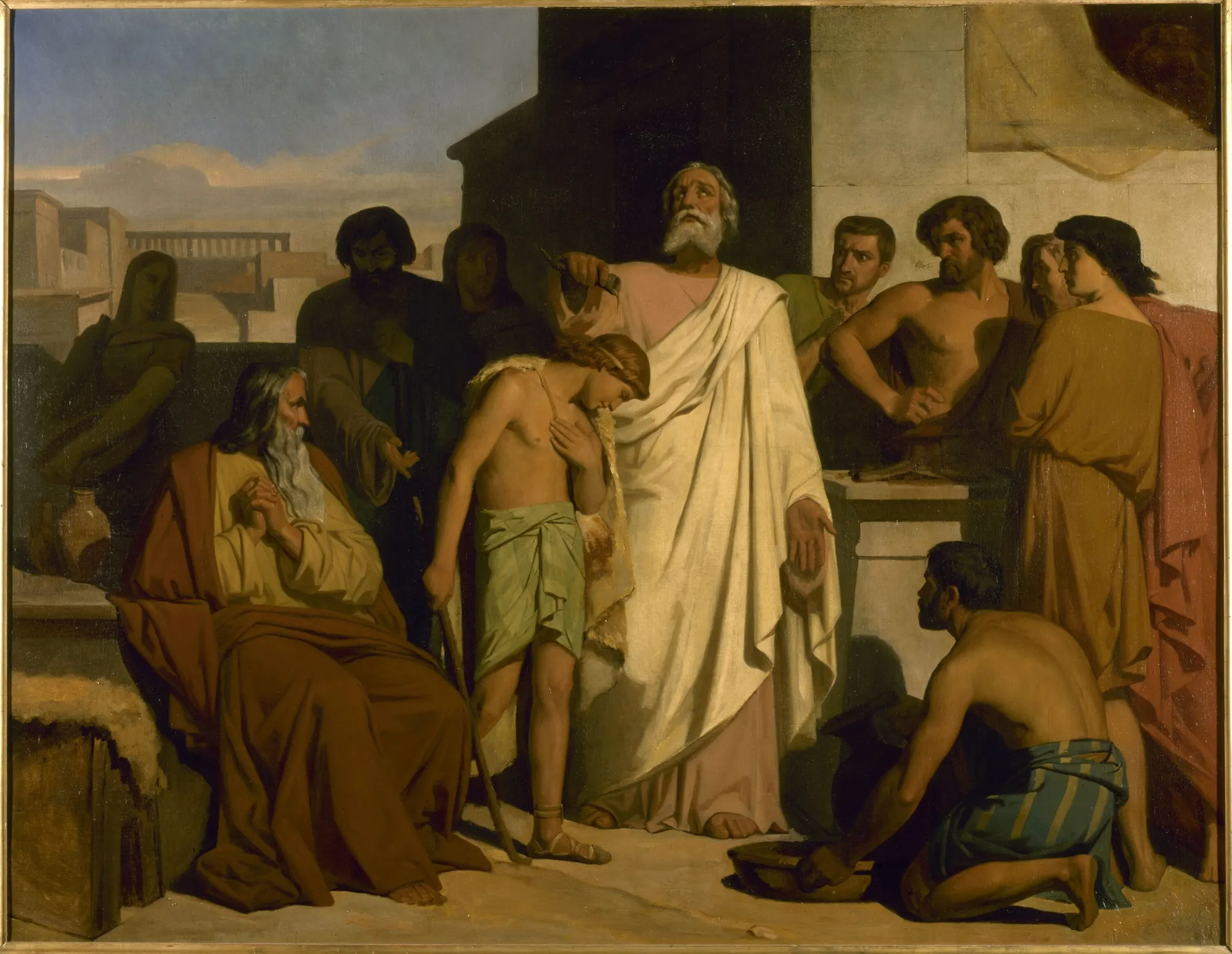
David answers that his men have been kept from women and that "the equipment of the young men is holy," and the priest gives him "the Bread of the Presence" just replaced with hot bread. This bread was lawful only for the priests under Leviticus 24:9. Jesus cites this episode at Matthew 12:3 to 4, arguing from David’s case that mercy outweighs the ceremonial law in real need.
The record, by era
The Church Fathers1 voice
When the disciples had been hungry on the sabbath and had plucked some ears [of grain] and rubbed them in their hands, they violated the holy day by so preparing their food. Yet Christ excuses them and even became their accomplice in breaking the sabbath. … For from the Creator's Scripture and from the purpose of Christ there is derived a vivid precedent from David's example when he went into the temple on the sabbath and provided food by boldly breaking up the show bread. Even he remembered that this privilege (the dispensation from fasting) was allowed on the sabbath from the very beginning, from when the sabbath itself was instituted. For although the Creator had forbidden that the manna should be gathered for two days, he permitted it on only one occasion—the day before the sabbath—so that the previous day's provision of food might free them from fasting on the following sabbath. Therefore the Lord had good reason for pursuing the same principle in the "annulling" of the sabbath (since that is the word which people will use). He had good reason, too, for expressing the Creator's will, when he bestowed the privilege of not fasting on the sabbath. In short, might he have—right then and there—put an end not only to the sabbath but to the Creator himself if he had commanded his disciples to fast on the sabbath, as this would have been contrary to the intention of the Scripture and of the Creator's will. But is he alien from the Creator because he did not directly defend his disciples but excuses them? Or because he interposes human need, as if deprecating censure? Or because he maintains the honor of the sabbath as a day which is to be free from gloom rather than from work? Or because he puts David and his companions on a level with his own disciples in their fault and their validation? Or because he is pleased to endorse the Creator's indulgence? […]
The Medieval Church1 voice
And David answered the priest, and said to him: Indeed, if it concerns women, etc. He answered those sending forth the apostles to teach the nations: What God has purified, do not call common (Acts X). For the Church restrained itself with my present help …
The Puritans and the Awakening2 voices
Vessels - That is, Either, 1. Their garments, or other utensils for their journey. The bread - Hebrew. and this bread; is in a manner common: that is, considering the time, and our necessity, this maybe used in a manner, like common bread.
And David answered the priest, and said unto him,....
The Nineteenth Century1 voice
A commentator
Jamieson, Fausset & Brown1802–1910
Commentary Critical and Explanatory on the Whole Bible (1871)
proposed
It is eaten by the priests, and may also, in our circumstances, be eaten by us. yea, though it were sanctified this day in the vessel--that is, though the hallowed bread had been but newly placed on the vessel, the ritual ordinance would have to yield to the great law of necessity and mercy (see on Mt 12:3; also see Mr 2:25;
quarantine:debris (2026-07-29) — unbalanced-parens
1 more voice on this verse
The Nineteenth Century1 voice
A commentator
Albert Barnes1798–1870
Notes, Explanatory and Practical, on the Old and New Testaments (1832-1869)
proposed
The vessels of the young men ... - i. e., their clothes Deu 22:5 or wallets (marginal reference), or other articles which might be Levitically unclean and need cleansing (Lev 13:58; Exo 19:10, etc.; Mar 7:4), as well as the person. And the bread ... - The meaning is; “Though it is treating it like common bread to give it to me and my young men, there is fresh showbread baked and put on the table in place of what you give us;” the day being Friday. as is indicated in the verse following.
The words behind it
26 Hebrew wordsEvery Hebrew word of this verse in the order it stands, with what it means and the door to its own study. The last column counts the times a word stands in the whole Bible: the rarer the word, the more the places it appears belong together.
| Hebrew | Sound | Meaning | Word study | In the Bible |
|---|---|---|---|---|
| וַיַּעַן֩ | vaiyaan | and he answered | H6030 → | 331 times |
| דָּוִ֨ד | david | David | H1732 → | 999 times |
| אֶת־ | ʾet- | <obj.> | H853 → | 10935 times |
| הַכֹּהֵ֜ן | hakohen | the priest | H3548 → | 750 times |
| וַיֹּ֣אמֶר | vaiyomer | and he said | H559 → | 5305 times |
| ל֗וֹ | lo | to <the> him | ||
| כִּ֣י | ki | that | H3588 → | 4482 times |
| אִם־ | ʾim- | except | H518 → | 1069 times |
| אִשָּׁ֤ה | ʾishah | woman | H802 → | 781 times |
| עֲצֻֽרָה־ | ʾatzurah- | [is] withheld | H6113 → | 47 times |
| לָ֙נוּ֙ | lanu | to <the> us | ||
| כִּתְמ֣וֹל | kitmol | as yesterday | H8543 → | |
| שִׁלְשֹׁ֔ם | shilshom | three days ago | H8032 → | 24 times |
| בְּצֵאתִ֕י | betzeti | when go out I | H3318 → | 1067 times |
| וַיִּהְי֥וּ | vaiyihyu | and they were | H1961 → | 3559 times |
| כְלֵֽי־ | khelei- | [the] vessels of | H3627 → | 325 times |
| הַנְּעָרִ֖ים | hanearim | the young men | H5288 → | 239 times |
| קֹ֑דֶשׁ | kodesh | holiness | H6944 → | 469 times |
| וְהוּא֙ | vehu' | and it | H1931 → | 1879 times |
| דֶּ֣רֶךְ | derekh | [is] a journey of | H1870 → | 707 times |
| חֹ֔ל | chol | profaneness | H2455 → | |
| וְאַ֕ף | veaf | and indeed? | H637 → | 134 times |
| כִּ֥י | ki | for | H3588 → | 4482 times |
| הַיּ֖וֹם | haiyom | this day | H3117 → | 2304 times |
| יִקְדַּ֥שׁ | yikdash | it is holy | H6942 → | 171 times |
| בַּכֶּֽלִי׃ | bakeli | in the vessel | H3627 → | 325 times |
וַיַּעַן֩and he answered
vaiyaanH6030 →331 times
דָּוִ֨דDavid
davidH1732 →999 times
אֶת־<obj.>
ʾet-H853 →10935 times
הַכֹּהֵ֜ןthe priest
hakohenH3548 →750 times
וַיֹּ֣אמֶרand he said
vaiyomerH559 →5305 times
ל֗וֹto <the> him
lo
כִּ֣יthat
kiH3588 →4482 times
אִם־except
ʾim-H518 →1069 times
אִשָּׁ֤הwoman
ʾishahH802 →781 times
עֲצֻֽרָה־[is] withheld
ʾatzurah-H6113 →47 times
לָ֙נוּ֙to <the> us
lanu
כִּתְמ֣וֹלas yesterday
kitmolH8543 →
שִׁלְשֹׁ֔םthree days ago
shilshomH8032 →24 times
בְּצֵאתִ֕יwhen go out I
betzetiH3318 →1067 times
וַיִּהְי֥וּand they were
vaiyihyuH1961 →3559 times
כְלֵֽי־[the] vessels of
khelei-H3627 →325 times
הַנְּעָרִ֖יםthe young men
hanearimH5288 →239 times
קֹ֑דֶשׁholiness
kodeshH6944 →469 times
וְהוּא֙and it
vehu'H1931 →1879 times
דֶּ֣רֶךְ[is] a journey of
derekhH1870 →707 times
חֹ֔לprofaneness
cholH2455 →
וְאַ֕ףand indeed?
veafH637 →134 times
כִּ֥יfor
kiH3588 →4482 times
הַיּ֖וֹםthis day
haiyomH3117 →2304 times
יִקְדַּ֥שׁit is holy
yikdashH6942 →171 times
בַּכֶּֽלִי׃in the vessel
bakeliH3627 →325 times
A shaded row is a word that stands 400 times or fewer in the Bible.
The walk
8 stopsEach card is a verse this one points to, and under it the verses that one points to in turn. Where several paths arrive at the same place, that place is listed first: the text keeps returning to it.
Through
Acts 9:15“Go!” said the Lord. “This man is My chosen instrument to carry My name before the Gentiles and their kings, and before the people of Israel.
it leads to
- Galatians 1:15–16
But when God, who set me apart from my mother’s womb and called me by His grace, was pleased
- Ephesians 3:7–8
I became a servant of this gospel by the gift of God’s grace, given me through the working of His power.
- Romans 11:13
I am speaking to you Gentiles. Inasmuch as I am the apostle to the Gentiles, I magnify my ministry
- 2 Timothy 4:16–17
At my first defense, no one stood with me, but everyone deserted me. May it not be charged against them.
- Acts 26:17–20
I will rescue you from your own people and from the Gentiles. I am sending you to them
- Galatians 1:15–16
Through
Leviticus 24:9It belongs to Aaron and his sons, who are to eat it in a holy place; for it is to him a most holy part of the offerings made by fire to the LORD—his…
it leads to
- Leviticus 8:31
And Moses said to Aaron and his sons, “Boil the meat at the entrance to the Tent of Meeting and eat it there with the bread that is in the basket of ordination offerings,…
- Luke 6:4
He entered the house of God, took the consecrated bread and gave it to his companions, and ate what is lawful only for the priests to eat.”
- Mark 2:26
During the high priesthood of Abiathar, he entered the house of God and ate the consecrated bread, which was lawful only for the priests. And he gave some to his companions as well.”
- Leviticus 8:31
Where this verse is studied
On this page
About 1 Samuel
Who and where
1 name in this verse with a page on the site.
This page draws on 9 works. Open the list of works
This page draws on Adam Clarke, Commentary on the Bible; Albert Barnes, Notes, Explanatory and Practical, on the Old and New Testaments (1832-1869); Ambrose of Milan, On Isaac and the Soul, 6.56; Bede, Commentary on Samuel; Jamieson, Fausset & Brown, Commentary Critical and Explanatory on the Whole Bible; John Gill, Exposition of the Old Testament; John Gill, Exposition of the Old Testament (1748-1763); John Wesley, Explanatory Notes upon the Old Testament and Tertullian, AGAINST MARCION 4.12.