
1 Kings 5:6
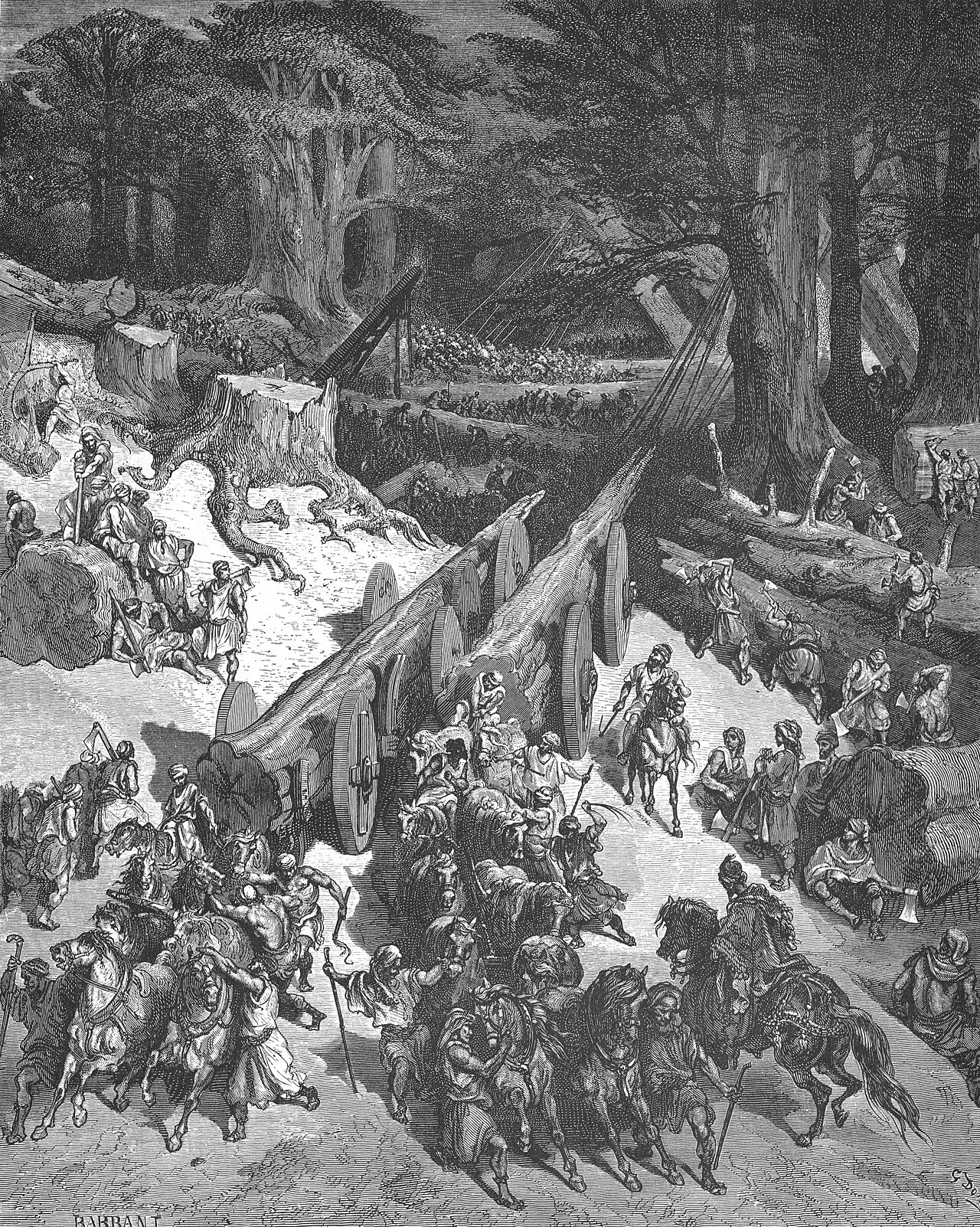
in 1 Kings 5Now therefore, order that cedars of Lebanon be cut down for me. My servants will be with your servants, and I will pay your servants whatever wages you set, for you know that there are none among us as skilled in logging as the Sidonians.”
BSB
The same verse in ASV and KJV ▾
ASV
Now therefore command thou that they cut me cedar-trees out of Lebanon; and my servants shall be with thy servants; and I will give thee hire for thy servants according to all that thou shalt say: for thou knowest that there is not among us any that knoweth how to cut timber like unto the Sidonians.
KJV
Now therefore command thou that they hew me cedar trees out of Lebanon; and my servants shall be with thy servants: and unto thee will I give hire for thy servants according to all that thou shalt appoint: for thou knowest that there is not among us any that can skill to hew timber like unto the Sidonians.
⋯
This verse in 1 Kings 5
Commentary
7 notes on this verseFor the servants of Hiram who cut down cedars from Lebanon for Solomon are the teachers chosen from among the Gentiles whose task is to fell those who enjoy the goods and glory of this world by correcting their pride and arrogance and convert their …
This site's exposition
can skill to hew timber
on 1 Kings 5:6-7
Solomon's admission that no one in Israel can skill to hew timber like the Sidonians sends the temple's timber outside the covenant people from the first plank; Wesley reads the Gentile labor as a type of the nations later built into Christ's own temple, a reading he names as his own rather than as the text's claim. Hiram answers with a blessing on the Lord who gave David so wise a son, language Adam Clarke takes as evidence of a genuine worshipper of Israel's God, while Jamieson, Fausset and Brown read it more cautiously, as a foreign king honoring another nation's deity by custom. The text itself gives only the blessing and leaves the man behind it for the reader to weigh.
The record, by era
The Puritans and the Awakening2 voices
They - That is, thy servants. And this assistance which these Gentiles gave to the building of Solomon's temple, was a type of the calling of the Gentiles, and that they should be instrumental in building and constituting Christ's spiritual temple.
Now therefore command thou that they hew me cedars out of Lebanon,.... That is, order his servants to cut them down there for him.
The Nineteenth Century3 voices
Any that can skill to hew timber - An obsolete and barbarous expression for any that know how to cut timber. They had neither sawyers, carpenters, joiners, nor builders among them, equal to the Sidonians. Sidon was a part of the territories of Hiram, and its inhabitants appear to have been the most expert workmen. It requires more skill to fell and prepare timber than is generally supposed. Vitruvius gives some rules relative to this, lib. ii., cap. 9, the sum of which is this:
A commentator
Jamieson, Fausset & Brown1802–1910
Commentary Critical and Explanatory on the Whole Bible (1871)
proposed
A division of labor was necessary, and while the former would do the work that required skilful artisans, Solomon engaged to supply the laborers. FURNISHES TIMBER TO BUILD THE TEMPLE.
A commentator
Albert Barnes1798–1870
Notes, Explanatory and Practical, on the Old and New Testaments (1832-1869)
proposed
Solomon’s message to Hiram and Hiram’s answer 1Ki 5:8-9 are given much more fully in 2Ch 2:3-16. Cedar-trees - The Hebrew word here and elsewhere translated “cedar,” appears to be used, not only of the cedar proper, but of other timber-trees also, as the fir, and, perhaps, the juniper. Still there is no doubt that the real Lebanon cedar is most commonly intended by it. This tree, which still grows on parts of the mountain, but which threatens to die out, was probably much more widely spread anciently. The Tyrians made the masts of their ships from the wood Eze 27:5, and would naturally be as careful to cultivate it as we have ourselves been to grow oak. The Assyrian kings, when they made their expeditions into Palestine, appear frequently to have cut it in Lebanon and Hermon, and to have transported it to their own capitals. Skill to hew timber like unto the Sidonians - The mechanical genius and nautical skill of the Phoenicians generally, and of the Sidonians in particular, is noticed by Homer and Herodotus. In the reign of Hiram, Sidon, though perhaps she might have a king of her own, acknowledged the supremacy of Tyre.
The words behind it
29 Hebrew wordsEvery Hebrew word of this verse in the order it stands, with what it means and the door to its own study. The last column counts the times a word stands in the whole Bible: the rarer the word, the more the places it appears belong together.
| Hebrew | Sound | Meaning | Word study | In the Bible |
|---|---|---|---|---|
| וְעַתָּ֡ה | veatah | and therefore | H6258 → | 433 times |
| צַוֵּה֩ | tzaveh | command | H6680 → | 494 times |
| וְיִכְרְתוּ־ | veyikhretu- | so they may cut | H3772 → | 288 times |
| לִ֨י | li | for <the> me | ||
| אֲרָזִ֜ים | ʾarazim | cedars | H730 → | 73 times |
| מִן־ | min- | from | H4480 → | 1188 times |
| הַלְּבָנ֗וֹן | halevanon | <the> Lebanon | H3844 → | 71 times |
| וַֽעֲבָדַי֙ | vaavadai | and servants my | H5650 → | 799 times |
| יִהְי֣וּ | yihyu | they will be | H1961 → | 3559 times |
| עִם־ | ʾim- | with | H5973 → | 1050 times |
| עֲבָדֶ֔יךָ | ʾavadeikha | servants your | H5650 → | 799 times |
| וּשְׂכַ֤ר | usekhar | and [the] wage[s] of | H7939 → | |
| עֲבָדֶ֙יךָ֙ | ʾavadeikha | servants your | H5650 → | 799 times |
| אֶתֵּ֣ן | ʾeten | I will give | H5414 → | 2011 times |
| לְךָ֔ | lekha | to <the> you | ||
| כְּכֹ֖ל | kekhol | according to all | H3605 → | 5413 times |
| אֲשֶׁ֣ר | ʾasher | that | H834 → | 5497 times |
| תֹּאמֵ֑ר | tomer | you will say | H559 → | 5305 times |
| כִּ֣י׀ | ki | for | H3588 → | 4482 times |
| אַתָּ֣ה | ʾatah | you | H859 → | 1094 times |
| יָדַ֗עְתָּ | yada'ta | you know | H3045 → | 945 times |
| כִּ֣י | ki | that | H3588 → | 4482 times |
| אֵ֥ין | ʾein | there not | H369 → | 789 times |
| בָּ֛נוּ | banu | among <the> us | ||
| אִ֛ישׁ | ʾish | [is] anyone | H376 → | 1663 times |
| יֹדֵ֥עַ | yodea' | [who] knows | H3045 → | 945 times |
| לִכְרָת־ | likhrot- | to cut | H3772 → | 288 times |
| עֵצִ֖ים | ʾetzim | wood<s> | H6086 → | 328 times |
| כַּצִּדֹנִֽים׃ | katzidonim | like the Sidonians | H6722 → | 16 times |
וְעַתָּ֡הand therefore
veatahH6258 →433 times
צַוֵּה֩command
tzavehH6680 →494 times
וְיִכְרְתוּ־so they may cut
veyikhretu-H3772 →288 times
לִ֨יfor <the> me
li
אֲרָזִ֜יםcedars
ʾarazimH730 →73 times
מִן־from
min-H4480 →1188 times
הַלְּבָנ֗וֹן<the> Lebanon
halevanonH3844 →71 times
וַֽעֲבָדַי֙and servants my
vaavadaiH5650 →799 times
יִהְי֣וּthey will be
yihyuH1961 →3559 times
עִם־with
ʾim-H5973 →1050 times
עֲבָדֶ֔יךָservants your
ʾavadeikhaH5650 →799 times
וּשְׂכַ֤רand [the] wage[s] of
usekharH7939 →
עֲבָדֶ֙יךָ֙servants your
ʾavadeikhaH5650 →799 times
אֶתֵּ֣ןI will give
ʾetenH5414 →2011 times
לְךָ֔to <the> you
lekha
כְּכֹ֖לaccording to all
kekholH3605 →5413 times
אֲשֶׁ֣רthat
ʾasherH834 →5497 times
תֹּאמֵ֑רyou will say
tomerH559 →5305 times
כִּ֣י׀for
kiH3588 →4482 times
אַתָּ֣הyou
ʾatahH859 →1094 times
יָדַ֗עְתָּyou know
yada'taH3045 →945 times
כִּ֣יthat
kiH3588 →4482 times
אֵ֥יןthere not
ʾeinH369 →789 times
בָּ֛נוּamong <the> us
banu
אִ֛ישׁ[is] anyone
ʾishH376 →1663 times
יֹדֵ֥עַ[who] knows
yodea'H3045 →945 times
לִכְרָת־to cut
likhrot-H3772 →288 times
עֵצִ֖יםwood<s>
ʾetzimH6086 →328 times
כַּצִּדֹנִֽים׃like the Sidonians
katzidonimH6722 →16 times
A shaded row is a word that stands 400 times or fewer in the Bible.
The walk
8 stopsEach card is a verse this one points to, and under it the verses that one points to in turn. Where several paths arrive at the same place, that place is listed first: the text keeps returning to it.
Through
Philippians 4:8Finally, brothers, whatever is true, whatever is honorable, whatever is right, whatever is pure, whatever is lovely, whatever is admirable—if anything is excellent or praiseworthy—think on these things.
it leads to
- James 3:17
But the wisdom from above is first of all pure, then peace-loving, gentle, accommodating, full of mercy and good fruit, impartial, and sincere.
- Titus 2:7
In everything, show yourself to be an example by doing good works. In your teaching show integrity, dignity,
- Romans 12:9–21
Love must be sincere. Detest what is evil; cling to what is good.
- 2 Corinthians 8:21
For we are taking great care to do what is right, not only in the eyes of the Lord, but also in the eyes of men.
- Galatians 5:22
But the fruit of the Spirit is love, joy, peace, patience, kindness, goodness, faithfulness,
- James 3:17
Through
Ephesians 4:7Now to each one of us grace has been given according to the measure of the gift of Christ.
it leads to
- Romans 12:3
For by the grace given me I say to every one of you: Do not think of yourself more highly than you ought, but think of yourself with sober judgment, according to the measure…
- 1 Peter 4:10
As good stewards of the manifold grace of God, each of you should use whatever gift he has received to serve one another.
- 1 Corinthians 12:7–11
Now to each one the manifestation of the Spirit is given for the common good.
- Romans 12:3
About 1 Kings
This page draws on Adam Clarke, Commentary on the Bible; Albert Barnes, Notes, Explanatory and Practical, on the Old and New Testaments (1832-1869); Bede, Of the Temple of Solomon 1.2.4-5; Jamieson, Fausset & Brown, Commentary Critical and Explanatory on the Whole Bible; Jamieson, Fausset and Brown, Commentary Critical and Explanatory on the Whole Bible; John Gill, Exposition of the Old Testament (1748-1763) and John Wesley, Explanatory Notes upon the Old Testament.