
1 Kings 10:13
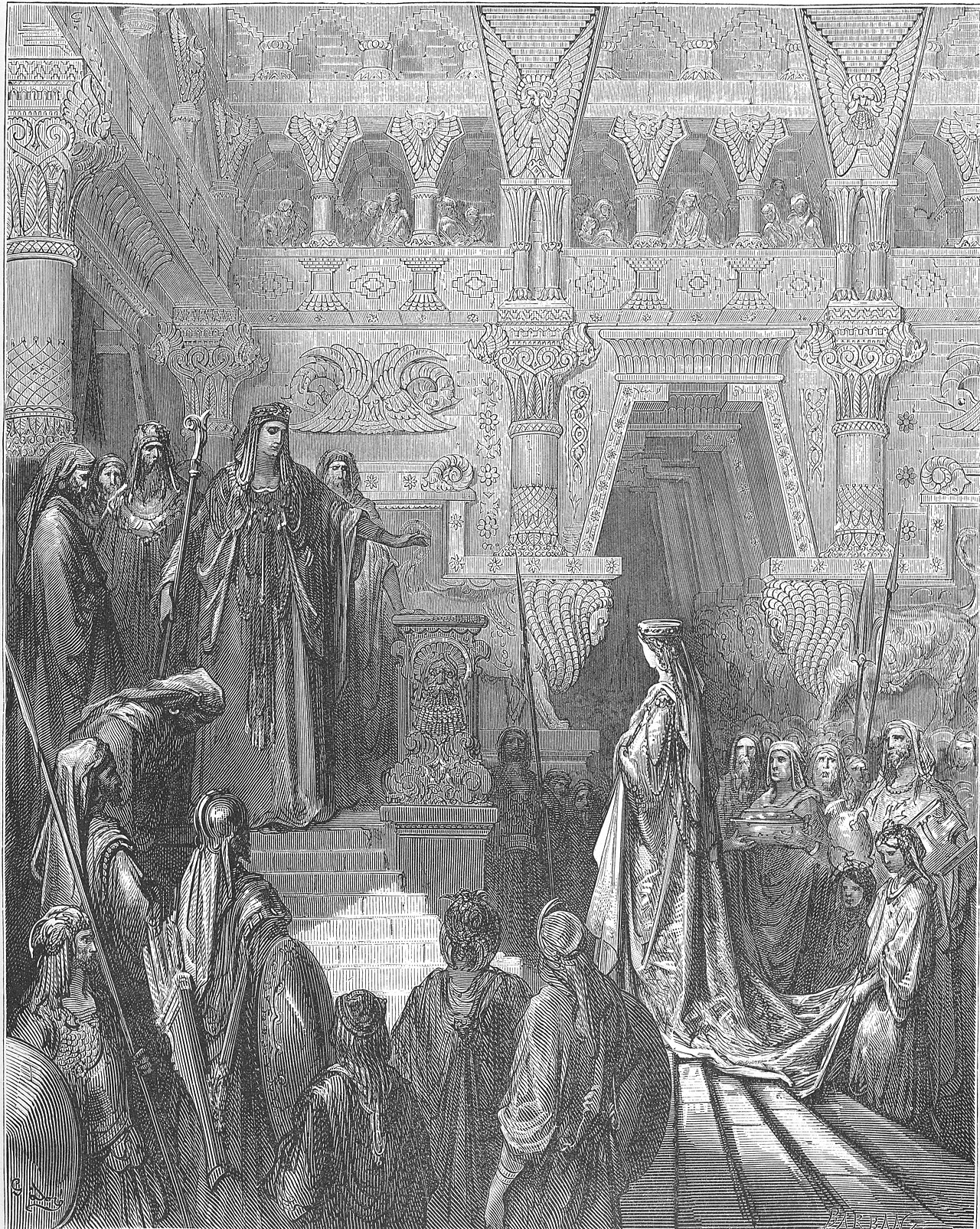
in 1 Kings 10King Solomon gave the queen of Sheba all she desired—whatever she asked—besides what he had given her out of his royal bounty. Then she left and returned to her own country, along with her servants.
BSB
The same verse in ASV and KJV ▾
ASV
And king Solomon gave to the queen of Sheba all her desire, whatsoever she asked, besides that which Solomon gave her of his royal bounty. So she turned, and went to her own land, she and her servants.
KJV
And king Solomon gave unto the queen of Sheba all her desire, whatsoever she asked, beside that which Solomon gave her of his royal bounty. So she turned and went to her own country, she and her servants.
⋯
This verse in 1 Kings 10
Commentary
6 notes on this verseAll her desire whatsoever she asked - Some imagine she desired progeny from the wise king of Israel; and all the traditions concerning her state that she had a son by Solomon called Menilek, who was brought up at the Israelitish court, succeeded his mother in the kingdom of Saba, and introduced among his subjects the Jewish religion. See at the end of the chapter, 1Ki 10:29 (note).
This site's exposition
great plenty of almug trees
on 1 Kings 10:11-13
Hiram's navy, the same one that ferries gold from Ophir, also brings back almug wood, a timber rare enough that the narrator can say there came no such almug trees since. Solomon uses it for pillars in the house of the Lord and his own house, and for harps and psalteries, the same wood serving both worship and music. The chapter closes the queen's visit with Solomon's royal bounty added on top of her own requests, and she returns to her own country, an ending the Gospels never dwell on because their point in citing her is her rising in judgment, not her going home.
This site's exposition
out of his royal bounty
Adam Clarke held that this verse belongs straight after verse 10, closing the visit of the queen of Sheba before the account of Solomon's gold. He also records the tradition that she bore Solomon a son, Menilek, who ruled her country after her and brought the Jewish faith there. Scripture itself says nothing of it.
The record, by era
The Puritans and the Awakening2 voices
19 The throne had six steps, and the top of the throne was round behind: and there were stays on either side on the place of the seat, and two lions stood beside the stays. 20 And twelve lions stood there on the one side and on the other upon the six steps: there was not the like made in any kingdom.
quarantine:scripture (2026-07-29) — verbatim-scripture
And King Solomon gave unto the queen of Sheba all her desire, whatsoever she asked,.... Some curious things she saw, and was desirous of, she asked for, and had them: besides that which Solomon gave her of his royal bounty; of his own good will and pleasure, without asking: so she turned and went to her own country: the country of Sheba in Arabia Felix: she and her sergeants: the train or retinue she brought with her, which was large, 1Ki 10:2.
The Nineteenth Century1 voice
A commentator
Jamieson, Fausset & Brown1802–1910
Commentary Critical and Explanatory on the Whole Bible (1871)
proposed
The sources whence this was derived are not mentioned; nor was it the full amount of his revenue; for this was "Beside that he had of the merchantmen, and of the traffic of the spice merchants, and of all the kings of Arabia, and of the governors of the country." The great encouragement he gave to commerce was the means of enriching his royal treasury.
How the passage was read
What the Jewish commentators add
Gave to the queen of Sheva. This giving refers only to the teaching of wisdom.
1 more on this passage, in their own words ▾
Six hundred sixty-six. Chirom gave him 120 [talents], the Queen of Sheva, the ships of Tarshish brought from Ophir, totaling 660 [talents]. I do not know from where the other six came.
This section is reception history: how the passage was read and kept in the Jewish tradition. Where a reading parts from an essential of the Christian faith, the section says so at that point.
Texts and citation data: Sefaria; each excerpt follows its version’s licence. 5 further sources are cited on this chapter that carry no English text this site may quote or only restate the verse.
The words behind it
22 Hebrew wordsEvery Hebrew word of this verse in the order it stands, with what it means and the door to its own study. The last column counts the times a word stands in the whole Bible: the rarer the word, the more the places it appears belong together.
| Hebrew | Sound | Meaning | Word study | In the Bible |
|---|---|---|---|---|
| וְהַמֶּ֨לֶךְ | vehamelekh | and the king | H4428 → | 2525 times |
| שְׁלֹמֹ֜ה | shelomoh | Solomon | H8010 → | 291 times |
| נָתַ֣ן | natan | he gave | H5414 → | 2011 times |
| לְמַֽלְכַּת־ | lemalkat- | to [the] queen of | H4436 → | 35 times |
| שְׁבָ֗א | sheva' | Sheba | H7614 → | 23 times |
| אֶת־ | ʾet- | <obj.> | H853 → | 10935 times |
| כָּל־ | kol- | all | H3605 → | 5413 times |
| חֶפְצָהּ֙ | cheftzah | desire her | H2656 → | 39 times |
| אֲשֶׁ֣ר | ʾasher | which | H834 → | 5497 times |
| שָׁאָ֔לָה | shaalah | she asked | H7592 → | 171 times |
| מִלְּבַד֙ | milevad | <from> <to> besides | H905 → | 200 times |
| אֲשֶׁ֣ר | ʾasher | [that] which | H834 → | 5497 times |
| נָֽתַן־ | natan- | he had given | H5414 → | 2011 times |
| לָ֔הּ | lah | to her | ||
| כְּיַ֖ד | keyad | according to [the] hand of | H3027 → | 1618 times |
| הַמֶּ֣לֶךְ | hamelekh | the king | H4428 → | 2525 times |
| שְׁלֹמֹ֑ה | shelomoh | Solomon | H8010 → | 291 times |
| וַתֵּ֛פֶן | vatefen | and she turned | H6437 → | 135 times |
| וַתֵּ֥לֶךְ | vatelekh | and she went | H1980 → | 1546 times |
| לְאַרְצָ֖הּ | leartzah | to own land her | H776 → | 2504 times |
| הִ֥יא | hi' | she | H1931 → | 1879 times |
| וַעֲבָדֶֽיהָ׃ ס | vaavadeiha | and servants her | H5650 → | 799 times |
וְהַמֶּ֨לֶךְand the king
vehamelekhH4428 →2525 times
שְׁלֹמֹ֜הSolomon
shelomohH8010 →291 times
נָתַ֣ןhe gave
natanH5414 →2011 times
לְמַֽלְכַּת־to [the] queen of
lemalkat-H4436 →35 times
שְׁבָ֗אSheba
sheva'H7614 →23 times
אֶת־<obj.>
ʾet-H853 →10935 times
כָּל־all
kol-H3605 →5413 times
חֶפְצָהּ֙desire her
cheftzahH2656 →39 times
אֲשֶׁ֣רwhich
ʾasherH834 →5497 times
שָׁאָ֔לָהshe asked
shaalahH7592 →171 times
מִלְּבַד֙<from> <to> besides
milevadH905 →200 times
אֲשֶׁ֣ר[that] which
ʾasherH834 →5497 times
נָֽתַן־he had given
natan-H5414 →2011 times
לָ֔הּto her
lah
כְּיַ֖דaccording to [the] hand of
keyadH3027 →1618 times
הַמֶּ֣לֶךְthe king
hamelekhH4428 →2525 times
שְׁלֹמֹ֑הSolomon
shelomohH8010 →291 times
וַתֵּ֛פֶןand she turned
vatefenH6437 →135 times
וַתֵּ֥לֶךְand she went
vatelekhH1980 →1546 times
לְאַרְצָ֖הּto own land her
leartzahH776 →2504 times
הִ֥יאshe
hi'H1931 →1879 times
וַעֲבָדֶֽיהָ׃ סand servants her
vaavadeihaH5650 →799 times
A shaded row is a word that stands 400 times or fewer in the Bible.
The walk
8 stopsEach card is a verse this one points to, and under it the verses that one points to in turn. Where several paths arrive at the same place, that place is listed first: the text keeps returning to it.
Through
Psalms 37:4Delight yourself in the LORD, and He will give you the desires of your heart.
it leads to
- Psalms 145:19
He fulfills the desires of those who fear Him; He hears their cry and saves them.
Reached by 3 separate paths from here.
- John 15:7
If you remain in Me and My words remain in you, ask whatever you wish, and it will be done for you.
- John 15:16
You did not choose Me, but I chose you. And I appointed you to go and bear fruit—fruit that will remain—so that whatever you ask the Father in My name, He will give you.
- Isaiah 58:14
then you will delight yourself in the LORD, and I will make you ride on the heights of the land and feed you with the heritage of your father Jacob.” For the mouth of…
- 1 John 5:14–15
And this is the confidence that we have before Him: If we ask anything according to His will, He hears us.
- Psalms 145:19
Through
Psalms 20:4May He give you the desires of your heart and make all your plans succeed.
it leads to
- Psalms 37:4
Delight yourself in the LORD, and He will give you the desires of your heart.
- Matthew 21:22
If you believe, you will receive whatever you ask for in prayer.”
- Psalms 21:2
You have granted his heart’s desire and have not withheld the request of his lips. Selah
- Psalms 37:4
Where this verse is studied
On this page
Studies1
About 1 Kings
Who and where
1 name in this verse with a page on the site.
This page draws on Adam Clarke, Commentary on the Bible; Albert Barnes, Notes on the Old Testament; Jamieson, Fausset & Brown, Commentary Critical and Explanatory on the Whole Bible; John Gill, Exposition of the Old Testament (1748-1763); Keil, The Books of the Kings and Matthew Henry, Commentary on the Whole Bible.