
1 Corinthians 11:21
in 1 Corinthians 11For as you eat, each of you goes ahead without sharing his meal. While one remains hungry, another gets drunk.
BSB
The same verse in ASV and KJV ▾
ASV
for in your eating each one taketh before other his own supper; and one is hungry, and another is drunken.
KJV
For in eating every one taketh before other his own supper: and one is hungry, and another is drunken.
⋯
This verse in 1 Corinthians 11
Commentary
13 notes on this verseThe apostle, checking those who transgress in their conduct at entertainments, says: "For every one taketh beforehand in eating his own supper; and one is hungry, and another drunken. Have ye not houses to eat and to drink in? Or despise ye the church of God, and shame those who have not?"
This site's exposition
it is not the Lord’s Supper
on 1 Corinthians 11:20-22
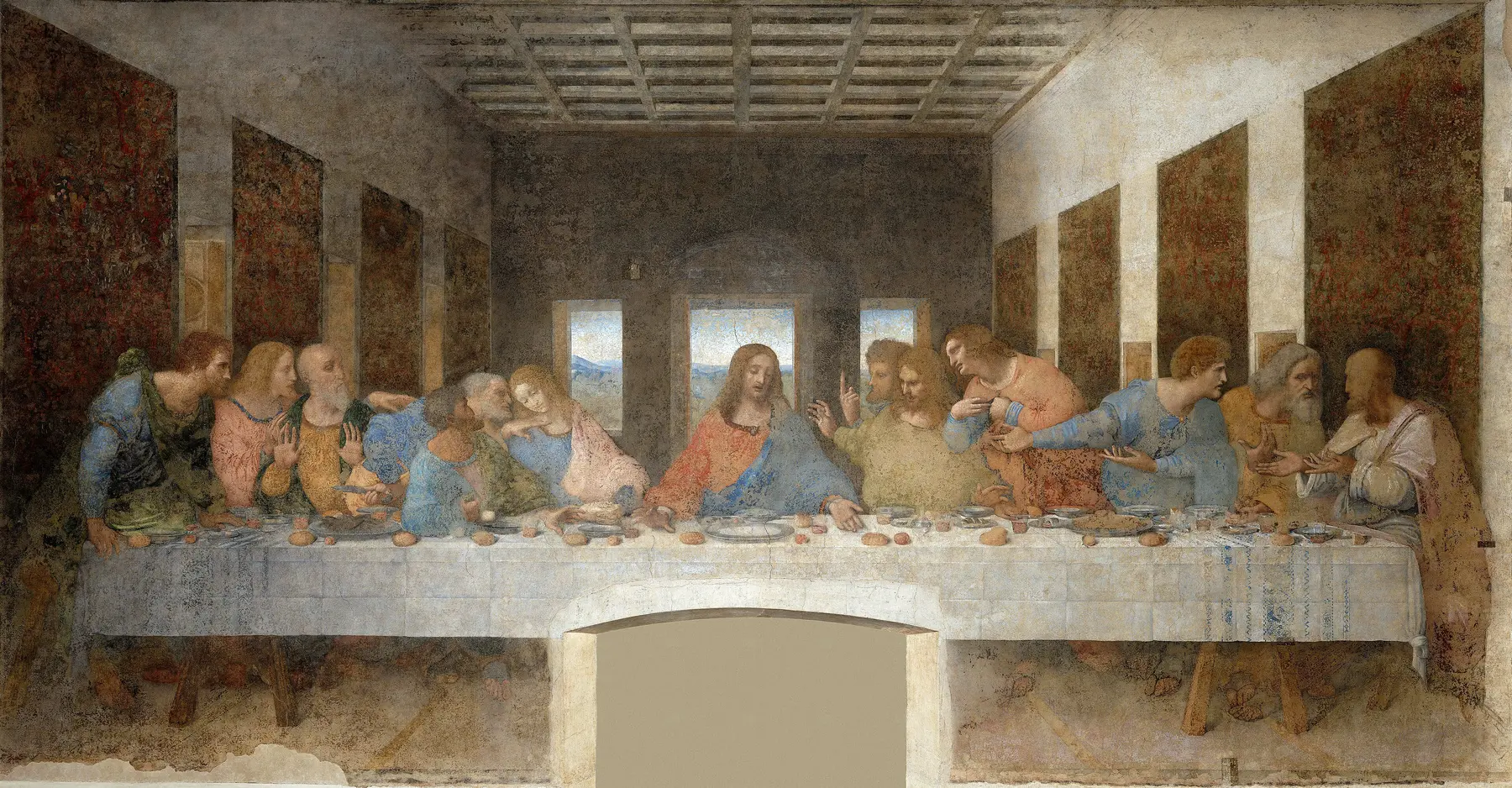
The meal, most likely the agape feast that held the bread and cup, had lost its shape. The wealthier went ahead with their own food, and while one remains hungry, another gets drunk.
This site's exposition
goes ahead without sharing his meal
Goes ahead is prolambano, eating one's meal first. Chrysostom describes the custom behind it: richer members brought food and drink to share with the poor at a common supper. At Corinth the rich ate and got drunk while the poor remained hungry.
The record, by era
The Church Fathers2 voices
"For in your eating, each one taketh before other his own supper," saith he, "and one is hungry, and another is drunken." Perceivest thou how he intimates that they were disgracing themselves rather? For that which is the Lord's, they make a private matter: so that themselves are the first to suffer indignity, depriving their own table of its greatest prerogative. How and in what manner? Because the Lord's Supper, i.e., the Master's, ought to be common. For the property of the master belongs not to this servant without belonging to that, but in common to all. So that by "the Lord's" Supper he expresses this, the "community" of the feast. As if he had said, "If it be thy master's, as assuredly it is, thou oughtest not to withdraw it as private, but as belonging to thy Lord and Master to set it in common before all. For this is the meaning of, 'the Lord's.' But now thou dost not suffer it to be the Lord's, not suffering it to be common but feasting by thyself." Wherefore also he goes on to say, "For each one taketh before other his own supper." And he said not, "cutteth off," but "taketh before," tacitly censuring them both for greediness and for precipitancy. This at least the sequel also shows. For having said this, he added again, "and one is hungry, and another is drunken," each of which showed a want of moderation, both the craving and the excess. See also a second fault again whereby those same persons are injured: the first, that they dishonor their supper: the second, that they are greedy and drunken; and what is yet worse, even when the poor are hungry. For what was intended to be set before all in common, that these men fed on alone, and proceeded both to surfeiting and to drunkenness. […]
And among those who have, they, who eat shamelessly and are insatiable, shame themselves. And both act badly; the one by paining those who have not, the other by exposing their own greed in the presence of those who have.
The Medieval Church2 voices
You have turned this Lord's Supper into your own private one. For as long as it was common, it was also called the Lord's Supper; for the Master's goods are common to all servants. But since each one hastens to eat his own supper, not …
Then when he says, For each one, he mentions the fault: first, insofar as they sinned against God; secondly, insofar as they sinned against their neighbor (v. 21b). He says, therefore, first: The reason I say that it is not lawful for you to eat …
The Puritans and the Awakening1 voice
For in eating what ye call the Lord's supper, instead of all partaking of one bread, each person brings his own supper, and eats it without staying for the rest. And hereby the poor, who cannot provide for themselves, have nothing; while the rich eat and drink to the full just as the heathens use to do at the feasts on their sacrifices.
5 more voices on this verse
The Puritans and the Awakening2 voices
This was profaning a sacred institution, and corrupting a divine ordinance, to the last degree. What was appointed to feed the soul was employed to feed their lusts and passions.
For in eating,....
The Nineteenth Century3 voices
A commentator
Albert Barnes1798–1870
Notes, Explanatory and Practical, on the Old and New Testaments (1832-1869)
For in eating - When you eat, having professedly come together to observe this ordinance. In order to understand this, it seems necessary to suppose that they had in some way made the Lord’s supper either connected with a common feast, or that they regarded it as a mere common festival to be observed in a way similar to the festivals among the Greeks. Many have supposed that this was done by making the observance of the supper follow a festival, or what were afterward called “love feasts” ἀγάπαι agapai - “Agapae”).
A commentator
Jamieson, Fausset & Brown1802–1910
Commentary Critical and Explanatory on the Whole Bible (1871)
proposed
one taketh before other--the rich "before" the poor, who had no supper of their own. Instead of "tarrying for one another" (1Co 11:33); hence the precept (1Co 12:21, 25). his own supper--"His own" belly is his God (Php 3:19); "the Lord's Supper," the spiritual feast, never enters his thoughts. drunken--The one has more than is good for him, the other less [BENGEL].
quarantine:debris (2026-07-29) — starts-lowercase
Every one taketh before - his own supper - They had a grand feast, though the different sects kept in parties by themselves; but all took as ample a supper as they could provide, (each bringing his own provisions with him), before they took what was called the Lord’s Supper. See on 1Co 11:17 (note).
The words behind it
16 Greek wordsEvery Greek word of this verse in the order it stands, with what it means and the door to its own study. The last column counts the times a word stands in the whole Bible: the rarer the word, the more the places it appears belong together.
| Greek | Sound | Meaning | Word study | In the Bible |
|---|---|---|---|---|
| ἕκαστος | hekastos | One | G1538 → | 81 times |
| γὰρ | gar | for | G1063 → | 1039 times |
| τὸ | to | <the> | G3588 → | 19766 times |
| ἴδιον | idion | [their] own | G2398 → | 114 times |
| δεῖπνον | deipnon | supper | G1173 → | |
| προλαμβάνει | prolambanei | takes first | G4301 → | |
| ἐν | en | in | G1722 → | 2738 times |
| τῷ | to | <the> | G3588 → | 19766 times |
| φαγεῖν, | phagein | eating, | G5315 → | 93 times |
| καὶ | kai | and | G2532 → | 9120 times |
| ὃς | hos | this [one] | G3739 → | 1405 times |
| μὲν | men | indeed | G3303 → | 176 times |
| πεινᾷ, | peina | is hungry, | G3983 → | 23 times |
| ὃς | hos | that [one] | G3739 → | 1405 times |
| δὲ | de | however | G1161 → | 2765 times |
| μεθύει. | methuei | is drunken. | G3184 → |
ἕκαστοςOne
hekastosG1538 →81 times
γὰρfor
garG1063 →1039 times
τὸ<the>
toG3588 →19766 times
ἴδιον[their] own
idionG2398 →114 times
δεῖπνονsupper
deipnonG1173 →
προλαμβάνειtakes first
prolambaneiG4301 →
ἐνin
enG1722 →2738 times
τῷ<the>
toG3588 →19766 times
φαγεῖν,eating,
phageinG5315 →93 times
καὶand
kaiG2532 →9120 times
ὃςthis [one]
hosG3739 →1405 times
μὲνindeed
menG3303 →176 times
πεινᾷ,is hungry,
peinaG3983 →23 times
ὃςthat [one]
hosG3739 →1405 times
δὲhowever
deG1161 →2765 times
μεθύει.is drunken.
methueiG3184 →
A shaded row is a word that stands 400 times or fewer in the Bible.
The walk
8 stopsEach card is a verse this one points to, and under it the verses that one points to in turn. Where several paths arrive at the same place, that place is listed first: the text keeps returning to it.
Through
Jude 1:12These men are hidden reefs in your love feasts, shamelessly feasting with you but shepherding only themselves. They are clouds without water, carried along by the wind; fruitless trees in autumn, twice dead after…
it leads to
- Philippians 3:19
Their end is destruction, their god is their belly, and their glory is in their shame. Their minds are set on earthly things.
Reached by 2 separate paths from here.
- Matthew 15:13
But Jesus replied, “Every plant that My heavenly Father has not planted will be pulled up by its roots.
- 2 Peter 2:17–20
These men are springs without water and mists driven by a storm. Blackest darkness is reserved for them.
- Ezekiel 34:8
‘As surely as I live, declares the Lord GOD, because My flock lacks a shepherd and has become prey and food for every wild beast, and because My shepherds did not search for My…
- Proverbs 25:14
Like clouds and wind without rain is the man who boasts of gifts never given.
- Philippians 3:19
Through
2 Peter 2:13The harm they will suffer is the wages of their wickedness. They consider it a pleasure to carouse in broad daylight. They are blots and blemishes, reveling in their deception as they feast with…
it leads to
- Romans 13:13
Let us behave decently, as in the daytime, not in carousing and drunkenness, not in sexual immorality and debauchery, not in dissension and jealousy.
- Romans 2:8–9
But for those who are self-seeking and who reject the truth and follow wickedness, there will be wrath and anger.
- Hebrews 2:2–3
For if the message spoken by angels was binding, and every transgression and disobedience received its just punishment,
- Romans 13:13
Where this verse is studied
On this page
Studies4
On this verse
About 1 Corinthians
This page draws on 12 works. Open the list of works
This page draws on Adam Clarke, Commentary on the Bible; Albert Barnes, Notes, Explanatory and Practical, on the First Epistle to the Corinthians; Albert Barnes, Notes, Explanatory and Practical, on the Old and New Testaments (1832-1869); Clement of Alexandria, The Instructor Book 2; Jamieson, Fausset & Brown, Commentary Critical and Explanatory on the Whole Bible; John Chrysostom, Homilies on First Corinthians; John Chrysostom, Homily on 1 Corinthians 27; John Gill, Exposition of the New Testament (1746-1748); John Wesley, Explanatory Notes upon the New Testament; Matthew Henry, Commentary on the Whole Bible; Theophylact of Ohrid, Commentary on 1 Corinthians and Thomas Aquinas, Commentary on 1 Corinthians.