
Psalm 114
8 verses · David and others · 10th to 5th century BC · Wisdom and poetry
The sea observed and fled; the Jordan turned back;
Introduction
Author unstated, the Exodus Remembered, Book 5: The return and the great Hallelujah, Poetry, Psalms Overview.
This psalm was sung at Passover, and it tells the story of the night Israel left Egypt in eight short verses. Its writer is not named. It gathers forty years into a few lines, from one crossing of water to another, and it describes the land itself reacting as God goes by. Listen for the questions put to the sea and the hills, and notice how long the psalm waits to name God. It lets the singers supply the answer before it gives one.
Context
- Who
- Israelites keeping the feast, who knew both crossings as the frame of their national story
- What
- A short poem on the exodus and the entry into the land, in which the sea, the Jordan and the mountains react to God's presence.
- Where
- Sung at Passover in Judah, remembering the Red Sea, the Jordan and the rock at Horeb.
- When
- It recalls events of the second millennium BC, and the date of the psalm itself is not recorded.
- Why
- To set the Passover night before the congregation as the act that made Israel God's own people.
Historical context
The psalm remembers two water crossings and treats them as one act. The sea that fled is the one the LORD drove back at Exodus 14:21, and the Jordan that turned back is the water standing still at Joshua 3:16. One crossing opened the forty years in the wilderness and the other closed them. Verse 2 says Judah became His sanctuary and Israel His dominion, which is said of a people before any building is named. The mountains skipping like rams is the language of an earthquake, and a hearer in the Jordan rift would have known ground that moves. Verse 8 is the water from the rock, struck at Exodus 17:6 and again at Numbers 20:11, and in a land that ran on cisterns and seasonal springs, rock turning into a pool was the most extravagant thing the psalm could say.
Significance
Sung at Passover, the psalm put the hearers on the bank watching the water behave strangely, and it withheld God's name until verse 7 so that the congregation supplied the answer before the psalm gave it. It also told them that the people themselves were His sanctuary, a claim that survives the loss of a building and was worth having in a century that lost one.
This chapter in Jewish lifeWhat this chapter is in Jewish life and reading.
What is done
This psalm stands second in the Hallel, Psalms 113 to 118, said as one unit at the appointed feasts (src/app/featured/the-hallel/page.tsx). At the seder it is the psalm at which the House of Hillel closes the first part of the set, where the House of Shammai closed it one psalm earlier, and the rest is finished over the fourth cup with the blessing of song (Mishnah Pesachim 10:6-7, as this site records it on its Hallel page).
The ruling of the House of Hillel is the one Jewish practice follows, so at a seder today the first part of the Hallel ends with this psalm, before the meal. The set is also said at Tabernacles, on the days of Dedication and at the New Moon (Mishnah Sukkah 3:9 and Mishnah Taanit 4:5).
How it is read
The psalm is read as the Exodus itself, and the classical comments stay close to that event. Rashi glosses the people of a strange tongue in verse 1 as a people whose language is other than the Holy Tongue, citing Isaiah 33:19 (Rashi on Psalms 114:1:1, Rashi on Psalms, The Judaica Press complete Tanach with Rashi, translated by A. J. Rosenberg, CC-BY).
On the Jordan turning back in verse 3 he gives one line with a large claim inside it, that it turned back "because all the water of Creation split" (Rashi on Psalms 114:3:1, same edition). The remaining comments are grammatical, on the superfluous letters in the words for the one who created the earth and for the fountain of water (Rashi on Psalms 114:7:1 and 114:8:1).
Ibn Ezra, Metzudat David and Radak carry nineteen comments on this eight verse psalm for which Sefaria holds no English version, and they are cited by reference (Ibn Ezra on Psalms 114:1:1, Metzudat David on Psalms 114:1:1, Radak on Psalms 114:1:1 and the sixteen references beside them).
What the rabbis say
Rashi carries the tradition about Nahshon here, and names where it stands. On verse 2 he writes that Judah became God's holy people because they sanctified His name when they went down into the sea, and he reports from the Aggadah at Midrash Tehillim 114:8 that Nahshon sprang into the sea saying that he would go down first (Rashi on Psalms 114:2:1, same edition). The site reports it as what the rabbis taught.
The corpus records forty places where the Midrash and the Talmud cite this psalm, thirty three under Midrash and seven under Talmud, and it carries the locator for each one with no text. The Jerusalem Talmud reads the first verse at Berakhot 2:4:8, Chagigah 2:1:15, Megillah 2:1:3 and Pesachim 10:5:3, and the Babylonian Talmud cites verse 8 at Pesachim 116b:5, which is the passage on the seder.
Verse 3, on the sea and the Jordan, draws seven locators, among them Bereshit Rabbah 87:8, Bamidbar Rabbah 1:2, Devarim Rabbah 3:8 and two places in Aggadat Bereshit at 8:2 and 17:1. Midrash Tehillim treats verse 5 at 114:5. The site reports where the rabbis cite the verse and reports no saying, because the locator carries none.
Sources: The Mishnah, Pesachim 10:6-7, Sukkah 3:9 and Taanit 4:5, as recorded at src/app/featured/the-hallel/page.tsx, about AD 200; Rashi, Rashi on Psalms 114, in The Judaica Press complete Tanach with Rashi, translated by A. J. Rosenberg, CC-BY; Midrash Tehillim, Midrash Tehillim 114:8, as Rashi cites it at Rashi on Psalms 114:2:1; Ibn Ezra, Metzudat David and Radak, their comments on Psalms 114, cited by reference; Sefaria holds no English version; The Midrash and the Talmud, the forty locators on Psalms 114 in scripts/data/sources/sefaria/psalms/114.json.
Psalms 114:1-2
a people of foreign tongue: Israel leaves Egypt and a people whose tongue was foreign to it. Judah becomes God's sanctuary and Israel His dominion, so the people themselves are the place He dwells and the ground He rules. God's dwelling here is a people.
Psalms 114:1
“When Israel went out of Egypt,.... The people of Israel in a body, publicly, openly, and not by stealth; freely and willingly, not forced and drove out; though urged by the Egyptians to go, through the hand of God upon them; and so went out with the mighty hand and outstretched arm of the Lord, and with great riches, and in health, not one feeble or sick among them.”
1 more voice on this verseWhat preachers and commentators have said about this verse, in their own words.
Psalms 114:1
“When Israel went out of Egypt. The song begins with a burst, as if the poetic fury could not be restrained, but overleaped all bounds. The soul elevated and filled with a sense of divine glory cannot wait to fashion a preface, but springs at once into the middle of its theme. Israel emphatically came out of Egypt, out of the population among whom they had been scattered, from under the yoke of bondage, and from under the personal grasp of the king who had made the people into national slaves.”
Charles Spurgeon · The Treasury of David, Vol. 5 (1878)Particular Baptist
Judah became God’s sanctuary: The Hebrew says His sanctuary. Spurgeon read the pronoun, with the name held back until verse 7, as a poet so full of God he forgets to name Him. Clarke took the pairing of Judah and Israel as a sign the psalm came after Israel and Judah became two kingdoms.
Psalms 114:2
Judah was his sanctuary, and Israel his dominion. The pronoun "his" comes in where we should have looked for the name of God; but the poet is so full of thought concerning the Lord that he forgets to mention his name, like the spouse in the Song, who begins, "Let him kiss me, "or Magdalene when she cried, "Tell me where thou hast laid him."
Charles Spurgeon · The Treasury of David, Vol. 5 (1878)Particular Baptist
2 more voices on this verse
Psalms 114:2
“He set up his sanctuary among them, in which he gave them the special tokens of his presence with them and promised to receive their homage and tribute. Happy are the people that have God's sanctuary among them (see Exod. xxv. 26 ), much more those that, like Judah here, are his sanctuaries, his living temples, on whom Holiness to the Lord is written.”
Matthew Henry · Commentary on the Whole Bible (1707-1721)puritan
Psalms 114:2
“Judah was his sanctuary - He set up his true worship among the Jews, and took them for his peculiar people. And Israel his dominion - These words are a proof, were there none other, that this Psalm was composed after the days of David, and after the division of the tribes, for then the distinction of Israel and Judah took place.”
Adam Clarke · Commentary on the Bible (1810-1826)evangelical
Psalms 114:3-6
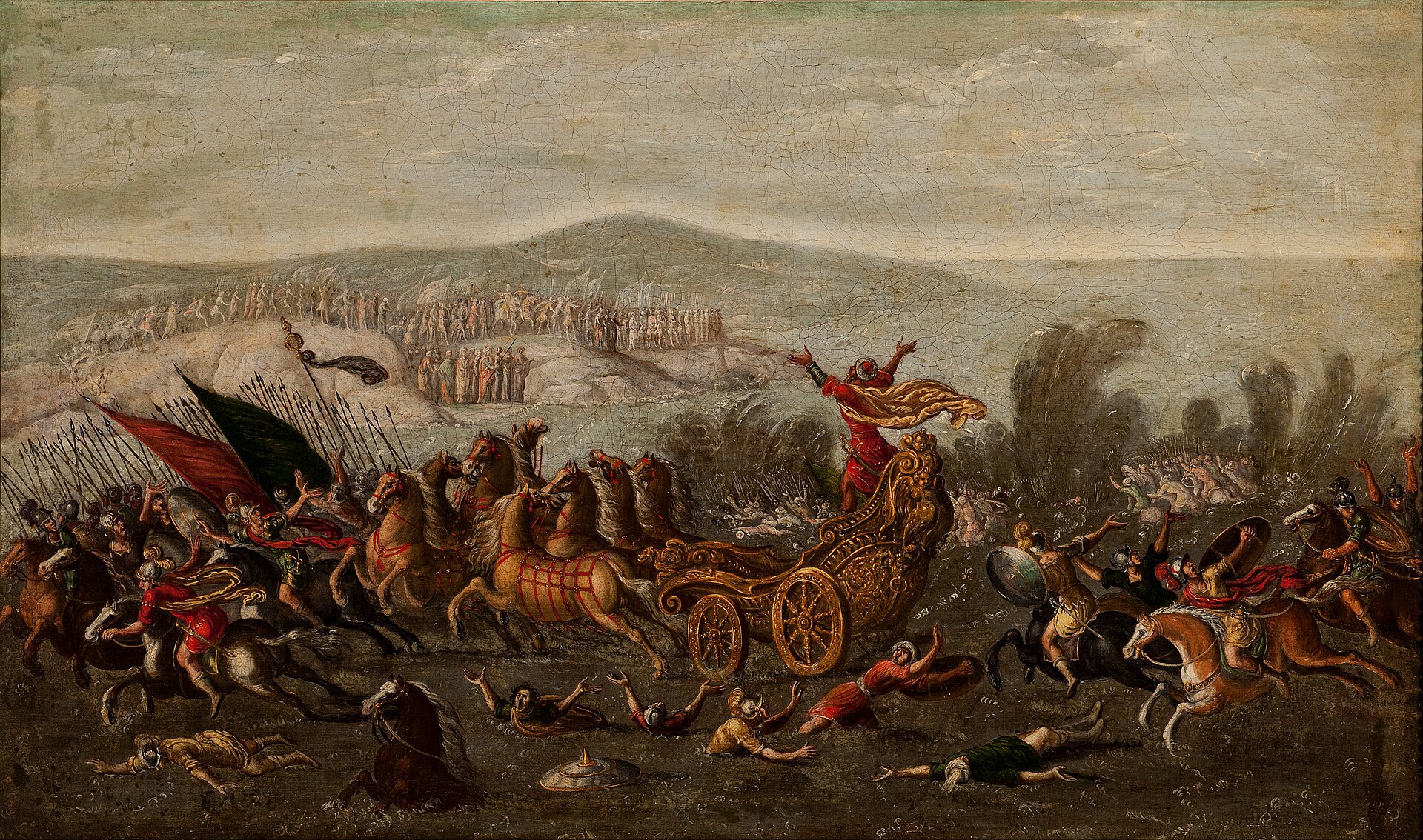
The sea observed and fled: The sea is the one the LORD drove back at Exodus 14:21, and the Jordan is the water standing still at Joshua 3:16. One crossing opened the wilderness years and the other closed them. Verses 5 and 6 put the question to the sea, the Jordan, the mountains and hills.
Psalms 114:3
“The sea saw it - The word it is supplied, not very properly, by our translators. It would be more expressive to say, “The sea saw:” that is, The sea - (the Red Sea) - saw the mighty movement - the marshalled hosts - the moving masses - the cattle - the pursuing enemies - the commotion - the agitation - on its usually quiet shores.”
the mountains skipped like rams: Gill placed the skipping at Sinai, where Exodus 19:18 says the whole mountain quaked when the LORD came down. Spurgeon kept two readings: the mountains and hills leaping for joy like lambs, or fleeing in fright like a startled flock. Henry said mountains are rams and lambs before God.
Psalms 114:4
“The mountains skipped like rams, and the little hills like lambs. At the coming of the Lord to Mount Sinai, the hills moved; either leaping for joy in the presence of their Creator like young lambs; or, if you will, springing from their places in affright at the terrible majesty of Jehovah, and flying like a flock of sheep when alarmed. Men fear the mountains, but the mountains tremble before the Lord.”
Charles Spurgeon · The Treasury of David, Vol. 5 (1878)Particular Baptist
1 more voice on this verse
Psalms 114:4
“Mountains and hills are, before God, but like rams and lambs; even the bulkiest and the most rocky are as manageable by him as they are by the shepherd. The trembling of the mountains before the Lord may shame the stupidity and obduracy of the children of men, who are not moved at the discoveries of his glory.”
Matthew Henry · Commentary on the Whole Bible (1707-1721)puritan
Why was it, O sea, that you fled: The psalm asks the sea why it fled and the Jordan why it turned back, as if they could answer. Spurgeon noted that the sea had never feared Pharaoh's hosts or been split by any storm, yet it fled from the presence of the LORD. Verse 7 gives the answer.
Psalms 114:5
“What ailed thee, O thou sea? Wert thou terribly afraid? Did thy strength fail thee? Did thy very heart dry up? What ailed thee, O thou sea, that thou fleddest? Thou wert neighbour to the power of Pharaoh, but thou didst never fear his hosts; stormy wind could never prevail against thee so as to divide thee in twain; but when the way of the Lord was in thy great waters thou was seized with affright, and thou becamest a fugitive from before him. Thou Jordan, that thou wast driven back? What ailed thee, O quick descending river?”
Charles Spurgeon · The Treasury of David, Vol. 5 (1878)Particular Baptist
O mountains, that you skipped like rams: Gill called the questions put to mountains and hills a beautiful figure, and the answer waits for verse 7. Spurgeon drew the lesson: the mountains and the hills all moved at the presence of God, while men who reason see it and stay unmoved. The earth trembles first.
Psalms 114:6
“Ye mountains, that ye skipped like rams,.... Not for joy, but fear; what caused these trembling motions, these violent agitations, and quakings, and movings to and fro like the skipping of rams? And ye little hills, like lambs? what was it that disturbed you, and put you into a panic, that you skipped like frightened lambs? These questions are put, by a beautiful and poetical figure, to inanimate creatures; the Red sea, the river of Jordan, the mountains of Sinai and Horeb, and the hills about them; to which an answer is turned in the next verse.”
1 more voice on this verse
Psalms 114:6
“Ye mountains, that ye skipped like rams; and ye little hills, like lambs? What ailed ye, that ye were thus moved? There is but one reply: the majesty of God made you to leap. A gracious mind will chide human nature for its strange insensibility, when the sea and the river, the mountains and the hills, are all sensitive to the presence of God. Man is endowed with reason and intelligence, and yet he sees unmoved that which the material creation beholds with fear.”
Charles Spurgeon · The Treasury of David, Vol. 5 (1878)Particular Baptist
Psalms 114:7-8
Tremble, O earth: The presence of the LORD is the answer the psalm gives to its question, and the whole earth is told to tremble at it. Verse 8 is the water from the rock, struck at Exodus 17:6 and again at Numbers 20:11. Rock and flint became a pool and a fountain.
Psalms 114:7
“Tremble, thou earth, at the presence of the Lord, at the presence of the God of Jacob. Or "from before the Lord, the Adonai, the Master and King." Very fitly does the Psalm call upon all nature again to feel a holy awe because its Ruler is still in its midst. Let the believer feel that God is near, and he will serve the Lord with fear and rejoice with trembling. Awe is not cast out by faith, but the rather it becomes deeper and more profound. The Lord is most reverenced where he is most loved.”
Charles Spurgeon · The Treasury of David, Vol. 5 (1878)Particular Baptist
2 more voices on this verse
Psalms 114:7
“Tremble, thou earth, at the presence of the Lord,.... Or, "the earth has trembled at the presence of the Lord"; so the Syriac and Arabic versions render it; the imperative is sometimes put for the preterite or past tense, see Psa 22:9, likewise the Septuagint and Vulgate Latin versions thus render it, "the earth is moved at the presence of the Lord"; and then the sense is by a prosopopoeia.”
Psalms 114:7
“The mercy of the miracle: What ailed thee? Was it only to amuse men? No; it was at the presence of the God of Jacob; it was in kindness to the Israel of God, for the salvation of that chosen people, that God was thus displeased against the rivers, and his wrath was against the sea, as the prophet speaks, Hab. iii.”
Matthew Henry · Commentary on the Whole Bible (1707-1721)puritan
who turned the rock into a pool: The God at whose presence the earth trembles in verse 7 is the same God who made hard flint pour water. Spurgeon pictured the flow standing like a lake at the rock's foot and following the tribes. Paul says at 1 Corinthians 10:4 that the rock was Christ.
Psalms 114:8
“Which turned the rock into a standing water, causing a mere or lake to stand at its foot, making the wilderness a pool: so abundant was the supply of water from the rock that it remained like water in a reservoir. The flint into a fountain of waters, which flowed freely in streams, following the tribes in their devious marches. Behold what God can do! It seemed impossible that the flinty rock should become a fountain; but he speaks, and it is done.”
Charles Spurgeon · The Treasury of David, Vol. 5 (1878)Particular Baptist
2 more voices on this verse
Psalms 114:8
“Which turned the rock into a standing water,.... Both at Rephidim and at Kadesh; which being smitten, streams of water flowed out like rivers, as if the rock itself was changed into water; and which came a constant and continual supply for the Israelites, for it is said to follow them; see Exo 17:6. The flint into a fountain of waters; referring to the same thing, the rocks were flinty ones.”
Psalms 114:8
“In singing this psalm we must acknowledge God's power and goodness in what he did for Israel, applying it to the much greater work of wonder, our redemption by Christ, and encouraging ourselves and others to trust in God in the greatest straits.”
Matthew Henry · Commentary on the Whole Bible (1707-1721)puritan
How this psalm is built
The form: A psalm of the exodus, in which Judah becomes God's sanctuary and Israel His dominion, as Delitzsch classes it.
A The sea observed and fled, the Jordan turned back
Psalm 114:3
B The mountains skipped like rams, the hills like lambs
Psalm 114:4
C Tremble, O earth, at the presence of the Lord, at the presence of the God of Jacob
Psalm 114:7
B′ O mountains, that you skipped like rams, O hills, like lambs
Psalm 114:6
A′ What was it, O sea, that you fled, O Jordan, that you turned back
Psalm 114:5
The patterns in this chapter
| Device | What it does | Where to see it |
|---|---|---|
| The question and its answer | Verses 3 and 4 report what the sea, the Jordan, the mountains and the hills did. Verses 5 and 6 ask each of them why, in the same order. Verse 7 gives the answer. The psalm states, asks and answers, and the asking repeats the stating item for item.Matthew Henry, Commentary on the Whole Bible, 1710, on Psalm 114:5. | Psalm 114:3, Psalm 114:5, Psalm 114:7 |
| The two crossings | The sea that fled is the one the LORD drove back at Exodus 14:21 and the Jordan that turned back is the water standing still at Joshua 3:16. One crossing opened the wilderness years and the other closed them, and the psalm sets them in one line as though they were a single act.Matthew Henry, Commentary on the Whole Bible, 1710, on Psalm 114:3. | Psalm 114:3, Psalm 114:5 |
| Mountains like rams, hills like lambs | The largest and least movable things in the country are given the movement of a flock, and the smaller hills are given the smaller animal. The scale of the figure matches the scale of what it describes.Charles Spurgeon, The Treasury of David, Vol. 5, 1878, on Psalm 114:4. | Psalm 114:4, Psalm 114:6 |
| God's name withheld until verse 7 | The psalm speaks of the sea, the Jordan, the mountains and the hills for six verses without naming the one who moved them. The name arrives at verse 7 as the answer to the question, which is why the question was asked.John Calvin, Commentary on the Book of Psalms, 1557, on Psalm 114:7. | Psalm 114:7 |
| Rock into a pool, flint into a fountain | Verse 8 closes on the water from the rock, struck at Exodus 17:6 and again at Numbers 20:11. The two halves of the line name the hardest material and the softest result twice over.John Gill, Exposition of the Old Testament, 1748 to 1763, on Psalm 114:8. | Psalm 114:8 |
What the psalm leaves out
7 more paragraphs on the patterns
It never describes the crossing itself. It describes what the water did, which puts the reader on the bank watching the sea behave strangely rather than in the middle of a miracle being explained. God is not named until verse 7, and the delay is what makes the question at verses 5 and 6 work: the reader supplies the answer before the psalm states it.
The claim at verse 2
Judah became His sanctuary is said of a people rather than a place, and it is said before any building is mentioned. That is the ground the New Testament builds on when it calls the church a temple at 1 Corinthians 3:16 and a spiritual house at 1 Peter 2:5. The psalm is already treating the people as the dwelling.
The figures
The largest and least movable things in the country are given the movement of a flock, and the smaller hills are given the smaller animal, so the scale of the figure matches the scale of what it describes. Verse 8 closes on the hardest material and the softest result twice over, rock into a pool and flint into a fountain.
The form the question takes
Asking the sea what frightened it is a rhetorical form the prophets use. It is a way of saying that the cause is obvious and has only to be named, and the naming is the point the psalm has been building to. Almost every line of the psalm says one thing twice, which makes it the shortest clear lesson in Hebrew parallelism in the Psalter.
Keep studying
Places1
Sources for this chapter
The summary
Jamieson, Fausset & Brown, Commentary Critical and Explanatory; John Calvin, Commentaries; John Wesley, Notes on the Old Testament and Matthew Henry, Complete Commentary.
The form and classifications
Charles Spurgeon, The Treasury of David, Vol. 5, 1878, on Psalm 114:1; Franz Delitzsch, Biblical Commentary on the Psalms, 1871, on Psalm 114:2 and John Calvin, Commentary on the Book of Psalms, 1557, on Psalm 114:7.
The exposition
Adam Clarke, Commentary on the Bible; Albert Barnes, Notes on the Book of Psalms; Charles Spurgeon, The Treasury of David; Franz Delitzsch, Biblical Commentary on the Psalms; John Calvin, Commentary on the Book of Psalms; John Gill, Exposition of the Old Testament and Matthew Henry, Commentary on the Whole Bible.
The painting
The Israelites crossing the Red Sea. Circle of Juan de la Corte, between 1630 and 1660. Wikimedia Commons. Public domain.