
Psalms 114:4
in Psalms 114the mountains skipped like rams, the hills like lambs.
BSB
The same verse in ASV and KJV ▾
ASV
The mountains skipped like rams, The little hills like lambs.
KJV
The mountains skipped like rams, and the little hills like lambs.
⋯
This verse in Psalms 114
Commentary
8 notes on this verseThe mountains skipped like rams,.... The mountains of Sinai and Horeb quaked and moved at the presence of the Lord, when he descended thereon to give the law; these saw his glory and trembled, Exo 19:
This site's exposition
The sea observed and fled
on Psalms 114:3-6
The sea that fled is the one the LORD drove back at Exodus 14:21, and the Jordan that turned back is the water standing still at Joshua 3:16. One crossing opened the wilderness years and the other closed them. Verses 5 and 6 put the question to the sea, the Jordan, the mountains and the hills by name.
The record, by era
The Church Fathers1 voice
"When Israel came out of Egypt, and the house of Jacob from among the strange people" [Psalm 114:1], "Judah was His sanctuary, and Israel His dominion" [Psalm 114:2]; "the sea saw that and fled, Jordan was driven back" [Psalm 114:3]. Think not that past deeds are related unto us, but rather that the future is predicted; since, while those miracles also were going on in that people, things present indeed were happening, but not without an intimation of things future....Some things he has related differently to what we have learned and read there: that he might not truly be thought to be repeating past acts rather than to be prophesying future things. For in the first place, we read not that the Jordan was driven back, but that it stood still on the side nearest the source of its streams, while the people were passing through; next, we read not of the mountains and hills skipping: all which he has added, and repeated. For after saying, "The sea saw that, and fled; Jordan was driven back:" he added, "The mountains skipped like rams, and the little hills like young sheep" [Psalm 114:4]: and then asks, "What ails you, O thou sea, that you fled, and thou, Jordan, that you were driven back?" [Psalm 114:5]. "You mountains, that you skipped like rams; and you little hills, like young sheep?" [Psalm 114:6].
The Puritans and the Awakening1 voice
Mountains and hills are, before God, but like rams and lambs; even the bulkiest and the most rocky are as manageable by him as they are by the shepherd. The trembling of the mountains before the Lord may shame the stupidity and obduracy of the children of men, who are not moved at the discoveries of his glory.
The Nineteenth Century3 voices
The mountains skipped like rams, and the little hills like lambs. At the coming of the Lord to Mount Sinai, the hills moved; either leaping for joy in the presence of their Creator like young lambs; or, if you will, springing from their places in affright at the terrible majesty of Jehovah, and flying like a flock of sheep when alarmed. Men fear the mountains, but the mountains tremble before the Lord.
A commentator
Jamieson, Fausset & Brown1802–1910
Commentary Critical and Explanatory on the Whole Bible (1871)
proposed
skipped . . . rams-- (Ps 29:6), describes the waving of mountain forests, poetically representing the motion of the mountains. The poetical description of the effect of God's presence on the sea and Jordan alludes to the history (Ex 14:21; Judah is put as a parallel to Israel, because of the destined, as well as real, prominence of that tribe.
quarantine:debris (2026-07-29) — starts-lowercase+unbalanced-parens
The mountains skipped like rams, and the little hills like lambs. At the coming of the Lord to Mount Sinai, the hills moved; either leaping for joy in the presence of their Creator like young lambs; or, if you will, springing from their places in affright at the terrible majesty of Jehovah, and flying like a flock of sheep when alarmed. Men fear the mountains, but the mountains tremble before the Lord. Sheep and lambs move lightly in the meadows; but the hills, which we are wont to call eternal, were as readily made to move as the most active creatures. Rams in their strength, and lambs in their play, are not more stirred than were the solid hills when Jehovah marched by. Nothing is immovable but God himself: the mountains shall depart, and the hills be removed, but the covenant of his grace abideth fast for ever and ever. Even thus do mountains of sin and hills of trouble move when the Lord comes forth to lead his people to their eternal Canaan. Let us never fear, but rather let our faith say unto this mountain, "Be thou removed hence and cast into the sea, "and it shall be done.
1 more voice on this verse
The Nineteenth Century1 voice
A commentator
Albert Barnes1798–1870
Notes, Explanatory and Practical, on the Old and New Testaments (1832-1869)
proposed
The mountains skipped like rams - As flocks in their gambols. They seemed to move from place to place; everything seemed to be unsettled, and acknowledged the presence of the Omnipotent One. The word rendered “skipped” means to leap for joy; to dance. See the notes at Psa 29:6. The reference here is to the agitations and commotions of the peaks of Sinai, when God came down to deliver the law. Exo 19:16-18. And the little hills like lambs - Hebrew, Like the sons of the flock. The reference here is to the less prominent eminences of Sinai. The lofty hills, and the smaller hills surrounding, seemed to be all in a state of commotion.
How the passage was read
What the Jewish commentators add
On the verses either side of this one
the Jordan turned backward because all the water of Creation split.
This section is reception history: how the passage was read and kept in the Jewish tradition. Where a reading parts from an essential of the Christian faith, the section says so at that point.
Texts and citation data: Sefaria; each excerpt follows its version’s licence. 3 further sources are cited on this chapter that carry no English text this site may quote or only restate the verse.
The words behind it
6 Hebrew wordsEvery Hebrew word of this verse in the order it stands, with what it means and the door to its own study. The last column counts the times a word stands in the whole Bible: the rarer the word, the more the places it appears belong together.
| Hebrew | Sound | Meaning | Word study | In the Bible |
|---|---|---|---|---|
| הֶֽ֭הָרִים | heharim | the mountains | H2022 → | 546 times |
| רָקְד֣וּ | rakedu | they skipped about | H7540 → | 9 times |
| כְאֵילִ֑ים | kheeilim | like rams | H352 → | 187 times |
| גְּ֝בָע֗וֹת | gevaot | hills | H1389 → | 68 times |
| כִּבְנֵי־ | kivnei- | like young ones of | H1121 → | 4930 times |
| צֹֽאן׃ | tzon | sheep | H6629 → | 274 times |
הֶֽ֭הָרִיםthe mountains
heharimH2022 →546 times
רָקְד֣וּthey skipped about
rakeduH7540 →9 times
כְאֵילִ֑יםlike rams
kheeilimH352 →187 times
גְּ֝בָע֗וֹתhills
gevaotH1389 →68 times
כִּבְנֵי־like young ones of
kivnei-H1121 →4930 times
צֹֽאן׃sheep
tzonH6629 →274 times
A shaded row is a word that stands 400 times or fewer in the Bible.
The walk
8 stopsEach card is a verse this one points to, and under it the verses that one points to in turn. Where several paths arrive at the same place, that place is listed first: the text keeps returning to it.
Through
Habakkuk 3:6He stood and measured the earth; He looked and startled the nations; the ancient mountains crumbled; the perpetual hills collapsed. His ways are everlasting.
it leads to
- Genesis 49:26
The blessings of your father have surpassed the blessings of the ancient mountains and the bounty of the everlasting hills. May they rest on the head of Joseph, on the brow of the prince…
- Nahum 1:5
The mountains quake before Him, and the hills melt away; the earth trembles at His presence—the world and all its dwellers.
- Deuteronomy 33:15
with the best of the ancient mountains and the bounty of the everlasting hills,
- Genesis 49:26
Through
Exodus 20:18When all the people witnessed the thunder and lightning, the sounding of the ram’s horn, and the mountain enveloped in smoke, they trembled and stood at a distance.
it leads to
- Exodus 19:16–18
On the third day, when morning came, there was thunder and lightning. A thick cloud was upon the mountain, and a very loud blast of the ram’s horn went out, so that all the…
- Exodus 19:16–18
Through
Exodus 19:18Mount Sinai was completely enveloped in smoke, because the LORD had descended on it in fire. And the smoke rose like the smoke of a furnace, and the whole mountain quaked violently.
it leads to
- Judges 5:5
The mountains quaked before the LORD, the One of Sinai, before the LORD, the God of Israel.
- Exodus 3:2
There the angel of the LORD appeared to him in a blazing fire from within a bush. Moses saw the bush ablaze with fire, but it was not consumed.
- Psalms 144:5
Part Your heavens, O LORD, and come down; touch the mountains, that they may smoke.
- Revelation 15:8
And the temple was filled with smoke from the glory of God and from His power; and no one could enter the temple until the seven plagues of the seven angels were completed.
- Judges 5:5
About Psalms
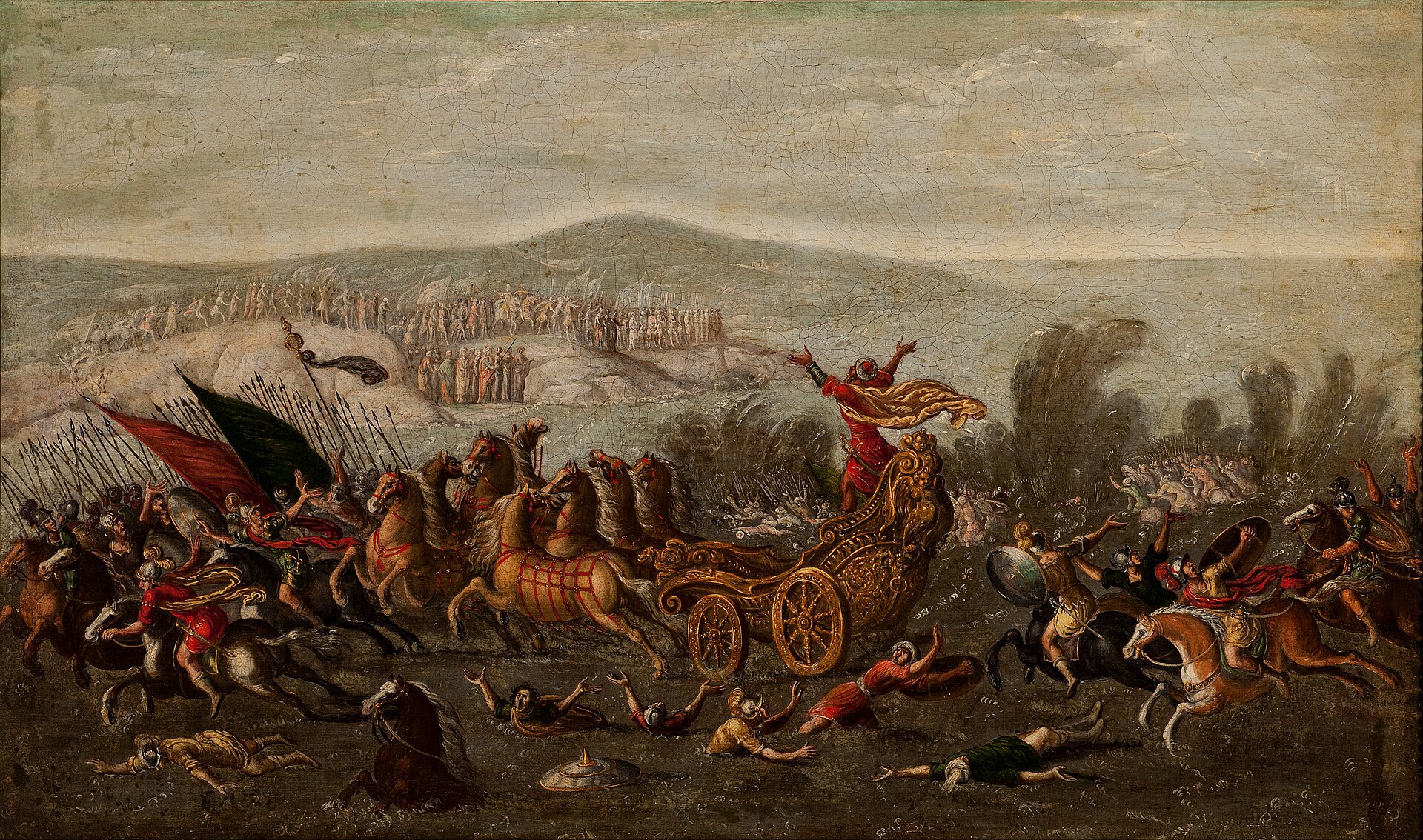
This page draws on Albert Barnes, Notes, Explanatory and Practical, on the Old and New Testaments (1832-1869); Augustine of Hippo, Exposition on Psalm 114; Charles Spurgeon, The Treasury of David; Charles Spurgeon, The Treasury of David, Vol. 5; Jamieson, Fausset & Brown, Commentary Critical and Explanatory on the Whole Bible; John Gill, Exposition of the Old Testament (1748-1763) and Matthew Henry, Commentary on the Whole Bible.