
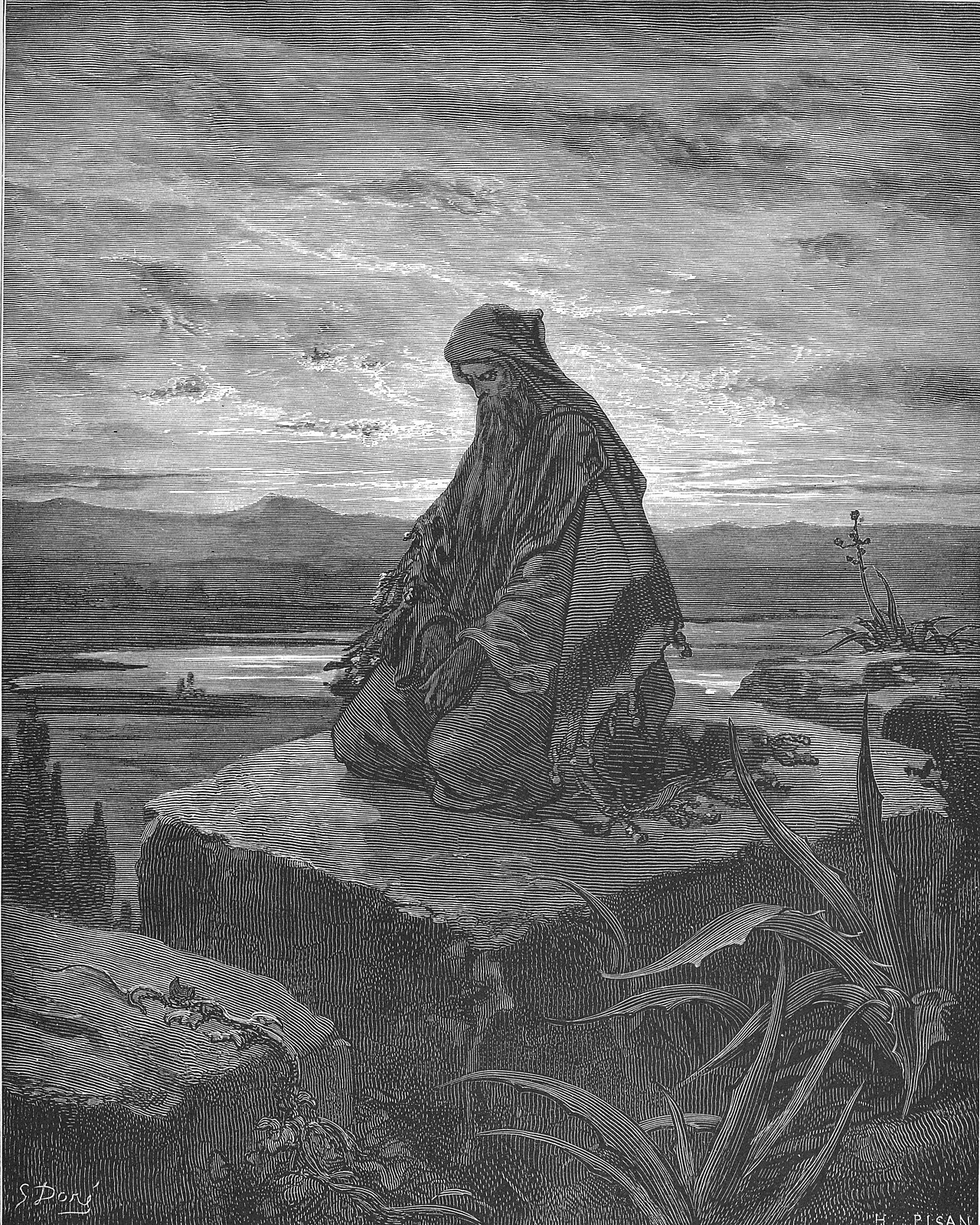
Isaiahchapter 47
15 verses · Isaiah · 8th century BC · The Prophets
So now hear this, O lover of luxury who sits securely, who says to herself, ‘I am, and there is none besides me. I will never be a widow or know the loss of children.’
Introduction
Isaiah, The Prophets, Isaiah Overview.
Isaiah wrote this chapter for exiles serving a city that called itself eternal. It is a taunt song, spoken to Babylon as though she were a proud queen about to lose her throne. The chapter names the city's cruelty to God's people and the arts she trusted to protect her. Listen for the words Babylon says about herself, because they are words the book elsewhere gives to God alone. The first hearers lived under her rule and knew her claims well.
Context
- Who
- Exiles serving a city that called itself eternal
- What
- A taunt song announcing the fall of Babylon from queen to slave.
- Where
- Babylon, the capital of the Chaldeans, on the Euphrates.
- When
- Spoken about 700 to 690 BC by the book's own reading; Babylon fell to Cyrus in 539 BC.
- Why
- To show that the empire that showed no mercy to God's people would be judged, and that her star watchers could not save her.
Historical context
The opening image is a demotion measured in household work. Grinding grain on a hand mill was the daily labor of the lowest servant in a house, kneeling, pushing a stone back and forth for hours to make one day's flour. Isaiah tells the queen city to come down from the throne, sit in the dust, take the millstones and grind meal. Then: uncover your locks, lift your skirt, uncover the leg, pass over the rivers. That is a deportee's march, wading a ford with skirts hitched up in front of everyone. In that culture, the shame of it was the worst part.
Show the rest of the historical context, 3 more paragraphs
The charge against her is not conquest but cruelty in it. God says he was angry with his people and gave them into her hand, and she showed them no mercy, and on the aged she laid her yoke very heavily. She was the rod, and she enjoyed it.
Her defense is astrology, and the description is exact. Babylon kept enormous archives of celestial omens; professional star-watchers reported what the moon and planets meant, and royal decisions were made on their reports. Isaiah names them as they were classified: the astrologers, the stargazers, the monthly prognosticators who forecast by the new moon. He tells her to stand up with her many enchantments and see whether they can help, and adds the driest line in the book, they cannot deliver themselves from the flame.
The two losses she thought impossible arrive together and on one day: the loss of children and widowhood. She had said in her heart, I am, and there is none besides me; I shall not sit as a widow, nor know the loss of children. When Babylon fell to Cyrus it was in a single night and largely without a fight, and the slow emptying of the city took centuries. Many readers take the total desolation described here, as in chapter 13, to reach past that historic night to a final Babylon at the end of the age.
Significance
Exiles working under Babylonian masters were told the exact sentence pronounced on the empire, in the empire's own religious language, before it was passed.
Show the rest of the significance, 1 more paragraph
And there is a warning inside it for Israel. Babylon's undoing was the sentence I am, and there is none besides me, a phrase that in this book belongs to God alone. It is said four times in these chapters by the LORD, and once by a city that thought it could borrow it.
This chapter in Jewish lifeWhat this chapter is in Jewish life and reading.
What is done
The site's own table in src/lib/hebraic/readings.ts, probed for this lane, printed no weekly portion and no Haftarah from this chapter, and no festival reading for the book. That table carries the Haftarah of each of the fifty-four weekly portions and the books read whole at the feasts, and it carries nothing for the special Sabbaths or the fast days. This card therefore names no public reading of the chapter and leaves that question to a source that holds those readings.
The corpus joins the chapter to the weeks of the Torah portions through the works arranged by portion. Under the first verse it carries Midrash Tanchuma Buber, Tazria 16:2 and Midrash Tanchuma, Tazria 11:1. Under the fourth verse it carries Bereshit Rabbati, Parashat Vayishlach 30. Under the sixth verse it carries Midrash Tanchuma Buber, Tazria 16:1. Under the eighth verse it carries Midrash Tanchuma Buber, Toldot 9:1. Under the fourteenth verse it carries Midrash Tanchuma Buber, Vayeshev 4:1 and Midrash Tanchuma Buber, Vayetzei 15:2. Under the nineteenth verse it carries Bereshit Rabbati, Parashat Vayetze 51.
How it is read
Two commentators on this chapter carry English in the corpus. Rashi is quoted from The Judaica Press complete Tanach with Rashi, translated by A. J. Rosenberg, which Sefaria reports as CC-BY, and every quotation of it is held to fifty words or fewer because the translation is modern. Ibn Ezra is quoted from the version Sefaria titles Commentary of Ibn Ezra on Isaiah - trans. by M. Friedlander, 1873, which it reports as Public Domain.
The chapter is the fall of Babylon, and Rashi reads it as a sentence carried out on a proud city. The millstones of the second verse he reads in two ways, as hard labour under the kings of Persia and Media, or as grinding flour for the road into exile (Rashi on Isaiah 47:2:1). The charge against her is in the sixth verse, and Rashi states it plainly: "On the aged, who were unable to bear hard work, you made heavy your yoke". Her boast that she would reign forever enticed her "until you did not take to heart these blows that would come upon you" (Rashi on Isaiah 47:6:1 and 47:7:1).
The two commentators part on one small point of voice. At the fourth verse Ibn Ezra hears Israel speak: "Then the Israelites will say, this is our redeemer". Rashi hears the prophet: "The prophet states: All this the Lord of Hosts does, to redeem us from there" (Ibn Ezra on Isaiah 47:4:1; Rashi on Isaiah 47:4:1).
The astrologers of the thirteenth verse draw Rashi's longest note. He reports Jonathan's rendering, the gazers of the heavens, and Menahem's grouping of the word with the words for clear and bright (Rashi on Isaiah 47:13:1). At the eleventh verse he follows Jonathan again, reading that Babylon will not know how to pray against the evil that comes on her (Rashi on Isaiah 47:11:1). Ibn Ezra's notes on the chapter are grammar, the Niphal of a verb at the third verse and an impersonal plural at the fifth (Ibn Ezra on Isaiah 47:3:1 and 47:5:1).
The corpus carries one further note on this chapter without an English text, marked linked because Sefaria holds no English version of the ref. It stands cited and unquoted at Radak on Isaiah 47:5:1.
What the rabbis say
The corpus carries forty rabbinic locators on this chapter and the text of none, so each is cited and linked here rather than quoted. On the first verse it holds Midrash Tanchuma Buber, Tazria 16:2, Midrash Tanchuma, Tazria 11:1 and Shir HaShirim Rabbah 3:4:2. On the second verse it holds Bamidbar Rabbah 9:45, Berakhot 24a:17, Eikhah Rabbah 1:41 and Ein Yaakov (Glick Edition), Khagigah 2:29. It holds Ein Yaakov (Glick Edition), Sanhedrin 11:38 and Ein Yaakov, Berakhot 3:15 there as well. On the fourth verse it holds Bereshit Rabbati, Parashat Vayishlach 30, Ein Yaakov, Khagigah 2:17, Kohelet Rabbah 4:1:1 and Shir HaShirim Rabbah 4:7:1.
It holds Vayikra Rabbah 32:8 there as well. On the sixth verse it holds Midrash Lekach Tov, Numbers 11:16:1, Midrash Tanchuma Buber, Tazria 16:1, Sifrei Bamidbar 92:1 and Sifrei Devarim 319:5. It holds Sifrei Zuta 11:16:4 and Vayikra Rabbah 13:5 there as well. On the eighth verse it holds Aggadat Bereshit 2:2 and Ein Yaakov (Glick Edition), Shabbat 16:5. It holds Learning to Read Midrash, Chapter 4; The Role of the Prooftext; The Lady and Her Attendants 3 and Midrash Tanchuma Buber, Toldot 9:1 there as well.
It holds Shemot Rabbah 15:16 and Sifrei Aggadah on Esther, Midrash Panim Acherim, Version II 6:5 there as well. On the tenth verse it holds Midrash Tehillim 48:2. On the eleventh verse it holds Midrash Lekach Tov, Genesis 32:21:2. On the thirteenth verse it holds Bamidbar Rabbah 20:7, Bereshit Rabbah 85:2 and Learning to Read Midrash, Appendix; Hebrew Sources 14:3. It holds Learning to Read Midrash, Chapter 14; The Meaning of a Chronological Problem; Connecting Yosef and Yehuda 122 there as well. It holds Learning to Read Midrash, Chapter 14; The Meaning of a Chronological Problem; Connecting Yosef and Yehuda 25 there as well.
It holds Mekhilta DeRabbi Shimon Ben Yochai 20:13 there as well. On the fourteenth verse it holds Aggadat Bereshit 59:1, Devarim Rabbah 2:29, Midrash Tanchuma Buber, Vayeshev 4:1 and Midrash Tanchuma Buber, Vayetzei 15:2. It holds Pesikta Rabbati 12:1 there as well. On the nineteenth verse it holds Bereshit Rabbati, Parashat Vayetze 51. What each of them teaches is a saying of the rabbis, and is reported as theirs wherever this site quotes one. The quotations wait on a fetch that carries the text.
Sources: Rashi, Rashi on Isaiah 47:1:1 to 47:15:1, The Judaica Press complete Tanach with Rashi, translated by A. J. Rosenberg, reported CC-BY; Ibn Ezra, Ibn Ezra on Isaiah 47:3:1 to 47:7:1, Commentary of Ibn Ezra on Isaiah - trans. by M. Friedlander, 1873, reported Public Domain; Radak, Radak on Isaiah 47:5:1, cited by ref because the corpus carries no English text; The Sefaria corpus, scripts/data/sources/sefaria/isaiah/47.json, the 40 Talmud and Midrash locators of this chapter; The site's own files, src/lib/hebraic/readings.ts, printing no portion and no Haftarah for this chapter and no festival reading for this book.
The heads below are this chapter's scenes. The numbered points under each are its verses.
Come Down and Sit in the Dust, Virgin Daughter of Babylon
Isaiah 47:1-4
“Go down and sit in the dust, O Virgin Daughter of Babylon” takes away both throne and title. She is set to a slave’s labor, “Take millstones and grind flour”. Into the taunt verse 4 sets “the Holy One of Israel”, the book’s title through both its halves.
Isaiah 47:1
“Virgin daughter of Babylon. It was a figure of speech frequently employed by Hebrew writers, to call any nation by the title of "Daughter." He calls her "Virgin," not because she was modest or chaste, but because she had been brought up softly and delicately like "virgins," and had never been forced by enemies, as we formerly said when speaking of Sidon.”
John Calvin · Commentaries (1554)reformed
1 more voice on this verseWhat preachers and commentators have said about this verse, in their own words.
Isaiah 47:1
“Come down - Descend from the throne; or from the seat of magnificence and power. The design of this verse has already been stated in the analysis. It is to foretell that Babylon would be humbled, and that she would be reduced from her magnificence and pride to a condition of abject wretchedness. She is therefore represented as a proud female accustomed to luxury and ease, suddenly brought to the lowest condition, and compelled to perform the most menial services.”
Take millstones and grind flour: Clarke notes that to grind flour on hand-mills was the hardest work of slaves, often laid on them as a punishment. The Daughter of Babylon now takes the millstones herself. Calvin reads the picture as a city of the highest honor sunk to the lowest disgrace.
Isaiah 47:2
“Take the millstones, and grind meal “Take the mill, and grind corn” - It was the work of slaves to grind the corn. They used hand-mills: water-mills were not invented till a little before the time of Augustus, (see the Greek epigram of Antipater, which seems to celebrate it as a new invention, Anthol. Cephalae, 653); wind-mills, not until long after. It was not only the work of slaves, but the hardest work; and often inflicted upon them as a severe punishment: - Molendum in pistrino; vapulandum; habendae compedes. Terent. Phorm. 2:1. 19. Hominem pistrino dignum. Id. Heaut. 3:2.”
Adam Clarke · Commentary on the Bible (1810-1826)evangelical
1 more voice on this verse
Isaiah 47:2
“The whole of this description tends to shew that there shall be a great change among the Babylonians, so that this city, which was formerly held in the highest honor, shall be sunk in the lowest disgrace, and subjected to outrages of every kind, and thus shall exhibit a striking display of the wrath of God.”
John Calvin · Commentaries (1554)reformed
Your nakedness will be uncovered: Barnes reads the uncovered nakedness as the abject state of the city, its pride stripped to the deepest shame. Vitringa, whom Barnes cites, took it to mean that the weakness, poverty and cruelty of Babylon would all be exposed. The vengeance is the LORD's alone.
Isaiah 47:3
"Bare your legs and cross the rivers. Your shame will be uncovered and your disgrace shown." For she was once led into captivity. She was taken from her own land into that of the victors. Being between the two rivers, they had to cross on their feet and uncover themselves. What decorum the women had was lost, and out of necessity even the private parts of their bodies were exposed to many.
Cyril of Alexandria · written before 444 · Commentary on Isaiah 4:3.47:1-3patristic
1 more voice on this verse
Isaiah 47:3
“Thy nakedness - This denotes the abject condition to which the city would be reduced. All its pride would be taken away; and it would be brought to such a state as to fill its inhabitants with the deepest mortification and shame. Vitringa supposes that it means, that all the imbecility and weakness; the vileness; the real poverty; the cruelty and injustice of Babylon, would be exposed. But it more probably means, that it would be reduced to the deepest ignominy.”
Clarke renders Redeemer as Avenger, the kinsman who takes up the cause of his own, which ties this verse to the vengeance announced. Henry applies the title to Christ. He is both LORD of Hosts and the Holy One of Israel, power and holiness engaged against Babylon and for Israel.
Isaiah 47:4
"He is the Holy One of Israel, a God in covenant with us, who has his residence among us, and will faithfully perform all the promises he has made to us." God's power and holiness are engaged against Babylon and for Zion. This may fitly be applied to Christ, our great Redeemer. He is both Lord of hosts and the Holy One of Israel.
Matthew Henry · Commentary on the Whole Bible (1707-1721)puritan
1 more voice on this verse
Isaiah 47:4
“Our Redeemer “Our Avenger” - Here a chorus breaks in upon the midst of the subject, with a change of construction, as well as sentiment, from the longer to the shorter kind of verse, for one distich only; after which the former subject and style are resumed. See note on Isa 45:16 (note).”
Adam Clarke · Commentary on the Bible (1810-1826)evangelical
Isaiah 47:5-7
“Sit in silence and go into darkness” strips Babylon of her second title. The charge is specific: the LORD placed his people “under your control” in anger, and “You showed them no mercy”. She said, “I will be queen forever”, and did not “consider their outcome.”
Isaiah 47:5
“These words are spoken by the Lord, our redeemer and the one who has freed us from a life of hard labor.… Or as Symmachus puts it, "You will no longer be called queenly. For I was angry with my people and harmed my inheritance." And I, for reasons of the right discipline, handed my people into your hands, as part of my taming them, but you showed fellow sufferers no kindness by treating them excessively harshly.”
Eusebius of Caesarea · written before 339 · Commentary on Isaiah 2:32patristic
2 more voices on this verse
Isaiah 47:5
“Sit thou silent - The same general sentiment is expressed here as in the preceding verses, though the figure is changed. In Isa 47:1-3, Babylon is represented under the image of a frivolous and delicately-reared female, suddenly reduced from her exalted station, and compelled to engage in the most menial and laborious employment. Here she is represented as in a posture of mourning.”
Isaiah 47:5
“These things are mentioned both to justify God in bringing these judgments upon her and to mortify her, and put her to so much the greater shame, under these judgments; for, when God comes forth to take vengeance, glory belongs to him, but confusion to the sinner.”
Matthew Henry · Commentary on the Whole Bible (1707-1721)puritan
I profaned My heritage: When the LORD profaned His heritage, He treated His people as common ground, and Gill names their idolatries as the reason. Clarke sends the reader to Isaiah 10 for the same pattern. One wicked nation is placed over another, and the one placed answers for its own lack of mercy.
Isaiah 47:6
“I was wroth with my people,.... The people of Israel, for their sins and transgressions, particularly their idolatries.”
Barnes grounds the boast in Babylon's walls, gates and stores, thought able to feed the city through a siege of many years. Aquinas hears the same queen's boast in Revelation 18, set in the heart of the great city. Pride forgets the outcome.
Isaiah 47:7
“And thou saidst, I shall be a lady for ever - This passage describes the pride and self-confidence of Babylon. She was confident in her wealth; the strength of her gates and walls; and in her abundant resources to resist an enemy, or to sustain a siege. Babylon was ten miles square; and it was supposed to contain provisions enough to maintain a siege for many years.”
1 more voice on this verse
Isaiah 47:7
“She looked upon the patent of her honour to be not merely during the pleasure of the sovereign Lord, the fountain of honour, or during her own good behaviour, but to be perpetual to the present generation and their heirs and successors for ever. She was not only proud that she was a lady, but confident that she should be a lady for ever.”
Matthew Henry · Commentary on the Whole Bible (1707-1721)puritan
Astrologers and Stargazers Cannot Save Thee
Isaiah 47:8-11
O lover of luxury who sits securely: Twice she claims what the LORD says in the chapters around it, “I am, and there is none besides me”. The two losses, “loss of children, and widowhood”, come “in a moment, in a single day”. Verse 10 names the cause, “Your wisdom and knowledge led you astray”.
Isaiah 47:8
“Therefore hear now this, thou that art given to pleasures,.... To carnal lusts and pleasures; gratifying her sensual appetite; indulging herself in everything that was agreeable to the senses; abounding in delicacies, and living deliciously; as is said of mystical Babylon, Rev 18:4, particularly given to venereal pleasures. Curtius says (g), "no city was more corrupt in its manners, or furnished to irritate or allure to immoderate pleasures.”
2 more voices on this verse
Isaiah 47:8
“Therefore hear now this - The prophet proceeds, in this verse and the following, to detail more particularly the sins of Babylon, and to state the certainty of the punishment which would come upon her. In the previous verses, the denunciation of punishment had been figurative. It had been represented under the image of a lady delicately trained and nurtured, doomed to the lowest condition of life, and compelled to stoop to the most menial offices. Here the prophet uses language without figure, and states directly her crimes, and her doom.”
Isaiah 47:8
“It is presumption to say of any creature, "It is, and there is not its like, there is none besides it" (for creatures stand very nearly upon a level with one another); but it is insufferable arrogance for any to say so of themselves, and an evidence of their self-ignorance.”
Matthew Henry · Commentary on the Whole Bible (1707-1721)puritan
in a moment, in a single day: Eusebius reads widowhood and loss of children as a kingdom stripped at once of its rulers and of the people they rule. Barnes stresses the speed, a city overthrown suddenly and unexpectedly. Her many sorceries and spells stand powerless against it.
Isaiah 47:9
“And what follows describes very clearly the arrogance of the kingdom of the Chaldeans and the foolishness of their royal people, in such a way that they ascribed to themselves immortal power and an indestructible rule. However, suddenly you will experience a loss of men and the destruction of your children—that is, men to rule among you, and children meaning those to be ruled. These things will come at once upon you and reveal you abandoned and childless. This will affect you not only through these things proclaimed but also through the extent of sorceries and incantations.”
Eusebius of Caesarea · written before 339 · Commentary on Isaiah 2:32patristic
2 more voices on this verse
Isaiah 47:9
“Widowhood is not to them a calamity in perfection, for they have this to comfort themselves with, that their Maker is their husband; loss of children is not, for he is better to them than ten sons.”
Matthew Henry · Commentary on the Whole Bible (1707-1721)puritan
Isaiah 47:9
“In a moment, in one day - This is designed, undoubtedly, to describe the suddenness with which Babylon would be destroyed. It would not decay slowly, and by natural causes, but it would not decay slowly, and by natural causes, but it would be suddenly and unexpectedly destroyed.”
You were secure in your wickedness: Henry observes that Babylon felt secure in her wickedness, when that wickedness was the one thing certain to ruin her. Her boast that no one sees her forgets the LORD. Barnes takes the wickedness to be her pride, ambition and oppression of other nations.
Isaiah 47:10
“They doubt not but they shall be too hard for all their enemies, because they dare lie, and kill, and forswear themselves, and do any thing for their interest. Thus they trust in their wickedness to secure them, which is the only thing that will ruin them.”
Matthew Henry · Commentary on the Whole Bible (1707-1721)puritan
2 more voices on this verse
Isaiah 47:10
“For thou hast trusted in thy wickedness - The word ‘wickedness’ here refers doubtless to the pride, arrogance, ambition, and oppressions of Babylon. It means, that she had supposed that she was able by these to maintain the ascendancy over other nations, and perpetuate her dominion. She supposed that by her great power, her natural advantages, and her wealth, she could resist the causes which had operated to destroy other nations.”
Isaiah 47:10
“And since Isaiah could not find one man to address, he spoke to the daughter of the Chaldeans, promising these things especially: The astrologers of heaven maintained and supported you, announcing to you what was coming to you from heaven.”
Eusebius of Caesarea · written before 339 · Preparation for the Gospel 6:11patristic
how to charm it away: Barnes connects the word behind charm it away with shachar, the dawn, and follows the margin that reads the disaster's morning as hidden from her. Gill names the quarter it came from. Babylon had no quarrel with Cyrus and never dreamed the calamity would rise from him.
Isaiah 47:11
“Therefore shall evil come upon thee,.... The evil of punishment, a great calamity; so Nebuchadnezzar foretold, as Abydenus relates (o), that συμφορη, a calamity, should come upon the Babylonians; a day of evil, because of the above sins Babylon was guilty of: thou shall not know from whence it riseth; from what quarter it will come, little dreaming of Cyrus, with whom the Chaldeans had had no quarrel.”
1 more voice on this verse
Isaiah 47:11
“Therefore shall evil come upon thee - In consequence of thy pride and self-confidence; of the prevalence of corruption, licentiousness, and sin; of the prevalence of the arts of magic and of divination abounding there; and of the cruel and unfeeling oppression of the people of God; for all these crimes ruin shall come certainly and suddenly upon thee. Thou shalt not know from whence it cometh - Margin, ‘The morning thereof.’ The margin expresses the true sense of the phrase. The word used here (שׁחר shachar) means “the aurora,” the dawn, the morning (see the notes at Isa 14:12).”
Isaiah 47:12-15
take your stand with your spells: “So take your stand with your spells” summons Babylon’s occult resources to the trial. Babylon was famed for reading the heavens, and these disciplines fail when they are needed. “Surely they are like stubble; the fire will burn them up”, and “not one of them can save you.”
Isaiah 47:12
“Stand now with thy enchantments - (See the notes at Isa 47:9). This is evidently sarcastic and ironical. It is a call on those who practiced the arts of magic to stand forth, and to show whether they were able to defend the city, and to save the nation. Wherein thou hast labored - Or in practicing which thou hast been diligently employed. From thy youth - From the very commencement of thy national existence. Babylon was always distinguished for these arts.”
The astrologers who observe the stars were, as Gesenius explains, dividers of the heavens who cast a person's fate from four signs at birth. Those who monthly predict her fate read each new moon. Barnes takes her weariness as exhaustion from so many counselors and arts, practiced from her youth.
Isaiah 47:13
“Thou art wearied - Thou hast practiced so many arts, and practiced them so long, that thou art exhausted in them. The ‘counsels’ here referred to, are those which the astrologers and diviners would take in examining the prognostications, and the supposed indications of future events. Let now the astrologers - Call in now the aid of the various classes of diviners on whom thou hast relied to save thee from the impending calamity and ruin.”
2 more voices on this verse
Isaiah 47:13
“And as to astrologers: let now the astrologers stand against their enemies, if they could, for they abounded in these arts, too: be not afraid of the signs of heaven, which the heathens fear (Jer 10:2).”
Thomas Aquinas · written before 1274 · Commentary on Isaiahpatristic
Isaiah 47:13
“GESENIUS explains it: the dividers of the heavens. In casting a nativity they observed four signs:--the horoscope, or sign which arose at the time one was born; the mid-heaven; the sign opposite the horoscope towards the west; and the hypogee. monthly prognosticators--those who at each new moon profess to tell thereby what is about to happen.”
Jamieson, Fausset & Brown · Commentary Critical and Explanatory on the Whole Bible (1871)reformed
ConnectionsDeuteronomy 18:10
Surely they are like stubble: The flame that burns this stubble is the LORD's judgment, the fire Barnes finds in Isaiah 1:31 and 30:30. Origen, reading the Greek, took the coals as a help that disciplines the Chaldeans for their good. The Hebrew leaves them no coals to warm them.
Isaiah 47:14
“Behold, they shall be as stubble - They shall be no more able to resist the judgments which are coming upon the city, than dry stubble can resist the action of the fire. A similar figure is used in Isa 1:31 (see the notes at that verse). Compare also Isa 29:6; Isa 30:30, where fire is a symbol of the devouring judgments of God. They shall not deliver themselves - Margin, as Hebrew, ‘Their souls.’ The meaning is, that they would be unable to protect themselves from the calamities which would come upon them and the city.”
2 more voices on this verse
Isaiah 47:14
And when God afflicts those who deserve punishment, how else is it intended except for their good? It is he who says to the Chaldaeans, "You have coals of fire; sit on them. They shall be a help to you." Further, let them hear what is related in the seventy-seventh psalm, which is ascribed to Asaph, about those who fell in the desert. It says, "When he slew them, then they sought him."
Origen of Alexandria · written before 253 · On First Principles 2:5.3patristic
Isaiah 47:14
THIS text is part of a terrible description of God's judgment upon Babylon and Chaldea. The Prophet had clearly written out the indictment of the Lord against that tyrannical people, and having proved their guilt he pronounces their sentence. He accused them of showing no mercy to the inheritance of the Lord which, in His wrath, He had given into their hands. He charges them with pride and boastfulness, for Chaldea had said in her heart, "I am and there is none beside me." And Babylon had boasted, "I shall be a lady forever. I shall see no sorrow."
Barnes takes those with whom she labored and traded to be the diviners and merchants gathered at Babylon from her youth, a mart for foreigners. Henry sees them again in Revelation 18, standing far off to lament. Each goes his own way and leaves her to fall.
Isaiah 47:15
“With whom thou hast labored - The multitude of diviners, astrologers, and merchants, with whom thou hast been connected and employed. The idea is, that Babylon had been the mart where all of them had been assembled. Even thy merchants from thy youth - Babylon was favorably situated for traffic; and was distinguished for it. Foreigners and strangers had resorted there, and it was filled with those who had come there for purposes of trade.”
1 more voice on this verse
Isaiah 47:15
“The New-Testament Babylon is lamented by the merchants that were made rich by her, but they very prudently stand afar off to lament her ( Rev. xviii. 15 ), not willing to attempt any thing for her succour. Happy are those who by faith and prayer deal with one that will be a very present help in time of trouble!”
Matthew Henry · Commentary on the Whole Bible (1707-1721)puritan
Keep studying
Sources for this chapter
The summary
Jamieson, Fausset & Brown, Commentary Critical and Explanatory; John Calvin, Commentaries; John Wesley, Notes on the Old Testament and Matthew Henry, Complete Commentary.
The exposition
Adam Clarke, Commentary on the Bible; Albert Barnes; Eusebius of Caesarea, COMMENTARY ON ISAIAH 2:32; Franz Delitzsch, Biblical Commentary on the Prophecies of Isaiah; Jamieson, Fausset & Brown, Commentary Critical and Explanatory on the Whole Bible; John Calvin, Commentaries; John Gill; Matthew Henry, Commentary on the Whole Bible; Origen of Alexandria, ON FIRST PRINCIPLES 2:5.3 and Thomas Aquinas, Commentary on Isaiah.