
1 Chronicleschapter 6
81 verses · Ezra, by tradition · 450 to 400 BC · History
Azariah was the father of Seraiah, and Seraiah was the father of Jehozadak.
Introduction
Ezra, by tradition, History, 1 Chronicles Overview.
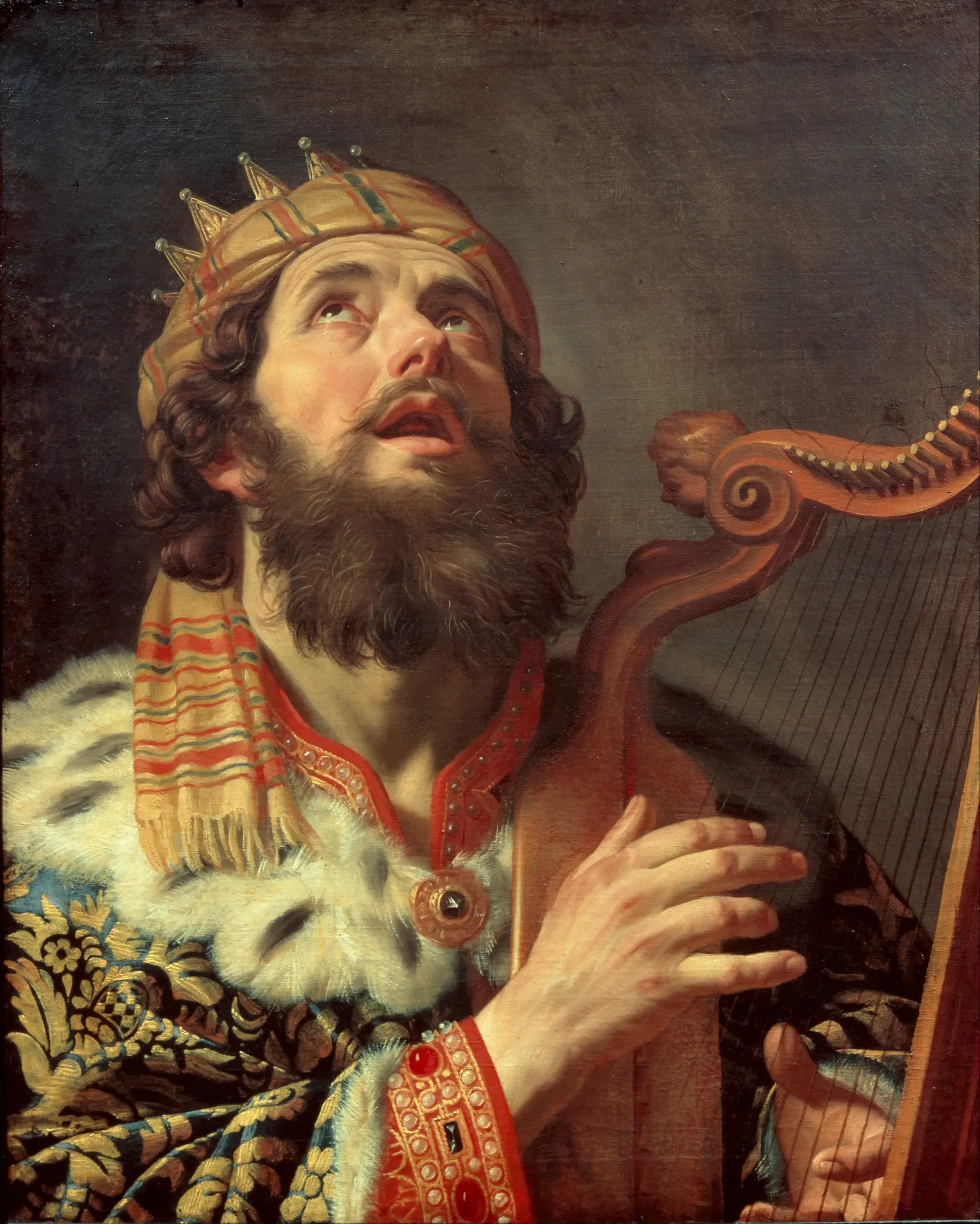
This chapter was written for the priests, Levites and singers who served at the rebuilt temple. It stands at the centre of the book's nine chapters of names, and its subject is the tribe that held no land. Its compiler traces the high priests from Aaron to the exile, then the families of singers, then the towns given to Levi. Listen for how the singers are placed around the one in the middle, and for how the towns are spread through every tribe. For the first hearers it was the staff list of the house they served in.
Context
- Who
- Priests and Levites of the second temple who served by right of this list
- What
- The line of the high priests, the families of temple singers and the towns with pasturelands given to the Levites.
- Where
- The sanctuary in Jerusalem and the Levite towns spread through the land of every tribe.
- When
- From Aaron to the exile of 586 BC, set down after the return from Babylon.
- Why
- To establish who could serve at the altar, who could lead the song and where the Levites lived.
Historical context
The chapter belongs to Levi, the tribe that held no territory and served at the altar.
Show the rest of the historical context, 4 more paragraphs
The high priesthood ran in one family, and the list traces it from Aaron through Phinehas and Zadok down to Jehozadak, who went into captivity when the LORD sent Judah and Jerusalem into exile by the hand of Nebuchadnezzar. That last name is the credential of Joshua son of Jehozadak, the high priest who came home with Zerubbabel, so the list exists to prove he was who he said he was.
The middle section names the three families of temple musicians and where each stood, Heman in the centre, Asaph at his right hand and the sons of Merari on the left. Many psalms carry those names in their headings, so the hymnbook and the duty roster match.
The last section is the map of Levi's towns. The tribe received towns with their surrounding pasturelands scattered through everyone else's land, so that teaching and sacrifice were within a walk of any region. The priestly families clustered near Jerusalem in Judah, Benjamin and Simeon, and the rest of Levi was spread to the north and east.
A first hearer knew what the arrangement cost and what it bought. A Levite lived among other tribes, drew his living from tithe and pasture, and held his place by a written line.
Significance
Everything the second temple did rested on lines like these, who could enter the holy place, who could sing, who could carry and who could teach. This was the staff list of the building the hearers were standing in.
Show the rest of the significance, 1 more paragraph
It carried a hard edge as well. A family that could not show its line did not serve, so in a community rebuilding from scratch the chapter was both a door and a wall.
This chapter in Jewish lifeWhat this chapter is in Jewish life and reading.
What is done
The chapter of the Levites has no place in the synagogue year. The site's own table in src/lib/hebraic/readings.ts printed parashot total 0 and haftarah uses total 0 for this book, and no festival reading.
Its material is met in the two portions that carry the same subject, and the corpus names both. Under the sixteenth verse, where David stations the singers, it carries Midrash Tanchuma Buber, Korach 7:1, and under the twenty-second Midrash Tanchuma, Korach 4:1 with Bamidbar Rabbah 18:5. Korach is the portion in which the standing of the Levites is contested and settled. Under the thirty-fifth, the sons of Aaron at the two altars, it carries Midrash Tanchuma, Shmini 3:1, Midrash Tanchuma Buber, Shmini 4:1 and Shemot Rabbah 15:1. Shmini is the portion of the eighth day, when the altar service begins.
How it is read
Rashi is the one commentator on this chapter whose English the corpus carries, quoted here from The Judaica Press complete Tanach with Rashi, translated by A. J. Rosenberg, which Sefaria reports as CC-BY. His notes on the singers are the ones that show a reader what this chapter was for. David stationed them when the ark came up from the house of Obed Edom. Rashi proves the arrangement from the end of chapter 16 of this book, where Asaph and his brothers serve before the ark continually (Rashi on I Chronicles 6:16:1). The word the verse uses for their manner he reads as the custom in which David had placed them (Rashi on I Chronicles 6:17:1).
The floor plan of that service stands in two short notes. Heman and his sons were in the middle. Asaph stood at Heman's right, and the sons of Merari stood at Heman's left (Rashi on I Chronicles 6:24:1 and 6:29:1). Three families singing in three fixed places is the shape the tradition keeps of Temple music.
The other Levites are given their work in the same plain manner. They were appointed for the whole service of the Tabernacle, as gate sentries and as the men who flayed the sacrifices, which Rashi proves from 2 Chronicles 35:11 (Rashi on I Chronicles 6:33:1). The sons of Aaron are marked off from them by the two altars, the altar of the burnt offering and the altar of the incense (Rashi on I Chronicles 6:35:1). The priestly line in the list runs only as far as Solomon, and Rashi says so rather than leaving the reader to count (Rashi on I Chronicles 6:38:1).
The towns at the end of the chapter carry a note about how the land was divided. All Israel cast lots to decide how much of the land would go to the priests and the Levites. The lot fell on Judah first, which is why Judah's towns head the list (Rashi on I Chronicles 6:39:1). The field around Hebron went to Caleb because Moses had given it to him (Rashi on I Chronicles 6:41:1).
One note in the chapter is textual rather than liturgical. The sons of Samuel are listed with a word that can be read as a name or as the ordinal second, and Rashi gives both readings. Either Abiah is the Joel of the eighteenth verse and of 1 Samuel 8:2, or the verse counts a second son whose name went unwritten. He supports the second reading from two places where the definite article is likewise dropped (Rashi on I Chronicles 6:13:1).
The corpus carries fourteen further notes on this chapter without an English text, each marked linked because Sefaria holds no English version of the ref. Eight stand cited and unquoted at Radak on I Chronicles 6:1:1, 6:5:1, 6:7:1, 6:10:1, 6:11:1, 6:18:1, 6:28:1 and 6:34:1. Three stand at Metzudat David on I Chronicles 6:4:1, 6:8:1 and 6:27:1, and three at Malbim on I Chronicles 6:14:1, 6:19:1 and 6:26:1.
What the rabbis say
The corpus carries nineteen rabbinic locators on this chapter and the text of none, so each is cited and linked here rather than quoted. It is the fewest of any chapter in the first nine, counted across the fifteen corpus files this lane read. On the third verse, the children of Amram, it holds Yalkut Shimoni on Torah at 526:1 and 750:16.
Samuel's family draws the next run. On the thirteenth verse the corpus holds Midrash Shmuel 1:6, Bamidbar Rabbah 10:5, Ruth Rabbah (Lerner) 4:3:3 and Bereshit Rabbati, Parashat Vayetze 23. On the sixteenth, David's appointment of the singers, it holds Midrash Tanchuma Buber, Korach 7:1. On the eighteenth it holds Bereshit Rabbah 98:5.
The house of Kohath and the singers carry the rest. On the twenty-second verse it holds Bamidbar Rabbah 18:5, Midrash Tanchuma, Korach 4:1 and Midrash Tanchuma, Vayechi 10:2. On the twenty-third it holds Midrash Aggadah, Genesis 49:6:2, and on the twenty-seventh Ein Yaakov (Glick Edition), Eiruvin 6:2. On the thirty-fourth it holds Kohelet Rabbah 1:4:4 and Midrash Shmuel 15:2. On the thirty-fifth, the sons of Aaron at the altars, it holds Shemot Rabbah 15:1 with Midrash Tanchuma, Shmini 3:1 and Midrash Tanchuma Buber, Shmini 4:1. On the forty-first, the field given to Caleb, it holds Yalkut Shimoni on Torah 787:17. What each of them teaches is a saying of the rabbis, and is reported as theirs wherever this site quotes one. The quotations wait on a fetch that carries the text.
Sources: Rashi, Rashi on I Chronicles 6:13:1 to 6:41:1, The Judaica Press complete Tanach with Rashi, translated by A. J. Rosenberg, reported CC-BY; Radak, Radak on I Chronicles 6:1:1, 6:5:1, 6:7:1, 6:10:1, 6:11:1, 6:18:1, 6:28:1 and 6:34:1, cited by ref because the corpus carries no English text; Metzudat David, Metzudat David on I Chronicles 6:4:1, 6:8:1 and 6:27:1, cited by ref because the corpus carries no English text; Malbim, Malbim on I Chronicles 6:14:1, 6:19:1 and 6:26:1, cited by ref because the corpus carries no English text; The Sefaria corpus, scripts/data/sources/sefaria/1-chronicles/6.json, the 19 Midrash locators of this chapter; The site's own files, src/lib/hebraic/readings.ts, printing no portion, no Haftarah and no festival reading for this book.
The heads below are this chapter's scenes. The numbered points under each are its verses.
The high-priestly line carried away into exile
1 Chronicles 6:1-3
Gershon, Kohath, and Merari: Levi's three sons head the chapter. Amram's children stand together as three names, Aaron, Moses, and Miriam, the only place in the chapter where a woman is named among the sons. Aaron's four sons follow, and only two of them, Eleazar and Ithamar, carry the line forward.
1 Chronicles 6:1
“The sons of Levi,.... After an account of the chief of the tribes of Judah and Simeon, of Reuben, Gad, and the half tribe of Manasseh, follows that of Levi, and his posterity; the kingdom being given to Judah, the birthright to Joseph, and the priesthood to Levi: the immediate sons of Levi were Gershon, Kohath, and Merari; as in Gen 46:11, from these sprung the three families of the Levites.”
2 more voices on this verseWhat preachers and commentators have said about this verse, in their own words.
1 Chronicles 6:1
“The sons of Levi - It has been well remarked that the genealogy of Levi is given here more ample and correct than that of any of the others. And this is perhaps an additional proof that the author was a priest, felt much for the priesthood, and took care to give the genealogy of the Levitical and sacerdotal families, from the most correct tables; for with such tables we may presume he was intimately acquainted.”
Adam Clarke · Commentary on the Bible (1810-1826)evangelical
1 Chronicles 6:1
“Aaron, and Moses, and Miriam, we have known much more of than their names, and cannot pass them over here without remembering that this was that Moses and Aaron whom God honoured in making them instruments of Israel's deliverance and settlement and figures of him that was to come, Moses as a prophet and Aaron as a priest.”
Matthew Henry · Commentary on the Whole Bible (1707-1721)puritan
Amram, Izhar, Hebron, and Uzziel: Kohath's four sons match Exodus 6:18 and Numbers 3:19. Izhar's son Korah is the ancestor of Heman the singer, whose descent is traced at verses 37 and 38. In the wilderness the Kohathites carried the most holy furnishings of the tabernacle (Numbers 4:4 to 15).
1 Chronicles 6:2
“And the sons of Kohath; Amram, Izhar, and Hebron, and Uzziel,.... Given in the same order as in Exo 6:18; see Gill on Exo 6:18.”
Aaron, Moses, and Miriam: Numbers 26:59 names the same three as the children of Amram and Jochebed. Nadab and Abihu died for offering unauthorized fire and left no sons, so the priesthood passed to Eleazar and Ithamar (Leviticus 10:1 to 2). Henry reads Moses as prophet and Aaron as priest.
1 Chronicles 6:4-15
Eleazar was the father of Phinehas: The priestly line runs from Aaron's grandson Phinehas through Zadok, who served David and Solomon, down to Jehozadak. Barnes flags a gap between Amariah and Hilkiah, three generations for a span the list of Judah's kings puts near two hundred years. The priesthood ends in Babylon as the kingdom did.
1 Chronicles 6:4
“Eleazar begat Phinehas - As the high priesthood continued in this family for a long time, the sacred historian confines himself to this chiefly, omitting Nadab and Abihu, and even the family of Ithamar.”
Adam Clarke · Commentary on the Bible (1810-1826)evangelical
Abishua was the father of Bukki: Abishua, Bukki and Uzzi carry the line of Eleazar and Phinehas, and Ezra 7:4 to 5 names them again. Jamieson, Fausset and Brown suppose that in the days of Uzzi the high priesthood passed for a time to the sons of Ithamar. The text gives no reason.
1 Chronicles 6:5
“Uzzi--It is supposed that, in his days, the high priesthood was, for unrecorded reasons, transferred from Eleazar's family to Ithamar's, in which it continued for several generations.”
Jamieson, Fausset & Brown · Commentary Critical and Explanatory on the Whole Bible (1871)reformed
Uzzi was the father of Zerahiah: Zerahiah and Meraioth stand in the same order in Ezra's descent at Ezra 7:3 to 4. After Meraioth, Ezra's list passes straight to an Azariah and leaves out several generations given here. Ezra 7 shortens the line.
Meraioth was the father of Amariah: These names carry the priestly line from the wilderness toward the time of David. Ahitub is named in 2 Samuel 8:17 as the father of Zadok, David's priest. The same pair returns in verse 11.
Ahitub was the father of Zadok: Zadok anointed Solomon king, and Solomon then made him priest in the place of Abiathar (1 Kings 1:39; 1 Kings 2:35). His son Ahimaaz carried news to David during Absalom's revolt (2 Samuel 15:27; 18:19 to 29). Ezekiel 44:15 later gives the altar to Zadok's sons.
1 Chronicles 6:8
“Ahitub begat Zadok - Through this person the high priesthood came again into the family of Eleazar.”
Adam Clarke · Commentary on the Bible (1810-1826)evangelical
Ahimaaz was the father of Azariah: Barnes holds that this Azariah, Zadok's grandson, was high priest when Solomon's temple was dedicated. Zadok lived into Solomon's reign, and Barnes judges that he cannot have been followed by a great-great-grandson, so he moves the notice to this man. 1 Kings 4:2 names Azariah son of Zadok as priest.
1 Chronicles 6:9
“Ahimaaz begat Azariah - It must, apparently, be this Azariah, and not the son of Johanan 1Ch 6:10, who was high priest at the dedication of Solomon’s Temple. For Zadok, who lived into the reign of Solomon 1Ki 4:4 cannot have been succeeded by a great-great-grandson. The notice in 1Ch 6:10, which is attached to the second Azariah, must, beyond a doubt, belong properly to the first.”
who served as priest in the temple: The notice on this Azariah's service is read two ways. Clarke and Wesley tie it to the Azariah who withstood King Uzziah (2 Chronicles 26:17 to 18), while Barnes moves it to verse 9. Wesley reads the words about Solomon's temple as marking it off from the second temple.
1 Chronicles 6:10
“Johanan - Supposed to be the same as Jehoiada. Executed the priest’s office - Probably this refers to the dignified manner in which Azariah opposed King Uzziah, who wished to invade the priest’s office, and offer incense in the temple. See 2Ch 26:17, 2Ch 26:18.”
Adam Clarke · Commentary on the Bible (1810-1826)evangelical
1 more voice on this verse
1 Chronicles 6:10
“Commentary on Chapter VI 10. The priest's office - So did all the rest, but it is implied that he did it worthily, he filled his place, and valiantly discharged his office in Uzziah's time. Solomon built - In Solomon's temple; so called to distinguish it from the second temple which was built or in building when these books were written.”
John Wesley · Explanatory Notes upon the Old Testament (1765)evangelical
Azariah was the father of Amariah: Barnes judges the line of Azariah, Amariah and Ahitub defective here. Between Amariah and Hilkiah in verse 13 it gives three fathers and sons for close to two hundred years of the kings of Judah. An Amariah was chief priest under Jehoshaphat (2 Chronicles 19:11).
1 Chronicles 6:11
“Ahitub - Between Amariah and Hilkiah 1Ch 6:13 this genealogy is most certainly defective, as it gives three generations only for a period for which nine generations are furnished by the list of the kings of Judah, and which cannot be estimated as much short of 200 years.”
Zadok was the father of Shallum: This Zadok is a later priest who bears the name of David's priest in verse 8. Shallum stands where 1 Chronicles 9:11 and Nehemiah 11:11 have Meshullam, between Zadok and Hilkiah. The line now nears the reign of Josiah.
Shallum was the father of Hilkiah: Hilkiah was high priest under Josiah and found the Book of the Law in the house of the LORD (2 Kings 22:8). His find set off Josiah's reform and the Passover of 2 Kings 23:21 to 23. His grandson Seraiah was the last high priest before the exile.
Seraiah was the father of Jehozadak: Jamieson, Fausset and Brown note Seraiah held the chief priesthood when Jerusalem fell and was put to death at Riblah (2 Kings 25:18 to 21). Ezra the scribe traces his own descent from this Seraiah in Ezra 7:1. Both men belong to one house.
1 Chronicles 6:14
“Azariah begat Seraiah--He filled the supreme pontifical office at the destruction of Jerusalem, and, along with his deputy and others, he was executed by Nebuchadnezzar's orders at Riblah (2Ki 25:18, 21).”
Jamieson, Fausset & Brown · Commentary Critical and Explanatory on the Whole Bible (1871)reformed
Jehozadak went into captivity: Barnes notes that the name means the LORD is righteous, and that Zedekiah, the king carried to Babylon, bore a name from the same parts. Jehozadak's son Jeshua came back as high priest with Zerubbabel (Ezra 3:2; Haggai 1:1). The priestly line survives the exile.
1 Chronicles 6:15
“Jehozadak - The meaning of the name is “Jehovah is righteous.” It has been noted as remarkable that the heads of both the priestly and the royal stock carried to Babylon should have had names (Zedekiah and Jehozadak) composed of the same elements, and assertive of the “justice of God,” which their sufferings showed forth so signally.”
The three houses of Levi
1 Chronicles 6:16-30
Gershom, Kohath, and Merari: Kohath's branch is carried furthest, reaching Elkanah and Samuel. For Samuel's sons the Hebrew has Vashni, which Clarke and Jamieson, Fausset and Brown read as a copied Hebrew phrase for and the second. Samuel's place in this family explains how a Levite living in Ephraim's hill country could judge Israel.
1 Chronicles 6:16
“Gershom, &c.--This repetition (see 1Ch 6:1) is made, as the historian here begins to trace the genealogy of the Levitical families who were not priests. The list is a long one, comprising the chiefs or heads of their several families until David's reign, who made a new and different classification of them by courses.”
Jamieson, Fausset & Brown · Commentary Critical and Explanatory on the Whole Bible (1871)reformed
Libni and Shimei: Gershom's two sons agree with Exodus 6:17 and Numbers 3:18. Libni's line follows in verses 20 and 21, and Shimei appears in Asaph's descent at verse 42. In the wilderness the Gershonites cared for the curtains and coverings of the tabernacle (Numbers 3:25 to 26).
Amram, Izhar, Hebron, and Uzziel: The four names repeat verse 2 to open the branches of Kohath outside the priesthood. The line that follows runs through Korah, Izhar's son. Uzziel's son Elzaphan helped carry away the bodies of Nadab and Abihu (Leviticus 10:4).
Mahli and Mushi: Merari's two sons match Exodus 6:19 and Numbers 3:20. The second half of the verse heads the whole list that follows, Levites ranked by their fathers' houses. In the wilderness the Merarites carried the frames, crossbars, posts and bases of the tabernacle (Numbers 3:36 to 37).
Of Gershom: The line of Gershom son of Levi runs here from Libni his son to Jeatherai his son. The descent of Asaph in verses 39 to 43 names Jahath, Zimmah and Zerah from the same house of Gershom, in reverse order. Barnes holds that both lists lost names in copying.
1 Chronicles 6:20
“Of Gershom - The names in this list are curiously different from those in 1Ch 6:41-43, which yet appear to represent the same line reversed. Probably both lists are more or less corrupted, and, as in many genealogies, omission is made, to reduce the number of the names to seven. Compare e. g. 1Ch 6:22-28 with 1Ch 6:33-38. Compare the other genealogy ties of this chapter; and see also Matt. 1:1-17.”
1 more voice on this verse
1 Chronicles 6:20
“Of Gershon, Libni his son,.... Whose genealogy runs thus, Jahath, called Jehiel, 1Ch 23:8. Zimmah, between whom was Shimei, 1Ch 6:42. Joah, the same with Ethan, 1Ch 6:42. Iddo, called Adaiah, 1Ch 6:41. Zerah, Jeaterai, whose name was also Ethni, 1Ch 6:41, the posterity of Shimei, the brother of Libni, are omitted.”
Libni his son, Jahath his son: Gill matches these names with Asaph's descent in verses 41 to 43: Joah with Ethan, Iddo with Adaiah, and Jeatherai with Ethni. Zerah and Zimmah stand in both lists under the same names. Barnes reads the two as one line.
The descendants of Kohath: Gill takes the Amminadab who heads this line as Izhar, the name given at verse 38 in Heman's descent. He adds that this branch is carried so far for the sake of Samuel the prophet, who came from it. The line reaches him through Korah.
1 Chronicles 6:22
“Korah - See the history of this man, and his rebellion, Numbers 16:1-33.”
Adam Clarke · Commentary on the Bible (1810-1826)evangelical
Amminadab his son, Korah his son: Korah led the revolt against Moses and Aaron in Numbers 16, yet his line did not die out with him (Numbers 26:11). Exodus 6:24 names Assir and Elkanah among the sons of Korah, as brothers. Here they stand in a line of descent.
Tahath his son, Uriel his son: Heman's descent at verses 36 and 37 gives these generations as Tahath, Zephaniah, Azariah and Joel. Gill takes Uriel as Zephaniah, Uzziah as Azariah, and Shaul as Joel. The two lists name one family.
The descendants of Elkanah: This Elkanah descends from Kohath through Korah and Assir. His descendants reach Samuel and his father Elkanah in verse 27. Verses 33 to 36 give the same family again in the line of Heman the singer.
Amasai, Ahimoth, Elkanah his son: Heman's descent at verses 34 and 35 gives Ahimoth as Mahath, Zophai as Zuph and Nahath as Toah. 1 Samuel 1:1 names the same ancestor Tohu and traces Elkanah's line back to Zuph. Saul found Samuel in Zuph (1 Samuel 9:5).
Eliab his son, Jeroham his son: This last Elkanah is Samuel's father, the husband of Hannah in 1 Samuel 1:1 to 2. Eliab here is called Eliel at verse 34 and Elihu in 1 Samuel 1:1. The family lived in the hill country of Ephraim.
Joel his firstborn and Abijah: Clarke notes that the Hebrew reads Vashni, the word for the second, where Joel has dropped out; the Berean follows 1 Samuel 8:2. These sons took bribes as judges at Beersheba, and Israel asked for a king (1 Samuel 8:1 to 5). Joel became the father of Heman the singer.
1 Chronicles 6:28
“The first-born Vashni, and Abiah - There is a great mistake in this verse: in 1Sa 8:2 we read, Now the name of his (Samuel’s) first-born was Joel; and the name of his second Abiah. The word יואל Joel is lost out of the text in this place, and ושני vesheni, which signifies the second, and which refers to Abiah, is made here into a proper name. The Septuagint, Vulgate, and Chaldee, copy this blunder; but the Syriac and Arabic read as in 1Sa 8:2. The MSS. have all copied the corrupted Hebrew in this place.”
Adam Clarke · Commentary on the Bible (1810-1826)evangelical
The descendants of Merari: The Merarite line here runs through Mahli, the elder son of verse 19. Ethan the singer descends through the other son, Mushi, at verse 47. Numbers 3:33 names both clans.
1 Chronicles 6:29
“The sons of Merari; Mahli,.... The posterity of his brother Mushi are omitted; his genealogy is drawn thus, Libni, Shimei, Uzza, Shimea, Haggiah, Asaiah.”
1 more voice on this verse
1 Chronicles 6:29
“31 And these are they whom David set over the service of song in the house of the L ORD , after that the ark had rest. 32 And they ministered before the dwelling place of the tabernacle of the congregation with singing, until Solomon had built the house of the L ORD in Jerusalem: and then they waited on their office according to their order.”
Matthew Henry · Commentary on the Whole Bible (1707-1721)puritan
Mahli, Libni his son, Shimei: Libni and Shimei here are Merarites who bear the same names as Gershom's sons in verse 17. An Asaiah led the sons of Merari when David brought up the ark to Jerusalem (1 Chronicles 15:6). The two may be the same man.
The singers David set over the house of the LORD
1 Chronicles 6:31-48
the men David put in charge of the music: These are the men David put in charge of the music in the house of the LORD. Heman comes from Kohath's line through Samuel and Korah, Asaph from Gershom's at his right hand, and Ethan from Merari's on the left. Edersheim traces the office to the Levitical standing recorded here.
1 Chronicles 6:31
“David was raised up on high to be the sweet psalmist of Israel ( 2 Sam. xxiii. 1 ), not only to pen psalms, but to appoint the singing of them in the house of the Lord (not so much because he was musical as because he was devout), and this he did after that the ark had rest.”
Matthew Henry · Commentary on the Whole Bible (1707-1721)puritan
1 more voice on this verse
1 Chronicles 6:31
“The genealogies of David’s three chief singers, Heman, Asaph, and Ethan or Jeduthun. 1Ch 6:32 They waited on their office - On the establishment and continuance of the choral service in the temple, see 2Ch 5:12, 2Ch 29:27-30; 2Ch 35:15. 1Ch 6:33 Heman - In general Asaph takes precedence of Heman and Jeduthun, but here Heman is placed first, because his family, that of the Kohathites, had the highest priestly rank, being the family which furnished the high priests (see 1Ch 6:2-15).”
They ministered with song before: Gill explains that the singers served before the ark in the tent David pitched for it, until the temple was built. 1 Chronicles 16:37 to 42 divides them between the ark in Jerusalem and the tabernacle at Gibeon. Jamieson, Fausset and Brown credit the regulations to David.
1 Chronicles 6:32
“And they ministered before the dwelling place of the tabernacles of the congregation with singing,.... Psalms, hymns, and spiritual songs; this service they performed before the ark, which was in a tent or tabernacle David pitched for it; and which the Targum here calls the tabernacle of time, or a temporary tabernacle: until Solomon had built the house of the Lord in Jerusalem; the temple there: and then they waited on their office according to their order; performed it in the manner prescribed by David, see 1Ch 25:1.”
1 more voice on this verse
1 Chronicles 6:32
“This was a considerable time before the temple was built. they waited on their office according to their order--which David, doubtless by the direction of the Holy Spirit, had instituted for the better regulation of divine worship.”
Jamieson, Fausset & Brown · Commentary Critical and Explanatory on the Whole Bible (1871)reformed
These are the men who served: The three chief singers come one from each clan of Levi: Heman from Kohath, Asaph from Gershom and Ethan from Merari. Barnes notes that Heman is placed first here, though Asaph usually leads, for the Kohathites held the highest rank. Heman was Samuel's grandson.
1 Chronicles 6:33
“And these are they that waited with their children,.... They and their posterity, who officiated in the service of singing psalms in the sanctuary: the three heads of them were of the three families of the Levites, as follow: of the sons of the Kohathites, Heman a singer; the chief of the singers, and who composed psalms and hymns, which are in the book of Psalms: the son of Joel, the son of Shemuel; or Samuel.”
Heman the singer, the son of Joel: Heman was Samuel's grandson through Joel (verse 28). 1 Chronicles 25:5 to 6 calls him the king's seer and records fourteen sons and three daughters who served under him in the music. Toah and Eliel here are Nahath and Eliab of verses 26 and 27.
the son of Zuph: Zuph is the ancestor named in 1 Samuel 1:1, and the district called the land of Zuph kept his name (1 Samuel 9:5). Mahath is Ahimoth of verse 26. Heman's pedigree here runs back up the line given in verses 25 to 27.
the son of Azariah, the son of Zephaniah: Gill identifies Zephaniah with Uriel and Azariah with Uzziah in verse 24. Joel here stands where verse 24 has Shaul. Heman's list and the Kohath list of verses 22 to 24 trace one family under different names.
the son of Tahath, the son of Assir: Here Assir is the son of Ebiasaph, and Ebiasaph the son of Korah. Verse 23 places a second Assir and an Elkanah between Korah and Tahath, and Exodus 6:24 names three sons of Korah as brothers. The records differ at this point.
the son of Izhar, the son of Kohath: Heman's pedigree alone is carried past Levi to Israel himself. Asaph's line ends at Levi in verse 43, and Ethan's at Levi in verse 47. Through Korah, Heman belongs to the family named in the titles of Psalms 42 and 44 to 49.
Heman’s kinsman was Asaph: Asaph stood at Heman's right hand and led the Gershomite singers. Twelve psalms carry his name, Psalm 50 and Psalms 73 to 83, and Henry notes that 2 Chronicles 29:30 calls him a seer. His descendants were still singers at the return from exile (Ezra 2:41).
1 Chronicles 6:39
“Asaph - This person, with Heman, the sons of Kora, Ethan, Jeduthun, etc., are celebrated in these books, and in the Psalms, for their skill in singing, and the part they performed in the public worship of God. It is very likely that their singing was only a kind of recitative or chanting, such as we still find in the synagogues. It does not appear that God had especially appointed these singers, much less any musical instruments, (the silver trumpets excepted), to be employed in his service.”
Adam Clarke · Commentary on the Bible (1810-1826)evangelical
1 more voice on this verse
1 Chronicles 6:39
“Several of the psalms bear his name, being either penned by him or tuned by him as the chief musician. It is plain that he was the penman of some psalms; for we read of those that praised the Lord in the words of David and of Asaph. He was a seer as well as a singer, 2 Chron. xxix.”
Matthew Henry · Commentary on the Whole Bible (1707-1721)puritan
Asaph the son of Berechiah: 1 Chronicles 15:17 also names Asaph as the son of Berechiah when the singers were appointed for the ark. His line runs back to Gershom in verse 43. Barnes reads this descent as Gershom's line of verses 20 and 21 given in reverse.
the son of Ethni, the son of Zerah: Gill takes Ethni as Jeatherai and Adaiah as Iddo, both from the Gershom list of verse 21. Zerah appears in both lists under the same name. These links let the two records be read together.
the son of Ethan, the son of Zimmah: Gill identifies this Ethan with Joah of verse 21; he is a Gershomite and a different man from Ethan the Merarite singer of verse 44. Here Zimmah is the son of Shimei, where verses 20 and 21 make Jahath his father. Gill places Shimei between the two.
the son of Jahath, the son of Gershom: Asaph's line reaches Levi through Jahath and Gershom. Verse 20 puts Libni between these two, and 1 Chronicles 23:10 lists a Jahath among the sons of Shimei. The records of Gershom's house were kept in more than one form.
On the left were their kinsmen: The Merarite singers stood on Heman's left, as Asaph and the Gershomites stood on his right. Gill identifies their leader Ethan with Jeduthun, the name found beside Heman in 1 Chronicles 16:41 and in several psalm titles. Each clan of Levi had its place.
1 Chronicles 6:44
“And their brethren, the sons of Merari,.... Who were the brethren of the Kohathites and Gershonites, descending from the same ancestor Levi: stood on the left hand; that is, of Heman, see 1Ch 6:39, the chief of whom was Ethan, sometimes called Jeduthun, 1Ch 16:41 and often in the book of Psalms; his genealogy is traced up to Levi thus; Kishi, called Kushaiah, 1Ch 15:17 Abdi, Malluch, Hashabiah, Amaziah, Hilkiah, Amzi, Bani, Shamer, Mahli, Mushi, Merari, Levi.”
Ethan the son of Kishi: Gill takes Kishi as Kushaiah, the name given for Ethan's father in 1 Chronicles 15:17. Ethan's line runs back through Hashabiah, Amaziah and Hilkiah, names borne by many Levites. The descent reaches Merari at verse 47.
the son of Amzi, the son of Bani: Amzi, Bani and Shemer carry Ethan's descent back toward Mushi, the younger son of Merari. The Merarite list of verses 29 and 30 followed the elder son Mahli, so the two lists trace separate branches. Verse 47 completes the line.
the son of Mahli, the son of Mushi: This Mahli is a son of Mushi who shares the name of his uncle, Merari's elder son; 1 Chronicles 23:23 lists Mahli among the sons. Ethan's descent ends at Levi, as Asaph's does in verse 43. Only Heman's goes on to Israel.
Their fellow Levites were assigned: Henry observes that Levites who could not sing were given other work in the house of God. Gill names it: keeping the gates, caring for the vessels, and slaughtering and preparing the sacrifices. 1 Chronicles 23 to 26 sets out these divisions under David.
1 Chronicles 6:48
“Their brethren also the Levites,.... Who were not skilled in singing, and employed in that service, even the rest of the Kohathites, Gershonites, and Merarites: were appointed unto all manner of service of the tabernacle of the house of God; some were porters at the gates; others had the care of the vessels; others slew the beasts for sacrifices, flayed them, and cut them up, and brought the pieces to the altar of burnt offerings, for the priests to offer.”
Aaron's sons who served at the altar
all the work of the Most Holy Place: One verse draws the line the chapter assumes: But Aaron and his sons did all the work of the Most Holy Place. They presented the offerings to make atonement for Israel. The same distinction stands behind Uzziah's judgment for taking up the censer in 2 Chronicles 26.
1 Chronicles 6:49
“They only were to sprinkle the blood and burn the incense; as for the work of the most holy place, that was to be done by the high priest only. Each had his work, and they both needed one another and both helped one another in it. Concerning the work of the priests we are here told, 1.”
Matthew Henry · Commentary on the Whole Bible (1707-1721)puritan
1 Chronicles 6:50-53
These were the descendants of Aaron: A second, shorter list of Aaron's sons repeats the priestly line from Eleazar down to Ahimaaz without carrying it forward to the captivity. Clarke reads the doubling as evidence the Chronicler had more than one older list in hand and drew on each where it served the record.
1 Chronicles 6:50
“These are the sons of Aaron - We have already had a list of these, (see 1Ch 6:3-16); this is a second, but less extensive, and is a proof that the writer of this book had several lists before him, from which he borrowed as he judged proper.”
Adam Clarke · Commentary on the Bible (1810-1826)evangelical
Eleazar his son, Phinehas his son: This second list of the descendants of Aaron repeats Eleazar, Phinehas, Abishua, Bukki, Uzzi and Zerahiah from verses 4 to 6. Clarke takes the repeat as a sign that the writer had more than one list. Here it opens the territories of the sons of Aaron.
Meraioth his son, Amariah his son: These three names repeat verses 6 and 7 without change. Ahitub is the father of Zadok, David's priest, in 2 Samuel 8:17. The line is brought to David's reign and stopped.
Zadok his son, and Ahimaaz: The list ends with Zadok and his son Ahimaaz, who both served David during Absalom's revolt (2 Samuel 15:27). Stopping here matches the singers of verses 31 to 47, who were appointed in David's reign. The priests' towns follow.
Cities and pasture lands given to the Levites
1 Chronicles 6:54-60
because the first lot fell to them: The priests receive Hebron first, a city of refuge, its fields kept for Caleb's family while the town and its suburbs went to Aaron's sons. Twelve more towns round out the priests' thirteen cities, a roster Gill sets beside Joshua 21 and finds matching with a few names spelled differently.
1 Chronicles 6:54
“Theirs was the lot - All the tribes and families obtained their respective inheritances by lot, but to the sons of Aaron was the first lot; and so the Syriac and Arabic have understood this place. The first lot, says Jarchi, fell to Judah, that they might give to the priests and the Levites the cities marked below. See an account of the possessions of the priests and Levites, Jos 20:1-9, 21.”
Adam Clarke · Commentary on the Bible (1810-1826)evangelical
They were given Hebron: Joshua 21:11 records the same grant of Hebron and its pasturelands to the priests. Hebron was where Abraham buried Sarah and where David first reigned over Judah (Genesis 23:19; 2 Samuel 2:11). It heads the priests' towns.
the fields and villages around: Caleb asked for Hebron and received it in Joshua 14:13 to 14, so his family kept the open land while the priests held the town. Joshua 21:12 makes the same division. Barnes notes that the writer followed Joshua 21 closely here.
1 Chronicles 6:56
“The writer evidently had before him Josh. 21, which he followed, as to its matter, closely. In some cases he perhaps modernised the ancient names (1Ch 6:58, 1Ch 6:60, 1Ch 6:72, etc.); in a few he substituted for the old an entirely new name, the modern apellation, probably, of the ancient site 1Ch 6:70, 1Ch 6:77. At one time, it would seem, his intention was to give the cities of the priests only, and to content himself with stating the mere number of the rest.”
Hebron (a city of refuge), Libnah: Hebron was one of the six cities of refuge named in Joshua 20:7 to 8. Libnah later revolted against Judah (2 Kings 8:22), and David sent spoil from his raids to Jattir and Eshtemoa (1 Samuel 30:27 to 28). The list follows Joshua 21:13 to 14.
Hilen, Debir: Hilen stands where Joshua 21:15 has Holon, one of the names Barnes thinks the writer brought up to date. Debir was the town once called Kiriath-sepher, which Othniel took for Caleb (Joshua 15:15 to 17). Both towns belonged to Judah.
Ashan, Juttah, and Beth-shemesh: Joshua 21:16 has Ain where this list has Ashan. Beth-shemesh is where the Philistines sent the ark, and some of its men were struck down for looking into it (1 Samuel 6:12 to 19). Its Levites took the ark down from the cart.
Gibeon, Geba, Alemeth, and Anathoth: Clarke notes the Hebrew names only eleven towns against the thirteen, lacking Gibeon and Juttah; the Berean includes both, as Joshua 21:16 to 17 does. Anathoth was Abiathar's place of banishment and Jeremiah's home (1 Kings 2:26; Jeremiah 1:1). Joshua 21:18 has Almon for Alemeth.
1 Chronicles 6:60
“All their cities - were thirteen - But there are only eleven reckoned here, Gibeon and Juttah being omitted, and the names of some of the others changed. None of the versions give the full number of names, although they all give the whole sum thirteen.”
Adam Clarke · Commentary on the Bible (1810-1826)evangelical
1 more voice on this verse
1 Chronicles 6:60
“For the diffusing of the knowledge of himself and his law to all parts of the land of Israel. Every tribe had Levites' cities in it; and so every room was furnished with a candle, so that none could be ignorant of his duty but it was either his own fault or the Levites'.”
Matthew Henry · Commentary on the Whole Bible (1707-1721)puritan
1 Chronicles 6:61-81
To the rest of the Kohathites: The rest of the Levites receive cities by lot from the other tribes. Kohath's clans receive them from Ephraim and half of Manasseh, Gershom's from Issachar, Asher, Naphtali, and Manasseh, and Merari's from Reuben, Gad, and Zebulun. Henry notes that every region of Israel kept a Levite city inside it.
The Gershomites, according to their clans: Joshua 21:6 gives the same thirteen cities to Gershon from Issachar, Asher, Naphtali and Manasseh in Bashan. The towns are named in verses 71 to 76. All lay in the north or across the Jordan.
The Merarites, according to their families: Joshua 21:7 gives Merari the same twelve cities from Reuben, Gad and Zebulun. Reuben and Gad lay east of the Jordan, so these Levites lived at the far edges of the land. The towns are listed in verses 77 to 81.
the Israelites gave to the Levites: The grant carries out Numbers 35:1 to 8, where the LORD told Moses to give the Levites towns with pasturelands out of every tribe's share. Numbers 35:7 sets the total at forty-eight. Joshua 21:41 gives the same number.
They assigned by lot the cities: This verse repeats Joshua 21:9, the lot that gave the priests their towns from Judah, Simeon and Benjamin. The cities named above are those of verses 57 to 60. Barnes suggests the writer first meant to name only the priests' towns and to give the rest as totals.
1 Chronicles 6:65
“Which are called by their names - Probably each family gave its own name to the city that fell to its lot.”
Adam Clarke · Commentary on the Bible (1810-1826)evangelical
some of the clans of the Kohathites: The Kohathite towns of verses 67 to 69 follow Joshua 21:20 to 24. Joshua lists Aijalon and Gath-rimmon under Dan, a tribe this chapter leaves unnamed. Chronicles places them after the towns of Ephraim.
They were given Shechem: Shechem was the city of refuge in Ephraim's hill country (Joshua 20:7), and there Joshua renewed the covenant in Joshua 24. Gezer stayed in Canaanite hands until Pharaoh captured it and gave it to his daughter, Solomon's wife (Joshua 16:10; 1 Kings 9:16). Both became Levite towns.
Jokmeam, Beth-horon: Joshua 21:22 has Kibzaim where this verse has Jokmeam. Beth-horon stood in the hill country of Ephraim and was built by Sheerah of the line of Ephraim (1 Chronicles 7:24). Joshua drove the kings of the Amorites down its descent (Joshua 10:10 to 11).
Aijalon, and Gath-rimmon: Joshua 21:23 to 24 gives Aijalon and Gath-rimmon to the Kohathites out of the tribe of Dan. The valley of Aijalon is where Joshua called on the moon to stand still (Joshua 10:12). Chronicles lists both under Ephraim.
1 Chronicles 6:69
“Aijalon with her suburbs - There are the two cities wanting here, Eltekeh and Gibethon. See Jos 21:23.”
Adam Clarke · Commentary on the Bible (1810-1826)evangelical
were given Aner and Bileam: Joshua 21:25 names Taanach and Gath-rimmon for this grant from the half-tribe of Manasseh. Barnes holds that the writer here gave later names in place of the ancient ones. Taanach lay by the waters of Megiddo (Judges 5:19).
Golan in Bashan and also Ashtaroth: Golan was the city of refuge for Manasseh east of the Jordan (Joshua 20:8). Ashtaroth had been a royal city of Og king of Bashan (Joshua 12:4), and Clarke notes Joshua 21 gives several of these towns different names. Joshua 21:27 has Be-eshterah here.
1 Chronicles 6:71
“We shall see from Jos 21:28, etc., that several of these cities have different names. How barren to us is this register, both of incident and interest! and yet, as barren rocks and sandy deserts make integral and necessary parts of the globe; so do these genealogical tables make necessary parts of the history of providence and grace in the maintenance of truth, and the establishment of the Church of Christ. Therefore no one that fears God will either despise or lightly esteem them.”
Adam Clarke · Commentary on the Bible (1810-1826)evangelical
they were given Kedesh, Daberath: Joshua 21:28 has Kishion where this verse has Kedesh, one of the names Barnes thinks the writer brought up to date. Daberath is named on the border of Zebulun near Tabor (Joshua 19:12). Kedesh in Galilee is another town (verse 76).
Ramoth, and Anem: Joshua 21:29 names Jarmuth and En-gannim for Issachar's remaining Levite towns. Clarke notes that several of these cities have different names in Joshua. Both books give Issachar four towns.
they were given Mashal, Abdon: Joshua 21:30 spells Mashal as Mishal. The tribe of Asher gave the Levites these cities and their pasturelands along its coast (Joshua 19:24 to 31). The people of Asher lived among the Canaanites of the land (Judges 1:32).
Hukok, and Rehob: Joshua 21:31 has Helkath where this verse has Hukok. Rehob is one of the towns whose Canaanites Asher failed to drive out (Judges 1:31). Four towns in all went to the Levites from Asher.
Kedesh in Galilee, Hammon, and Kiriathaim: Kedesh in Galilee was the northern city of refuge (Joshua 20:7) and the home of Barak (Judges 4:6). Joshua 21:32 gives Hammoth-dor and Kartan where this verse has Hammon and Kiriathaim. Naphtali gave three towns.
they were given Rimmono and Tabor: Joshua 21:34 to 35 gives the Merarites four other cities from the tribe of Zebulun: Jokneam, Kartah, Dimnah and Nahalal. Barnes holds that Rimmono and Tabor are later names for these ancient sites. Barak gathered his army at Tabor (Judges 4:6).
Bezer in the wilderness, Jahzah: Bezer was the city of refuge for Reuben on the plateau east of the Jordan (Deuteronomy 4:43; Joshua 20:8). Jahzah is Jahaz, where Sihon fought Israel and was defeated (Numbers 21:23 to 24). Both lay in Sihon's former kingdom.
Kedemoth, and Mephaath: Moses sent messengers of peace to Sihon from the wilderness of Kedemoth (Deuteronomy 2:26). Mephaath is later named among the towns of the plateau judged with Moab in Jeremiah 48:21. By then Moab held them.
Ramoth in Gilead, Mahanaim: Ramoth in Gilead was the city of refuge for Gad (Joshua 20:8), and Ahab died fighting for it (1 Kings 22). Mahanaim is where Jacob met the angels of God (Genesis 32:1 to 2) and where David took refuge from Absalom (2 Samuel 17:24). Both were Levite towns.
Heshbon, and Jazer: Heshbon had been the royal city of Sihon, taken by Israel in Numbers 21:25 to 26. Jazer fell soon after (Numbers 21:32), and in David's last year capable Hebronites were found there (1 Chronicles 26:31). The list of Levite towns ends here.
How this psalm is built
The form: Genealogy, the fullest single table of the priesthood in Scripture, closing with the Levitical cities, as Barnes classes it.
A From Adam to the sons of Israel, the world narrowed to one family
1:1-2:2
B Judah, the royal tribe, at length, ending with David's line
2:3-4:23
C Simeon and the tribes east of the Jordan
4:24-5:26
X Levi: the priestly houses and the singers David set over the song
6:1-81
C′ The northern and outlying tribes
7:1-40
B′ Benjamin, Judah's remaining partner in the restored province
8:1-40
A′ The exile named, and the families who came back to Jerusalem
9:1-34
The patterns in this chapter
| Device | What it does | Where to see it |
|---|---|---|
| The three sons named twice | Verse 1 opens the chapter with Gershon, Kohath and Merari, and verse 16 opens it again with the same three under the spelling Gershom. The first run carries Aaron's line to the captivity, the second carries the Levitical houses that did not descend from Aaron down toward David's day. Adam Clarke and Jamieson, Fausset and Brown both read the second opening as the start of a distinct list rather than a repetition.Jamieson, Fausset & Brown, Commentary Critical and Explanatory on the Whole Bible, 1871, on 1 Chronicles 6:16-30. | 1 Chronicles 6:1, 1 Chronicles 6:16, 1 Chronicles 6:17 |
| One at the centre, one at each hand | The singers are set out by position as well as by pedigree. Heman of Kohath's line stands in the middle from verse 33, Asaph of Gershom's line serves at his right hand at verse 39, and the sons of Merari stand on the left at verse 44. Each of the three is traced back through his own house, Heman as far as Samuel and Korah. Alfred Edersheim reads the office of the temple singer as resting on the Levitical standing recorded here.Alfred Edersheim, The Temple: Its Ministry and Services, on the service of song. | 1 Chronicles 6:31, 1 Chronicles 6:33, 1 Chronicles 6:39, 1 Chronicles 6:44 |
| The cities given by lot | Verses 54 to 81 give Levi its towns rather than a territory. Verse 60 closes the priests' share at thirteen cities among their families, and the verses after it allot ten to the rest of the Kohathites, thirteen to the Gershomites and twelve to the Merarites. John Gill sets the roster beside Joshua 21 and finds it matching with a few names spelled differently. Matthew Henry notes that every region of Israel kept a Levite's city inside it.John Gill, Exposition of the Old Testament, 1748 to 1763, on 1 Chronicles 6:54-60. | 1 Chronicles 6:54, 1 Chronicles 6:60, 1 Chronicles 6:61, 1 Chronicles 6:62, 1 Chronicles 6:63 |
| Levi at the centre of the nine chapters | The genealogies of chapters 1 to 9 have been read as one concentric arrangement with this chapter at its centre. H. G. M. Williamson noted the arrangement and Chronicles scholarship has widely followed it, and the book's dossier carries it with its status stated as proposed. The ring runs from the world narrowed to one family, through Judah and the outlying tribes, to Levi, and back out through the northern tribes and Benjamin to the families who came home. The pairs are the reading, and the page carries them as proposed.H. G. M. Williamson, 1 and 2 Chronicles, New Century Bible Commentary, 1982. | 1 Chronicles 1:1, 1 Chronicles 6:1, 1 Chronicles 9:34 |
Where the chapter stands in the book
11 more paragraphs on the patterns
The book guide gives this chapter a band of its own, titled Levi: the Priestly Line, running from 6:1 to 6:81. Its form line calls it the fullest single high-priestly table in Scripture, and its body line reads it as the funnel's second narrow point, matched to Judah's, the altar answering the throne. The guide also marks Levi as the centre of the proposed ring.
The historical value
Verse 15 dates the end of the priestly line by the same event that ends the royal line in chapter 3, the deportation under Nebuchadnezzar. The office keeps its own exile ledger beside the throne's.
The Levitical cities of verses 54 to 81 answer to Joshua 21, and John Gill compares the two rosters name by name. Among Kohath's grant stand cities of refuge such as Shechem, so the sanctuary town and the place of legal safety are the same towns.
Verse 32 dates the singers' service to the period before the temple, ministering with song before the tabernacle, the Tent of Meeting, until Solomon built the house of the LORD in Jerusalem.
The debated concept
Barnes flags a gap between Amariah and Hilkiah in the high-priestly list, three generations recorded for a span the list of Judah's kings shows lasted closer to two hundred years. This is the same class of question the dossier states as why the genealogies disagree with other lists, and the three positions there apply here. Keil and Delitzsch read adoption or levirate inside one family, Williamson reads descent and succession as two different questions, and Knoppers reads independent traditions preserved side by side.
Samuel's sons are recorded at verse 28 under a name that Adam Clarke and Jamieson, Fausset and Brown both read as a copied Hebrew phrase meaning the second rather than a proper name. The reading is reported here with its holders, and the page decides nothing.
The divine connection
Verse 49 is the hinge of the chapter. Aaron and his sons did all the work of the Most Holy Place and presented the offerings to make atonement for Israel, according to all that Moses the servant of God had commanded. Jamieson, Fausset and Brown read the verse as the joint between the office described and the men who filled it. The same distinction stands behind the judgment on Uzziah for taking up the censer in 2 Chronicles 26.
Samuel's place in Kohath's branch at verses 27 and 28 explains how a man living in Ephraim's hill country could judge Israel and anoint its first two kings. He was a Levite by descent, and the chapter is where the record shows it.
Keep studying
People and groups12
Sources for this chapter
The summary
Jamieson, Fausset & Brown, Commentary Critical and Explanatory; John Wesley, Notes on the Old Testament and Matthew Henry, Complete Commentary.
The form and classifications
Adam Clarke, Commentary on the Bible, 1832, on 1 Chronicles 6:50-53; Albert Barnes, Notes, Explanatory and Practical, on the Old and New Testaments, 1832 to 1869, on 1 Chronicles 6:4-15; Alfred Edersheim, The Temple: Its Ministry and Services, on the service of song and H. G. M. Williamson, 1 and 2 Chronicles, New Century Bible Commentary, 1982, on 1 Chronicles 1:1-9:34.
The exposition
Adam Clarke, Commentary on the Bible; Albert Barnes; Alfred Edersheim, The Temple: Its Ministry and Services; Berean Standard Bible; Jamieson Fausset and Brown, Commentary Critical and Explanatory on the Whole Bible; Jamieson, Fausset & Brown, Commentary Critical and Explanatory on the Whole Bible; John Gill; John Wesley, Explanatory Notes upon the Old Testament and Matthew Henry, Commentary on the Whole Bible.