
About 523 to 1415 · Subject · The Cloud of Witnesses
The Witnesses of the Long Middle
Christians died for the faith at Najran in Arabia, in Frisia, at Córdoba and at Constance, and their records name each of them.
Jan Hus dated a letter from his cell at Constance as written in prison in chains, on the eve of the feast of John the Baptist.
Do not fear what you are about to suffer. Look, the devil is about to throw some of you into prison to test you, and you will suffer tribulation for ten days. Be faithful even unto death, and I will give you the crown of life.
- Books
- Matthew, Revelation
- Hold in memory
- Matthew 10:28, Revelation 2:10
Summary
Between the fall of Rome and the Reformation, Christians died for Christ in Arabia, in Frisia, in Spain and in Bohemia. Each death told below is fixed by a record written in its own time or soon after. The last of them was a master of Prague who wrote to his people from prison before he died.
- The Christians of Najran in South Arabia were killed by the king of Himyar about 523.
- Boniface was killed with his companions in Frisia in 754 or 755.
- A priest of Córdoba, Eulogius, was beheaded on 11 March 859.
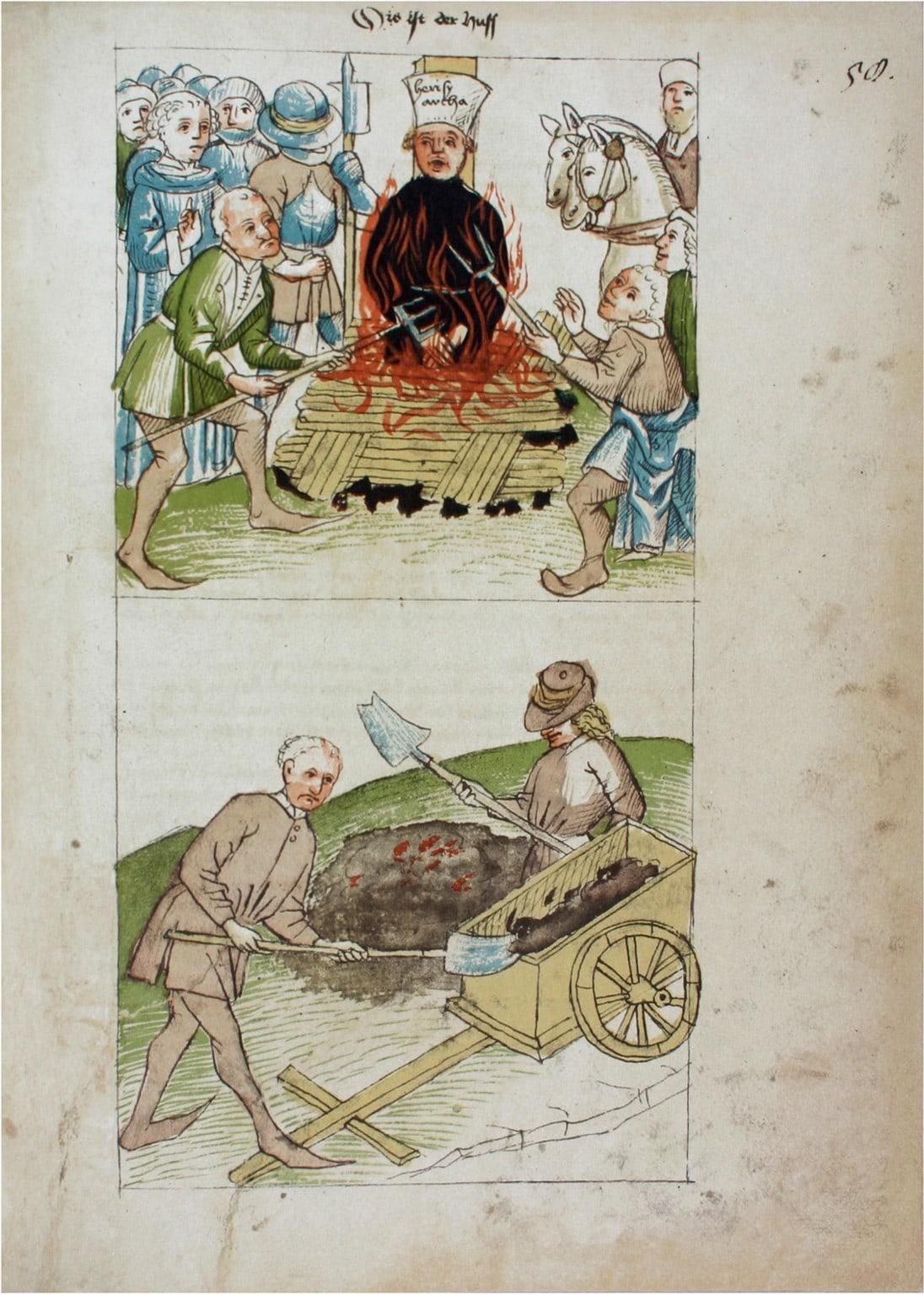
- Jan Hus was burned at Constance on 6 July 1415.
The Verses These Witnesses Held
Boniface spoke Matthew 10:28 to his companions, and Hus wrote Matthew 16:24 in a letter from prison.
Two of these witnesses left the verses they held at the end in their own words. Willibald reports Boniface's charge to his priests, and Hus copied a verse into a letter from his cell.
In their mouths
Do not be afraid of those who kill the body but cannot kill the soul. Instead, fear the One who can destroy both soul and body in hell.
Willibald reports that Boniface gave this charge to the priests and deacons beside him as the raiders came.
Then Jesus told His disciples, “If anyone wants to come after Me, he must deny himself and take up his cross and follow Me.
Hus set this verse down in his letter to his friends at Constance.
Blessed is the man who perseveres under trial, because when he has stood the test, he will receive the crown of life that God has promised to those who love Him.
Hus's editors of 1904 note this verse beside the same letter.
James 1:12BSB
The Stations from Najran to Constance
Five stations run across nine centuries, each fixed by the record named beside it.
The record of witnesses runs from Najran to the fire at Constance, a span of nearly nine centuries.
- The Christians of Najran are killedAbout 523The Letter of Simeon, written the next year, as Moberg dates it in 1924
- Boniface is killed in Frisia754 or 755Willibald's Life of Boniface
- Eulogius is beheaded at Córdoba11 March 859The Catholic Encyclopedia, volume 5 (1909)
- The Waldensian movement begins1173The chronicle of Laon
- Jan Hus is burned at Constance6 July 1415D. S. Schaff, History of the Christian Church (1910)
A timeline of five stations, each row naming the record that fixes its date.
The era of the long middle holds the wider story of the church in these centuries.
Najran, Frisia and Córdoba
A bishop's letter tells of Najran, a monk's Life tells of Boniface, and a priest of Córdoba wrote of his own city.
Najran was a town on the frontier of Yemen where Christianity flourished, as the Catholic Encyclopedia of 1907 records. Axel Moberg, who edited the Book of the Himyarites in 1924, weighs the Letter of Simeon of Beth Arsham among the accounts of its martyrs.
Moberg's sources name the persecutor the Jewish king of Himyar.
The Acts of Arethas, as Moberg summarises them, tell of a great pyre on which 427 of the town's clergy were burned. The leading men, with Arethas at their head, were imprisoned and told to deny Christ.
Their wives were brought to persuade them to recant. The women urged their husbands to stand firm, and they were killed by the sword.
Moberg reads the Book of the Himyarites as giving the death of Harith, as it names Arethas, in its nineteenth chapter, where he is beheaded.
Boniface, an English monk, had organised the churches of Hesse, Thuringia and Bavaria. In old age he went back to preach in Frisia, and raiders killed him and his companions at their tents there.
Willibald, who wrote his Life, gives the year 755, and the tradition of Fulda gives 754.
At Córdoba the Christians lived under the rulers Abd-er-Rahman the Second and Mohammed the First. The Catholic Encyclopedia of 1909 says the priest Eulogius wrote the lives of the martyrs who died there between 848 and 859.
In 850, the same article says, Eulogius stopped saying Mass for a time so that he could better defend the cause of the martyrs.
He was chosen archbishop of Toledo shortly before he was beheaded.
From Lyon to Constance
An inquisitor listed the Waldensians' teachings as errors, and a council of the Western church sent a master of Prague to the fire.
The chronicle of Laon dates the turning of Valdes of Lyon to 1173, when he gave away his money to follow Christ in poverty. By 1254 an inquisitor, Reinerius Saccho, had set down the teachings of his followers as errors.
Some later Waldensians claimed that their churches went back to the apostles. The record dates the movement from Valdes in 1173, as MannaFest's page on the Waldensians shows from the manuscripts.
Jan Hus, a master of Prague, came to the Council of Constance under a safe-conduct from Sigismund. He was imprisoned there.
The council condemned him, and he was burned on 6 July 1415.
In Their Own Words
Boniface (675 to 754)
words reported in Willibald, The Life of Saint Boniface, chapter 8, chapter 8, to the priests and deacons
Boniface told his priests not to fear those who kill the body.
“Men and brethren, be of stout heart, and fear not them who kill the body, since they are not able to slay the soul, which continues without end”
English Benedictine
About this saying1 paragraph
Willibald gives these words to the priests and deacons beside Boniface in Frisia, in 754 or 755.
Jan Hus (1372 to 1415)
Letter 64, to all the people of Bohemia, letter 64, 10 June 1415, page 231
Hus asked the people of Bohemia to hold fast the truth.
“I entreat you to hold fast the truth of God, which I have written and preached to you from the Holy Scriptures and the utterances of His saints.”
Pre-Reformation reformer
About this saying1 paragraph
He wrote this letter in Czech from his prison at Constance on 10 June 1415.
Jan Hus
Letter 73, to his friends at Constance, letter 73, the eve of St. John Baptist, 1415, page 253
Hus asked Christ to draw him after himself.
“O loving Christ, draw me, a weakling, after Thyself; for if Thou drawest me not, I cannot follow Thee. Grant me a brave spirit that it may be ready.”
Pre-Reformation reformer
About this saying1 paragraph
He wrote this prayer for his friends thirteen days before he died.
Whether the Letter of Simeon Is Simeon's Own
Two readings of the earliest letter on Najran stand in Moberg's edition of 1924.
Moberg reports that Nöldeke and Guidi held the Letter to be the authentic work of Bishop Simeon, written the year after the killings.
He reports that Halévy thought the Letter a forgery without historical value.
Moberg found the Book of the Himyarites close to the Acts of Arethas in its plan and its lines. The killings at Najran stand in more than one record for that reason.
Books to Read Next
The Book of the Himyarites
Axel Moberg, editor and translator · 1924
Moberg sets out what the Syriac and Greek records say of the martyrs of Najran.
At the Internet ArchiveThe Letters of John Hus
Herbert B. Workman and R. Martin Pope, translators · 1904
The letters Hus wrote from his prison at Constance are printed in English with notes.
Free at the Internet ArchiveWhat These Witnesses Handed On
The witnesses of these centuries died under a king of Arabia, at the hands of raiders, under the rulers of Córdoba and by the sentence of a church council. Their letters and Lives kept their words for the church that came after them.
Sources
Scripture is the Berean Standard Bible.
- The Holy Bible, Berean Standard Bible (read 2026)
- Axel Moberg, The Book of the Himyarites (Lund, 1924), introduction, pages xxvi to xxxi.
- Gabriel Oussani, Arabia, The Catholic Encyclopedia, volume 1 (New York: Robert Appleton Company, 1907)
- Fidel Fita, Eulogius of Cordova, The Catholic Encyclopedia, volume 5 (New York: Robert Appleton Company, 1909)
- The Letters of John Hus, translated by Herbert B. Workman and R. Martin Pope (London: Hodder and Stoughton, 1904), letter 64, page 231, and letter 73, page 253.
- Willibald, The Life of Saint Boniface, chapter 8, in George W. Robinson's English (1916)
Keep Studying
People and groups3
Subjects10
Church history1