
About AD 110 to AD 177 · Subject · The Cloud of Witnesses
The Witnesses of the Second Century
Ignatius on the road to Rome, Polycarp at Smyrna, Justin at Rome and the martyrs of Lyon, each told in a letter or record of the time.
In the second century the churches began to write down how their witnesses died, and their letters were copied and read aloud for generations.
Do not fear what you are about to suffer. Look, the devil is about to throw some of you into prison to test you, and you will suffer tribulation for ten days. Be faithful even unto death, and I will give you the crown of life.
- Books
- Revelation, 1 Peter, John
- Hold in memory
- Revelation 2:10
Summary
The second century gives the first full accounts of Christians who died for Christ after the apostles. Some are told by the witnesses themselves, and others by the churches that watched them die. The four best known lived in Syria, Asia, Rome and Gaul.
- Ignatius, bishop of Antioch, wrote letters on his way to die at Rome.
- Polycarp, bishop of Smyrna, was burned in the stadium, and his church kept the record of his trial.
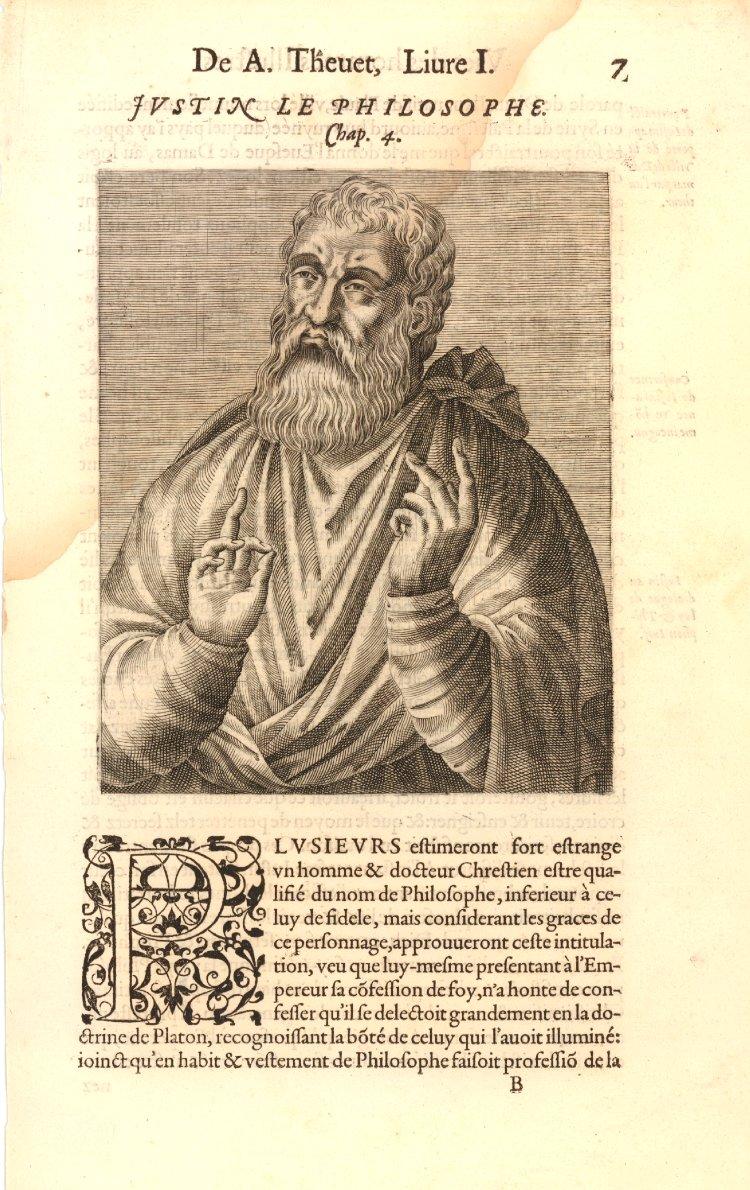
- Justin, who had written defences of the faith, was beheaded at Rome under the prefect Rusticus.
- The churches of Lyon and Vienne wrote of their dead, among them Blandina, a slave.
The Verses the Witnesses Lived
Christ's word to Smyrna, Peter's word on the name and Christ's word on the seed stand behind the century's records.
The second-century records quote the New Testament often. Three verses stand close to their stories, one for the city of Polycarp, one for the confession the martyrs made, and one for the image Ignatius took for his own death.
The verses
But if you suffer as a Christian, do not be ashamed, but glorify God that you bear that name.
The martyrs of Lyon answered their judges with the name this verse speaks of, saying they were Christians.
1 Peter 4:16BSB
Truly, truly, I tell you, unless a kernel of wheat falls to the ground and dies, it remains only a seed; but if it dies, it bears much fruit.
Ignatius called himself the wheat of God in his letter to the Romans, an image close to this saying of Christ.
John 12:24BSB
The Dead of the Second Century
Each row names a death, its date as the record gives it and the record itself.
Four witnesses and one church's dead span about seventy years, from Ignatius to the martyrs of Lyon.
- Ignatius of Antioch dies at RomeWithin a few years of AD 110His own letters, and Eusebius, Church History 3.36
- Polycarp is burned at SmyrnaAD 155 or 156 by the letter's dating; under Marcus Aurelius by EusebiusThe Martyrdom of Polycarp; Eusebius, Church History 4.15
- Justin and his companions are beheaded at RomeAfter AD 163, when Rusticus became prefectThe Martyrdom of Justin
- The martyrs of Lyon and Vienne dieAD 177Their churches' letter, in Eusebius, Church History 5.1
Three of the four rows open a page of their own on the witness.
Four Records of the Century
A bishop's letters, a church's letter, a trial record and a letter from Gaul tell the century's deaths.
Ignatius was sent west from Syria under a guard of soldiers, condemned to the beasts. Along the way he wrote letters to the churches of Asia, and he begged the Christians of the capital to do nothing to save him.
Polycarp, bishop of Smyrna, was an old man when he was arrested. The proconsul pressed him to curse Christ, and he answered that he had served Him eighty-six years. The church of Smyrna wrote an account of his trial and his burning in the stadium and sent it to the church at Philomelium.
Justin had addressed his apologies to the emperors. At Rome the prefect Rusticus tried him with six companions, among them Chariton, Euelpistus and Hierax. A record of the hearing survives, and it ends with the sentence that those who refused to sacrifice be scourged and beheaded.
In 177 a mob turned on the Christians of Lyon and Vienne in Gaul. The governor held them in prison and wrote to the emperor, who ordered that those who confessed should die and those who denied should go free. The survivors wrote a long letter to the churches of Asia and Phrygia, and Eusebius kept much of it in his Church History.
In Their Own Words
Ignatius of Antioch (died 108)
The Epistle to the Romans, chapter 4
Ignatius called himself the wheat of God.
“I am the wheat of God, and let me be ground by the teeth of the wild beasts, that I may be found the pure bread of Christ.”
Early Church
About this saying1 paragraph
He wrote this early in the second century, in the letter he sent ahead of himself.
Polycarp of Smyrna (died 155)
The Martyrdom of Polycarp, chapter 9
Polycarp would not curse the King he had served.
“Eighty and six years have I served Him, and He never did me any injury: how then can I blaspheme my King and my Saviour?”
Early Church
About this saying1 paragraph
The church of Smyrna recorded his answer to the proconsul in the account it wrote of his death in the second century.
Justin Martyr (died 165)
The Martyrdom of Justin and his companions, chapter 4
Justin told the prefect he knew he would rise.
“I do not suppose it, but I know and am fully persuaded of it.”
Early Church
About this saying1 paragraph
Rusticus, prefect of Rome from 163, asked Justin whether he supposed he would go up to heaven, and the record keeps his answer.
Blandina (died 177)
the letter of the churches of Vienne and Lyons, in Eusebius, Church History, 5.1.19
Blandina gave the same answer to every torment.
“I am a Christian, and there is nothing vile done by us.”
Martyr
About this saying1 paragraph
Their letter of 177 says she gave this answer each time she was tortured.
The churches of Vienne and Lyons
the letter of the churches of Vienne and Lyons, in Eusebius, Church History, 5.2.3
The survivors of Lyon would not be called martyrs.
“They are already witnesses whom Christ has deemed worthy to be taken up in their confession, having sealed their testimony by their departure; but we are lowly and humble confessors.”
Church
About this saying1 paragraph
The same letter of 177 tells how the confessors who lived refused the name they kept for those who died.
Where the Records Differ on Polycarp's Year
The letter of Smyrna and Eusebius point to different years for Polycarp's death.
The letter of Smyrna names the proconsul and the day, and J. B. Lightfoot reckoned from these a date in 155 or 156. Eusebius places the death in the reign of Marcus Aurelius, which began in 161, and the heading of his chapter names the joint reign with Verus.
The letter was written by the church that saw the death, and Eusebius wrote about a century and a half later. The Polycarp page sets out the reckoning in full.
Books to Read Next
The Ante-Nicene Fathers, volume 1
Alexander Roberts and James Donaldson, editors · 1885
It holds the letters of Ignatius, the Martyrdom of Polycarp and the record of Justin's trial in English.
Free at the Christian Classics Ethereal LibraryThe Church History of Eusebius
Eusebius of Caesarea, translated by Arthur Cushman McGiffert · 1890
In book 5 Eusebius copies most of the letter from Lyon.
Free at the Christian Classics Ethereal LibraryWhat the Second Century Left
The second century left the church its first full martyr accounts and the word martyr kept for those who died. In the third century the empire itself would order every subject to sacrifice.
Sources
Scripture is the Berean Standard Bible.
- The Holy Bible, Berean Standard Bible (read 2026)
- Ignatius of Antioch, To the Romans 4, the shorter Greek letters, The Ante-Nicene Fathers, volume 1 (1885)
- The Martyrdom of Polycarp 9, The Ante-Nicene Fathers, volume 1 (1885)
- The Martyrdom of Justin and his companions 4 and 5, translated by M. Dods, The Ante-Nicene Fathers, volume 1 (1885), with McGiffert's note on Rusticus's prefecture from 163.
- The letter of the churches of Vienne and Lyons, in Eusebius, Church History 5.1 and 5.2, translated by A. C. McGiffert, Nicene and Post-Nicene Fathers, second series, volume 1 (1890)
- Eusebius, Church History 3.36 and 4.15, translated by A. C. McGiffert (1890)
- J. B. Lightfoot, The Apostolic Fathers, part 2, volume 1 (1889), on the date of Polycarp's death.
Keep Studying
Studies1
People and groups1
Subjects10