
Ruth 3:12
in Ruth 3Yes, it is true that I am a kinsman-redeemer, but there is a redeemer nearer than I.
BSB
The same verse in ASV and KJV ▾
ASV
And now it is true that I am a near kinsman; howbeit there is a kinsman nearer than I.
KJV
And now it is true that I am thy near kinsman: howbeit there is a kinsman nearer than I.
⋯
This verse in Ruth 3
Commentary
5 notes on this verseAnd now it is true, that I am thy near kinsman,.... Her husband and he being brothers' sons, so own cousins: howbeit, there is a kinsman nearer than I, who was, the Jews say (w), the brother of her husband's father, and so his uncle, which was a nearer relation than an own cousin. (w) Midrash Ruth, ut supra. (31. 4. & 34. 2) Jarchi in loc.
This site's exposition
Yes, it is true that I am a kinsman-redeemer
on Ruth 3:12-13
The nearer redeemer enters in one clause and is never named, and chapter 4 exists to get past him. Boaz answers with an oath, "as surely as the LORD lives", the second in the book after Ruth's at 1:17. Her request joins the brother's duty of Deuteronomy 25:5 and the kinsman's right over land at Leviticus 25:25, which no statute joins, and Boaz takes both as one obligation.
The record, by era
The Puritans and the Awakening1 voice
Yet he does not bid her go herself to this other kinsman; this would have been to put too great a hardship upon her: but he promises, [1.] That he would himself propose it to the other kinsman, and know his mind. The Hebrew word for a widow signifies one that is dumb.
The Nineteenth Century2 voices
There is a kinsman nearer than I - It is very likely that Naomi was not acquainted with this circumstance. Some have supposed that there was a brother of Elimelech remaining, who was nearer than Boaz, who is supposed to have been only a nephew; the former, therefore, must have a prior right.
A commentator
Albert Barnes1798–1870
Notes, Explanatory and Practical, on the Old and New Testaments (1832-1869)
proposed
By “kinsman,” understand the גאל gā'al (Rth 2:20 note).
How the passage was read
What the Jewish commentators add
Now, though it is true that. אִם [=if] is written but not read, i.e., it conveys uncertainty [who will be the actual redeemer], for there is surely a redeemer closer than I. 13 The kinsman was Elimelech’s brother whereas Bo’az was only his nephew.
2 more on this passage, in their own words ▾
Stay the night. Stay over [one more night] without a husband.
"אשת חיל (a virtuous woman):" I will explain this in Proverbs.
This section is reception history: how the passage was read and kept in the Jewish tradition. Where a reading parts from an essential of the Christian faith, the section says so at that point.
Texts and citation data: Sefaria; each excerpt follows its version’s licence. 2 further sources are cited on this chapter that carry no English text this site may quote or only restate the verse.
The words behind it
11 Hebrew wordsEvery Hebrew word of this verse in the order it stands, with what it means and the door to its own study. The last column counts the times a word stands in the whole Bible: the rarer the word, the more the places it appears belong together.
| Hebrew | Sound | Meaning | Word study | In the Bible |
|---|---|---|---|---|
| וְעַתָּה֙ | veatah | and therefore | H6258 → | 433 times |
| כִּ֣י | ki | for | H3588 → | 4482 times |
| אָמְנָ֔ם | ʾamenam | truly | H551 → | |
| כִּ֥י | ki | that | H3588 → | 4482 times |
| גֹאֵ֖ל | goel | [am] a kinsman-redeemer | H1350 → | 104 times |
| אָנֹ֑כִי | ʾanokhi | I | H595 → | 359 times |
| וְגַ֛ם | vegam | and also | H1571 → | 769 times |
| יֵ֥שׁ | yesh | there | H3426 → | |
| גֹּאֵ֖ל | goel | [is] a kinsman-redeemer | H1350 → | 104 times |
| קָר֥וֹב | karov | near | H7138 → | |
| מִמֶּֽנִּי׃ | mimeni | more than I | H4480 → | 1188 times |
וְעַתָּה֙and therefore
veatahH6258 →433 times
כִּ֣יfor
kiH3588 →4482 times
אָמְנָ֔םtruly
ʾamenamH551 →
כִּ֥יthat
kiH3588 →4482 times
גֹאֵ֖ל[am] a kinsman-redeemer
goelH1350 →104 times
אָנֹ֑כִיI
ʾanokhiH595 →359 times
וְגַ֛םand also
vegamH1571 →769 times
יֵ֥שׁthere
yeshH3426 →
גֹּאֵ֖ל[is] a kinsman-redeemer
goelH1350 →104 times
קָר֥וֹבnear
karovH7138 →
מִמֶּֽנִּי׃more than I
mimeniH4480 →1188 times
A shaded row is a word that stands 400 times or fewer in the Bible.
The walk
8 stopsEach card is a verse this one points to, and under it the verses that one points to in turn. Where several paths arrive at the same place, that place is listed first: the text keeps returning to it.
Through
Matthew 7:12In everything, then, do to others as you would have them do to you. For this is the essence of the Law and the Prophets.
it leads to
- Luke 6:31
Do to others as you would have them do to you.
- Romans 13:8–10
Be indebted to no one, except to one another in love. For he who loves his neighbor has fulfilled the law.
- Galatians 5:13–14
For you, brothers, were called to freedom; but do not use your freedom as an opportunity for the flesh. Rather, serve one another in love.
- Mark 12:29–34
Jesus replied, “This is the most important: ‘Hear O Israel, the Lord our God, the Lord is One.
- Leviticus 19:18
Do not seek revenge or bear a grudge against any of your people, but love your neighbor as yourself. I am the LORD.
- Luke 6:31
Through
1 Thessalonians 4:6and no one should ever violate or exploit his brother in this regard, because the Lord will avenge all such acts, as we have already told you and solemnly warned you.
it leads to
- Hebrews 13:4
Marriage should be honored by all and the marriage bed kept undefiled, for God will judge the sexually immoral and adulterers.
- Romans 12:19
Do not avenge yourselves, beloved, but leave room for God’s wrath. For it is written: “Vengeance is Mine; I will repay, says the Lord.”
- Hebrews 13:4
Through
Ruth 4:1Meanwhile, Boaz went to the gate and sat down there. Soon the kinsman-redeemer of whom he had spoken came along, and Boaz said, “Come over here, my friend, and sit down.” So he went…
it leads to
- Deuteronomy 25:7
But if the man does not want to marry his brother’s widow, she is to go to the elders at the city gate and say, “My husband’s brother refuses to preserve his brother’s name…
- Deuteronomy 25:7
Where this verse is studied
On this page
About Ruth
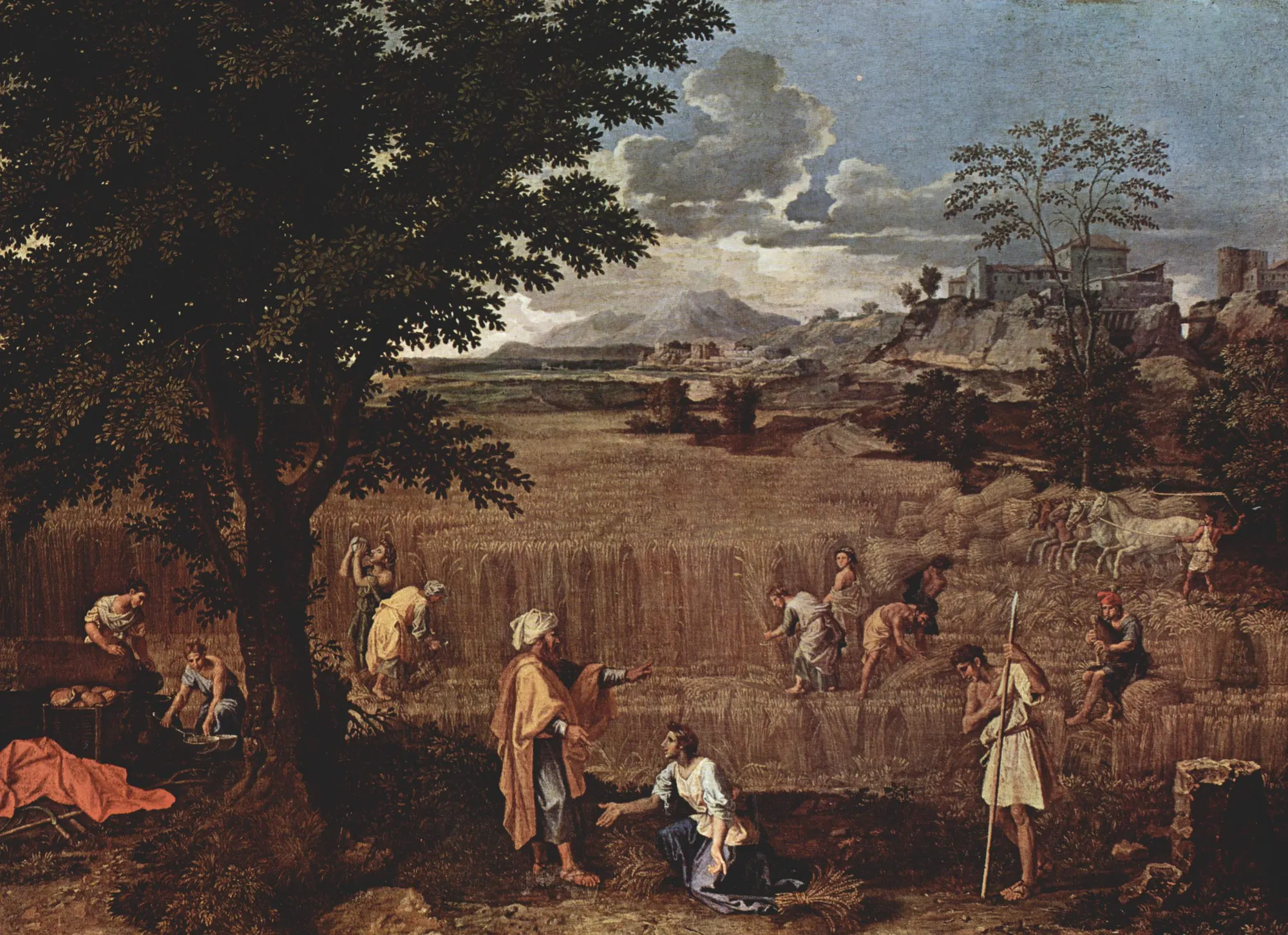
This page draws on Adam Clarke, Commentary on the Bible; Albert Barnes, Notes, Explanatory and Practical, on the Old and New Testaments (1832-1869); John Gill, Exposition of the Old Testament (1748-1763); John Gill, Exposition of the Old Testament; Keil and Delitzsch, Biblical Commentary on the Old Testament: Joshua, Judges, Ruth and Matthew Henry, Commentary on the Whole Bible.