
Psalms 144:3
in Psalms 144O LORD, what is man, that You regard him, the son of man that You think of him?
BSB
The same verse in ASV and KJV ▾
ASV
Jehovah, what is man, that thou takest knowledge of him? Or the son of man, that thou makest account of him?
KJV
Lord, what is man, that thou takest knowledge of him! or the son of man, that thou makest account of him!
⋯
This verse in Psalms 144
Commentary
9 notes on this verseLord, what is man, that you have made yourself known to him? or the son of man, that you take account of him? This very thing is said also in the eighth psalm. 'What is man, that you are mindful of him? or the son of man, that you visit him?' Lord, what is man, that you have made yourself known to him? He speaks of the frailty of the body and of the human condition: and what does he say? If you look at the flesh, what is man? If at the spirit, man is a great thing.
This site's exposition
what is man, that You regard him
on Psalms 144:3-4
Verse 3 asks the question of Psalm 8:4 again, what man is, that God should notice him. Henry set the two psalms side by side: Psalm 8:5 crowns man with glory, and this one gives him a breath and a passing shadow. The word for the breath is hebel, emptiness.
The record, by era
The Church Fathers1 voice
"Lord, what is man, that Thou hast become known unto him?" All is included in "that Thou hast become known unto him." "Or the son of man, that Thou valuest him?" Thou valuest him, that is, Thou makest him of such importance, Thou countest him of such price, Thou knowest under what Thou placest him, over what Thou placest him. For valuing is considering the price of a thing. How greatly did He value man, who for him shed the blood of His only-begotten Son! For God valueth not man in the same way as one man valueth another; he, when he findeth a slave for sale, giveth a higher price for a horse than for a man. Consider how greatly He valued thee, that thou mayest be able to say, "If God be for us, who can be against us?" And how greatly did He value thee, "who spared not His own Son"? "How shall He not also with Him freely give us all things?" He who giveth this food to the combatant, what keepeth He in store for the conqueror?...
The Puritans and the Awakening2 voices
Lord, what is man, that thou takest knowledge of him?.... Man, that is at most and best but a creature, made of the dust of the earth, is but dust and ashes; yea, a sinful creature, that drinks up iniquity like water: and yet the Lord not only knows him, as he is the omniscient God, but takes notice of him in a way of providence, and in a way of grace.
6 ), who was highly exalted because he humbled himself to be found in fashion as a man, and has authority to execute judgment because he is the Son of man.
quarantine:debris (2026-07-29) — leading-citation-number+unbalanced-parens
The Nineteenth Century2 voices
Lord, what is man, that thou takest knowledge of him? What a contrast between Jehovah and man! The Psalmist turns from the glorious all sufficiency of God to the insignificance and nothingness of man. He sees Jehovah to be everything, and then cries, "Lord, what is man!" What is man in the presence of the Infinite God? What can he be compared to? He is too little to be described at all; only God, who knows the most minute object, can tell what man is.
Lord, what is man, that thou takest knowledge of him? What a contrast between Jehovah and man! The Psalmist turns from the glorious all sufficiency of God to the insignificance and nothingness of man. He sees Jehovah to be everything, and then cries, "Lord, what is man!" What is man in the presence of the Infinite God? What can he be compared to? He is too little to be described at all; only God, who knows the most minute object, can tell what man is. Certainly he is not fit to be the rock of our confidence: he is at once too feeble and too fickle to be relied upon. The Psalmist's wonder is that God should stoop to know him, and indeed it is more remarkable than if the greatest archangel should make a study of emmets, or become the friend of mites. God knows his people with a tender intimacy, a constant, careful observation: he foreknew them in love, he knows them by care, he will know them in acceptance at last. Why and wherefore is this? What has man done? What has he been? What is he now that God should know him, and make himself known to him as his goodness, fortress, and high tower? This is an unanswerable question. Infinite condescension can alone account for the Lord stooping to be the friend of man. That he should make man the subject of election, the object of redemption, the child of eternal love, the darling of infallible providence, the next of kin to Deity, is indeed a matter requiring more than the two notes of exclamation found in this verse. Or the son of man, that thou makest account of him! The son of man is a weaker being still, —so the original word implies. He is not so much man as God made him, but man as his mother bore him; and how can the Lord think of him, and write down such a cipher in his accounts?
2 more voices on this verse
The Nineteenth Century2 voices
Lord, what is man - See the notes on Psa 8:4, Psa 8:5. What is Adam, that thou approvest of him? Can he do any thing worthy of thy notice? Or the son of feeble perishing man, that thou shouldest hold him in repute? What care, love, and attention, dost thou lavish upon him!
A commentator
Albert Barnes1798–1870
Notes, Explanatory and Practical, on the Old and New Testaments (1832-1869)
proposed
Lord, what is man, that thou takest knowledge of him? - The sentiment here is the same as in Psa 8:4, though the language is not precisely the same. See the notes at that passage. The word rendered “that thou takest knowledge of him,” means here to take notice of; to regard. The idea is, It is amazing that a being so insignificant as man should be an object of interest to God, or that One so great should pay any attention to him and to his affairs. In Psa 8:4, the language is “that thou art mindful of him,” that is, that thou dost remember him - that thou dost not altogether pass him over. In Psa 8:1-9 the remark is made in view of the heavens as being so exalted in comparison with man, and the wonder is, that in view of worlds so vast occupying the divine attention, and needing the divine care, “man,” so insignificant, does not pass out of his view altogether. Here the remark seems to be made in illustration of the idea that there is no strength in man; that he has no power to accomplish anything of himself; that he is entirely dependent on God. Or the son of man - Man - any of the race. See the notes at Psa 8:4. That thou makest account of him! - Psa 8:4, “that thou visitest him.” See the notes at that passage. The word here means “that thou shouldest “think” of him,” that he should ever come into thy thought at all.
The words behind it
7 Hebrew wordsEvery Hebrew word of this verse in the order it stands, with what it means and the door to its own study. The last column counts the times a word stands in the whole Bible: the rarer the word, the more the places it appears belong together.
| Hebrew | Sound | Meaning | Word study | In the Bible |
|---|---|---|---|---|
| יְֽהוָ֗ה | yahweh | O Yahweh | H3068 → | 6520 times |
| מָה־ | mah- | what? | H4100 → | 752 times |
| אָ֭דָם | ʾadom | [is] humankind | H120 → | 551 times |
| וַתֵּדָעֵ֑הוּ | vatedaehu | and you have considered him | H3045 → | 945 times |
| בֶּן־ | ben- | a child of | H1121 → | 4930 times |
| אֱ֝נ֗וֹשׁ | ʾenoosh | humankind | H582 → | 566 times |
| וַֽתְּחַשְּׁבֵֽהוּ׃ | vatechashevehu | and you have regarded him | H2803 → | 124 times |
יְֽהוָ֗הO Yahweh
yahwehH3068 →6520 times
מָה־what?
mah-H4100 →752 times
אָ֭דָם[is] humankind
ʾadomH120 →551 times
וַתֵּדָעֵ֑הוּand you have considered him
vatedaehuH3045 →945 times
בֶּן־a child of
ben-H1121 →4930 times
אֱ֝נ֗וֹשׁhumankind
ʾenooshH582 →566 times
וַֽתְּחַשְּׁבֵֽהוּ׃and you have regarded him
vatechashevehuH2803 →124 times
A shaded row is a word that stands 400 times or fewer in the Bible.
The walk
8 stopsEach card is a verse this one points to, and under it the verses that one points to in turn. Where several paths arrive at the same place, that place is listed first: the text keeps returning to it.
Through
Psalms 8:4what is man that You are mindful of him, or the son of man that You care for him?
it leads to
- Job 7:17
What is man that You should exalt him, that You should set Your heart upon him,
- Hebrews 2:6–9
But somewhere it is testified in these words: “What is man that You are mindful of him, or the son of man that You care for him?
- Psalms 146:3
Put not your trust in princes, in mortal man, who cannot save.
- Luke 1:68
“Blessed be the Lord, the God of Israel, because He has visited and redeemed His people.
- Job 7:17
Through
Hebrews 2:6But somewhere it is testified in these words: “What is man that You are mindful of him, or the son of man that You care for him?
it leads to
- Psalms 8:4–8
what is man that You are mindful of him, or the son of man that You care for him?
- Job 7:17–18
What is man that You should exalt him, that You should set Your heart upon him,
- Psalms 8:4–8
Through
Job 7:17What is man that You should exalt him, that You should set Your heart upon him,
it leads to
- Hebrews 2:6
But somewhere it is testified in these words: “What is man that You are mindful of him, or the son of man that You care for him?
- Psalms 8:4
what is man that You are mindful of him, or the son of man that You care for him?
- Hebrews 2:6
Where this verse is studied
On this page
About Psalms
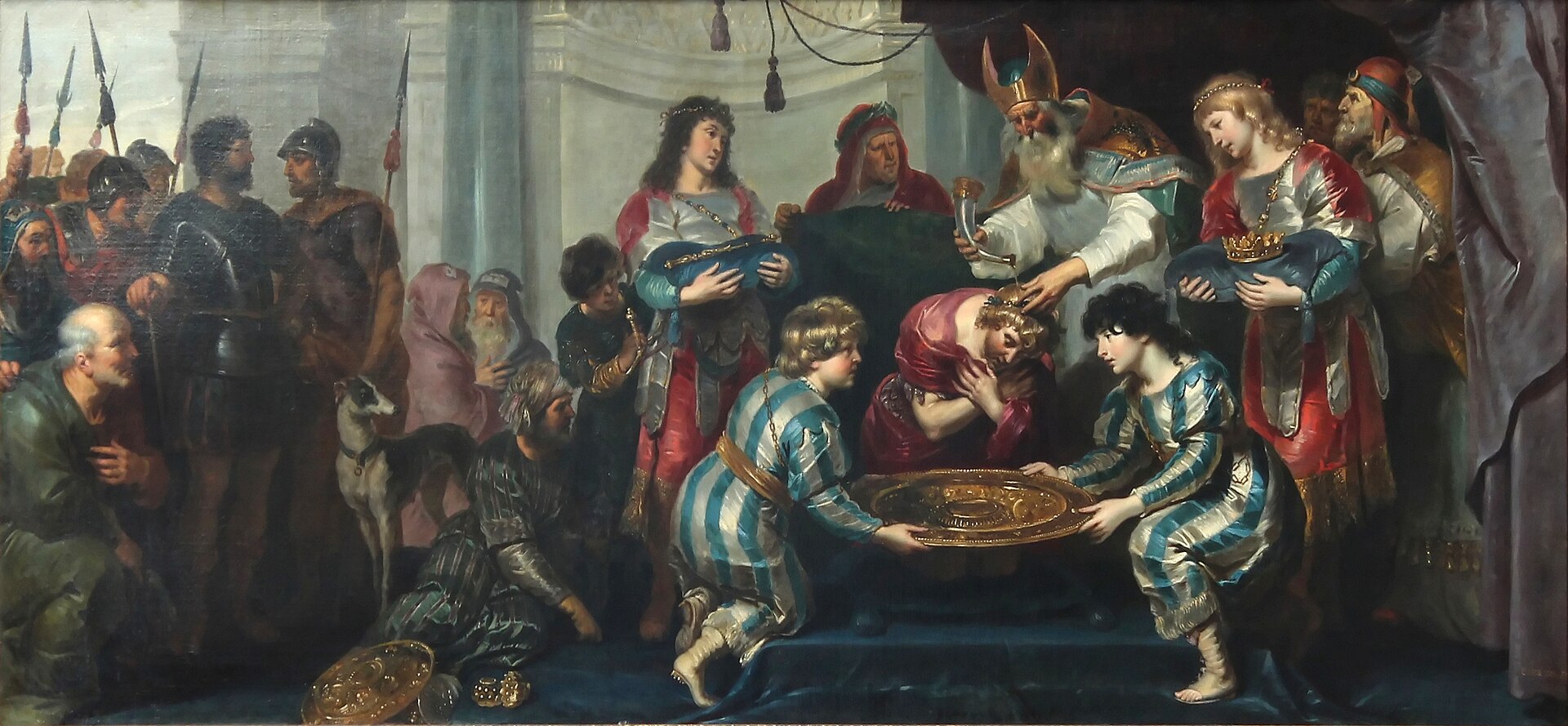
This page draws on Adam Clarke, Commentary on the Bible; Albert Barnes, Notes, Explanatory and Practical, on the Old and New Testaments (1832-1869); Augustine of Hippo, Exposition on Psalm 144; Charles Spurgeon, The Treasury of David, Vol. 7; Franz Delitzsch, Biblical Commentary on the Psalms; Jerome, Homily 54, on Psalm 143; John Gill, Exposition of the Old Testament (1748-1763) and Matthew Henry, Commentary on the Whole Bible.