
Psalms 137:5
in Psalms 137If I forget you, O Jerusalem, may my right hand cease to function.
BSB
The same verse in ASV and KJV ▾
ASV
If I forget thee, O Jerusalem, Let my right hand forget her skill.
KJV
If I forget thee, O Jerusalem, let my right hand forget her cunning.
⋯
This verse in Psalms 137
Commentary
9 notes on this verseIf I forget you, Jerusalem, let my right hand be given over to forgetfulness. Therefore, because he has sinned and fallen, he calls to mind his former way of life and Jerusalem, and he sets before himself this resolve: that unless I shall always be mindful of you, and always hold you in mind, let my right hand be given over to forgetfulness — that is, my works. He did not say the left hand, but the right: for the left hand is always in forgetfulness. Do you wish, then, always to be in remembrance of the Lord?
This site's exposition
If I forget you, O Jerusalem
on Psalms 137:5-6
The singer swears by naming what he loses if he fails. The Hebrew uses the verb forget twice, of the man and then of his own right hand, a hand that would cease to work. His tongue is staked on it too, and Jerusalem is set above every joy.
The record, by era
The Church Fathers1 voice
But take heed how thou dwellest among them, O people of God, O body of Christ, O high-born band of wanderers (for thy home is not here, but elsewhere), lest when thou lovest them, strivest for their friendship, and fearest to displease such men, Babylon begin to delight thee and thou forget Jerusalem. In fear then of this, see what the Psalmist subjoins, see what follows. "If I forget thee, O Jerusalem" (ver. 5), amid the speeches of those who hold me captive, amid the speeches of treacherous men, amid the speeches of men who ask with ill intent, asking, yet unwilling to learn. ...What then? "If I forget thee, O Jerusalem, let my right hand forget me."
The Puritans and the Awakening2 voices
If I forget thee, O Jerusalem,.... This was said by one or everyone of the Levites; or singers, as Aben Ezra and Kimchi; or by the congregation of Israel, as Jarchi; by one of them, in the name of the rest; or by the composer of the psalm.
They preferred it above their chief joy, and therefore they remembered it and could not forget it. What we love we love to think of. Those that rejoice in God do, for his sake, make Jerusalem their joy, and prefer it before that, whatever it is, which is the head of their joy, which is dearest to them in this world.
The Nineteenth Century2 voices
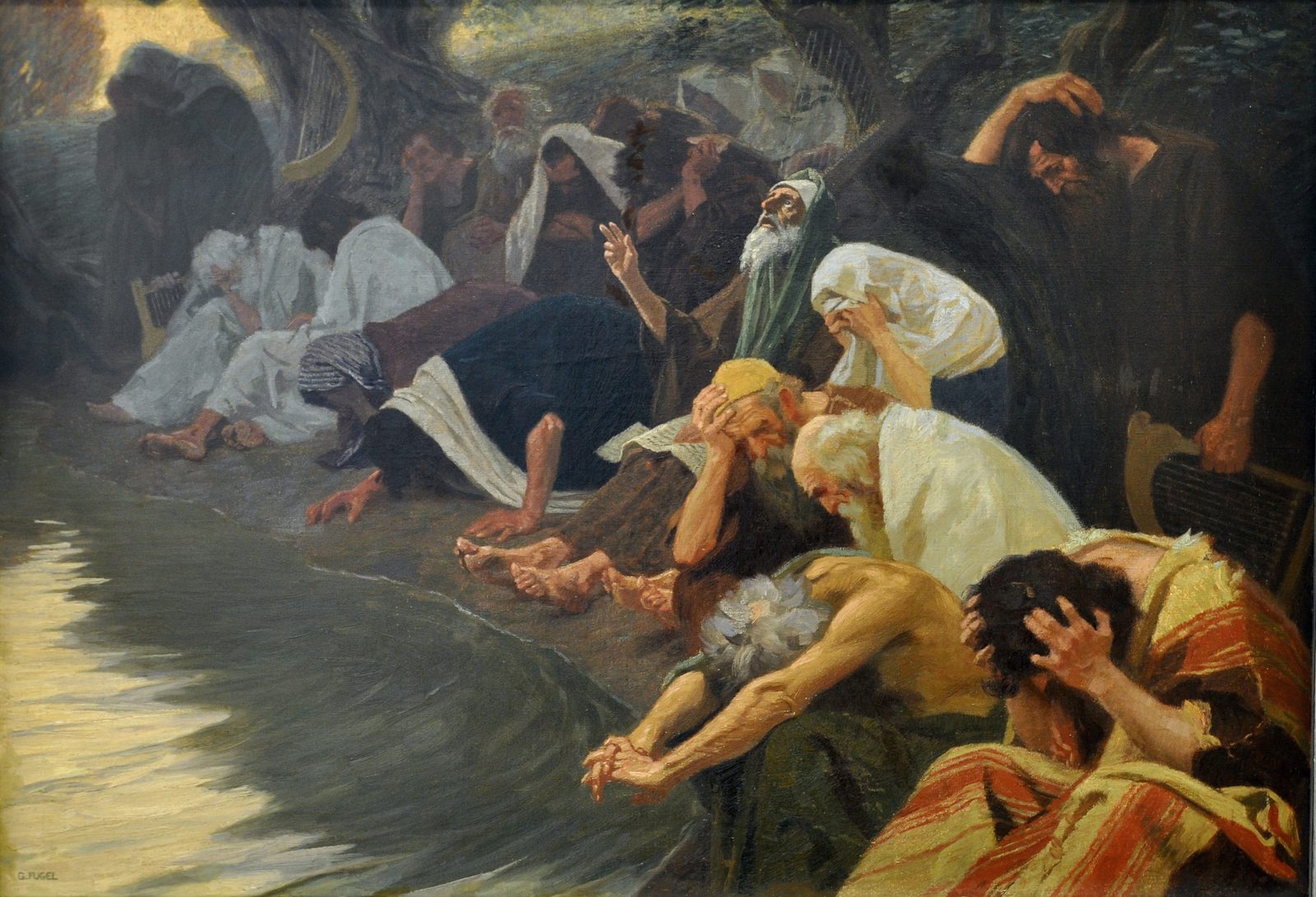
If I forget thee, O Jerusalem, let my right hand forget her cunning. To sing Zion's songs for the pleasure of Zion's foes, would be to forget the Holy City Each Jew declares for himself that he will not do this; for the pronoun alters from "we" to "I." Individually the captives pledge themselves to fidelity to Jerusalem, and each one asserts that he had sooner forget the art which drew music from his harp strings than use it for Babel's delectation.
If I forget thee, O Jerusalem, let my right hand forget her cunning. To sing Zion's songs for the pleasure of Zion's foes, would be to forget the Holy City Each Jew declares for himself that he will not do this; for the pronoun alters from "we" to "I." Individually the captives pledge themselves to fidelity to Jerusalem, and each one asserts that he had sooner forget the art which drew music from his harp strings than use it for Babel's delectation. Better far that the right hand should forget its usual handicraft, and lose all its dexterity, than that it should fetch music for rebels out of the Lord's instruments, or accompany with sweet skill a holy Psalm desecrated into a common song for fools to laugh at. Not one of them will thus dishonour Jehovah to glorify Belus and gratify his vetaries. Solemnly they imprecate vengeance upon themselves should they so false, so faithless prove.
2 more voices on this verse
The Nineteenth Century2 voices
If I forget thee, O Jerusalem - Such conduct would be, in effect, a renunciation of our land a tacit acknowledgment that we were reconciled to our bondage; a concession that we were pleased with our captivity, and could profane holy ordinances by using them as means of sport or pastime to the heathen. No: Jerusalem! we remember thee and thy Divine ordinances: and especially thy King and our God, whose indignation we must bear, because we have sinned against him. Let my right hand forget - Let me forget the use of my right hand. Let me forget that which is dearest and most profitable to me; and let me lose my skill in the management of my harp, if I ever prostitute it to please the ungodly multitude or the enemies of my Creator!
A commentator
Albert Barnes1798–1870
Notes, Explanatory and Practical, on the Old and New Testaments (1832-1869)
proposed
If I forget thee, O Jerusalem - The meaning here is, that to sing in such circumstances would seem to imply that they had forgotten Jerusalem; that they were unmindful of its sorrows, and cared not that it was desolate. The remembrance of its calamities pressed hard upon them, and they could not do anything which would seem to imply that they had become unmindful of the sufferings that had come upon their nation. One will not make merry when a wife or child lies dying - or on the day of the funeral - or over the grave of a mother. A joyous and brilliant party, accompanied with music, feasting, dancing, when a friend has been just laid in the grave, when the calamities of war are abroad, when the pestilence is raging in a city, we feel to be untimely, unseemly, and incongruous. So these captives said it would be if they should make merry while their temple was in ruins; while their city was desolate; while their people were captives in a foreign land. Let my right hand forget her cunning - Let my right hand forget its skill in music - all its skill. If I should now play on the harp - as indicative of joy - let the hand which would be employed in sweeping over its strings become paralyzed and powerless. Let the punishment come where it would seem to be deserved - on the hand which could play at such a time. So Cranmer held the hand which had been employed in signing a recantation of his faith in the fire, until it was burned off, and dropped in the flames.
How the passage was read
What the Jewish commentators add
If I forget you, O Jerusalem The congregation of Israel says this.
1 more on this passage, in their own words ▾
If I do not bring up Jerusalem The remembrance of the mourning of its destruction I shall bring up to mention at the head of every joyous occasion of mine.
This section is reception history: how the passage was read and kept in the Jewish tradition. Where a reading parts from an essential of the Christian faith, the section says so at that point.
Texts and citation data: Sefaria; each excerpt follows its version’s licence. 5 further sources are cited on this chapter that carry no English text this site may quote or only restate the verse.
The words behind it
5 Hebrew wordsEvery Hebrew word of this verse in the order it stands, with what it means and the door to its own study. The last column counts the times a word stands in the whole Bible: the rarer the word, the more the places it appears belong together.
| Hebrew | Sound | Meaning | Word study | In the Bible |
|---|---|---|---|---|
| אִֽם־ | ʾim- | if | H518 → | 1069 times |
| אֶשְׁכָּחֵ֥ךְ | ʾeshkachekh | I will forget you | H7911 → | 102 times |
| יְֽרוּשָׁלִָ֗ם | yerushalim | O Jerusalem | H3389 → | 643 times |
| תִּשְׁכַּ֥ח | tishkach | may it forget | H7911 → | 102 times |
| יְמִינִֽי׃ | yemini | right [hand] my | H3225 → | 140 times |
אִֽם־if
ʾim-H518 →1069 times
אֶשְׁכָּחֵ֥ךְI will forget you
ʾeshkachekhH7911 →102 times
יְֽרוּשָׁלִָ֗םO Jerusalem
yerushalimH3389 →643 times
תִּשְׁכַּ֥חmay it forget
tishkachH7911 →102 times
יְמִינִֽי׃right [hand] my
yeminiH3225 →140 times
A shaded row is a word that stands 400 times or fewer in the Bible.
The walk
8 stopsEach card is a verse this one points to, and under it the verses that one points to in turn. Where several paths arrive at the same place, that place is listed first: the text keeps returning to it.
Through
Psalms 84:10For better is one day in Your courts than a thousand elsewhere. I would rather be a doorkeeper in the house of my God than dwell in the tents of the wicked.
it leads to
- Psalms 27:4
One thing I have asked of the LORD; this is what I desire: to dwell in the house of the LORD all the days of my life, to gaze on the beauty of the…
- Psalms 26:8–10
O LORD, I love the house where You dwell, the place where Your glory resides.
- Psalms 63:2
So I have seen You in the sanctuary and beheld Your power and glory.
- Philippians 3:20
But our citizenship is in heaven, and we eagerly await a Savior from there, the Lord Jesus Christ,
- Romans 8:5–6
Those who live according to the flesh set their minds on the things of the flesh; but those who live according to the Spirit set their minds on the things of the Spirit.
- Psalms 27:4
Through
Zechariah 11:17Woe to the worthless shepherd, who deserts the flock! May a sword strike his arm and his right eye! May his arm be completely withered and his right eye utterly blinded!”
it leads to
- Jeremiah 23:1
“Woe to the shepherds who destroy and scatter the sheep of My pasture!” declares the LORD.
- Ezekiel 13:3
This is what the Lord GOD says: Woe to the foolish prophets who follow their own spirit, yet have seen nothing.
- 1 Corinthians 8:4
So about eating food sacrificed to idols: We know that an idol is nothing at all in the world, and that there is no God but one.
- Jeremiah 23:1
Where this verse is studied
On this page
Studies3
On this verse
On this chapter
About Psalms
Who and where
1 name in this verse with a page on the site.
This page draws on Adam Clarke, Commentary on the Bible; Albert Barnes, Notes, Explanatory and Practical, on the Old and New Testaments (1832-1869); Augustine of Hippo, Exposition on Psalm 137; Charles Spurgeon, The Treasury of David, Vol. 7; Jerome, Homily 48, on Psalm 136; John Gill, Exposition of the Old Testament; John Gill, Exposition of the Old Testament (1748-1763) and Matthew Henry, Commentary on the Whole Bible.