
Psalms 90:16
in Psalms 90May Your work be shown to Your servants, and Your splendor to their children.
BSB
The same verse in ASV and KJV ▾
ASV
Let thy work appear unto thy servants, And thy glory upon their children.
KJV
Let thy work appear unto thy servants, and thy glory unto their children.
⋯
This verse in Psalms 90
Commentary
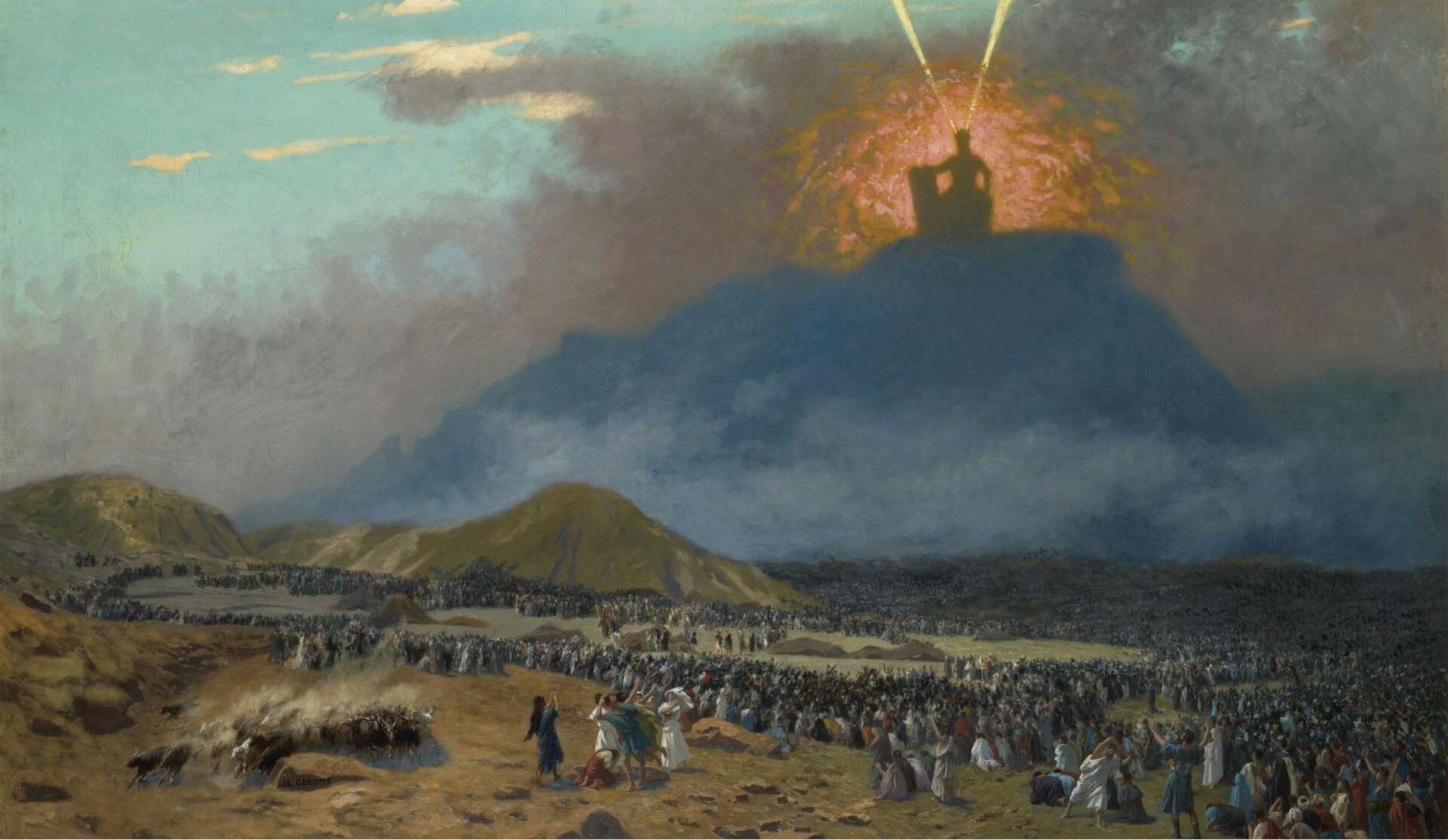
13 notes on this verseTO understand this Psalm, you must observe its black border. Remember the sorrows of Moses, the man of God, who saw a whole generation die in the wilderness and was, himself, denied admission to the promised land. The man, Moses, was greatly afflicted. I might almost call him, as far as his life in the wilderness was concerned, "a man of sorrows and acquainted with grief." He dug the desert till it became a cemetery, for he lived amid 40 years of funerals.
This site's exposition
May Your work be shown
on Psalms 90:16-17
The prayer asks that the servants see God's work and that their children see His splendor. Verse 17 asks for His favor to rest on them, and then asks twice for the work of their hands to be established. The Hebrew says establish twice.
The record, by era
The Church Fathers1 voice
But now in days that are as yet evil, let us speak as follows. "Look upon Thy servants, and upon Thy works" [Psalm 90:16]. For Thy servants themselves are Thy works, not only inasmuch as they are men, but as Thy servants, that is, obedient to Thy commands. For we are His workmanship, created not merely in Adam, but in Christ Jesus, unto good works, which God hath before ordained that we should walk in them: "for it is God which worketh in us both to will and to do of His good pleasure." "And direct their sons:" that they may be right in heart, for to such God is bountiful; for "God is bountiful to Israel, to those that are right in heart."...
The Puritans and the Awakening4 voices
"Let thy work appear, and in it thy glory will appear to us and those that shall come after us." In praying for God's grace God's glory must be our end; and we must therein have an eye to our children as well as to ourselves, that they also may experience God's glory appearing upon them, so as to change them into the same image, from glory to glory.
) does not discharge us from using our utmost endeavours in serving him and working out our salvation. But, when we have done all, we must wait upon God for the success, and beg of him to prosper our handy works, to give us to compass what we aim at for his glory.
quarantine:debris (2026-07-29) — leading-punctuation+unbalanced-parens
5 Thou carriest them away as with a flood; they are as a sleep: in the morning they are like grass which groweth up. 6 In the morning it flourisheth, and groweth up; in the evening it is cut down, and withereth. This psalm is entitled a prayer of Moses.
quarantine:scripture (2026-07-29) — scripture-overlap:88%@v4-6
Let thy work appear unto thy servants,....
6 more voices on this verse
The Nineteenth Century6 voices
Let thy work appear unto thy servants. See how he dwells upon that word servants. It is as far as the law can go, and Moses goes to the full length permitted him henceforth Jesus calls us not servants but friends, and if we are wise we shall make full use of our wider liberty. Moses asks for displays of divine power and providence conspicuously wrought, that all the people might be cheered thereby. They could find no solace in their own faulty works, but in the work of God they would find comfort. And thy glory unto their children.
A commentator
Jamieson, Fausset & Brown1802–1910
Commentary Critical and Explanatory on the Whole Bible (1871)
proposed
thy work--or, providential acts. thy glory-- (Ps 8:5; 45:3), the honor accruing from Thy work of mercy to us.
quarantine:debris (2026-07-29) — starts-lowercase
Let thy work appear unto thy servants. See how he dwells upon that word servants. It is as far as the law can go, and Moses goes to the full length permitted him henceforth Jesus calls us not servants but friends, and if we are wise we shall make full use of our wider liberty. Moses asks for displays of divine power and providence conspicuously wrought, that all the people might be cheered thereby. They could find no solace in their own faulty works, but in the work of God they would find comfort. And thy glory unto their children. While their sons were growing up around them, they desired to see some outshinings of the promised glory gleaming upon them. Their Sons were to inherit the land which had been given them by covenant, and therefore they sought on their behalf some tokens of the coming good, some morning dawnings of the approaching noonday. How eagerly do good men plead for their children. They can bear very much personal affliction if they may but be sure that their children will know the glory of God, and thereby be led to serve him. We are content with the work if our children may but see the glory which will result from it: we sow joyfully if they may reap.
TO understand this Psalm, you must observe its black border. Remember the sorrows of Moses, the man of God, who saw a whole generation die in the wilderness and was, himself, denied admission to the promised land. The man, Moses, was greatly afflicted. I might almost call him, as far as his life in the wilderness was concerned, "a man of sorrows and acquainted with grief." He dug the desert till it became a cemetery, for he lived amid 40 years of funerals. This 90th Psalm is saturated with the griefs of a sentenced generation, by whom it could be truly said, "We are consumed by Your anger, and by Your wrath are we troubled." We have, in our own case, as a Church and people, a double black border to surround our text this morning, for death has despoiled us a second time. We were, last Wednesday, burying our honored deacon, William Higgs, and at the moment of our meeting for that solemn purpose, another greatly esteemed deacon, William Mills, (William Mills, Esq., for many years a beloved deacon of the Church in the Metropolitan Tabernacle, was taken to his rest January 12th, 1883, at the age of sixty-two), was suddenly stricken down with paralysis, to linger for a few hours and then to breathe out his soul unto God. I shall not trust myself to speak about him, for this double loss has, to a great extent, unnerved me. But this I must say, that he was an experienced and mature Christian and, above all, a quiet, diligent, loving, gracious servant of our common Master, whose care was the poor of the Church, to whom he distributed our alms with discretion and tenderness. It was pleasant to hear from him the story of his Christian experience. His was a calm and lowly walk. Of late, being weakly, he was much at home and there the Psalms of David and the Morning and Evening Portions were his comfort.
Let thy work appear unto thy servants - That thou art working for us we know; but O, let thy work appear! Let us now see, in our deliverance, that thy thoughts towards us were mercy and love. And thy Glory - Thy pure worship be established among our children for ever.
A commentator
Albert Barnes1798–1870
Notes, Explanatory and Practical, on the Old and New Testaments (1832-1869)
proposed
Let thy work appear unto thy servants - That is, thy gracious work of interposition. Let us see thy power displayed in removing these calamities, and in restoring to us the days of health and prosperity. And thy glory unto their children - The manifestation of thy character; the display of thy goodness, of thy power, and thy grace. Let this spreading and wasting evil be checked and removed, so that our children may live, and may have occasion to celebrate thy goodness, and to record the wonders of thy love.
The words behind it
7 Hebrew wordsEvery Hebrew word of this verse in the order it stands, with what it means and the door to its own study. The last column counts the times a word stands in the whole Bible: the rarer the word, the more the places it appears belong together.
| Hebrew | Sound | Meaning | Word study | In the Bible |
|---|---|---|---|---|
| יֵרָאֶ֣ה | yeraeh | may it appear | H7200 → | 1300 times |
| אֶל־ | ʾel- | to | H413 → | 5510 times |
| עֲבָדֶ֣יךָ | ʾavadeikha | servants your | H5650 → | 799 times |
| פָעֳלֶ֑ךָ | foolekha | deed[s] your | H6467 → | 37 times |
| וַ֝הֲדָרְךָ֗ | vahadarekha | and majesty your | H1926 → | 30 times |
| עַל־ | ʾal- | to | H5921 → | 5755 times |
| בְּנֵיהֶֽם׃ | beneihem | children their | H1121 → | 4930 times |
יֵרָאֶ֣הmay it appear
yeraehH7200 →1300 times
אֶל־to
ʾel-H413 →5510 times
עֲבָדֶ֣יךָservants your
ʾavadeikhaH5650 →799 times
פָעֳלֶ֑ךָdeed[s] your
foolekhaH6467 →37 times
וַ֝הֲדָרְךָ֗and majesty your
vahadarekhaH1926 →30 times
עַל־to
ʾal-H5921 →5755 times
בְּנֵיהֶֽם׃children their
beneihemH1121 →4930 times
A shaded row is a word that stands 400 times or fewer in the Bible.
The walk
8 stopsEach card is a verse this one points to, and under it the verses that one points to in turn. Where several paths arrive at the same place, that place is listed first: the text keeps returning to it.
Through
Habakkuk 3:2O LORD, I have heard the report of You; I stand in awe, O LORD, of Your deeds. Revive them in these years; make them known in these years. In Your wrath, remember mercy!
it leads to
- Psalms 85:6
Will You not revive us again, that Your people may rejoice in You?
- Psalms 90:13–17
Return, O LORD! How long will it be? Have compassion on Your servants.
- Hosea 6:2–3
After two days He will revive us; on the third day He will raise us up, that we may live in His presence.
- Lamentations 3:32
Even if He causes grief, He will show compassion according to His abundant loving devotion.
- Psalms 85:6
Through
Deuteronomy 32:4He is the Rock, His work is perfect; all His ways are just. A God of faithfulness without injustice, righteous and upright is He.
it leads to
- Psalms 18:30–31
As for God, His way is perfect; the word of the LORD is flawless. He is a shield to all who take refuge in Him.
- Psalms 92:15
to proclaim, “The LORD is upright; He is my Rock, and in Him there is no unrighteousness.”
- Isaiah 26:4
Trust in the LORD forever, because GOD the LORD is the Rock eternal.
- Psalms 18:2
The LORD is my rock, my fortress, and my deliverer. My God is my rock, in whom I take refuge, my shield, and the horn of my salvation, my stronghold.
- Psalms 18:30–31
About Psalms
This page draws on 10 works. Open the list of works
This page draws on Adam Clarke, Commentary on the Bible; Albert Barnes, Notes, Explanatory and Practical, on the Old and New Testaments (1832-1869); Augustine of Hippo, Exposition on Psalm 90; Charles Spurgeon, The Metropolitan Tabernacle Pulpit, Sermon No. 1701: “Gladness For Sadness” (lightly modernized text, CCEL edition); Charles Spurgeon, The Treasury of David; Charles Spurgeon, The Treasury of David, Vol. 4; Franz Delitzsch, Biblical Commentary on the Psalms; Jamieson, Fausset & Brown, Commentary Critical and Explanatory on the Whole Bible; John Gill, Exposition of the Old Testament (1748-1763) and Matthew Henry, Commentary on the Whole Bible.