
Psalms 90:11
in Psalms 90Who knows the power of Your anger? Your wrath matches the fear You are due.
BSB
The same verse in ASV and KJV ▾
ASV
Who knoweth the power of thine anger, And thy wrath according to the fear that is due unto thee?
KJV
Who knoweth the power of thine anger? even according to thy fear, so is thy wrath.
⋯
This verse in Psalms 90
Commentary
10 notes on this verseA commentator
Albert Barnes1798–1870
Notes, Explanatory and Practical, on the Old and New Testaments (1832-1869)
Who knoweth the power of thine anger? - Who can measure it, or take a correct estimate of it, as it is manifest in cutting down the race of people? If the removal of people by death is to be traced to thine anger - or is, in any proper sense, an expression of thy wrath - who can measure it, or understand it?
This site's exposition
Who knows the power of Your anger
on Psalms 90:11-12
Verse 11 asks who knows the power of God's anger, and the psalm lets the question stand. Verse 12 asks God to teach the counting of days. The second half asks that a heart of wisdom be brought in, where the Hebrew verb is bo, to bring.
The record, by era
The Church Fathers1 voice
"For who knows the power of Your wrath: and for the fear of You to number Your anger?" [Psalm 90:11]. It belongs to very few men, he says, to know the power of Your wrath; for when Thou dost spare, Your anger is so far heavier against most men; that we may know that labour and sorrow belong not to wrath, but rather to Your mercy, when You chasten and teachest those whom You love, to save them from the torments of eternal punishment: as it is said in another Psalm, "The sinner has provoked the Lord: He will not require it of him according to the greatness of His wrath." With this also is understood, "Who knows?" Such is the difficulty of finding any one who knows how to number Your anger by Your fear, that he adds this, meaning that it is to the purpose that Thou appearest to spare some, with whom You are more angry, that the sinner may be prospered in his path, and receive a heavier doom at the last. For when the power of human wrath has killed the body, it has nothing more to do: but God has power both to punish here, and after the death of the body to send into Hell, and by the few who are thus taught, the vain and seductive prosperity of the wicked is judged to be greater wrath of God.. ..
The Puritans and the Awakening3 voices
Thy fear - According to the fear of thee; according to that fear which sinful men have of a just God. So - It bears full proportion to it, nay indeed doth far exceed it.
Who knoweth the power of thine anger?....
Who knows it, so as to improve the knowledge of it? Those who make a mock at sin, and make light of Christ, surely do not know the power of God's anger. For, according to thy fear, so is thy wrath;
The Nineteenth Century1 voice
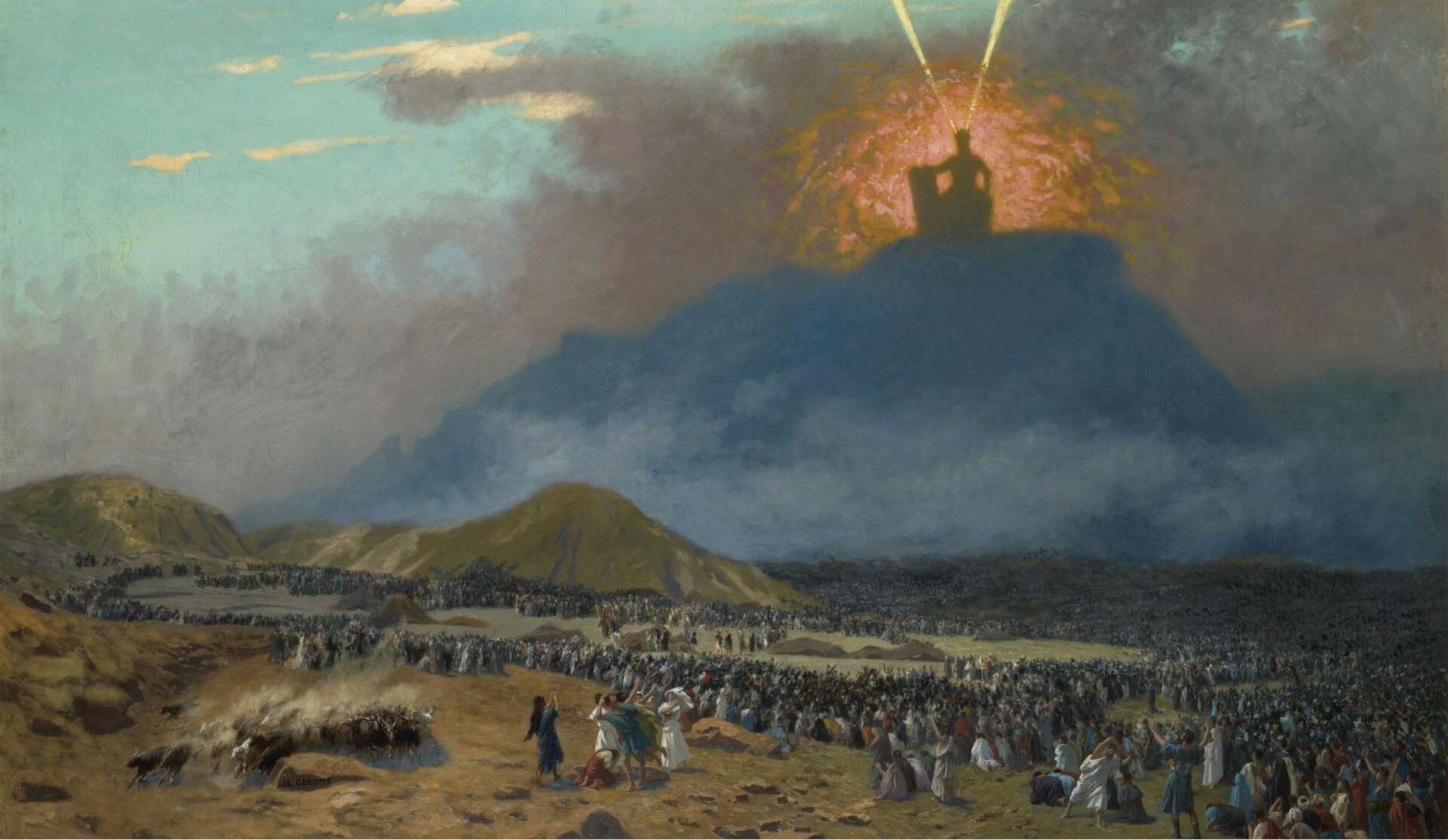
Who knoweth the power of thine anger? Moses saw men dying all around him: he lived among funerals, and was overwhelmed at the terrible results of the divine displeasure. He felt that none could measure the might of the Lord's wrath. Even according to thy fear, so is thy wrath.
3 more voices on this verse
The Nineteenth Century3 voices
A commentator
Jamieson, Fausset & Brown1802–1910
Commentary Critical and Explanatory on the Whole Bible (1871)
proposed
The whole verse may be read as a question implying the negative, "No one knows what Thy anger can do, and what Thy wrath is, estimated by a true piety."
Who knoweth the power of thine anger? Moses saw men dying all around him: he lived among funerals, and was overwhelmed at the terrible results of the divine displeasure. He felt that none could measure the might of the Lord's wrath. Even according to thy fear, so is thy wrath. Good men dread that wrath beyond conception, but they never ascribe too much terror to it: bad men are dreadfully convulsed when they awake to a sense of it, but their horror is not greater than it had need be, for it is a fearful thing to fall into the hands of an angry God. Holy Scripture when it depicts God's wrath against sin never uses an hyperbole; it would be impossible to exaggerate it. Whatever feelings of pious awe and holy trembling may move the tender heart, it is never too much moved; apart from other considerations the great truth of the divine anger, when most powerfully felt, never impresses the mind with a solemnity in excess of the legitimate result of such a contemplation. What the power of God's anger is in hell, and what it would be on earth, were it not in mercy restrained, no man living can rightly conceive. Modern thinkers rail at Milton and Dante, Bunyan and Baxter, for their terrible imagery; but the truth is that no vision of poet, or denunciation of holy seer, can ever reach to the dread height of this great argument, much less go beyond it. The wrath to come has its horrors rather diminished than enhanced in description by the dark lines of human fancy; it baffles words, it leaves imagination far behind. Beware ye that forget God lest he tear you in pieces and there be none to deliver. God is terrible out of his holy places. Remember Sodom and Gomorrah! Remember Korah and his company! Mark well the graves of lust in the wilderness! Nay, rather bethink ye of the place where their worm dieth not, and their fire is not quenched.
Who knoweth the power of thine angers - The afflictions of this life are not to be compared to the miseries which await them who live and die without being reconciled to God, and saved from their sins.
How the passage was read
What the Jewish commentators add
Who knows the might of Your wrath In these few days, who can acquire intelligence to know the might of Your wrath and to fear You, and as for You—Your fear is Your anger.
2 more on this passage, in their own words ▾
The days of our years because of them are seventy years The days of these years of ours, because of these iniquities of ours and because of these sins of our youth, are seventy years.
So teach the number of our days And just as in the beginning, make known in the world the number of our long days, and since we enjoy longevity, we will be able to acquire intelligence, and we will acquire in them a heart of wisdom.
This section is reception history: how the passage was read and kept in the Jewish tradition. Where a reading parts from an essential of the Christian faith, the section says so at that point.
Texts and citation data: Sefaria; each excerpt follows its version’s licence. 3 further sources are cited on this chapter that carry no English text this site may quote or only restate the verse.
The words behind it
6 Hebrew wordsEvery Hebrew word of this verse in the order it stands, with what it means and the door to its own study. The last column counts the times a word stands in the whole Bible: the rarer the word, the more the places it appears belong together.
| Hebrew | Sound | Meaning | Word study | In the Bible |
|---|---|---|---|---|
| מִֽי־ | mi- | who? | H4310 → | 423 times |
| י֭וֹדֵעַ | yodea' | [is] knowing | H3045 → | 945 times |
| עֹ֣ז | ʾoz | [the] strength of | H5797 → | 92 times |
| אַפֶּ֑ךָ | ʾapekha | anger your | H639 → | 276 times |
| וּ֝כְיִרְאָתְךָ֗ | ukheyiratekha | and [is] like fear your | H3374 → | 45 times |
| עֶבְרָתֶֽךָ׃ | ʾevratekha | fury your | H5678 → | 34 times |
מִֽי־who?
mi-H4310 →423 times
י֭וֹדֵעַ[is] knowing
yodea'H3045 →945 times
עֹ֣ז[the] strength of
ʾozH5797 →92 times
אַפֶּ֑ךָanger your
ʾapekhaH639 →276 times
וּ֝כְיִרְאָתְךָ֗and [is] like fear your
ukheyiratekhaH3374 →45 times
עֶבְרָתֶֽךָ׃fury your
ʾevratekhaH5678 →34 times
A shaded row is a word that stands 400 times or fewer in the Bible.
The walk
8 stopsEach card is a verse this one points to, and under it the verses that one points to in turn. Where several paths arrive at the same place, that place is listed first: the text keeps returning to it.
Through
Revelation 6:17For the great day of Their wrath has come, and who is able to withstand it?”
it leads to
- Malachi 3:2
But who can endure the day of His coming? And who can stand when He appears? For He will be like a refiner’s fire, like a launderer’s soap.
Reached by 2 separate paths from here.
- Psalms 76:7
You alone are to be feared. When You are angry, who can stand before You?
Reached by 2 separate paths from here.
- Joel 2:11
The LORD raises His voice in the presence of His army. Indeed, His camp is very large, for mighty are those who obey His command. For the Day of the LORD is great and…
- Joel 2:31
The sun will be turned to darkness and the moon to blood before the coming of the great and awesome Day of the LORD.
- Revelation 16:14
These are demonic spirits that perform signs and go out to all the kings of the earth, to assemble them for battle on the great day of God the Almighty.
- Malachi 3:2
Through
Isaiah 33:14The sinners in Zion are afraid; trembling grips the ungodly: “Who of us can dwell with a consuming fire? Who of us can dwell with everlasting flames?”
it leads to
- Hebrews 12:29
“For our God is a consuming fire.”
- Isaiah 66:24
“As they go forth, they will see the corpses of the men who have rebelled against Me; for their worm will never die, their fire will never be quenched, and they will be a…
- Hebrews 12:29
Through
Nahum 1:6Who can withstand His indignation? Who can endure His burning anger? His wrath is poured out like fire; even rocks are shattered before Him.
it leads to
- Jeremiah 10:10
But the LORD is the true God; He is the living God and eternal King. The earth quakes at His wrath, and the nations cannot endure His indignation.
- Jeremiah 10:10
About Psalms
This page draws on 9 works. Open the list of works
This page draws on Adam Clarke, Commentary on the Bible; Albert Barnes, Notes, Explanatory and Practical, on the Old and New Testaments (1832-1869); Augustine of Hippo, Exposition on Psalm 90; Charles Spurgeon, The Treasury of David, Vol. 4; Jamieson, Fausset & Brown, Commentary Critical and Explanatory on the Whole Bible; Jamieson, Fausset and Brown, Commentary Critical and Explanatory on the Whole Bible; John Gill, Exposition of the Old Testament (1748-1763); John Wesley, Explanatory Notes upon the Old Testament and Matthew Henry, Commentary on the Whole Bible.