
Psalms 119:72
in Psalms 119The law from Your mouth is more precious to me than thousands of pieces of gold and silver.
BSB
The same verse in ASV and KJV ▾
ASV
The law of thy mouth is better unto me Than thousands of gold and silver. י YODH.
KJV
The law of thy mouth is better unto me than thousands of gold and silver.
⋯
This verse in Psalms 119
Commentary
7 notes on this verseA commentator
Albert Barnes1798–1870
Notes, Explanatory and Practical, on the Old and New Testaments (1832-1869)
The law of thy mouth - The law which proceeds out of thy mouth, or which thou hast spoken. Is better unto me - The Hebrew is, “Good to me is the law of thy mouth above thousands of gold and silver.” Than thousands of gold and silver - Than any amount of wealth. It is to me the most valuable possession; that which I prize above all other things. Compare the notes at Psa 19:10.
This site's exposition
You are good to Your servant
on Psalms 119:65-72
Affliction is named a teacher here: before it he went astray, and after it he keeps the word. Verse 71 says the affliction was good for him. The law from God's mouth outweighs thousands of pieces of gold and silver.
The record, by era
The Church Fathers1 voice
But that this is not gained, save through love, wherein he who doeth them hath delight, on which account it is said, "In Thy sweetness teach me Thy righteousnesses:" the following verse showeth, wherein he saith, "The law of Thy mouth is better unto me than thousands of gold and silver" [Psalm 119:72]: so that love loveth the law of God more than avarice loveth thousands of gold and silver.
The Puritans and the Awakening1 voice
The law of thy mouth is better unto me than thousands of gold and silver. The word of God, the doctrines contained in it; which, coming out of the mouth of God, and spoken by him, carries in it weight and authority, commands reverence and respect; and ought to be considered as indeed the word of God and not of man; and so of more value than thousands of pieces of gold and silver; or, as the Targum, than a thousand talents of gold and silver. The truths and doctrines of the word of God are not only comparable to gold and silver for their intrinsic worth and value; but are preferable to them, and to be received before them: David had his thousands of gold and silver, but he esteemed the word of God above them all; and willingly suffered afflictions, that he might understand it better; see Psa 119:1
The Nineteenth Century3 voices
"The law of thy mouth." A sweetly expressive name for the word of God. It comes from God's own mouth with freshness and power to our souls. Things written are as dried herbs; but speech has a liveliness and dew about it. We do well to look upon the word of the Lord as though it were newly spoken into our ear; for in very truth it is not decayed by years, but is as forcible and sure as though newly uttered. Precepts are prized when it is seen that they come forth from the lips of our Father who is in heaven. The same lips which spoke us into existence have spoken the law by which we are to govern that existence. Whence could a law so sweetly proceed as from the mouth of our covenant God? Well may we prize beyond all price that which comes from such a source. "Is better unto me than thousands of gold and silver." If a poor man had said this, the world's witlings would have hinted that the grapes are sour, and that men who have no wealth are the first to despise it; but this is the verdict of a man who owned his thousands, and could judge by actual experience of the value of money and the value of truth. He speaks of great riches, he heaps it up by thousands, he mentions the varieties of its forms,—"gold and silver;" and then he sets the word of God before it all, as better to him, even if others did not think it better to them. Wealth is good in some respects, but obedience is better in all respects. It is well to keep the treasures of this life; but far more commendable to keep the law of the Lord. The law is better than gold and silver, for these may be stolen from us, but not the word; these take to themselves wings, but the word of God remains; these are useless in the hour of death, but then it is that the promise is most dear.
"The law of thy mouth." A sweetly expressive name for the word of God. It comes from God's own mouth with freshness and power to our souls. Things written are as dried herbs; but speech has a liveliness and dew about it. We do well to look upon the word of the Lord as though it were newly spoken into our ear; for in very truth it is not decayed by years, but is as forcible and sure as though newly uttered.
The law of thy mouth is better - Who can say this? Who prefers the law of his God, the Christ that bought him, and the heaven to which he hopes to go, when he can live no longer upon earth, to thousands of gold and silver? Yea, how many are there who, like Judas, sell their Savior even for thirty pieces of silver? Hear this, ye lovers of the world and of money! As the letter ט teth begins but few words, not forty, in the Hebrew language, there is less variety under this division than under any of the preceding.
The words behind it
7 Hebrew wordsEvery Hebrew word of this verse in the order it stands, with what it means and the door to its own study. The last column counts the times a word stands in the whole Bible: the rarer the word, the more the places it appears belong together.
| Hebrew | Sound | Meaning | Word study | In the Bible |
|---|---|---|---|---|
| טֽוֹב־ | tov- | [is] good | H2896 → | 538 times |
| לִ֥י | li | for me | ||
| תֽוֹרַת־ | torat- | [the] law of | H8451 → | 219 times |
| פִּ֑יךָ | pikha | mouth your | H6310 → | 498 times |
| מֵ֝אַלְפֵ֗י | mealfei | more than thousands of | H505 → | 505 times |
| זָהָ֥ב | zahav | gold | H2091 → | 389 times |
| וָכָֽסֶף׃ | vakhasef | and silver | H3701 → | 403 times |
טֽוֹב־[is] good
tov-H2896 →538 times
לִ֥יfor me
li
תֽוֹרַת־[the] law of
torat-H8451 →219 times
פִּ֑יךָmouth your
pikhaH6310 →498 times
מֵ֝אַלְפֵ֗יmore than thousands of
mealfeiH505 →505 times
זָהָ֥בgold
zahavH2091 →389 times
וָכָֽסֶף׃and silver
vakhasefH3701 →403 times
A shaded row is a word that stands 400 times or fewer in the Bible.
The walk
8 stopsEach card is a verse this one points to, and under it the verses that one points to in turn. Where several paths arrive at the same place, that place is listed first: the text keeps returning to it.
Through
Psalms 19:10They are more precious than gold, than much pure gold; they are sweeter than honey, than honey from the comb.
it leads to
- Proverbs 16:16
How much better to acquire wisdom than gold! To gain understanding is more desirable than silver.
Reached by 2 separate paths from here.
- Psalms 119:103
How sweet are Your words to my taste— sweeter than honey in my mouth!
- Proverbs 3:13–15
Blessed is the man who finds wisdom, the man who acquires understanding,
- Proverbs 16:16
Through
Proverbs 16:16How much better to acquire wisdom than gold! To gain understanding is more desirable than silver.
it leads to
- Proverbs 8:10–11
Receive my instruction instead of silver, and knowledge rather than pure gold.
- Matthew 16:26
What will it profit a man if he gains the whole world, yet forfeits his soul? Or what can a man give in exchange for his soul?
- Proverbs 8:19
My fruit is better than gold, pure gold, and my harvest surpasses choice silver.
- Luke 12:21
This is how it will be for anyone who stores up treasure for himself but is not rich toward God.”
- Ecclesiastes 7:12
For wisdom, like money, is a shelter, and the advantage of knowledge is that wisdom preserves the life of its owner.
- Proverbs 8:10–11
Where this verse is studied
On this page
About Psalms
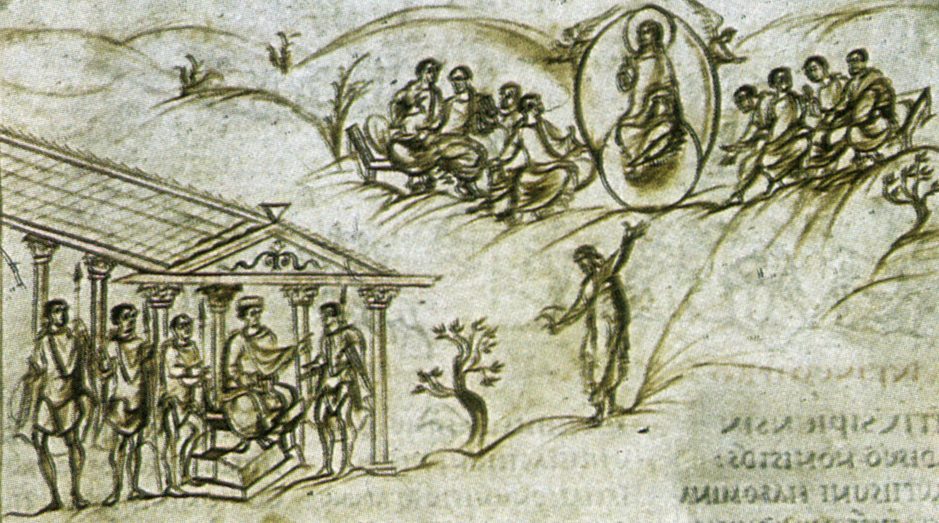
This page draws on Adam Clarke, Commentary on the Bible; Albert Barnes, Notes, Explanatory and Practical, on the Old and New Testaments (1832-1869); Albert Barnes, Notes on the Book of Psalms; Augustine of Hippo, ON THE PSALMS, Psalm 119; Charles Spurgeon, The Treasury of David, Vol. 6; John Gill, Exposition of the Old Testament and John Gill, Exposition of the Old Testament (1748-1763).