
Jeremiah 17:15
in Jeremiah 17Behold, they keep saying to me, “Where is the word of the LORD? Let it come now!”
BSB
The same verse in ASV and KJV ▾
ASV
Behold, they say unto me, Where is the word of Jehovah? let it come now.
KJV
Behold, they say unto me, Where is the word of the Lord? let it come now.
⋯
This verse in Jeremiah 17
Commentary
4 notes on this verse(Verse 15) Look, they say to me: Where is the word of the Lord? Let it come. Those who do not believe in the future, speak to the Prophet: Where is the word of the Lord? Let us come: considering the dissimulation of judgment, thinking of delay.
This site's exposition
Heal me, O Lord, and I shall be healed
on Jeremiah 17:14-18
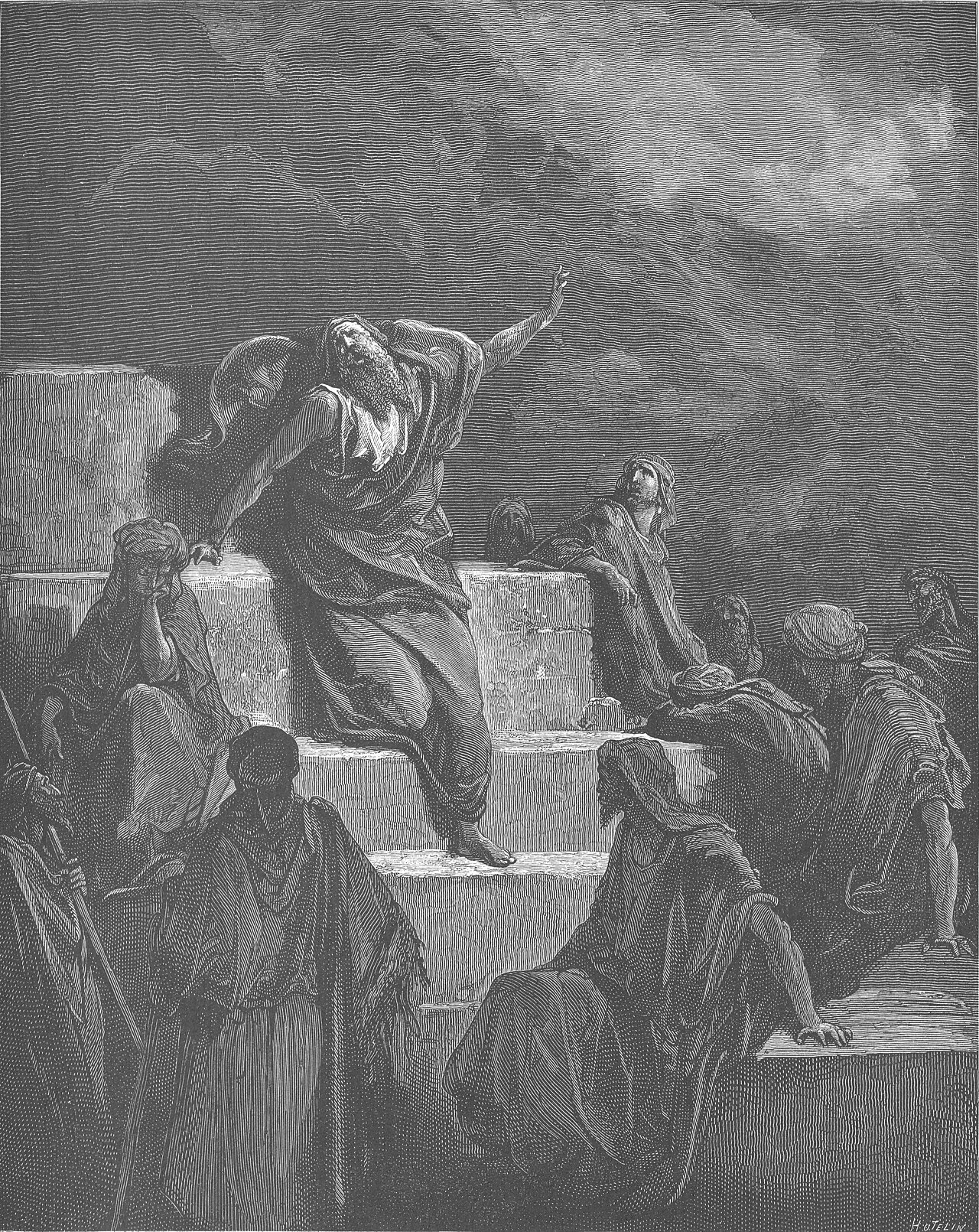
Heal me, O Lord, and I shall be healed; save me, and I shall be saved: for thou art my praise belongs to the confessions running through chapters 11 to 20, Jeremiah turning from preaching to prayer when the mockery, Where is the word of the Lord? let it come now, grows unbearable. Henry reads the appeal I have not hastened from being a pastor to follow thee as Jeremiah reminding a God who alone knows it that the threats he carries were never his own choosing. Calvin reads the prayer for his persecutors' confounding, rather than his own, as grief permitted a man asking God to vindicate the word he was made to speak.
The record, by era
The Nineteenth Century2 voices
Where is the word of the Lord? - Where is the accomplishment of his threatenings? Thou hast said that the city and the temple should both be destroyed. No such events have yet taken place. But they did take place, and every tittle of the menace was strictly fulfilled.
A commentator
Jamieson, Fausset & Brown1802–1910
Commentary Critical and Explanatory on the Whole Bible (1871)
on Jeremiah 17:14-18
Prayer of the prophet for deliverance from the enemies whom he excited by his faithful denunciations. Heal . . . save--not only make me whole (as to the evils of soul as well as body which I am exposed to by contact with ungodly foes, Jer 15:18), but keep me so. my praise--He whom I have to praise for past favors, and therefore to whom alone I look for the time to come.
How the passage was read
What the Jewish commentators add
On the verses either side of this one
for You are my praise I praise myself and boast with You, saying that You are my Savior.
This section is reception history: how the passage was read and kept in the Jewish tradition. Where a reading parts from an essential of the Christian faith, the section says so at that point.
Texts and citation data: Sefaria; each excerpt follows its version’s licence. 5 further sources are cited on this chapter that carry no English text this site may quote or only restate the verse.
The words behind it
9 Hebrew wordsEvery Hebrew word of this verse in the order it stands, with what it means and the door to its own study. The last column counts the times a word stands in the whole Bible: the rarer the word, the more the places it appears belong together.
| Hebrew | Sound | Meaning | Word study | In the Bible |
|---|---|---|---|---|
| הִנֵּה־ | hineh- | here! | H2009 → | 843 times |
| הֵ֕מָּה | hemah | they | H1992 → | 553 times |
| אֹמְרִ֖ים | ʾomerim | [are] saying | H559 → | 5305 times |
| אֵלָ֑י | ʾelai | to me | H413 → | 5510 times |
| אַיֵּ֥ה | ʾaiyeh | where? | H346 → | 45 times |
| דְבַר־ | devar- | [is] [the] word of | H1697 → | 1440 times |
| יְהוָ֖ה | yahweh | Yahweh | H3068 → | 6520 times |
| יָ֥בוֹא | yavo' | let it come | H935 → | 2568 times |
| נָֽא׃ | na' | please | H4994 → | 404 times |
הִנֵּה־here!
hineh-H2009 →843 times
הֵ֕מָּהthey
hemahH1992 →553 times
אֹמְרִ֖ים[are] saying
ʾomerimH559 →5305 times
אֵלָ֑יto me
ʾelaiH413 →5510 times
אַיֵּ֥הwhere?
ʾaiyehH346 →45 times
דְבַר־[is] [the] word of
devar-H1697 →1440 times
יְהוָ֖הYahweh
yahwehH3068 →6520 times
יָ֥בוֹאlet it come
yavo'H935 →2568 times
נָֽא׃please
na'H4994 →404 times
A shaded row is a word that stands 400 times or fewer in the Bible.
The walk
8 stopsEach card is a verse this one points to, and under it the verses that one points to in turn. Where several paths arrive at the same place, that place is listed first: the text keeps returning to it.
Through
Amos 5:18Woe to you who long for the Day of the LORD! What will the Day of the LORD be for you? It will be darkness and not light.
it leads to
- Joel 1:15
Alas for the day! For the Day of the LORD is near, and it will come as destruction from the Almighty.
- Joel 2:1–2
Blow the ram’s horn in Zion; sound the alarm on My holy mountain! Let all who dwell in the land tremble, for the Day of the LORD is coming; indeed, it is near—
- Joel 2:31
The sun will be turned to darkness and the moon to blood before the coming of the great and awesome Day of the LORD.
- Jeremiah 30:7
How awful that day will be! None will be like it! It is the time of Jacob’s distress, but he will be saved out of it.
- Malachi 4:1
“For behold, the day is coming, burning like a furnace, when all the arrogant and every evildoer will be stubble; the day is coming when I will set them ablaze,” says the LORD of…
- Joel 1:15
Through
Ezekiel 12:22“Son of man, what is this proverb that you have in the land of Israel: ‘The days go by, and every vision fails’?
it leads to
- Ezekiel 18:2–3
“What do you people mean by quoting this proverb about the land of Israel: ‘The fathers have eaten sour grapes, and the teeth of the children are set on edge’?
- Jeremiah 5:12–13
They have lied about the LORD and said: “He will not do anything; harm will not come to us; we will not see sword or famine.
Reached by 2 separate paths from here.
- Ezekiel 18:2–3
Through
Isaiah 5:19to those who say, “Let Him hurry and hasten His work so that we may see it! Let the plan of the Holy One of Israel come so that we may know it!”
it leads to
- Ezekiel 12:22
“Son of man, what is this proverb that you have in the land of Israel: ‘The days go by, and every vision fails’?
- Ezekiel 12:22
Where this verse is studied
On this page
About Jeremiah
This page draws on Adam Clarke, Commentary on the Bible; Jamieson, Fausset & Brown, Commentary Critical and Explanatory on the Whole Bible; Jerome, Commentary on Jeremiah; John Calvin, Commentary on Jeremiah and Lamentations and Matthew Henry, Commentary on the Whole Bible.