
Judges 14:13
in Judges 14But if you cannot solve it, you must give me thirty linen garments and thirty sets of clothes.” “Tell us your riddle,” they replied. “Let us hear it.”
BSB
The same verse in ASV and KJV ▾
ASV
but if ye cannot declare it unto me, then shall ye give me thirty linen garments and thirty changes of raiment. And they said unto him, Put forth thy riddle, that we may hear it.
KJV
But if ye cannot declare it me, then shall ye give me thirty sheets and thirty change of garments. And they said unto him, Put forth thy riddle, that we may hear it.
⋯
This verse in Judges 14
Commentary
4 notes on this verseA commentator
Jamieson, Fausset & Brown1802–1910
Commentary Critical and Explanatory on the Whole Bible (1871)
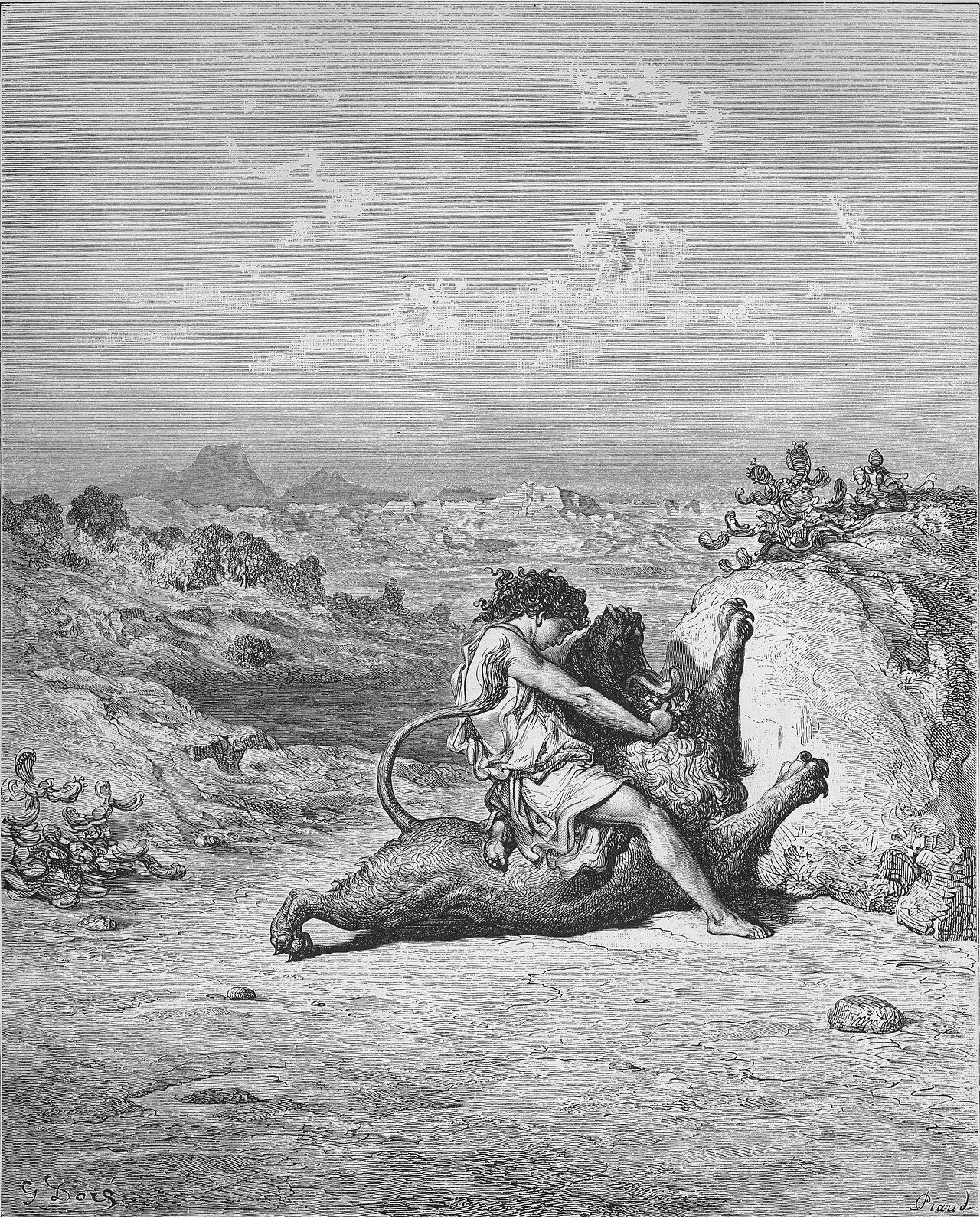
I will now put forth a riddle--Riddles are a favorite Oriental amusement at festive entertainments of this nature, and rewards are offered to those who give the solution. Samson's riddle related to honey in the lion's carcass. The prize he offered was thirty sindinim, or shirts, and thirty changes of garments, probably woolen.
This site's exposition
now put forth a riddle
on Judges 14:12-14
The word for riddle is chidah, the same word used of the hard questions the queen of Sheba brings to Solomon at 1 Kings 10:1 and of the dark saying Ezekiel is told to speak at Ezekiel 17:2. The stake is thirty linen garments and thirty changes of raiment against the same, so a wedding game carries the price of a small fortune on each side. Adam Clarke observes that the riddle offers no rule of interpretation to anyone who was not there, since the road to the answer runs through a lion nobody saw and honey nobody was told about. Three of the seven days are spent by the end of verse 14.
The record, by era
The Puritans and the Awakening2 voices
But if ye cannot declare it unto me,.... Explain the riddle in the space of time allowed: then shall ye give me thirty sheets, and thirty change of garments; so many shirts and suits of apparel: and they said unto him, put forth thy riddle that we may hear it; not thereby to judge whether they would agree to his proposals, but hereby suggesting that they accepted his terms and conditions, either to give or receive the above premium, if they did or did not hit on the explanation of the riddle.
Samson's riddle was his own invention, for it was his own achievement that gave occasion for it: Out of the eater came forth meat, and out of the strong came forth sweetness. Read my riddle, what is this?
The words behind it
18 Hebrew wordsEvery Hebrew word of this verse in the order it stands, with what it means and the door to its own study. The last column counts the times a word stands in the whole Bible: the rarer the word, the more the places it appears belong together.
| Hebrew | Sound | Meaning | Word study | In the Bible |
|---|---|---|---|---|
| וְאִם־ | veim- | and if | H518 → | 1069 times |
| לֹ֣א | lo' | not | H3808 → | 5168 times |
| תוּכְלוּ֮ | tukhelu | you will be able | H3201 → | 194 times |
| לְהַגִּ֣יד | lehagid | to tell | H5046 → | 370 times |
| לִי֒ | li | to <the> me | ||
| וּנְתַתֶּ֨ם | unetatem | and you will give | H5414 → | 2011 times |
| אַתֶּ֥ם | ʾatem | you | H859 → | 1094 times |
| לִי֙ | li | to <the> me | ||
| שְׁלֹשִׁ֣ים | sheloshim | thirty | H7970 → | 172 times |
| סְדִינִ֔ים | sedinim | linen garments | H5466 → | |
| וּשְׁלֹשִׁ֖ים | usheloshim | and thirty | H7970 → | 172 times |
| חֲלִיפ֣וֹת | chalifot | changes of | H2487 → | 12 times |
| בְּגָדִ֑ים | begadim | garments | H899 → | 217 times |
| וַיֹּ֣אמְרוּ | vaiyomeru | and they said | H559 → | 5305 times |
| ל֔וֹ | lo | to <the> him | ||
| ח֥וּדָה | chudah | ask [the] riddle ! | H2330 → | 4 times |
| חִידָתְךָ֖ | chidatekha | riddle your | H2420 → | 17 times |
| וְנִשְׁמָעֶֽנָּה׃ | venishmaenah | so we may hear it | H8085 → | 1159 times |
וְאִם־and if
veim-H518 →1069 times
לֹ֣אnot
lo'H3808 →5168 times
תוּכְלוּ֮you will be able
tukheluH3201 →194 times
לְהַגִּ֣ידto tell
lehagidH5046 →370 times
לִי֒to <the> me
li
וּנְתַתֶּ֨םand you will give
unetatemH5414 →2011 times
אַתֶּ֥םyou
ʾatemH859 →1094 times
לִי֙to <the> me
li
שְׁלֹשִׁ֣יםthirty
sheloshimH7970 →172 times
סְדִינִ֔יםlinen garments
sedinimH5466 →
וּשְׁלֹשִׁ֖יםand thirty
usheloshimH7970 →172 times
חֲלִיפ֣וֹתchanges of
chalifotH2487 →12 times
בְּגָדִ֑יםgarments
begadimH899 →217 times
וַיֹּ֣אמְרוּand they said
vaiyomeruH559 →5305 times
ל֔וֹto <the> him
lo
ח֥וּדָהask [the] riddle !
chudahH2330 →4 times
חִידָתְךָ֖riddle your
chidatekhaH2420 →17 times
וְנִשְׁמָעֶֽנָּה׃so we may hear it
venishmaenahH8085 →1159 times
A shaded row is a word that stands 400 times or fewer in the Bible.
Where this verse is studied
On this page
Studies1
About Judges
This page draws on Adam Clarke, Commentary on the Bible; Jamieson, Fausset & Brown, Commentary Critical and Explanatory on the Whole Bible; John Gill, Exposition of the Old Testament; John Gill, Exposition of the Old Testament (1748-1763) and Matthew Henry, Commentary on the Whole Bible.