
Isaiah 5:9
in Isaiah 5I heard the LORD of Hosts declare: “Surely many houses will become desolate, great mansions left unoccupied.
BSB
The same verse in ASV and KJV ▾
ASV
In mine ears saith Jehovah of hosts, Of a truth many houses shall be desolate, even great and fair, without inhabitant.
KJV
In mine ears said the Lord of hosts, Of a truth many houses shall be desolate, even great and fair, without inhabitant.
⋯
This verse in Isaiah 5
Commentary
8 notes on this verse(Ver. 9.) In my ears are these things of the Lord of hosts: Unless many houses are deserted, great and beautiful without an inhabitant. Because we translate according to the Hebrew, 'In my ears are these things of the Lord of hosts,' that is, the words that the Lord spoke still resonate in my ears: The LXX translated, 'These things have been heard in the ears of the Lord of hosts.'
This site's exposition
join house to house
on Isaiah 5:8-10
The first woe names a specific sin of the wealthy, buying up field after field and house after house until a family owns a district and lives on it alone, which the older commentators read against the land laws that kept ancestral plots inside a family. The Lord of hosts answers in the prophet's own hearing rather than through a vision, a form the bench notes as unusual weight: many houses shall be desolate, even great and fair, without inhabitant. Verse ten measures the judgment in the currency the sin was committed in, ten acres of vineyard yielding one bath and a homer of seed yielding only an ephah, roughly a tenth of what was sown, the land itself turning against the men who consolidated it.
The record, by era
The Medieval Church1 voice
174. Third, the threat of punishment is set out, and concerning this, two things are set out. First, the authority and power of the one who punishes; hence he says: these words of the Lord of hosts, who is able to punish, are in my …
The Puritans and the Awakening2 voices
In mine ears, said the Lord of hosts,....
God created not the earth in vain; he formed it to be inhabited, ch. xlv. But men's projects are often frustrated, and what they frame answers not the intention. We have a saying, That fools build houses for wise men to live in; but sometimes, as the event proves, they are built for no man to live in.
The Nineteenth Century2 voices
A commentator
Albert Barnes1798–1870
Notes, Explanatory and Practical, on the Old and New Testaments (1832-1869)
In mine ears - This probably refers to the prophet. As if he had said, ‘God has revealed it to me,’ or ‘God has said in my ears,’ i. e, to me. The Septuagint reads it, ‘These things are heard in the ears of the Lord of hosts,’ that is, the wishes” of the man of avarice. The Chaldee, ‘The prophet said, In my ears I have heard; a decree has gone from the Lord of hosts,’ etc. Many houses shall be desolate - Referring to the calamities that should come upon the nation for its crimes.
A commentator
Jamieson, Fausset & Brown1802–1910
Commentary Critical and Explanatory on the Whole Bible (1871)
proposed
In mine ears . . . the Lord--namely, has revealed it, as in Isa 22:14. desolate--literally, "a desolation," namely, on account of the national sins. great and fair--houses.
1 more voice on this verse
The Nineteenth Century1 voice
In mine ears. “To mine ear” - The sentence in the Hebrew text seems to be imperfect in this place; as likewise in Isa 22:14 (note), where the very same sense seems to be required as here. See the note there; and compare 1Sa 9:15 (note). In this place the Septuagint supply the word ηκουσθη, and the Syriac אשתמע eshtama, auditus est Jehovah in auribus meis, i.e., נגלה niglah, as in Isa 22:14. Many houses - This has reference to what was said in the preceding verse: “In vain are ye so intent upon joining house to house, and field to field; your houses shall be left uninhabited, and your fields shall become desolate and barren; so that a vineyard of ten acres shall produce but one bath (not eight gallons) of wine, and the husbandman shall reap but a tenth part of the seed which he has sown.” Kimchi says this means such an extent of vineyard as would require ten yoke of oxen to plough in one day.
How the passage was read
What the Jewish commentators add
On the verses either side of this one
For ten acres of vineyard And, because of the famine, the inhabitants of the house will be exiled, leaving no one dwelling in them.
1 more on this passage, in their own words ▾
Because of the sin of not giving tithes, the place of ten acres of vineyard shall produce one bath; and the place where a cor of seed was sown shall produce three measures.
This section is reception history: how the passage was read and kept in the Jewish tradition. Where a reading parts from an essential of the Christian faith, the section says so at that point.
Texts and citation data: Sefaria; each excerpt follows its version’s licence. 2 further sources are cited on this chapter that carry no English text this site may quote or only restate the verse.
The words behind it
13 Hebrew wordsEvery Hebrew word of this verse in the order it stands, with what it means and the door to its own study. The last column counts the times a word stands in the whole Bible: the rarer the word, the more the places it appears belong together.
| Hebrew | Sound | Meaning | Word study | In the Bible |
|---|---|---|---|---|
| בְּאָזְנָ֖י | beazenai | in ears my | H241 → | 187 times |
| יְהוָ֣ה | yahweh | Yahweh | H3068 → | 6520 times |
| צְבָא֑וֹת | tzevaot | of hosts | H6635 → | 485 times |
| אִם־ | ʾim- | if | H518 → | 1069 times |
| לֹ֞א | lo' | not | H3808 → | 5168 times |
| בָּתִּ֤ים | batim | houses | H1004 → | 2046 times |
| רַבִּים֙ | rabim | many | H7227 → | 454 times |
| לְשַׁמָּ֣ה | leshamah | <into> a waste | H8047 → | 39 times |
| יִֽהְי֔וּ | yihyu | they will become | H1961 → | 3559 times |
| גְּדֹלִ֥ים | gedolim | great [houses] | H1419 → | 526 times |
| וְטוֹבִ֖ים | vetovim | and good [houses] | H2896 → | 538 times |
| מֵאֵ֥ין | meein | from not | H369 → | 789 times |
| יוֹשֵֽׁב׃ | yoshev | inhabitant | H3427 → | 1079 times |
בְּאָזְנָ֖יin ears my
beazenaiH241 →187 times
יְהוָ֣הYahweh
yahwehH3068 →6520 times
צְבָא֑וֹתof hosts
tzevaotH6635 →485 times
אִם־if
ʾim-H518 →1069 times
לֹ֞אnot
lo'H3808 →5168 times
בָּתִּ֤יםhouses
batimH1004 →2046 times
רַבִּים֙many
rabimH7227 →454 times
לְשַׁמָּ֣ה<into> a waste
leshamahH8047 →39 times
יִֽהְי֔וּthey will become
yihyuH1961 →3559 times
גְּדֹלִ֥יםgreat [houses]
gedolimH1419 →526 times
וְטוֹבִ֖יםand good [houses]
vetovimH2896 →538 times
מֵאֵ֥יןfrom not
meeinH369 →789 times
יוֹשֵֽׁב׃inhabitant
yoshevH3427 →1079 times
A shaded row is a word that stands 400 times or fewer in the Bible.
The walk
8 stopsEach card is a verse this one points to, and under it the verses that one points to in turn. Where several paths arrive at the same place, that place is listed first: the text keeps returning to it.
Through
Amos 3:7Surely the Lord GOD does nothing without revealing His plan to His servants the prophets.
it leads to
- John 15:15
No longer do I call you servants, for a servant does not understand what his master is doing. But I have called you friends, because everything I have learned from My Father I have…
- Genesis 18:17
And the LORD said, “Shall I hide from Abraham what I am about to do?
- Psalms 25:14
The LORD confides in those who fear Him, and reveals His covenant to them.
- Revelation 1:1
This is the revelation of Jesus Christ, which God gave Him to show His servants what must soon come to pass. He made it known by sending His angel to His servant John,
- Daniel 9:22–27
He instructed me and spoke with me, saying: “O Daniel, I have come now to give you insight and understanding.
- John 15:15
Through
2 Chronicles 36:21So the land enjoyed its Sabbath rest all the days of the desolation, until seventy years were completed, in fulfillment of the word of the LORD through Jeremiah.
it leads to
- Jeremiah 29:10
For this is what the LORD says: “When Babylon’s seventy years are complete, I will attend to you and confirm My promise to restore you to this place.
- Leviticus 26:34–35
Then the land shall enjoy its Sabbaths all the days it lies desolate, while you are in the land of your enemies. At that time the land will rest and enjoy its Sabbaths.
- Zechariah 1:12
Then the angel of the LORD said, “How long, O LORD of Hosts, will You withhold mercy from Jerusalem and the cities of Judah, with which You have been angry these seventy years?”
- Jeremiah 29:10
Where this verse is studied
On this page
About Isaiah
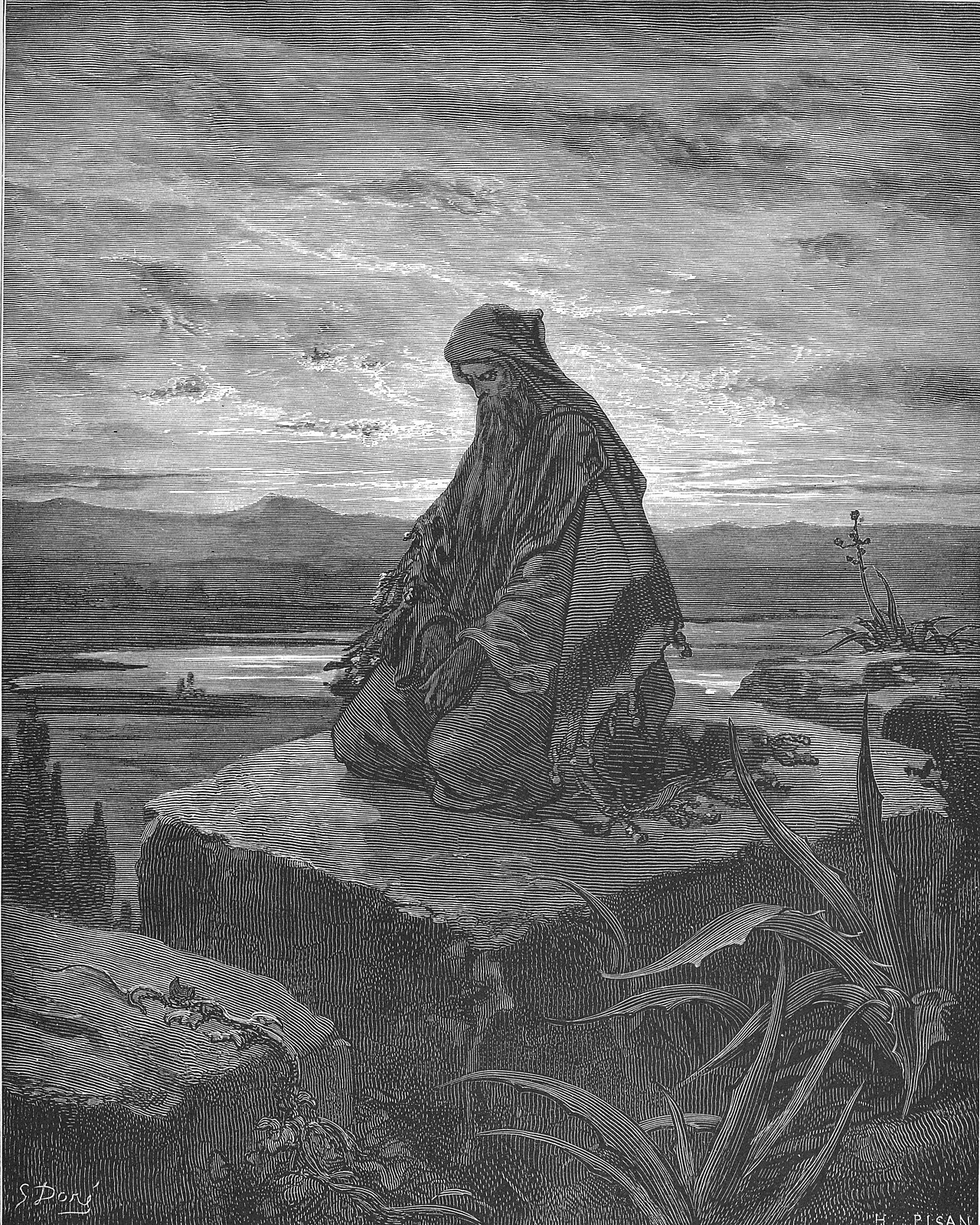
This page draws on Adam Clarke, Commentary on the Bible; Albert Barnes, Notes on the Book of Isaiah; Albert Barnes, Notes, Explanatory and Practical, on the Old and New Testaments (1832-1869); Jamieson, Fausset & Brown, Commentary Critical and Explanatory on the Whole Bible; Jerome, Commentary on Isaiah; John Gill, Exposition of the Old Testament (1748-1763); Matthew Henry, Commentary on the Whole Bible and Thomas Aquinas, Commentary on Isaiah.