
Isaiah 13:22
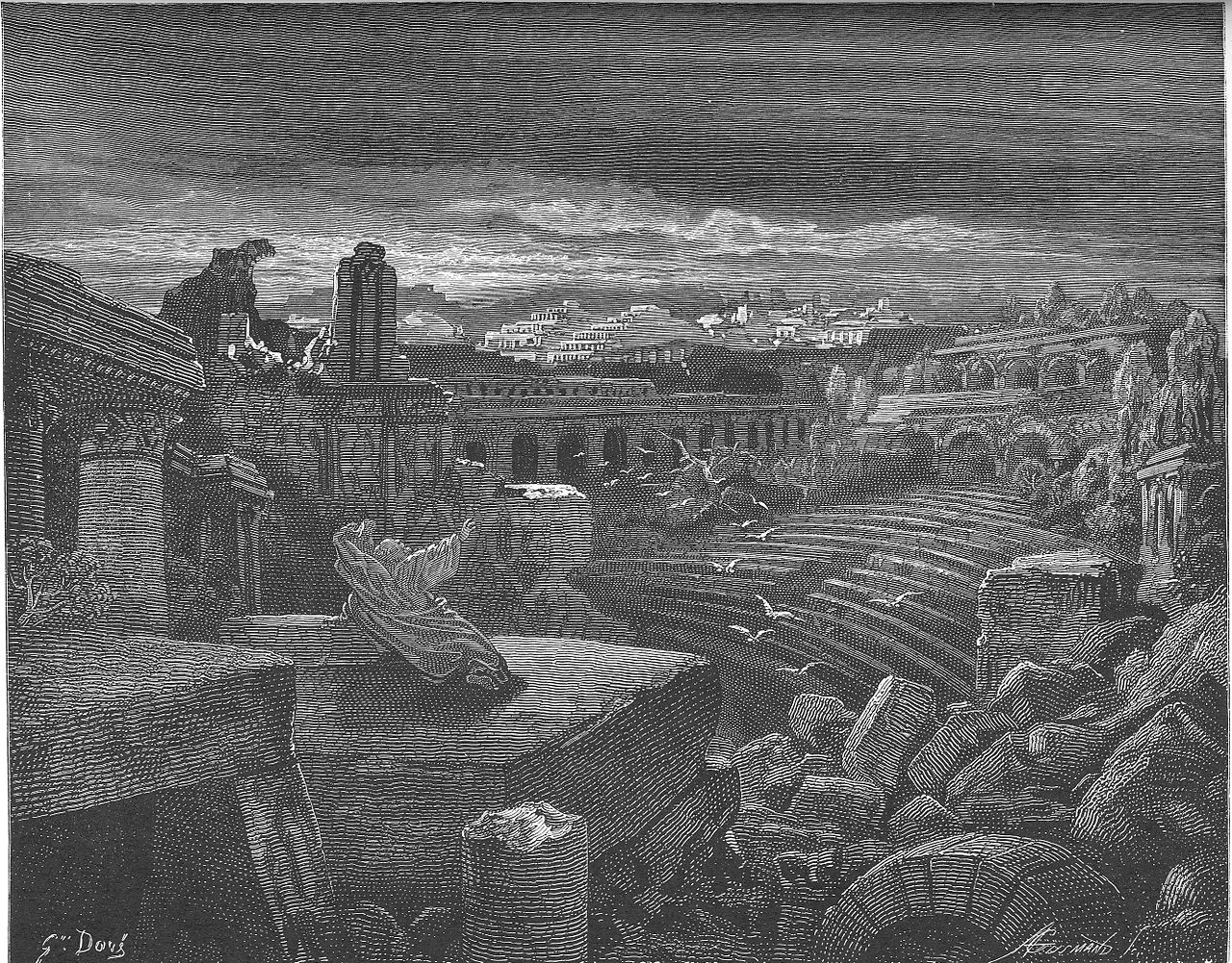
in Isaiah 13Hyenas will howl in her fortresses and jackals in her luxurious palaces. Babylon’s time is at hand, and her days will not be prolonged.
BSB
The same verse in ASV and KJV ▾
ASV
And wolves shall cry in their castles, and jackals in the pleasant palaces: and her time is near to come, and her days shall not be prolonged.
KJV
And the wild beasts of the islands shall cry in their desolate houses, and dragons in their pleasant palaces: and her time is near to come, and her days shall not be prolonged.
⋯
This verse in Isaiah 13
Commentary
10 notes on this verseIn their pleasant palaces “In their palaces” - באלמנותיו bealmenothaiv; a plain mistake, I presume, for בארמנתיו bearmenothaiv. It is so corrected in two MSS., the Syriac, Chaldee, and Vulgate. Πουλυποδες δ’ εν εμοι θαλαμας φωκαι τε μελαιναι Οικα ποιησονται ακηδεα, χητεΐ λαων. Hom. Hymn. in Apol. 77. Of which the following passage of Milton may be taken for a translation, though not so designed: - “And in their palaces, Where luxury late reigned, sea monsters whelped, And stabled.” Par. Lost, 11:7
This site's exposition
Babylon, the jewel of the kingdoms
on Isaiah 13:19-22
Babylon, "the jewel of the kingdoms," is measured against Sodom and Gomorrah, the standard of total ruin fixed in Israel's memory from Genesis. Desert creatures in the palaces are the Hebrew picture of a place abandoned, which Revelation later borrows for the fall of the final Babylon.
This site's exposition
her days will not be prolonged
Isaiah spoke of the days of Babylon while Assyria still ruled. Barnes linked the name of the hyenas to the word for islands or coasts, and Clarke corrected the word for luxurious palaces from the manuscripts. Her time is at hand, and chapter 14 turns to her king.
The record, by era
The Church Fathers1 voice
(Verses 20-22.) Neither the Arabs will pitch their tents there, nor will shepherds rest there; instead, there will be beasts, their houses will be filled with dragons, and ostriches will dwell there, and hairy creatures will leap about. And owls will answer in her buildings, and sirens in the temples of pleasure. Babylon will be so devastated and deserted that it won't even be useful for pastures of cattle and flocks.
The Medieval Church1 voice
As to the inhabitation of beasts and the dead: but wild beasts shall rest there, who love solitude. Dragons, who, according to some, are large winged serpents, according to others, are large fish with wet scales, and according to others, are cubit long serpents that …
The Puritans and the Awakening3 voices
3 I have commanded my sanctified ones, I have also called my mighty ones for mine anger, even them that rejoice in my highness. 4 The noise of a multitude in the mountains, like as of a great people; a tumultuous noise of the kingdoms of nations gathered together: the L ORD of hosts mustereth the host of the battle.
quarantine:scripture (2026-07-29) — scripture-overlap:97%@v3-4
): Her time is near to come. This prophecy of the destruction of Babylon was intended for the support and comfort of the people of God when they were captives there and grievously oppressed; and the accomplishment of the prophecy was nearly 200 years after the time when it was delivered; yet it followed soon after the time for which it was calculated.
quarantine:debris (2026-07-29) — leading-punctuation+unbalanced-parens
And the wild beasts of the islands shall cry in their desolate houses,....
2 more voices on this verse
The Nineteenth Century2 voices
A commentator
Jamieson, Fausset & Brown1802–1910
Commentary Critical and Explanatory on the Whole Bible (1871)
Fable gave them wings, because they stand with much of the body elevated and then dart swiftly. MAURER understands here another species of jackal. her time . . . near--though one hundred seventy-four years distant, yet "near" to Isaiah, who is supposed to be speaking to the Jews as if now captives in Babylon (Isa 14:1, 2).
A commentator
Albert Barnes1798–1870
Notes, Explanatory and Practical, on the Old and New Testaments (1832-1869)
proposed
And the wild beasts of the islands - (איים 'ı̂yı̂ym); see the notes at Isa 11:11; Isa 41:1, on the word rendered ‘islands.’ The word denotes islands, or coasts, and as those coasts and islands were unknown and unexplored, the word seems to have denoted unknown and uninhabited regions in general. Boehart supposes that by the word here used is denoted a species of wolves, the jackal, or the “thoes.” It is known as a wild animal, exceedingly fierce, and is also distinguished by alternate howlings in the night (“see” Bochart’s “Hieroz.” i. 3. 12). The word wolf probably will not express an erroneous idea here. The Chaldee renders it, ‘Cats.’ Shall cry - Hebrew, ‘Shall answer, or respond to each other.’ This is known to be the custom of wolves and some other wild animals, who send forth those dismal howls in alternate responses at night. This alternation of the howl or cry gives an additional impressiveness to the loneliness and desolation of forsaken Babylon. And dragons - (תנין tannı̂yn). This word, in its various forms of “tannim, taninim, tannin, and tannoth,” denotes sometimes “jackals or thoes,” as in Job 30:29; Psa 44:19; Mic 1:8; Mal 1:3. But it also denotes a great fish, a whale, a sea monster, a dragon, a serpent. It is translated ‘a whale’ in Gen 1:21; Job 7:12; Eze 32:2; ‘serpents,’ Exo 7:9-10, Exo 7:12; ‘dragons,’ or ‘dragon,’ Deu 32:33; Neh 2:13; Psa 44:19; Psa 74:13; Psa 91:13; Psa 148:7; Isa 27:1; Isa 51:9; Jer 14:6; Jer 51:34; Mal 1:3, “et al.;” and once ‘sea monsters,’ Lam 4:3. A “dragon” properly means a kind of winged serpent much celebrated in the dark ages. Here it may not improperly be rendered “jackal” (“see” Bochart’s “Hieroz.” i. 1. 9, p. […]
The words behind it
12 Hebrew wordsEvery Hebrew word of this verse in the order it stands, with what it means and the door to its own study. The last column counts the times a word stands in the whole Bible: the rarer the word, the more the places it appears belong together.
| Hebrew | Sound | Meaning | Word study | In the Bible |
|---|---|---|---|---|
| וְעָנָ֤ה | veanah | and it will sing | H6030 → | 331 times |
| אִיִּים֙ | ʾiyim | hyenas | H338 → | |
| בְּאַלְמנוֹתָ֔יו | bealmnotav | in palaces its | H490 → | 56 times |
| וְתַנִּ֖ים | vetanim | and jackals | H8577 → | 28 times |
| בְּהֵ֣יכְלֵי | beheikhelei | in [the] palaces of | H1964 → | 80 times |
| עֹ֑נֶג | ʾoneg | delight | H6027 → | |
| וְקָר֤וֹב | vekarov | and [is] near | H7138 → | 77 times |
| לָבוֹא֙ | lavo' | to go | H935 → | 2568 times |
| עִתָּ֔הּ | ʾitah | time its | H6256 → | 296 times |
| וְיָמֶ֖יהָ | veyameiha | and days its | H3117 → | 2304 times |
| לֹ֥א | lo' | not | H3808 → | 5168 times |
| יִמָּשֵֽׁכוּ׃ | yimashekhu | they will be prolonged | H4900 → | 36 times |
וְעָנָ֤הand it will sing
veanahH6030 →331 times
אִיִּים֙hyenas
ʾiyimH338 →
בְּאַלְמנוֹתָ֔יוin palaces its
bealmnotavH490 →56 times
וְתַנִּ֖יםand jackals
vetanimH8577 →28 times
בְּהֵ֣יכְלֵיin [the] palaces of
beheikheleiH1964 →80 times
עֹ֑נֶגdelight
ʾonegH6027 →
וְקָר֤וֹבand [is] near
vekarovH7138 →77 times
לָבוֹא֙to go
lavo'H935 →2568 times
עִתָּ֔הּtime its
ʾitahH6256 →296 times
וְיָמֶ֖יהָand days its
veyameihaH3117 →2304 times
לֹ֥אnot
lo'H3808 →5168 times
יִמָּשֵֽׁכוּ׃they will be prolonged
yimashekhuH4900 →36 times
A shaded row is a word that stands 400 times or fewer in the Bible.
The walk
8 stopsEach card is a verse this one points to, and under it the verses that one points to in turn. Where several paths arrive at the same place, that place is listed first: the text keeps returning to it.
Through
Deuteronomy 32:35Vengeance is Mine; I will repay. In due time their foot will slip; for their day of disaster is near, and their doom is coming quickly.”
it leads to
- Romans 12:19
Do not avenge yourselves, beloved, but leave room for God’s wrath. For it is written: “Vengeance is Mine; I will repay, says the Lord.”
- Nahum 1:2
The LORD is a jealous and avenging God; the LORD is avenging and full of wrath. The LORD takes vengeance on His foes and reserves wrath for His enemies.
- Hebrews 10:30
For we know Him who said, “Vengeance is Mine; I will repay,” and again, “The Lord will judge His people.”
- Psalms 73:17–19
until I entered God’s sanctuary; then I discerned their end.
- 2 Peter 2:3
In their greed, these false teachers will exploit you with deceptive words. The longstanding verdict against them remains in force, and their destruction does not sleep.
- Romans 12:19
Through
Isaiah 35:7The parched ground will become a pool, the thirsty land springs of water. In the haunt where jackals once lay, there will be grass and reeds and papyrus.
it leads to
- Acts 26:18
to open their eyes, so that they may turn from darkness to light and from the power of Satan to God, that they may receive forgiveness of sins and an inheritance among those sanctified…
- Isaiah 49:10
They will not hunger or thirst, nor will scorching heat or sun beat down on them. For He who has compassion on them will guide them and lead them beside springs of water.
- Acts 26:18
Through
Jeremiah 51:33For this is what the LORD of Hosts, the God of Israel, says: “The Daughter of Babylon is like a threshing floor at the time it is trampled. In just a little while her…
it leads to
- Isaiah 21:10
O my people, crushed on the threshing floor, I tell you what I have heard from the LORD of Hosts, the God of Israel.
- Isaiah 21:10
Where this verse is studied
On this page
Studies1
About Isaiah
This page draws on Adam Clarke, Commentary on the Bible; Albert Barnes, Notes, Explanatory and Practical, on the Old and New Testaments (1832-1869); Jamieson, Fausset & Brown, Commentary Critical and Explanatory on the Whole Bible; Jerome, Commentary on Isaiah; John Gill, Exposition of the Old Testament; John Gill, Exposition of the Old Testament (1748-1763); Matthew Henry, Commentary on the Whole Bible and Thomas Aquinas, Commentary on Isaiah.