
Genesis 7:22
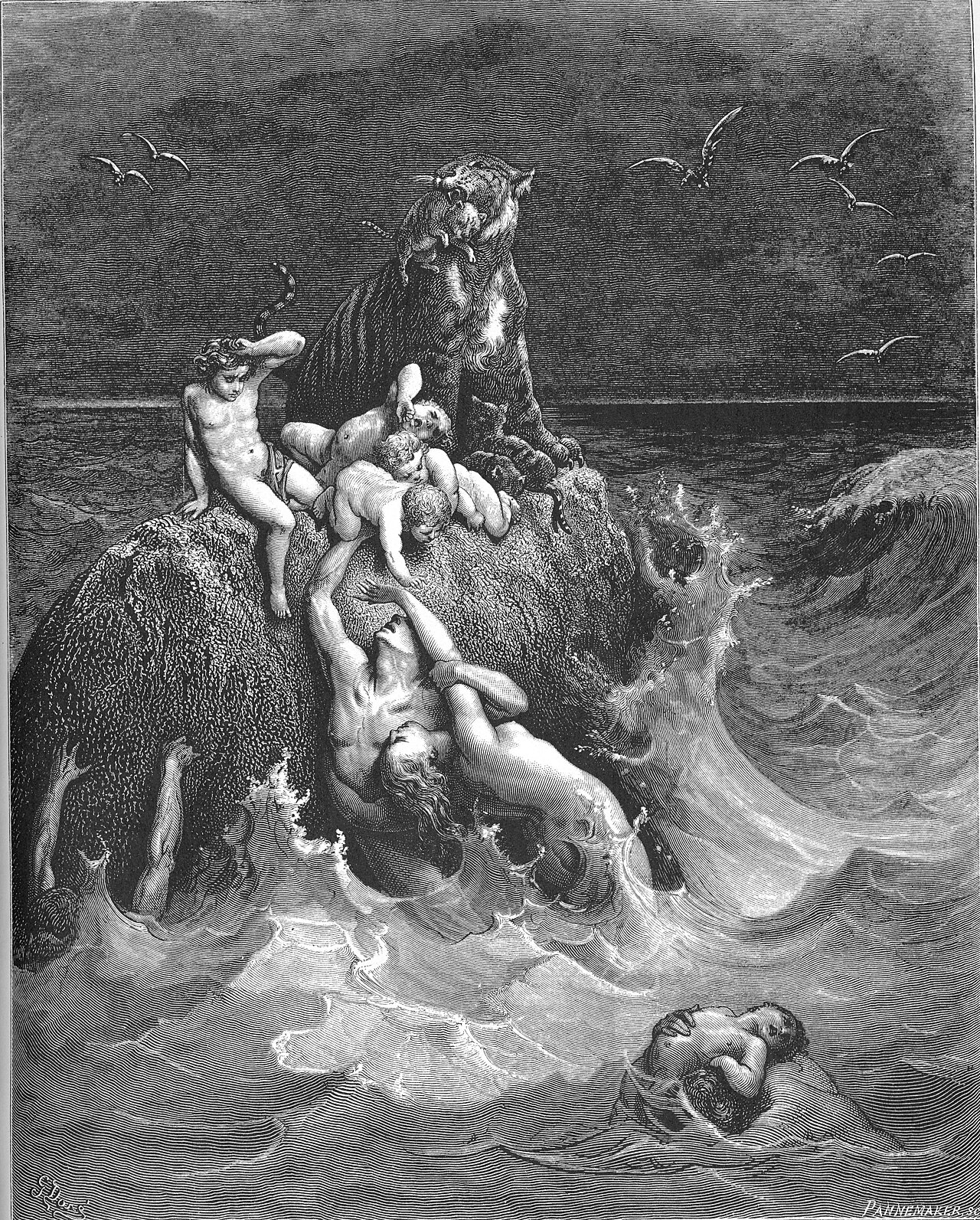
in Genesis 7Of all that was on dry land, everything that had the breath of life in its nostrils died.
BSB
The same verse in ASV and KJV ▾
ASV
all in whose nostrils was the breath of the spirit of life, of all that was on the dry land, died.
KJV
All in whose nostrils was the breath of life, of all that was in the dry land, died.
⋯
This verse in Genesis 7
Commentary
4 notes on this verseOf all that was in the dry land - From this we may conclude that such animals only as could not live in the water were preserved in the ark.
This site's exposition
every living thing that moved upon the earth
on Genesis 7:21-24
The dying is stated and never described. The single line of hope is that those in the ark remained. Jesus took these days as the picture of His own coming, that people ate and drank and married until the day Noah entered the ark, at Matthew 24:38 and 39. The water stands over the earth for 150 days.
This site's exposition
breath of life in its nostrils
The phrase goes back to 2:7, where the LORD God breathed the breath of life into the man's nostrils. Dry land limits the loss to land creatures. Adam Clarke concluded that only animals unable to live in the water were taken into the ark.
The record, by era
The Church Fathers1 voice
Then, a little further on in the same book [Genesis], one could just as easily have noticed the verse "Everything on the dry land in whose nostrils was the breath of life died." This means that everything that lived on the earth perished in the flood. Thus we find that Holy Scripture is accustomed to use both phrases—"living soul" and "the breath of life"—in regard even to beasts, and in the verse "All things wherein there is the breath of life" the Greek text does not use the word pneuma but pnoē.
The words behind it
10 Hebrew wordsEvery Hebrew word of this verse in the order it stands, with what it means and the door to its own study. The last column counts the times a word stands in the whole Bible: the rarer the word, the more the places it appears belong together.
| Hebrew | Sound | Meaning | Word study | In the Bible |
|---|---|---|---|---|
| כֹּ֡ל | kol | all | H3605 → | 5413 times |
| אֲשֶׁר֩ | ʾasher | that | H834 → | 5497 times |
| נִשְׁמַת־ | nishmat- | [the] breath of | H5397 → | |
| ר֨וּחַ | ruach | [the] breath of | H7307 → | 378 times |
| חַיִּ֜ים | chaiyim | life | H2416 → | 498 times |
| בְּאַפָּ֗יו | beapav | [was] in nostrils its | H639 → | 276 times |
| מִכֹּ֛ל | mikol | from all | H3605 → | 5413 times |
| אֲשֶׁ֥ר | ʾasher | that | H834 → | 5497 times |
| בֶּחָֽרָבָ֖ה | becharavah | [was] on the dry ground | H2724 → | |
| מֵֽתוּ׃ | metu | they died | H4191 → | 839 times |
כֹּ֡לall
kolH3605 →5413 times
אֲשֶׁר֩that
ʾasherH834 →5497 times
נִשְׁמַת־[the] breath of
nishmat-H5397 →
ר֨וּחַ[the] breath of
ruachH7307 →378 times
חַיִּ֜יםlife
chaiyimH2416 →498 times
בְּאַפָּ֗יו[was] in nostrils its
beapavH639 →276 times
מִכֹּ֛לfrom all
mikolH3605 →5413 times
אֲשֶׁ֥רthat
ʾasherH834 →5497 times
בֶּחָֽרָבָ֖ה[was] on the dry ground
becharavahH2724 →
מֵֽתוּ׃they died
metuH4191 →839 times
A shaded row is a word that stands 400 times or fewer in the Bible.
The walk
8 stopsEach card is a verse this one points to, and under it the verses that one points to in turn. Where several paths arrive at the same place, that place is listed first: the text keeps returning to it.
Through
Genesis 2:7Then the LORD God formed man from the dust of the ground and breathed the breath of life into his nostrils, and the man became a living being.
it leads to
- Ecclesiastes 12:7
before the dust returns to the ground from which it came and the spirit returns to God who gave it.
- Job 33:4
The Spirit of God has made me, and the breath of the Almighty gives me life.
- 1 Corinthians 15:45
So it is written: “The first man Adam became a living being;” the last Adam a life-giving spirit.
- Isaiah 64:8
But now, O LORD, You are our Father; we are the clay, and You are the potter; we are all the work of Your hand.
- Acts 17:25
Nor is He served by human hands, as if He needed anything, because He Himself gives everyone life and breath and everything else.
- Ecclesiastes 12:7
Through
Genesis 6:17And behold, I will bring floodwaters upon the earth to destroy every creature under the heavens that has the breath of life. Everything on the earth will perish.
it leads to
- Genesis 7:4
For seven days from now I will send rain on the earth for forty days and forty nights, and I will wipe from the face of the earth every living thing I have made.”
- 2 Peter 2:5
if He did not spare the ancient world when He brought the flood on its ungodly people, but preserved Noah, a preacher of righteousness, among the eight;
- Genesis 7:21–23
And every living thing that moved upon the earth perished—birds, livestock, animals, every creature that swarms upon the earth, and all mankind.
- Genesis 7:4
Where this verse is studied
On this page
Studies8
On this verse
On this chapter
About Genesis
This page draws on Adam Clarke, Commentary on the Bible; Augustine of Hippo, City of God 13.24; John Calvin, Commentary on Genesis and Matthew Henry, Commentary on the Whole Bible.