
Genesis 4:7
in Genesis 4If you do what is right, will you not be accepted? But if you refuse to do what is right, sin is crouching at your door; it desires you, but you must master it.”
BSB
The same verse in ASV and KJV ▾
ASV
If thou doest well, shall it not be lifted up? and if thou doest not well, sin coucheth at the door; and unto thee shall be its desire; but do thou rule over it.
KJV
If thou doest well, shalt thou not be accepted? and if thou doest not well, sin lieth at the door. And unto thee shall be his desire, and thou shalt rule over him.
⋯
This verse in Genesis 4
Commentary
11 notes on this verseIf thou doest well - That which is right in the sight of God, shalt thou not be accepted? Does God reject any man who serves him in simplicity and godly sincerity? But if thou doest not well, can wrath and indignation against thy righteous brother save thee from the displeasure under which thou art fallen? On the contrary, have recourse to thy Maker for mercy; לפתח חטאת רבץ lappethach chattath robets, a sin-offering lieth at thy door; an animal proper to be offered as an atonement for sin is now couching at the door of thy fold.
This site's exposition
Why are you angry
on Genesis 4:6-7
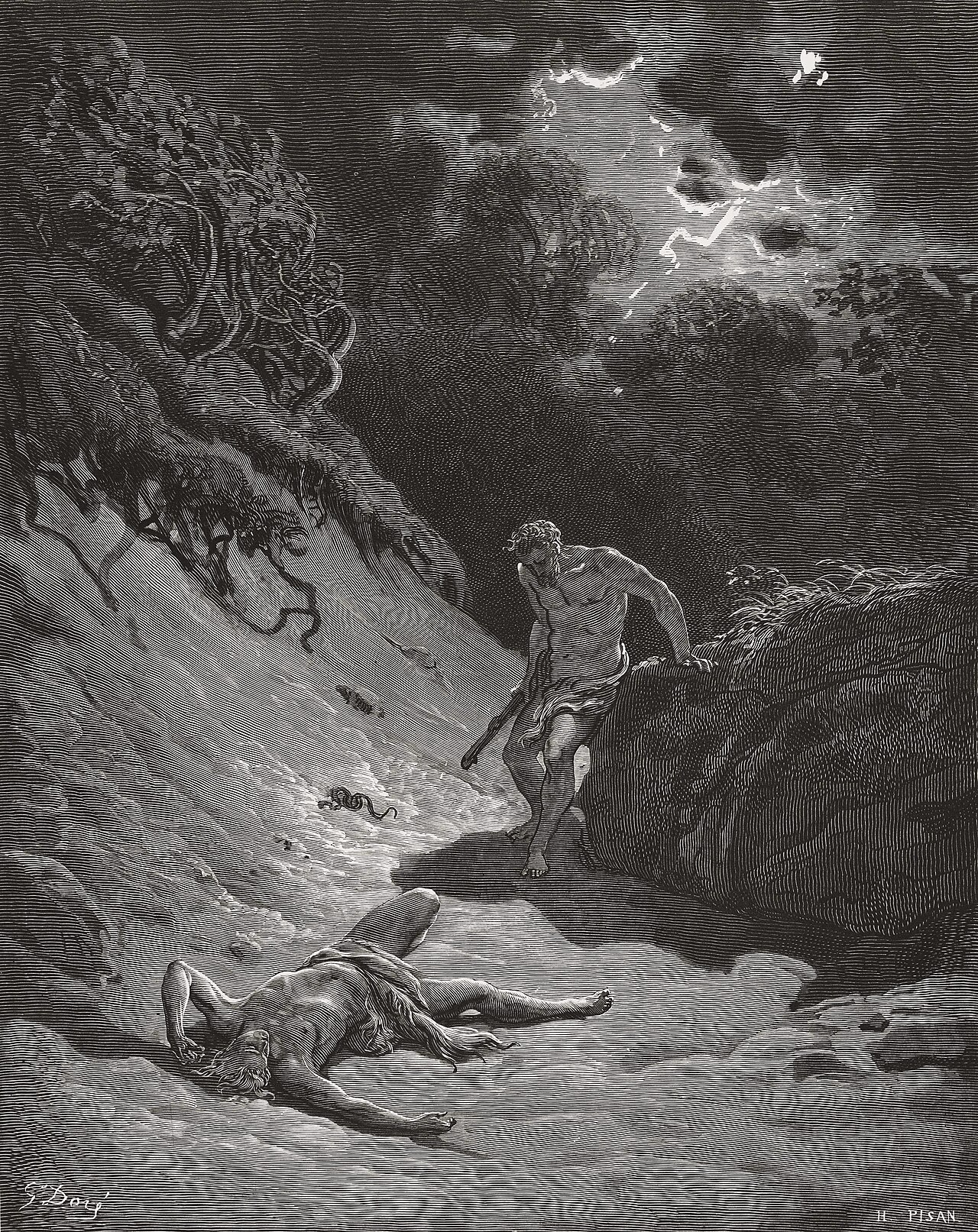
God speaks to Cain before he kills, and the door is still open to him. This is the first time the word sin appears in the Bible, and it appears as an animal crouching at a door and wanting him. Clarke reads the same Hebrew noun as a sin offering couching at the door, which sets a remedy beside the warning. Cain is told he must master it.
This site's exposition
will you not be accepted
The Hebrew for accepted is se'et, a lifting up, and it answers the face that fell in verses 5 and 6. Cain's face can be raised again. Adam Clarke read the question as an open door, since God rejects no one who serves Him in sincerity.
The record, by era
The Church Fathers3 voices
God wishes to defuse the wild frenzy and remove the anger by means of his words. You see, he observed the stages of Cain's thinking and realized the savagery of his deadly intention; so he intends at this early stage to sedate his thinking and bring repose to his mind by placing his brother subject to him and not undermining his authority. But even despite such great concern and such potent remedies, Cain gained nothing from the experience. Such was the degree of difference in their attitudes and the excess of evil intent.
God said to Cain, "Why are you angry, and why is your face gloomy?" Instead of being filled with anger, you ought to be filled with distress. Instead of your face being gloomy, tears ought to be flowing from your eyes.
A commentator
John ChrysostomCommentary (church-history corpus) · Written in the 5th century.
proposed
So what is the upshot? You have sinned, and sinned grievously, but I am not imposing punishment for the sin; after all, I am loving, and "I do not want the death of the sinner, rather that he be converted and live." Since, then you have sinned, be at peace, lend calm to your thinking and rid yourself of the onset of the waves crashing around your mind, settle the storm lest you add to the previous sin another more grievous one and set your mind on something beyond repair. Don't give yourself into the clutches of the wicked demon. "'You have sinned, be at peace.'" He knew right from the outset that the future attack against his brother would take place, and by these words he checks it beforehand. You see, since he was God and knew the unspoken intentions of Cain's mind, he was aware of the movements of his heart; so with this earnest exhortation and the considerateness of his words he applies the appropriate remedy to him, doing everything in his power in case this man should reject the medication and fall headlong into the abyss of fratricide. "'You have sinned, be at peace." ' Don't think, he says, even if I have turned away from your offering owing to your incorrect attitude and have welcomed your brother's gift because of his sound choice, that I have stripped you of your pride of place and removed you from the distinction of firstborn. "'Be at peace," ' even if he has been deemed worthy of my regard and his gifts have proved acceptable, nevertheless "'his movement is towards you, and you will be superior to him.'" And so even after this sin I permit you to have the privilege of being firstborn, and I bid him be subject to your authority and your control. See the Lord's loving kindness, how he wishes to defuse the wild frenzy and remove the anger by means of his words.
The Medieval Church1 voice
But his desire shall be for you, and you shall rule over him. In accordance with the idiom of the Hebrew language, he substituted the indicative mood for the imperative, such as you have innumerable times: You shall love the Lord your God, you shall …
The Puritans and the Awakening1 voice
If thou doest well, shalt thou not be accepted?....
3 more voices on this verse
The Nineteenth Century3 voices
SINNERS are not all of the laughing sort—Cain's mind was angry and his heart was heavy. The short life of the vicious is not always a merry one. See, here you have a man who is utterly without God, but he is not without sorrow. His countenance has fallen, his looks are sullen—he is a miserable man. There are many ungodly people still in the world who are not happy in the condition in which they find themselves. The present does not content them and they have no future from which to borrow the light of hope.
A commentator
Jamieson, Fausset & Brown1802–1910
Commentary Critical and Explanatory on the Whole Bible (1871)
proposed
If thou doest well, shalt thou not be accepted?--A better rendering is, "Shalt thou not have the excellency"? which is the true sense of the words referring to the high privileges and authority belonging to the first-born in patriarchal times.
quarantine:debris (2026-07-29) — unbalanced-parens
SINNERS are not all of the laughing sort—Cain's mind was angry and his heart was heavy. The short life of the vicious is not always a merry one. See, here you have a man who is utterly without God, but he is not without sorrow. His countenance has fallen, his looks are sullen—he is a miserable man. There are many ungodly people still in the world who are not happy in the condition in which they find themselves. The present does not content them and they have no future from which to borrow the light of hope. The service of sin is hard to them and yet they do not quit it for the service of the Lord. They are in danger of having two Hells—one in this life and another in the world to come! They have a religion of their own, even as Cain brought an offering of the fruit of the ground, but it yields them no comfort, for God has no respect to their offering and, therefore, they are displeased about it. The things of God bring an increase to their inward wretchedness—it was after a sacrifice that Cain's countenance fell. Many unrenewed hearts quarrel with God at His own altar—quarrel by presenting what He never commanded and then by growing angry because He rejects their will-worship! They attend the means of Grace, but they are not saved nor comforted, and they do not like it. They pray, after a fashion, but they are not heard—and they feel indignant at the slight. They read the Scriptures, but no cheering promise is ever applied to their hearts—and they grow fierce at their failure. They see another accepted, as Abel was, and this excites their jealousy and envy gnaws at their heart. They are angry with God, with their fellow man and with everything about them! Their countenance falls and they are in a morose mood which fits them for any cruel word or deed. Can you not see their sullen looks? They would very much like to have the enjoyments of religion.
The words behind it
15 Hebrew wordsEvery Hebrew word of this verse in the order it stands, with what it means and the door to its own study. The last column counts the times a word stands in the whole Bible: the rarer the word, the more the places it appears belong together.
| Hebrew | Sound | Meaning | Word study | In the Bible |
|---|---|---|---|---|
| הֲל֤וֹא | halo' | ¿ not | H3808 → | 5168 times |
| אִם־ | ʾim- | if | H518 → | 1069 times |
| תֵּיטִיב֙ | teitiv | you will do well | H3190 → | 117 times |
| שְׂאֵ֔ת | seet | lifting up | H7613 → | |
| וְאִם֙ | veim | and if | H518 → | 1069 times |
| לֹ֣א | lo' | not | H3808 → | 5168 times |
| תֵיטִ֔יב | teitiv | you will do well | H3190 → | 117 times |
| לַפֶּ֖תַח | lapetach | to the door | H6607 → | 164 times |
| חַטָּ֣את | chatat | sin | H2403 → | 295 times |
| רֹבֵ֑ץ | rovetz | [is] crouching | H7257 → | 30 times |
| וְאֵלֶ֙יךָ֙ | veeleikha | and [is] to you | H413 → | 5510 times |
| תְּשׁ֣וּקָת֔וֹ | teshukato | desire its | H8669 → | |
| וְאַתָּ֖ה | veatah | and you | H859 → | 1094 times |
| תִּמְשָׁל־ | timshol- | you will rule | H4910 → | 81 times |
| בּֽוֹ׃ | bo | over <the> it |
הֲל֤וֹא¿ not
halo'H3808 →5168 times
אִם־if
ʾim-H518 →1069 times
תֵּיטִיב֙you will do well
teitivH3190 →117 times
שְׂאֵ֔תlifting up
seetH7613 →
וְאִם֙and if
veimH518 →1069 times
לֹ֣אnot
lo'H3808 →5168 times
תֵיטִ֔יבyou will do well
teitivH3190 →117 times
לַפֶּ֖תַחto the door
lapetachH6607 →164 times
חַטָּ֣אתsin
chatatH2403 →295 times
רֹבֵ֑ץ[is] crouching
rovetzH7257 →30 times
וְאֵלֶ֙יךָ֙and [is] to you
veeleikhaH413 →5510 times
תְּשׁ֣וּקָת֔וֹdesire its
teshukatoH8669 →
וְאַתָּ֖הand you
veatahH859 →1094 times
תִּמְשָׁל־you will rule
timshol-H4910 →81 times
בּֽוֹ׃over <the> it
bo
A shaded row is a word that stands 400 times or fewer in the Bible.
The walk
8 stopsEach card is a verse this one points to, and under it the verses that one points to in turn. Where several paths arrive at the same place, that place is listed first: the text keeps returning to it.
Through
Romans 6:16Do you not know that when you offer yourselves as obedient slaves, you are slaves to the one you obey, whether you are slaves to sin leading to death, or to obedience leading to…
it leads to
- John 8:34
Jesus replied, “Truly, truly, I tell you, everyone who sins is a slave to sin.
- Matthew 6:24
No one can serve two masters: Either he will hate the one and love the other, or he will be devoted to the one and despise the other. You cannot serve both God and…
- Joshua 24:15
But if it is unpleasing in your sight to serve the LORD, then choose for yourselves this day whom you will serve, whether the gods your fathers served beyond the Euphrates, or the gods…
- 2 Peter 2:19
They promise them freedom, while they themselves are slaves to depravity. For a man is a slave to whatever has mastered him.
- Romans 6:12–13
Therefore do not let sin reign in your mortal body so that you obey its desires.
- John 8:34
Through
James 1:15Then after desire has conceived, it gives birth to sin; and sin, when it is full-grown, gives birth to death.
it leads to
- Psalms 7:14
Behold, the wicked man travails with evil; he conceives trouble and births falsehood.
- Job 15:35
They conceive trouble and give birth to evil; their womb is pregnant with deceit.”
- Romans 5:12–21
Therefore, just as sin entered the world through one man, and death through sin, so also death was passed on to all men, because all sinned.
- Psalms 7:14
Where this verse is studied
On this page
Studies12
About Genesis
This page draws on Adam Clarke, Commentary on the Bible; Bede, Commentary on Genesis (Hexaemeron); Charles Spurgeon, The Metropolitan Tabernacle Pulpit, Sermon No. 1929: “To Those Who Are Angry With Their Godly Friends” (lightly modernized text, CCEL edition); Ephrem the Syrian, COMMENTARY ON GENESIS 3.4.1-3; Jamieson, Fausset & Brown, Commentary Critical and Explanatory on the Whole Bible; John Chrysostom, HOMILIES ON GENESIS 18.24; John Chrysostom, Commentary (church-history corpus) and John Gill, Exposition of the Old Testament (1748-1763).