
Ezra 10:25
in Ezra 10And among the other Israelites, from the descendants of Parosh: Ramiah, Izziah, Malchijah, Mijamin, Eleazar, Malchijah, and Benaiah.
BSB
The same verse in ASV and KJV ▾
ASV
And of Israel: Of the sons of Parosh: Ramiah, and Izziah, and Malchijah, and Mijamin, and Eleazar, and Malchijah, and Benaiah.
KJV
Moreover of Israel: of the sons of Parosh; Ramiah, and Jeziah, and Malchiah, and Miamin, and Eleazar, and Malchijah, and Benaiah.
⋯
This verse in Ezra 10
Commentary
3 notes on this verseMoreover of Israel - That is, as Calmet observes, simple Israelites, to distinguish them from the priests, Levites, and singers, mentioned in Ezr 10:18, Ezr 10:23, Ezr 10:24.
This site's exposition
Moreover of Israel
on Ezra 10:25-43
The heading moreover of Israel opens the chapter's longest stretch, nineteen verses of names sorted by family, the lay portion of the same registry method that had numbered the return in Ezra 2. No comment interrupts the roll; the sheer count of families involved, ten or more houses of ordinary Israelites, is left to make its own point about how far the failure had spread. A name recorded here is a case already closed by the time the chapter reached this point, the trespass offered and the wife put away, so the list stands as a record of finished discipline rather than an open charge.
The record, by era
The Puritans and the Awakening1 voice
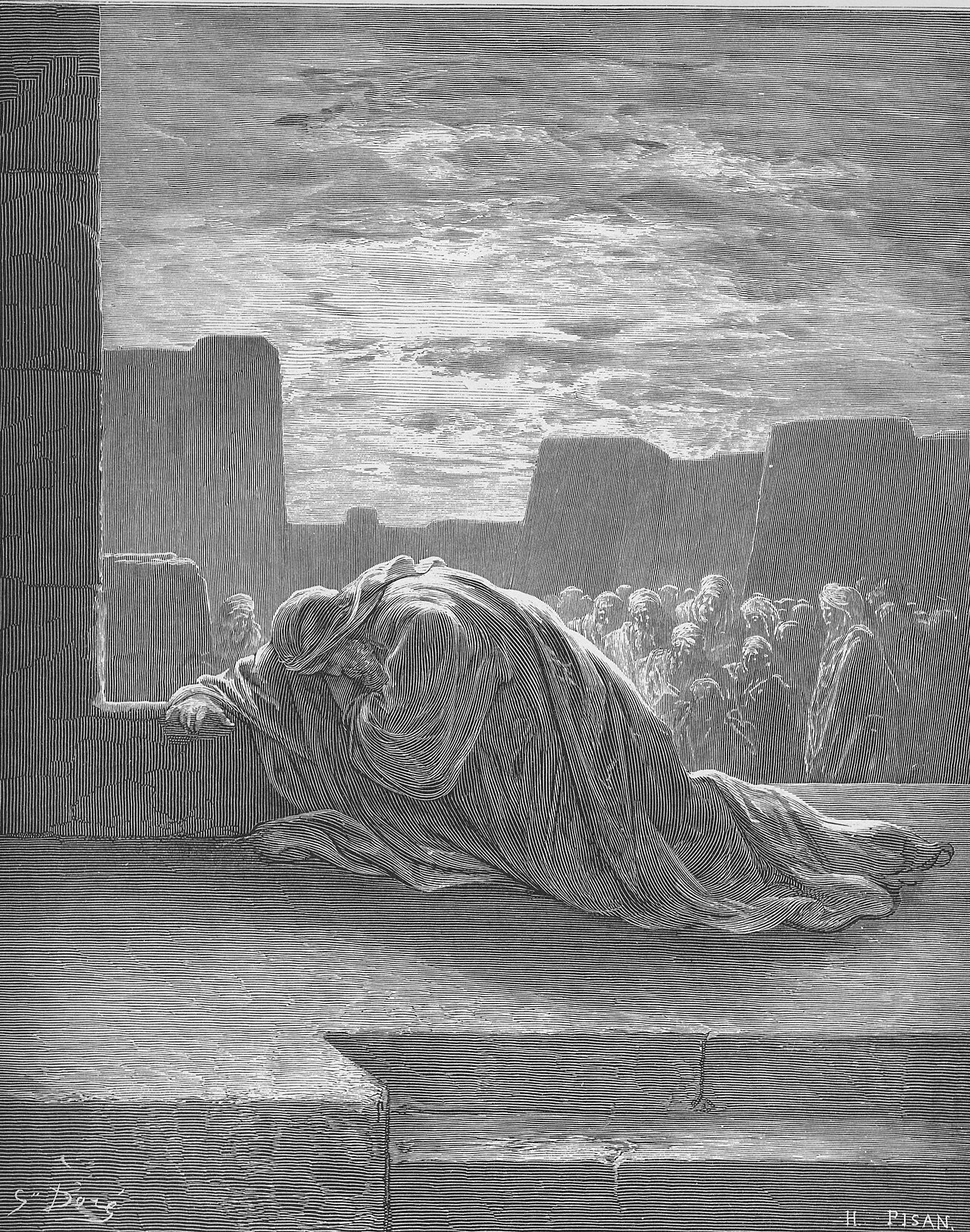
What good impressions were made upon the people by Ezra's humiliation and confession of sin. No sooner was it noised in the city that their new governor, in whom they rejoiced, was himself in grief, and to so great a degree, for them and their sin, than presently there assembled to him a very great congregation, to see what the matter was and to mingle their tears with his,
The words behind it
10 Hebrew wordsEvery Hebrew word of this verse in the order it stands, with what it means and the door to its own study. The last column counts the times a word stands in the whole Bible: the rarer the word, the more the places it appears belong together.
| Hebrew | Sound | Meaning | Word study | In the Bible |
|---|---|---|---|---|
| וּמִֽיִּשְׂרָאֵ֑ל | umiyisrael | and of Israel | H3478 → | 2507 times |
| מִבְּנֵ֣י | mibenei | of [the] sons of | H1121 → | 4930 times |
| פַרְעֹ֡שׁ | farosh | Parosh | H6551 → | 6 times |
| רַ֠מְיָה | ramyah | Ramiah | H7422 → | |
| וְיִזִּיָּ֤ה | veyiziyah | and Izziah | H3150 → | |
| וּמַלְכִּיָּה֙ | umalkiyah | and Malkijah | H4441 → | 16 times |
| וּמִיָּמִ֣ן | umiyamin | and Mijamin | H4326 → | |
| וְאֶלְעָזָ֔ר | veelazar | and Eleazar | H499 → | 72 times |
| וּמַלְכִּיָּ֖ה | umalkiyah | and Malkijah | H4441 → | 16 times |
| וּבְנָיָֽה׃ ס | uvenayah | and Benaiah | H1141 → | 42 times |
וּמִֽיִּשְׂרָאֵ֑לand of Israel
umiyisraelH3478 →2507 times
מִבְּנֵ֣יof [the] sons of
mibeneiH1121 →4930 times
פַרְעֹ֡שׁParosh
faroshH6551 →6 times
רַ֠מְיָהRamiah
ramyahH7422 →
וְיִזִּיָּ֤הand Izziah
veyiziyahH3150 →
וּמַלְכִּיָּה֙and Malkijah
umalkiyahH4441 →16 times
וּמִיָּמִ֣ןand Mijamin
umiyaminH4326 →
וְאֶלְעָזָ֔רand Eleazar
veelazarH499 →72 times
וּמַלְכִּיָּ֖הand Malkijah
umalkiyahH4441 →16 times
וּבְנָיָֽה׃ סand Benaiah
uvenayahH1141 →42 times
A shaded row is a word that stands 400 times or fewer in the Bible.
The walk
5 stopsEach card is a verse this one points to, and under it the verses that one points to in turn. Where several paths arrive at the same place, that place is listed first: the text keeps returning to it.
Through
Ezra 2:3the descendants of Parosh, 2,172;
it leads to
- Ezra 8:3
from the descendants of David, Hattush of the descendants of Shecaniah; from the descendants of Parosh, Zechariah, and with him were registered 150 men;
Reached by 2 separate paths from here.
- Nehemiah 7:8
the descendants of Parosh, 2,172;
- Ezra 8:3
Through
Nehemiah 7:8the descendants of Parosh, 2,172;
it leads to
- Ezra 2:3
the descendants of Parosh, 2,172;
- Nehemiah 10:14
And the leaders of the people: Parosh, Pahath-moab, Elam, Zattu, Bani,
- Nehemiah 10:25
Rehum, Hashabnah, Maaseiah,
- Ezra 2:3
About Ezra
Who and where
1 name in this verse with a page on the site.
This page draws on Adam Clarke, Commentary on the Bible; John Gill, Exposition of the Old Testament and Matthew Henry, Commentary on the Whole Bible.