
Ezra 1:8
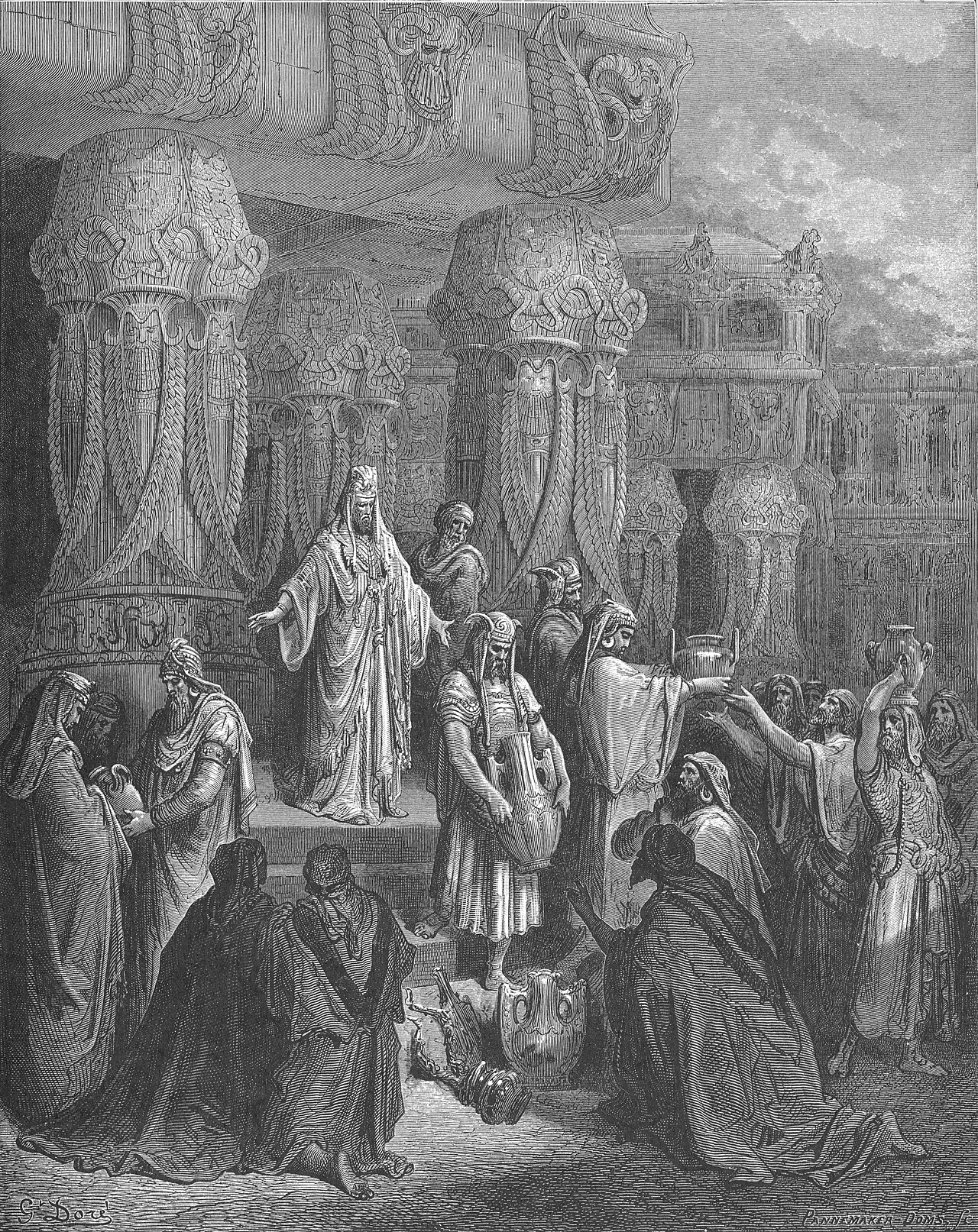
in Ezra 1Cyrus king of Persia had them brought out by the hand of Mithredath the treasurer, who counted them out to Sheshbazzar the prince of Judah.
BSB
The same verse in ASV and KJV ▾
ASV
even those did Cyrus king of Persia bring forth by the hand of Mithredath the treasurer, and numbered them unto Sheshbazzar, the prince of Judah.
KJV
Even those did Cyrus king of Persia bring forth by the hand of Mithredath the treasurer, and numbered them unto Sheshbazzar, the prince of Judah.
⋯
This verse in Ezra 1
Commentary
8 notes on this verseSheshbazzar, the prince of Judah - This was probably the Chaldean name of him who was originally called Zerubbabel: the former signifies joy in affliction; the latter, a stranger in Babylon. The latter may be designed to refer to his captive state; the former, to the prospect of release. Some think this was quite a different person, a Persian or Chaldean, sent by Cyrus to superintend whatever officers or men Cyrus might have sent to assist the Jews on their return; and to procure them help in the Chaldean provinces, through which they might be obliged to travel.
This site's exposition
the vessels of the house of the Lord
on Ezra 1:7-8
Cyrus brings out the vessels of the house of the Lord that Nebuchadnezzar had carried off and set in the house of his own gods, the temple vessels that survived seventy years in pagan storage. Mithredath the treasurer hands them over by count to Sheshbazzar, the prince of Judah, so the return begins with an inventory rather than a sermon. The list answers the list at 2 Ki 25:13-17, where the same vessels are catalogued going out of Jerusalem broken and carried away; here they are catalogued coming home.
The record, by era
The Puritans and the Awakening4 voices
Sheshbazzar - Zerubbabel; the Chaldeans called him Sheshbazzar, that is, Joy in tribulation, but among his own people he was called Zerubbabel, a stranger in Babylon. So he looked upon himself, tho' (Josephus says) he was captain of the life- guard.
1 , &c.), and which perhaps was shown to him by those about him. His name (some say) in the Persian language signifies the sun, for he brought light and healing to the church of God, and was an eminent type of Christ the Sun of righteousness. Some was that his name signifies a father, and Christ is the everlasting Father.
quarantine:debris (2026-07-29) — unbalanced-parens
Even these did Cyrus king of Persia bring forth by the hand of Mithredath the treasurer,....
How careful Providence was of the vessels of the temple, that they were not lost, melted down, or so mixed with other vessels that they could not be known, but that they were all now forthcoming. Such care God has of the living vessels of mercy, vessels of honour, of whom it is said ( 2 Tim. ii. 19, 20 ), The Lord knows those that are his, and they shall none of them perish.
The Nineteenth Century1 voice
A commentator
Jamieson, Fausset & Brown1802–1910
Commentary Critical and Explanatory on the Whole Bible (1871)
proposed
Shesh-bazzar, the prince of Judah--that is, Zerubbabel, son of Salathiel (compare Ezr 3:8; He was born in Babylon, and called by his family Zerubbabel, that is, stranger or exile in Babylon. Shesh-bazzar, signifying "fire-worshipper," was the name given him at court, as other names were given to Daniel and his friends.
quarantine:debris (2026-07-29) — unbalanced-parens
1 more voice on this verse
The Nineteenth Century1 voice
A commentator
Albert Barnes1798–1870
Notes, Explanatory and Practical, on the Old and New Testaments (1832-1869)
proposed
Mithredath - Or, “Mithridates.” The occurrence of this name, which means “given by Mithra” or “dedicated to Mithra,” is an indication that the sun-worship of the Persians was at least as old as the time of Cyrus. Sheshbazzar - i. e., Zerubbabel. On his royal descent, see 1Ch 3:19 note.
The words behind it
12 Hebrew wordsEvery Hebrew word of this verse in the order it stands, with what it means and the door to its own study. The last column counts the times a word stands in the whole Bible: the rarer the word, the more the places it appears belong together.
| Hebrew | Sound | Meaning | Word study | In the Bible |
|---|---|---|---|---|
| וַיּֽוֹצִיאֵ֗ם | vaiyotziem | and he brought out them | H3318 → | 1067 times |
| כּ֚וֹרֶשׁ | koresh | Cyrus | H3566 → | 15 times |
| מֶ֣לֶךְ | melekh | [the] king of | H4428 → | 2525 times |
| פָּרַ֔ס | paras | Persia | H6539 → | 28 times |
| עַל־ | ʾal- | on | H5921 → | 5755 times |
| יַ֖ד | yad | [the] hand of | H3027 → | 1618 times |
| מִתְרְדָ֣ת | mitredat | Mithredath | H4990 → | |
| הַגִּזְבָּ֑ר | hagizbar | the treasurer | H1489 → | |
| וַֽיִּסְפְּרֵם֙ | vaiyisperem | and he counted out them | H5608 → | 159 times |
| לְשֵׁשְׁבַּצַּ֔ר | lesheshebatzar | to Sheshbazzar | H8339 → | |
| הַנָּשִׂ֖יא | hanasi' | the prince | H5387 → | |
| לִיהוּדָֽה׃ | lihudah | of Judah | H3063 → | 819 times |
וַיּֽוֹצִיאֵ֗םand he brought out them
vaiyotziemH3318 →1067 times
כּ֚וֹרֶשׁCyrus
koreshH3566 →15 times
מֶ֣לֶךְ[the] king of
melekhH4428 →2525 times
פָּרַ֔סPersia
parasH6539 →28 times
עַל־on
ʾal-H5921 →5755 times
יַ֖ד[the] hand of
yadH3027 →1618 times
מִתְרְדָ֣תMithredath
mitredatH4990 →
הַגִּזְבָּ֑רthe treasurer
hagizbarH1489 →
וַֽיִּסְפְּרֵם֙and he counted out them
vaiyisperemH5608 →159 times
לְשֵׁשְׁבַּצַּ֔רto Sheshbazzar
lesheshebatzarH8339 →
הַנָּשִׂ֖יאthe prince
hanasi'H5387 →
לִיהוּדָֽה׃of Judah
lihudahH3063 →819 times
A shaded row is a word that stands 400 times or fewer in the Bible.
The walk
8 stopsEach card is a verse this one points to, and under it the verses that one points to in turn. Where several paths arrive at the same place, that place is listed first: the text keeps returning to it.
Through
Haggai 1:1In the second year of the reign of Darius, on the first day of the sixth month, the word of the LORD came through Haggai the prophet to Zerubbabel son of Shealtiel, governor of…
it leads to
- Ezra 3:8
In the second month of the second year after they had arrived at the house of God in Jerusalem, Zerubbabel son of Shealtiel, Jeshua son of Jozadak, and the rest of their associates including…
Reached by 2 separate paths from here.
- Ezra 2:2
accompanied by Zerubbabel, Jeshua, Nehemiah, Seraiah, Reelaiah, Mordecai, Bilshan, Mispar, Bigvai, Rehum, and Baanah. This is the count of the men of Israel:
- Ezra 3:2
Then Jeshua son of Jozadak and his fellow priests, along with Zerubbabel son of Shealtiel and his associates, began to build the altar of the God of Israel to sacrifice burnt offerings on it,…
- Nehemiah 7:7
accompanied by Zerubbabel, Jeshua, Nehemiah, Azariah, Raamiah, Nahamani, Mordecai, Bilshan, Mispereth, Bigvai, Nehum, and Baanah. This is the count of the men of Israel:
- Haggai 2:10
On the twenty-fourth day of the ninth month, in the second year of Darius, the word of the LORD came to Haggai the prophet, saying,
- Ezra 3:8
Through
Ezra 5:16So this Sheshbazzar came and laid the foundation of the house of God in Jerusalem, and from that time until now it has been under construction, but it has not yet been completed.”
it leads to
- Ezra 6:15
And this temple was completed on the third day of the month of Adar, in the sixth year of the reign of King Darius.
- Ezra 3:10
When the builders had laid the foundation of the temple of the LORD, the priests in their apparel with trumpets, and the Levites (the sons of Asaph) with cymbals, took their positions to praise…
- Ezra 6:15
Through
Ezra 5:14He also removed from the temple of Babylon the gold and silver articles belonging to the house of God, which Nebuchadnezzar had taken and carried there from the temple in Jerusalem. King Cyrus gave…
it leads to
- Ezra 6:5
Furthermore, the gold and silver articles of the house of God, which Nebuchadnezzar took from the temple in Jerusalem and carried to Babylon, must also be returned to the temple in Jerusalem and deposited…
- Ezra 6:5
Where this verse is studied
On this page
About Ezra
Who and where
1 name in this verse with a page on the site.
This page draws on Adam Clarke, Commentary on the Bible; Albert Barnes, Notes, Explanatory and Practical, on the Old and New Testaments (1832-1869); Jamieson Fausset and Brown, Commentary Critical and Explanatory on the Whole Bible; Jamieson, Fausset & Brown, Commentary Critical and Explanatory on the Whole Bible; John Gill, Exposition of the Old Testament; John Gill, Exposition of the Old Testament (1748-1763); John Wesley, Explanatory Notes upon the Old Testament and Matthew Henry, Commentary on the Whole Bible.