
Esther 3:2
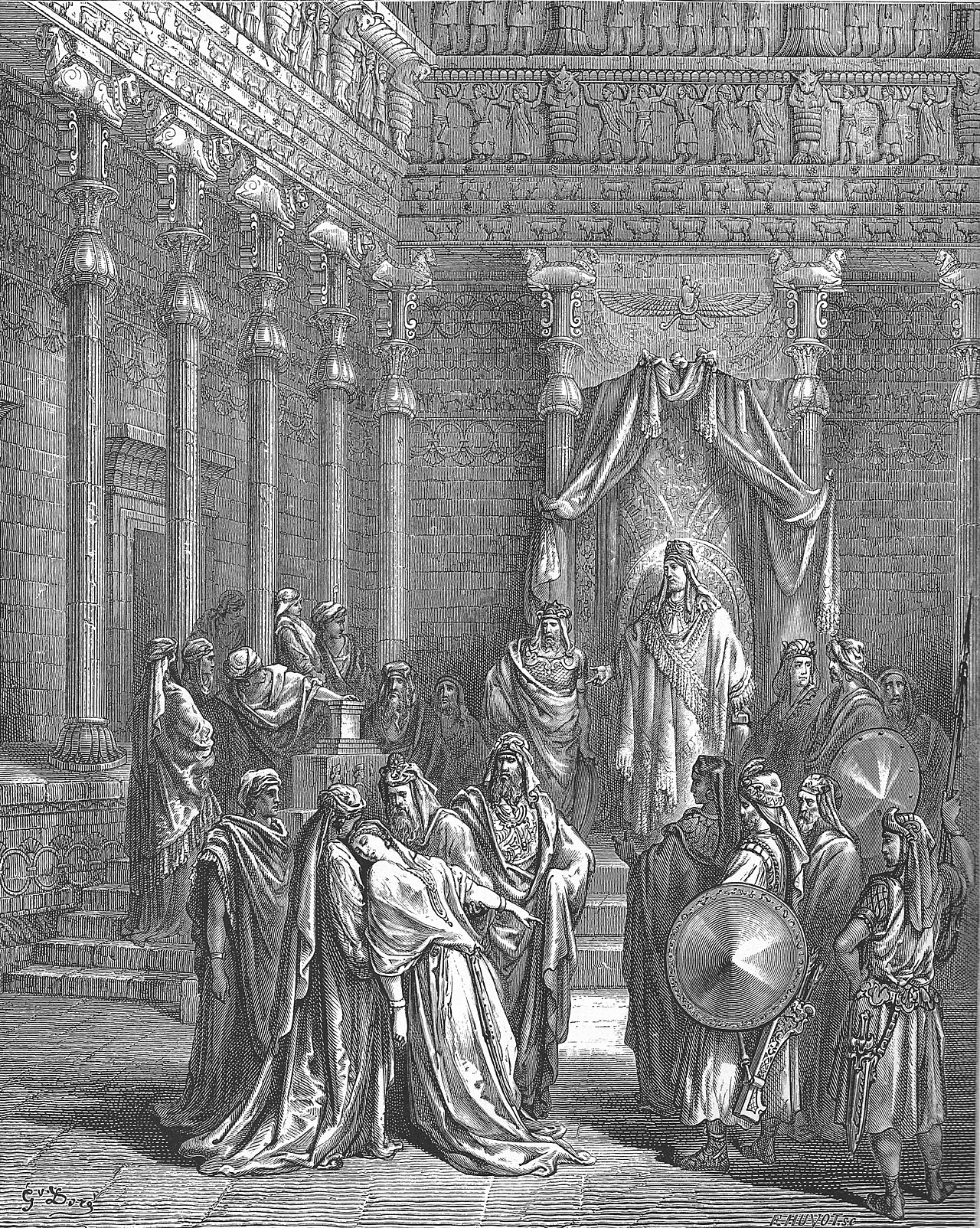
in Esther 3All the royal servants at the king’s gate bowed down and paid homage to Haman, because the king had commanded that this be done for him. But Mordecai would not bow down or pay homage.
BSB
The same verse in ASV and KJV ▾
ASV
And all the king’s servants, that were in the king’s gate, bowed down, and did reverence to Haman; for the king had so commanded concerning him. But Mordecai bowed not down, nor did him reverence.
KJV
And all the king’s servants, that were in the king’s gate, bowed, and reverenced Haman: for the king had so commanded concerning him. But Mordecai bowed not, nor did him reverence.
⋯
This verse in Esther 3
Commentary
11 notes on this verseThe king’s servants, that were in the king’s gate - By servants here, certainly a higher class of officers are intended than porters; and Mordecai was one of those officers, and came to the gate with the others who were usually there in attendance to receive the commands of the king.
This site's exposition
King Xerxes honored Haman
on Esther 3:1-2
Haman is raised "above all the princes who were with him," and the text gives no reason. It names him "the Agagite," and 1 Samuel 15:8 names Agag king of Amalek. The servants at the gate bow to Haman, and Mordecai "would not bow down or pay homage".
This site's exposition
All the royal servants at the king’s gate
The royal servants at the king’s gate were officers of the court, and Adam Clarke counts Mordecai among them. The homage was a prostration, and John Wesley recalls that the Greeks refused it even to the Persian kings. Mordecai refused it among his own fellow servants.
The record, by era
The Medieval Church2 voices
Nothing else is symbolized by the arrogant Haman than the opulence of the powerful of this world who take advantage of the benefits conceded to them by divine mercy. They despise allowing their neighbors, who are given to them as companions by nature, to have …
Now, what could the arrogant Haman symbolize if not the haughtiness of the powerful of this world, who exploit the benefactions conferred on them in the name of godly piety even as they disdain to treat their neighbors—who share their lot in nature—as partners in …
The Puritans and the Awakening3 voices
And that a Jew should deny this honour, is not strange, seeing the wise Grecians did positively refuse to give this honour to the kings of Persia themselves, even when they were to make their addresses to them: and one Timocrates was put to death by the Athenians for worshipping Darius in that manner.
I wonder what the king saw in Haman that was commendable or meritorious; it is plain that he was not a man of honour or justice, of any true courage or steady conduct, but proud, and passionate, and revengeful; yet was he promoted, and caressed, and there was none so great as he.
And the king's servants that were in the king's gate,....
3 more voices on this verse
The Puritans and the Awakening1 voice
He was urged to it by his friends, who reminded him of the king's commandment, and consequently of the danger he incurred if he refused to comply with it; it was as much as his life was worth, especially considering Haman's insolence,
The Nineteenth Century2 voices
A commentator
Jamieson, Fausset & Brown1802–1910
Commentary Critical and Explanatory on the Whole Bible (1871)
proposed
all the king's servants, that were in the king's gate, bowed, and reverenced Haman--Large mansions in the East are entered by a spacious vestibule, or gateway, along the sides of which visitors sit, and are received by the master of the house; for none, except the nearest relatives or special friends, are admitted farther.
quarantine:debris (2026-07-29) — starts-lowercase
A commentator
Albert Barnes1798–1870
Notes, Explanatory and Practical, on the Old and New Testaments (1832-1869)
proposed
Mordecai probably refused the required prostration, usual though it was, on religious grounds. Hence, his opposition led on to his confession that he was a Jew Est 3:4.
How the passage was read
What the Jewish commentators add
On the verses either side of this one
After these events. That this remedy was created as a salvation for Yisroel.
This section is reception history: how the passage was read and kept in the Jewish tradition. Where a reading parts from an essential of the Christian faith, the section says so at that point.
Texts and citation data: Sefaria; each excerpt follows its version’s licence. 5 further sources are cited on this chapter that carry no English text this site may quote or only restate the verse.
The words behind it
19 Hebrew wordsEvery Hebrew word of this verse in the order it stands, with what it means and the door to its own study. The last column counts the times a word stands in the whole Bible: the rarer the word, the more the places it appears belong together.
| Hebrew | Sound | Meaning | Word study | In the Bible |
|---|---|---|---|---|
| וְכָל־ | vekhol | and all | H3605 → | 5413 times |
| עַבְדֵ֨י | ʾavdei | [the] servants of | H5650 → | 799 times |
| הַמֶּ֜לֶךְ | hamelekh | the king | H4428 → | 2525 times |
| אֲשֶׁר־ | ʾasher- | who | H834 → | 5497 times |
| בְּשַׁ֣עַר | beshaar | [were] at [the] gate of | H8179 → | 374 times |
| הַמֶּ֗לֶךְ | hamelekh | the king | H4428 → | 2525 times |
| כֹּרְעִ֤ים | koreim | [were] kneeling | H3766 → | 36 times |
| וּמִֽשְׁתַּחֲוִים֙ | umishtachavim | and bowing down | H7812 → | 172 times |
| לְהָמָ֔ן | lehaman | to Haman | H2001 → | 54 times |
| כִּי־ | ki- | for | H3588 → | 4482 times |
| כֵ֖ן | khen | thus | H3651 → | 771 times |
| צִוָּה־ | tzivah- | he had commanded | H6680 → | 494 times |
| ל֣וֹ | lo | to <the> him | ||
| הַמֶּ֑לֶךְ | hamelekh | the king | H4428 → | 2525 times |
| וּמָ֨רְדֳּכַ֔י | umaredokhai | and Mordecai | H4782 → | 60 times |
| לֹ֥א | lo' | not | H3808 → | 5168 times |
| יִכְרַ֖ע | yikhra' | he knelt | H3766 → | 36 times |
| וְלֹ֥א | velo' | and not | H3808 → | 5168 times |
| יִֽשְׁתַּחֲוֶֽה׃ | yishtachaveh | he bowed down | H7812 → | 172 times |
וְכָל־and all
vekholH3605 →5413 times
עַבְדֵ֨י[the] servants of
ʾavdeiH5650 →799 times
הַמֶּ֜לֶךְthe king
hamelekhH4428 →2525 times
אֲשֶׁר־who
ʾasher-H834 →5497 times
בְּשַׁ֣עַר[were] at [the] gate of
beshaarH8179 →374 times
הַמֶּ֗לֶךְthe king
hamelekhH4428 →2525 times
כֹּרְעִ֤ים[were] kneeling
koreimH3766 →36 times
וּמִֽשְׁתַּחֲוִים֙and bowing down
umishtachavimH7812 →172 times
לְהָמָ֔ןto Haman
lehamanH2001 →54 times
כִּי־for
ki-H3588 →4482 times
כֵ֖ןthus
khenH3651 →771 times
צִוָּה־he had commanded
tzivah-H6680 →494 times
ל֣וֹto <the> him
lo
הַמֶּ֑לֶךְthe king
hamelekhH4428 →2525 times
וּמָ֨רְדֳּכַ֔יand Mordecai
umaredokhaiH4782 →60 times
לֹ֥אnot
lo'H3808 →5168 times
יִכְרַ֖עhe knelt
yikhra'H3766 →36 times
וְלֹ֥אand not
velo'H3808 →5168 times
יִֽשְׁתַּחֲוֶֽה׃he bowed down
yishtachavehH7812 →172 times
A shaded row is a word that stands 400 times or fewer in the Bible.
The walk
8 stopsEach card is a verse this one points to, and under it the verses that one points to in turn. Where several paths arrive at the same place, that place is listed first: the text keeps returning to it.
Through
Psalms 15:4who despises the vile but honors those who fear the LORD, who does not revise a costly oath,
it leads to
- Judges 11:35
As soon as Jephthah saw her, he tore his clothes and said, “No! Not my daughter! You have brought me to my knees! You have brought great misery upon me, for I have given…
- Matthew 5:33
Again, you have heard that it was said to the ancients, ‘Do not break your oath, but fulfill your vows to the Lord.’
- Psalms 101:6
My eyes favor the faithful of the land, that they may dwell with me; he who walks in the way of integrity shall minister to me.
- Judges 11:35
Through
Esther 2:21In those days, while Mordecai was sitting at the king’s gate, Bigthan and Teresh, two of the king’s eunuchs who guarded the entrance, grew angry and conspired to assassinate King Xerxes.
it leads to
- Esther 6:2
And there it was found recorded that Mordecai had exposed Bigthana and Teresh, two of the eunuchs who guarded the king’s entrance, when they had conspired to assassinate King Xerxes.
- Esther 6:2
Through
Esther 3:1After these events, King Xerxes honored Haman son of Hammedatha, the Agagite, elevating him to a position above all the princes who were with him.
it leads to
- Numbers 24:7
Water will flow from his buckets, and his seed will have abundant water. His king will be greater than Agag, and his kingdom will be exalted.
- Esther 5:11
Haman recounted to them his glorious wealth, his many sons, and all the ways the king had honored and promoted him over the other officials and servants.
- Daniel 6:2
and over them three administrators, including Daniel, to whom these satraps were accountable so that the king would not suffer loss.
- Numbers 24:7
Through
Esther 5:9That day Haman went out full of joy and glad of heart. At the king’s gate, however, he saw Mordecai, who did not rise or tremble in fear at his presence. And Haman was…
it leads to
- Esther 3:5
When Haman saw that Mordecai would not bow down or pay him homage, he was filled with rage.
- Esther 3:5
Where this verse is studied
About Esther
Who and where
1 name in this verse with a page on the site.
This page draws on 9 works. Open the list of works
This page draws on Adam Clarke, Commentary on the Bible; Albert Barnes, Notes, Explanatory and Practical, on the Old and New Testaments (1832-1869); Jamieson, Fausset & Brown, Commentary Critical and Explanatory on the Whole Bible; John Gill, Exposition of the Old Testament (1748-1763); John Wesley, Explanatory Notes upon the Old Testament; Keil, The Books of Ezra, Nehemiah, and Esther; Matthew Henry, Commentary on the Whole Bible; Rabanus Maurus, EXPLANATION ON THE BOOK OF ESTHER 6 and Rabanus Maurus, Commentary on Esther.