
Esther 3:1
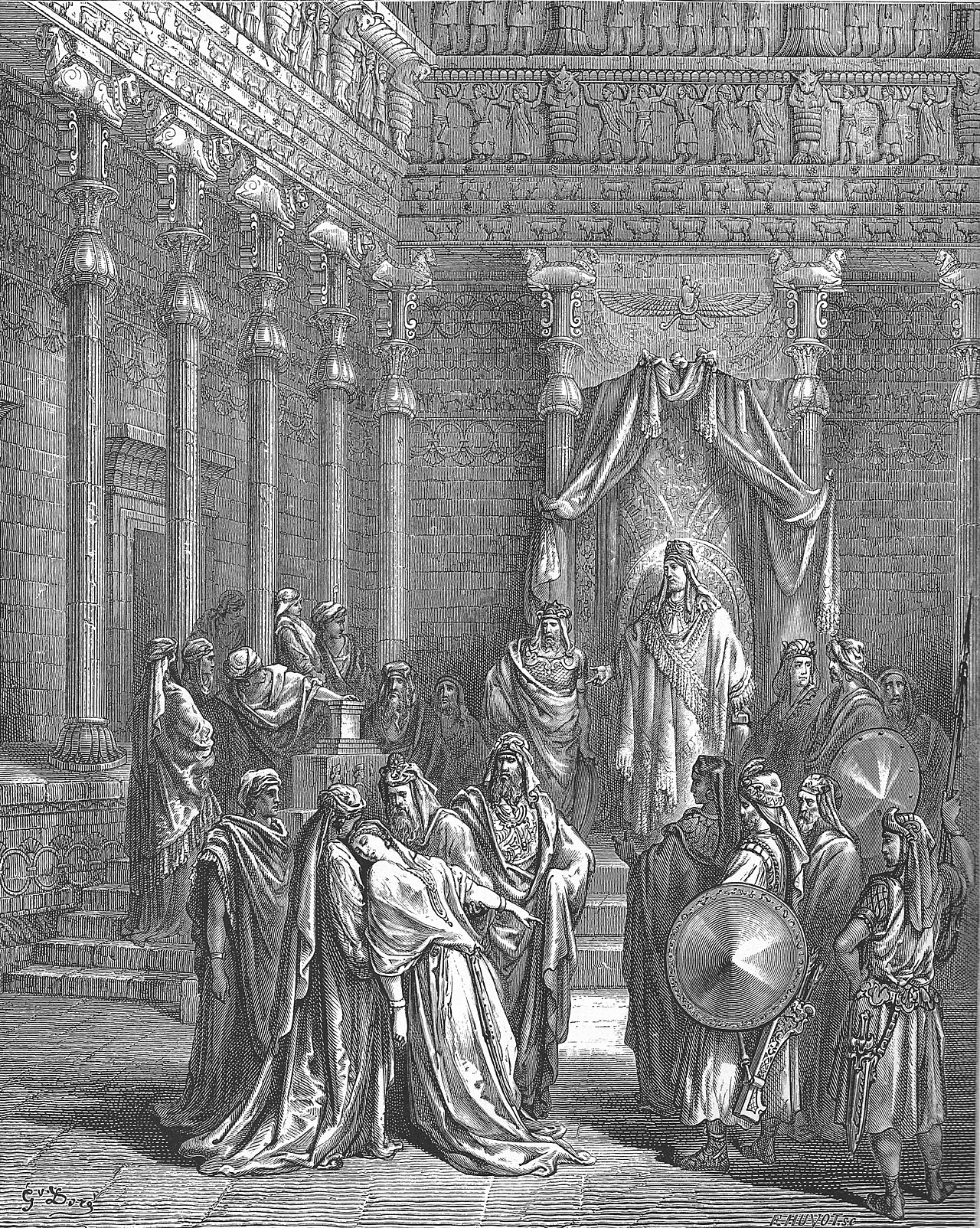
in Esther 3After these events, King Xerxes honored Haman son of Hammedatha, the Agagite, elevating him to a position above all the princes who were with him.
BSB
The same verse in ASV and KJV ▾
ASV
After these things did king Ahasuerus promote Haman the son of Hammedatha the Agagite, and advanced him, and set his seat above all the princes that were with him.
KJV
After these things did king Ahasuerus promote Haman the son of Hammedatha the Agagite, and advanced him, and set his seat above all the princes that were with him.
⋯
This verse in Esther 3
Commentary
9 notes on this verseA commentator
Albert Barnes1798–1870
Notes, Explanatory and Practical, on the Old and New Testaments (1832-1869)
The name, Haman, is probably the same as the Classical Omanes, and in ancient Persian, “Umana”, an exact equivalent of the Greek “Eumenes.” Hammedatha is perhaps the same as “Madata” or “Mahadata”, an old Persian name signifying “given by (or to) the moon.” The Agagite - The Jews generally understand by this expression “the descendant of Agag,” the Amalekite monarch of 1 Sam. 15. Haman, however, by his own name, and the names of his sons Est 9:7-9 and his father, would seem to have been a genuine Persian.
This site's exposition
King Xerxes honored Haman
on Esther 3:1-2
Haman is raised "above all the princes who were with him," and the text gives no reason. It names him "the Agagite," and 1 Samuel 15:8 names Agag king of Amalek. The servants at the gate bow to Haman, and Mordecai "would not bow down or pay homage".
The record, by era
The Medieval Church2 voices
Nothing else is symbolized by the arrogant Haman than the opulence of the powerful of this world who take advantage of the benefits conceded to them by divine mercy. They despise allowing their neighbors, who are given to them as companions by nature, to have …
Now, what could the arrogant Haman symbolize if not the haughtiness of the powerful of this world, who exploit the benefactions conferred on them in the name of godly piety even as they disdain to treat their neighbors—who share their lot in nature—as partners in …
The Puritans and the Awakening3 voices
Agagite - An Amalekite of the royal seed of that nation, whose kings were successively called Agag. All the princes - Gave him the first place and seat, which was next to the king.
After these things,....
The king took a fancy to him (princes are not bound to give reasons for their favours), made him his favourite, his confidant, his prime-minister of state.
2 more voices on this verse
The Nineteenth Century2 voices
A commentator
Jamieson, Fausset & Brown1802–1910
Commentary Critical and Explanatory on the Whole Bible (1871)
After these things did king Ahasuerus promote Haman . . . set his seat above all the princes--that is, raised him to the rank of vizier, or prime confidential minister, whose pre-eminence in office and power appeared in the elevated state chair appropriated to that supreme functionary. Such a distinction in seats was counted of vast importance in the formal court of Persia.
Haman - the Agagite - Perhaps he was some descendant of that Agag, king of the Amalekites, spared by Saul, but destroyed by Samuel; and on this ground might have an antipathy to the Jews. Set his seat above all the princes - Made him his prime minister, and put all the officers of state under his direction.
How the passage was read
What the Jewish commentators add
After these events. That this remedy was created as a salvation for Yisroel.
This section is reception history: how the passage was read and kept in the Jewish tradition. Where a reading parts from an essential of the Christian faith, the section says so at that point.
Texts and citation data: Sefaria; each excerpt follows its version’s licence. 5 further sources are cited on this chapter that carry no English text this site may quote or only restate the verse.
The words behind it
20 Hebrew wordsEvery Hebrew word of this verse in the order it stands, with what it means and the door to its own study. The last column counts the times a word stands in the whole Bible: the rarer the word, the more the places it appears belong together.
| Hebrew | Sound | Meaning | Word study | In the Bible |
|---|---|---|---|---|
| אַחַ֣ר׀ | ʾachar | after | H310 → | |
| הַדְּבָרִ֣ים | hadevarim | the things | H1697 → | 1440 times |
| הָאֵ֗לֶּה | haeleh | <the> these | H428 → | 746 times |
| גִּדַּל֩ | gidal | he made great | H1431 → | 117 times |
| הַמֶּ֨לֶךְ | hamelekh | the king | H4428 → | 2525 times |
| אֲחַשְׁוֵר֜וֹשׁ | ʾachashveroosh | Ahasuerus | H325 → | 31 times |
| אֶת־ | ʾet- | <obj.> | H853 → | 10935 times |
| הָמָ֧ן | haman | Haman | H2001 → | 54 times |
| בֶּֽן־ | ben- | [the] son of | H1121 → | 4930 times |
| הַמְּדָ֛תָא | hamedata' | Hammedatha | H4099 → | 5 times |
| הָאֲגָגִ֖י | haagagi | the Agagite | H91 → | 5 times |
| וַֽיְנַשְּׂאֵ֑הוּ | vaynaseehu | and he exalted him | H5375 → | 656 times |
| וַיָּ֙שֶׂם֙ | vaiyasem | and he placed | H7760 → | 584 times |
| אֶת־ | ʾet- | <obj.> | H853 → | 10935 times |
| כִּסְא֔וֹ | kiso | seat his | H3678 → | 135 times |
| מֵעַ֕ל | meal | <from> above | H5921 → | 5755 times |
| כָּל־ | kol- | all | H3605 → | 5413 times |
| הַשָּׂרִ֖ים | hasarim | the officials | H8269 → | 421 times |
| אֲשֶׁ֥ר | ʾasher | who | H834 → | 5497 times |
| אִתּֽוֹ׃ | ʾito | [were] with him | H854 → | 929 times |
אַחַ֣ר׀after
ʾacharH310 →
הַדְּבָרִ֣יםthe things
hadevarimH1697 →1440 times
הָאֵ֗לֶּה<the> these
haelehH428 →746 times
גִּדַּל֩he made great
gidalH1431 →117 times
הַמֶּ֨לֶךְthe king
hamelekhH4428 →2525 times
אֲחַשְׁוֵר֜וֹשׁAhasuerus
ʾachashverooshH325 →31 times
אֶת־<obj.>
ʾet-H853 →10935 times
הָמָ֧ןHaman
hamanH2001 →54 times
בֶּֽן־[the] son of
ben-H1121 →4930 times
הַמְּדָ֛תָאHammedatha
hamedata'H4099 →5 times
הָאֲגָגִ֖יthe Agagite
haagagiH91 →5 times
וַֽיְנַשְּׂאֵ֑הוּand he exalted him
vaynaseehuH5375 →656 times
וַיָּ֙שֶׂם֙and he placed
vaiyasemH7760 →584 times
אֶת־<obj.>
ʾet-H853 →10935 times
כִּסְא֔וֹseat his
kisoH3678 →135 times
מֵעַ֕ל<from> above
mealH5921 →5755 times
כָּל־all
kol-H3605 →5413 times
הַשָּׂרִ֖יםthe officials
hasarimH8269 →421 times
אֲשֶׁ֥רwho
ʾasherH834 →5497 times
אִתּֽוֹ׃[were] with him
ʾitoH854 →929 times
A shaded row is a word that stands 400 times or fewer in the Bible.
The walk
8 stopsEach card is a verse this one points to, and under it the verses that one points to in turn. Where several paths arrive at the same place, that place is listed first: the text keeps returning to it.
Through
Esther 3:10So the king removed the signet ring from his finger and gave it to Haman son of Hammedatha, the Agagite, the enemy of the Jews.
it leads to
- Genesis 41:42
Then Pharaoh removed the signet ring from his finger, put it on Joseph’s finger, clothed him in garments of fine linen, and placed a gold chain around his neck.
- Esther 8:2
The king removed the signet ring he had recovered from Haman and presented it to Mordecai. And Esther appointed Mordecai over the estate of Haman.
- Esther 7:6
Esther replied, “The adversary and enemy is this wicked man—Haman!” And Haman stood in terror before the king and queen.
- Genesis 41:42
Through
1 Samuel 15:33But Samuel declared: “As your sword has made women childless, so your mother will be childless among women.” And Samuel hacked Agag to pieces before the LORD at Gilgal.
it leads to
- Judges 1:7
Then Adoni-bezek said, “Seventy kings with their thumbs and big toes cut off have gathered the scraps under my table. As I have done to them, so God has repaid me.” And they brought…
- Genesis 9:6
Whoever sheds the blood of man, by man his blood will be shed; for in His own image God has made mankind.
- Judges 1:7
Through
Numbers 24:7Water will flow from his buckets, and his seed will have abundant water. His king will be greater than Agag, and his kingdom will be exalted.
it leads to
- 2 Samuel 5:12
And David realized that the LORD had established him as king over Israel and had exalted his kingdom for the sake of His people Israel.
- 1 Chronicles 14:2
And David realized that the LORD had established him as king over Israel and had highly exalted his kingdom for the sake of His people Israel.
- 2 Samuel 5:12
Through
Esther 5:11Haman recounted to them his glorious wealth, his many sons, and all the ways the king had honored and promoted him over the other officials and servants.
it leads to
- Esther 9:7–10
including Parshandatha, Dalphon, Aspatha,
- Esther 9:7–10
Where this verse is studied
On this page
About Esther
This page draws on 9 works. Open the list of works
This page draws on Adam Clarke, Commentary on the Bible; Albert Barnes, Notes, Explanatory and Practical, on the Old and New Testaments (1832-1869); Jamieson, Fausset & Brown, Commentary Critical and Explanatory on the Whole Bible; John Gill, Exposition of the Old Testament (1748-1763); John Wesley, Explanatory Notes upon the Old Testament; Keil, The Books of Ezra, Nehemiah, and Esther; Matthew Henry, Commentary on the Whole Bible; Rabanus Maurus, EXPLANATION ON THE BOOK OF ESTHER 6 and Rabanus Maurus, Commentary on Esther.