
Esther 3:15
in Esther 3The couriers left, spurred on by the king’s command, and the edict was issued in the citadel of Susa. Then the king and Haman sat down to drink, but the city of Susa was in confusion.
BSB
The same verse in ASV and KJV ▾
ASV
The posts went forth in haste by the king’s commandment, and the decree was given out in Shushan the palace. And the king and Haman sat down to drink; but the city of Shushan was perplexed.
KJV
The posts went out, being hastened by the king’s commandment, and the decree was given in Shushan the palace. And the king and Haman sat down to drink; but the city Shushan was perplexed.
⋯
This verse in Esther 3
Commentary
10 notes on this verseA commentator
Albert Barnes1798–1870
Notes, Explanatory and Practical, on the Old and New Testaments (1832-1869)
Shushan was perplexed - Susa was now the capital of Persia, and the main residence of the Persians of high rank. These, being attached to the religion of Zoroaster, would naturally sympathize with the Jews, and be disturbed at their threatened destruction. Even apart from this bond of union, the decree was sufficiently strange and ominous to “perplex” thoughtful citizens.
This site's exposition
A copy of the text
on Esther 3:14-15
The chapter closes on two clauses: "the king and Haman sat down to drink, but the city of Susa was in confusion". The narrator adds no comment. The book, which never names God, leaves the city's distress to speak for itself.
This site's exposition
The couriers left, spurred on by the king’s
The whole city of Susa shared the confusion of the Jews. Barnes credits the Persians of the city, followers of Zoroaster, with sympathy for the Jews. Clarke adds that a mob given leave to plunder one people would plunder Persians too, and that many families of Susa had married Jews.
The record, by era
The Medieval Church1 voice
"And the decree was immediately issued in Shushan; and the king and Haman were attending the feast while all the Jews in the city were crying." This is what the Savior preached to his disciples in the Gospel: "Amen, amen I say to you that …
The Puritans and the Awakening3 voices
This cursed method many take to drown their convictions, and harden their own hearts and the hearts of others in sin. The city was very sad upon it (and the other cities of the kingdom, no doubt, when they had notice of it): The city Shushan was perplexed, not only the Jews themselves, but all their neighbours that had any principles of justice and compassion.
This Haman was an Agagite (an Amalekite, says Josephus), probably of the descendants of Agag, a common name of the princes of Amalek, as appears, Num. xxiv. Some think that he was by birth a prince, as Jehoiakim was, whose seat was set above the rest of the captive kings ( 2 Kings xxv.
quarantine:debris (2026-07-29) — unbalanced-parens
The post went out, being hastened by the king's command,....
The Nineteenth Century1 voice
A commentator
Jamieson, Fausset & Brown1802–1910
Commentary Critical and Explanatory on the Whole Bible (1871)
Then were the king's scribes called . . . and there was written--The government secretaries were employed in making out the proclamation authorizing a universal massacre of the Jews on one day. It was translated into the dialects of all the people throughout the vast empire, and swift messengers were sent to carry it into all the provinces.
2 more voices on this verse
The Nineteenth Century2 voices
A commentator
Jamieson, Fausset & Brown1802–1910
Commentary Critical and Explanatory on the Whole Bible (1871)
proposed
the king and Haman sat down to drink; but the city Shushan was perplexed--The completeness of the word-painting in this verse is exquisite. The historian, by a simple stroke, has drawn a graphic picture of an Oriental despot, wallowing with his favorite in sensual enjoyments, while his tyrannical cruelties were rending the hearts and homes of thousands of his subjects.
quarantine:debris (2026-07-29) — starts-lowercase
The posts - Literally, the couriers, the hircarrahs, those who carried the public despatches; a species of public functionaries, who have been in use in all nations of the world from the remotest antiquity. The decree was given at Shushan - It was dated from the royal Susa, where the king then was. The city Shushan was perplexed - They saw that in a short time, by this wicked measure the whole city would be thrown into confusion; for, although the Jews were the only objects of this decree, yet, as it armed the populace against them, even the Persians could not hope to escape without being spoiled, when a desperate mob had begun to taste of human blood, and enrich themselves with the property of the murdered. Besides, many Persian families had, no doubt, become united by intermarriages with Jewish families, and in such a massacre they would necessarily share the same fate with the Jews. A more impolitic, disgraceful, and cruel measure was never formed by any government; and one would suppose that the king who ordered it must have been an idiot, and the counsellors who advised it must have been madmen. But a despotic government is ever capable of extravagance and cruelty; for as it is the bane of popular freedom and happiness, so is it the disgrace of political wisdom and of all civil institutions. Despotism and tyranny in the state are the most direct curses which insulted justice can well inflict upon a sinful nation.
How the passage was read
What the Jewish commentators add
On the verses either side of this one
The terms. An Aramaic term [meaning] the account of the writ, disreinement in O.F. [text, content, account].
This section is reception history: how the passage was read and kept in the Jewish tradition. Where a reading parts from an essential of the Christian faith, the section says so at that point.
Texts and citation data: Sefaria; each excerpt follows its version’s licence. 5 further sources are cited on this chapter that carry no English text this site may quote or only restate the verse.
The words behind it
16 Hebrew wordsEvery Hebrew word of this verse in the order it stands, with what it means and the door to its own study. The last column counts the times a word stands in the whole Bible: the rarer the word, the more the places it appears belong together.
| Hebrew | Sound | Meaning | Word study | In the Bible |
|---|---|---|---|---|
| הָֽרָצִ֞ים | haratzim | the runners | H7323 → | 103 times |
| יָצְא֤וּ | yatzeu | they went out | H3318 → | 1067 times |
| דְחוּפִים֙ | dechufim | being hasty | H1765 → | 4 times |
| בִּדְבַ֣ר | bidvar | at [the] word of | H1697 → | 1440 times |
| הַמֶּ֔לֶךְ | hamelekh | the king | H4428 → | 2525 times |
| וְהַדָּ֥ת | vehadat | and the law | H1881 → | 22 times |
| נִתְּנָ֖ה | nitenah | it was given | H5414 → | 2011 times |
| בְּשׁוּשַׁ֣ן | beshushan | in Susa | H7800 → | 21 times |
| הַבִּירָ֑ה | habirah | the citadel | H1002 → | 16 times |
| וְהַמֶּ֤לֶךְ | vehamelekh | and the king | H4428 → | 2525 times |
| וְהָמָן֙ | vehaman | and Haman | H2001 → | 54 times |
| יָשְׁב֣וּ | yashevu | they sat down | H3427 → | 1079 times |
| לִשְׁתּ֔וֹת | lishtot | to drink | H8354 → | 217 times |
| וְהָעִ֥יר | vehair | and the city of | H5892 → | 1090 times |
| שׁוּשָׁ֖ן | shushan | Susa | H7800 → | 21 times |
| נָבֽוֹכָה׃ פ | navokhah | it was in confusion | H943 → |
הָֽרָצִ֞יםthe runners
haratzimH7323 →103 times
יָצְא֤וּthey went out
yatzeuH3318 →1067 times
דְחוּפִים֙being hasty
dechufimH1765 →4 times
בִּדְבַ֣רat [the] word of
bidvarH1697 →1440 times
הַמֶּ֔לֶךְthe king
hamelekhH4428 →2525 times
וְהַדָּ֥תand the law
vehadatH1881 →22 times
נִתְּנָ֖הit was given
nitenahH5414 →2011 times
בְּשׁוּשַׁ֣ןin Susa
beshushanH7800 →21 times
הַבִּירָ֑הthe citadel
habirahH1002 →16 times
וְהַמֶּ֤לֶךְand the king
vehamelekhH4428 →2525 times
וְהָמָן֙and Haman
vehamanH2001 →54 times
יָשְׁב֣וּthey sat down
yashevuH3427 →1079 times
לִשְׁתּ֔וֹתto drink
lishtotH8354 →217 times
וְהָעִ֥ירand the city of
vehairH5892 →1090 times
שׁוּשָׁ֖ןSusa
shushanH7800 →21 times
נָבֽוֹכָה׃ פit was in confusion
navokhahH943 →
A shaded row is a word that stands 400 times or fewer in the Bible.
The walk
8 stopsEach card is a verse this one points to, and under it the verses that one points to in turn. Where several paths arrive at the same place, that place is listed first: the text keeps returning to it.
Through
Proverbs 29:2When the righteous flourish, the people rejoice, but when the wicked rule, the people groan.
it leads to
- Proverbs 28:12
When the righteous triumph, there is great glory, but when the wicked rise, men hide themselves.
- Proverbs 11:10
When the righteous thrive, the city rejoices, and when the wicked perish, there are shouts of joy.
- Proverbs 28:28
When the wicked come to power, people hide themselves; but when they perish, the righteous flourish.
- Esther 8:15
Mordecai went out from the presence of the king in royal garments of blue and white, with a large gold crown and a purple robe of fine linen. And the city of Susa shouted…
- Proverbs 28:12
Through
John 16:20Truly, truly, I tell you, you will weep and wail while the world rejoices. You will grieve, but your grief will turn to joy.
it leads to
- James 1:2
Consider it pure joy, my brothers, when you encounter trials of many kinds,
- Matthew 5:4
Blessed are those who mourn, for they will be comforted.
- Revelation 7:14–17
“Sir,” I answered, “you know.” So he replied, “These are the ones who have come out of the great tribulation; they have washed their robes and made them white in the blood of the…
- Psalms 126:5–6
Those who sow in tears will reap with shouts of joy.
- James 1:2
Where this verse is studied
About Esther
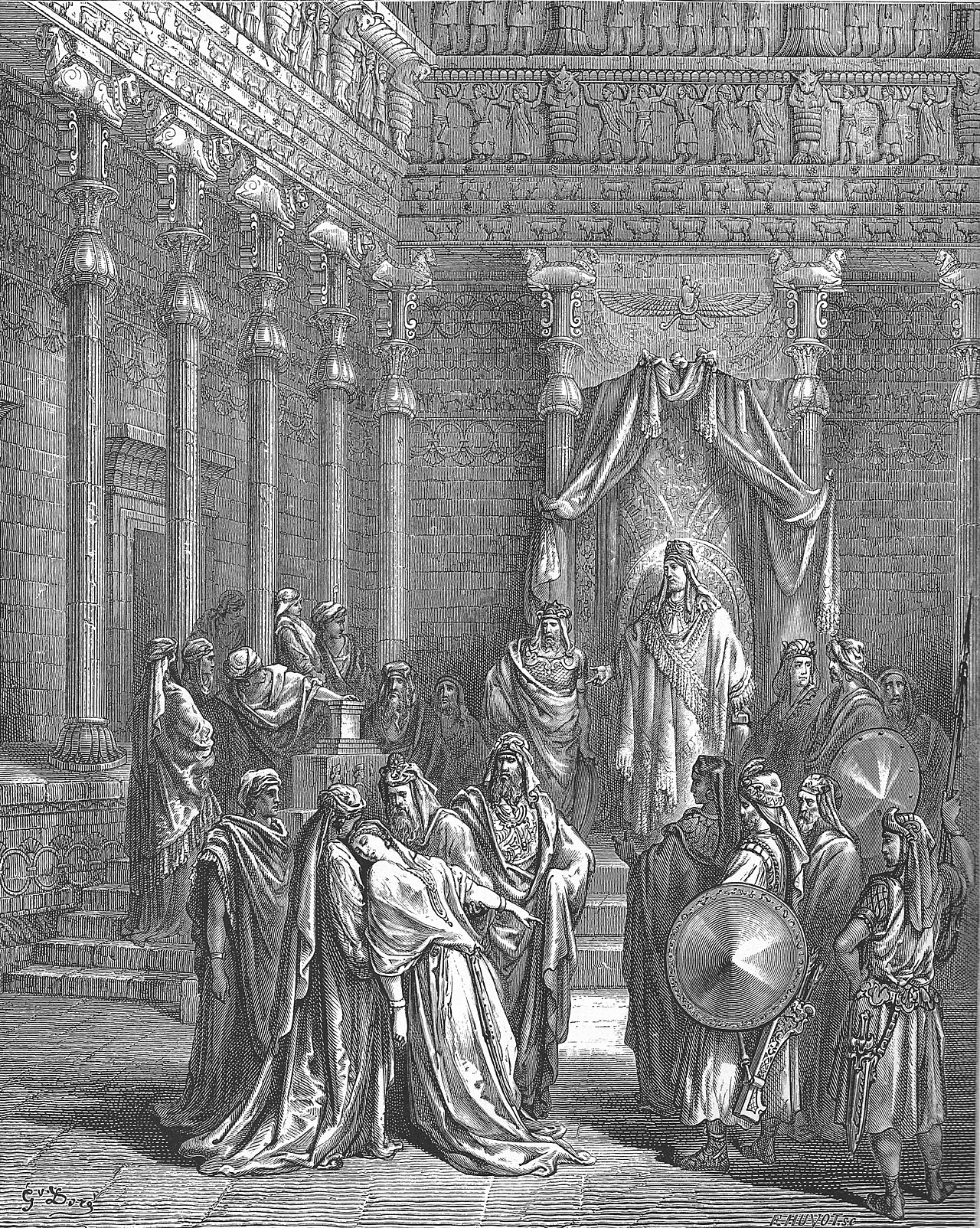
This page draws on Adam Clarke, Commentary on the Bible; Albert Barnes, Notes, Explanatory and Practical, on the Old and New Testaments (1832-1869); Jamieson, Fausset & Brown, Commentary Critical and Explanatory on the Whole Bible; John Gill, Exposition of the Old Testament; John Gill, Exposition of the Old Testament (1748-1763); Matthew Henry, Commentary on the Whole Bible; Rabanus Maurus, Commentary on Esther and W. F. Adeney, Ezra, Nehemiah and Esther (Expositor's Bible).