
Amos 8:1
in Amos 8This is what the Lord GOD showed me: I saw a basket of summer fruit.
BSB
The same verse in ASV and KJV ▾
ASV
Thus the Lord Jehovah showed me: and, behold, a basket of summer fruit.
KJV
Thus hath the Lord God shewed unto me: and behold a basket of summer fruit.
⋯
This verse in Amos 8
Commentary
9 notes on this verseThus hath the Lord God showed unto me,.... Another vision, which is the fourth, and after the following manner: and, behold, a basket of summer fruit; not of the first ripe fruit, but of such as were gathered at the close of the summer, when autumn began.
This site's exposition
a basket of summer fruit
on Amos 8:1-3
The fourth vision is a basket of summer fruit, and the Lord names its meaning with a play the bench carries in the Hebrew, qayits, summer fruit, sounding against qets, the end, so the ripe basket itself becomes the pronouncement: the end is come upon my people of Israel; I will not again pass by them any more, the same refusal the plumbline vision reached but now with no plea from Amos and no reprieve given. The songs of the temple turned to howling and the dead cast forth with silence complete the picture the earlier visions were spared, worship silenced and the dead too many for the customary mourning rites.
The record, by era
The Church Fathers1 voice
(Chapter 8, verses 1 and following) This is what the Lord God showed me: Behold, a basket of summer fruit. And he said, 'Amos, what do you see?' And I said, 'A basket of summer fruit.' Then the Lord said to me, 'The end has come upon my people Israel; I will not pass by them anymore. The songs of the temple shall become wailings in that day,' declares the Lord God. 'Many shall be the dead bodies, cast out in every place. Silence!' LXX: This is what the Lord God showed me: Behold, a basket of summer fruit.
The Puritans and the Awakening1 voice
) and that shall change their note. Oppressors are here called to an account for their abusing the poor; and their destruction is foretold, which will set them a mourning,
quarantine:debris (2026-07-29) — leading-punctuation+unbalanced-parens
The Nineteenth Century3 voices
A commentator
Albert Barnes1798–1870
Notes, Explanatory and Practical, on the Old and New Testaments (1832-1869)
Thus hath the Lord God showed me - The sentence of Amaziah pronounced, Amos resumes just where he left off, before Amaziah broke in upon him. His vehement interruption is like a stone cast into the deep waters. They close over it, and it leaves no trace. Amos had authenticated the third vision; “Thus hath the Lord God shewed me.” He resumes in the self-same calm words. The last vision declared that the end was certain; this, that it was at hand. A basket of summer fruit - The fruit was the latest harvest in Palestine.
A commentator
Jamieson, Fausset & Brown1802–1910
Commentary Critical and Explanatory on the Whole Bible (1871)
proposed
summer fruit--Hebrew, kitz. In Am 8:2 "end" is in Hebrew, keetz. The similarity of sounds implies that, as the summer is the end of the year and the time of the ripeness of fruits, so Israel is ripe for her last punishment, ending her national existence.
quarantine:debris (2026-07-29) — starts-lowercase
N READING THROUGH THE PROPHETICAL BOOKS, you must have been struck at their singular variety. On looking a little more closely, you have at once perceived that every prophet has a manner and style peculiarly his own. Although God speaketh through them all, yet they lose not their individuality or originality of character. The breath which causes the music is the same, but no two of the instruments give forth precisely the same sound.
2 more voices on this verse
The Nineteenth Century2 voices
N READING THROUGH THE PROPHETICAL BOOKS, you must have been struck at their singular variety. On looking a little more closely, you have at once perceived that every prophet has a manner and style peculiarly his own. Although God speaketh through them all, yet they lose not their individuality or originality of character. The breath which causes the music is the same, but no two of the instruments give forth precisely the same sound. It is true they all utter the words of God; but each voice has its own special cry, so that though God is pre-eminently seen, yet the man is not lost. You do not find in searching through the prophets that Jeremiah copies the language of Isaiah. The herdsman Amos writes not like the wise counsellor Daniel; nor does Jonah borrow the notes of Malachi. Every man speaks after his own order. Whatever he was when God called him to be a prophet, that he remains. God consecrates what is already there, and doth not re-cast the man into a new mould. I believe this is an excellent lesson to all the ministers of Christ in these times. How much more useful might many men be if they would speak according to their own character, after their own style. But instead thereof, the young minister attaches himself to some eminent model, and copies, not only the expressions, but the very tones, the action, nay the whims and absurdities of the master whom he venerates. But if each man, instead of seeking to be another, would be himself; if he would consecrate his powers and talents to God as they are, and bring them out in their native simplicity whether they be polished or rough, the world would be conscious that a man had arisen who was in earnest, and not a mere player, an imitator of another.
A basket of summer fruit - As summer fruit was not proper for preserving, but must be eaten as soon as gathered, so the Lord intimates by this symbol that the kingdom of Israel was now ripe for destruction, and that punishment must descend upon it without delay. Some think the prophet means the fruits at the end of autumn. And as after the autumn no fruit could be expected, so Israel’s summer is gone by, her autumn is ended, and she shall yield no more fruit. Or, the autumn of her iniquity is come, the measure is filled up, and now she shall gather the fruit of her sin in the abundance of her punishment.
How the passage was read
What the Jewish commentators add
a basket of late figs Heb. כְּלוּב. A basket full of late figs, which are not good
This section is reception history: how the passage was read and kept in the Jewish tradition. Where a reading parts from an essential of the Christian faith, the section says so at that point.
Texts and citation data: Sefaria; each excerpt follows its version’s licence. 5 further sources are cited on this chapter that carry no English text this site may quote or only restate the verse.
The words behind it
7 Hebrew wordsEvery Hebrew word of this verse in the order it stands, with what it means and the door to its own study. The last column counts the times a word stands in the whole Bible: the rarer the word, the more the places it appears belong together.
| Hebrew | Sound | Meaning | Word study | In the Bible |
|---|---|---|---|---|
| כֹּ֥ה | koh | thus | H3541 → | 577 times |
| הִרְאַ֖נִי | hirani | he showed me | H7200 → | 1300 times |
| אֲדֹנָ֣י | ʾadonai | [the] Lord | H136 → | 440 times |
| יְהוִ֑ה | yahweh | Yahweh | H3069 → | 306 times |
| וְהִנֵּ֖ה | vehineh | and there! | H2009 → | 843 times |
| כְּל֥וּב | keluv | a basket of | H3619 → | |
| קָֽיִץ׃ | kayitz | summer fruit | H7019 → | 20 times |
כֹּ֥הthus
kohH3541 →577 times
הִרְאַ֖נִיhe showed me
hiraniH7200 →1300 times
אֲדֹנָ֣י[the] Lord
ʾadonaiH136 →440 times
יְהוִ֑הYahweh
yahwehH3069 →306 times
וְהִנֵּ֖הand there!
vehinehH2009 →843 times
כְּל֥וּבa basket of
keluvH3619 →
קָֽיִץ׃summer fruit
kayitzH7019 →20 times
A shaded row is a word that stands 400 times or fewer in the Bible.
The walk
8 stopsEach card is a verse this one points to, and under it the verses that one points to in turn. Where several paths arrive at the same place, that place is listed first: the text keeps returning to it.
Through
Amos 7:7This is what He showed me: Behold, the Lord was standing by a wall true to plumb, with a plumb line in His hand.
it leads to
- 2 Kings 21:13
I will stretch out over Jerusalem the measuring line used against Samaria and the plumb line used against the house of Ahab, and I will wipe out Jerusalem as one wipes out a bowl—wiping…
- Isaiah 28:17
I will make justice the measuring line and righteousness the level. Hail will sweep away your refuge of lies, and water will flood your hiding place.
- Revelation 21:15
The angel who spoke with me had a golden measuring rod to measure the city and its gates and walls.
- 2 Kings 21:13
Through
Amos 7:1This is what the Lord GOD showed me: He was preparing swarms of locusts just after the king’s harvest, as the late spring crop was coming up.
it leads to
- Joel 1:4
What the devouring locust has left, the swarming locust has eaten; what the swarming locust has left, the young locust has eaten; and what the young locust has left, the destroying locust has eaten.
- Isaiah 33:4
Your spoil, O nations, is gathered as by locusts; like a swarm of locusts men sweep over it.
- Amos 4:9
“I struck you with blight and mildew in your growing gardens and vineyards; the locust devoured your fig and olive trees, yet you did not return to Me,” declares the LORD.
- Joel 1:4
Through
Amos 7:4This is what the Lord GOD showed me: The Lord GOD was calling for judgment by fire. It consumed the great deep and devoured the land.
it leads to
- Isaiah 66:15–16
For behold, the LORD will come with fire—His chariots are like a whirlwind—to execute His anger with fury and His rebuke with flames of fire.
- Amos 7:1
This is what the Lord GOD showed me: He was preparing swarms of locusts just after the king’s harvest, as the late spring crop was coming up.
- Isaiah 66:15–16
Where this verse is studied
On this page
About Amos
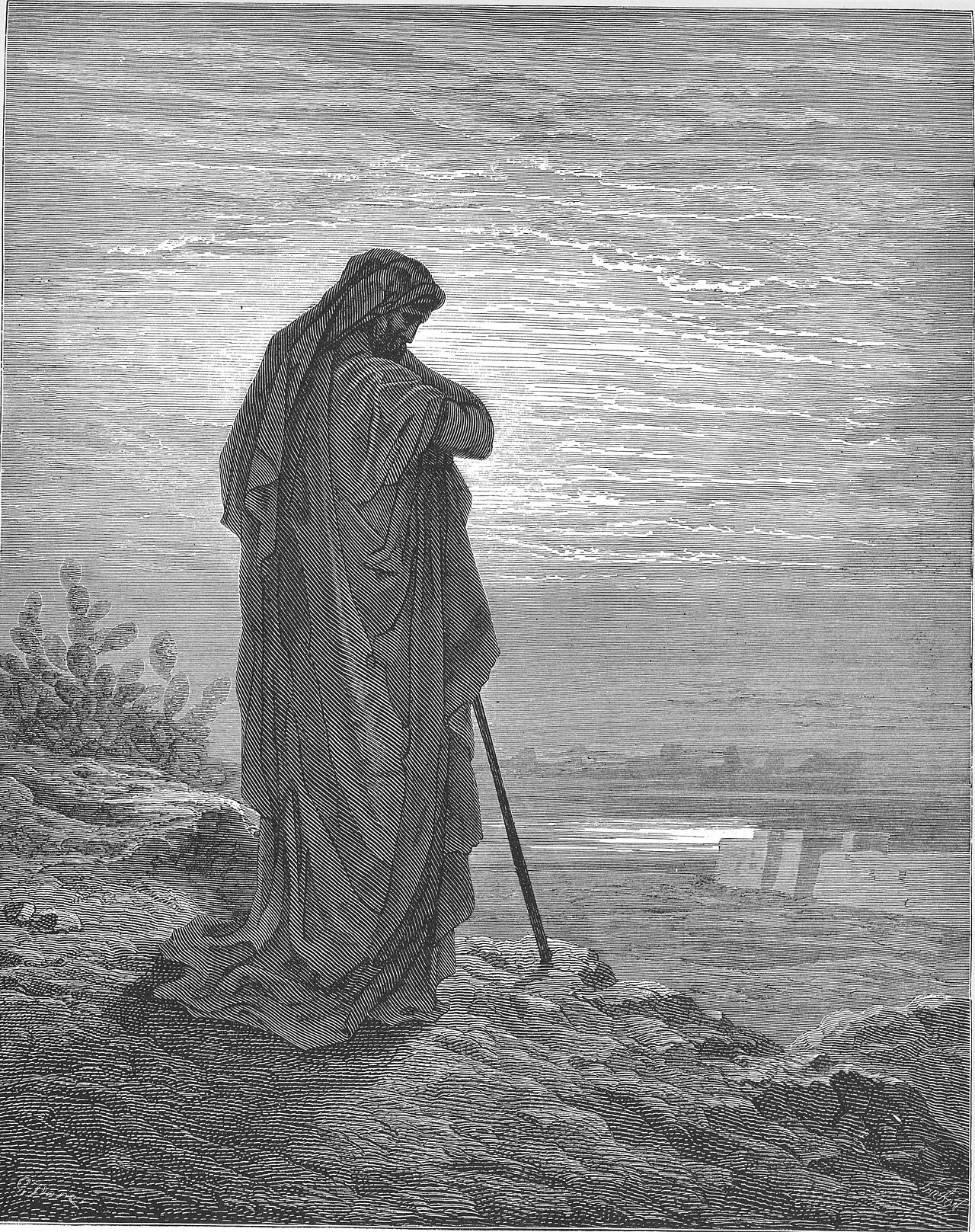
This page draws on Adam Clarke, Commentary on the Bible; Albert Barnes, Notes, Explanatory and Practical, on the Old and New Testaments (1832-1869); Carl Friedrich Keil, The Twelve Minor Prophets; Charles Spurgeon, The New Park Street Pulpit, Sermon No. 343: “A Basket of Summer Fruit” (lightly modernized text, CCEL edition); Jamieson, Fausset & Brown, Commentary Critical and Explanatory on the Whole Bible; Jerome, Commentary on Amos; John Gill, Exposition of the Old Testament (1748-1763) and Matthew Henry, Commentary on the Whole Bible.