
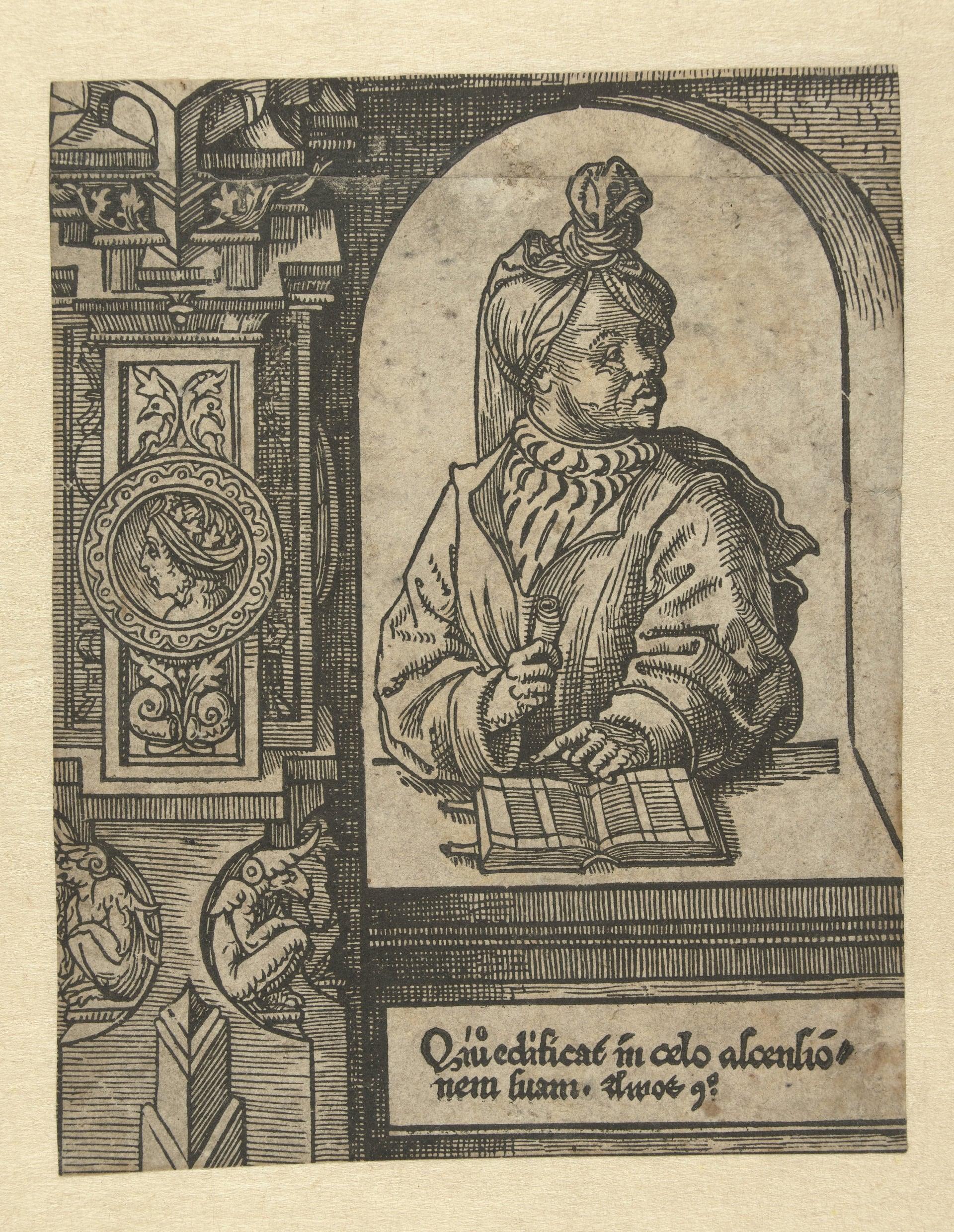
Jacob Cornelisz van Oostsanen, The Prophet Amos, 1521 to 1525. Public domain.
Amos 8:11 to 12 · Subject · Featured Study
The Famine of the Word
The famine of the word follows the vision of the basket of summer fruit in Amos 8.
Israel had ordered its prophets to be quiet, and the LORD answered with a famine of a new kind.
Behold, the days are coming, declares the Lord GOD, when I will send a famine on the land—not a famine of bread or a thirst for water, but a famine of hearing the words of the LORD.
Behold, the days are coming, declares the Lord GOD, when I will send a famine on the land—not a famine of bread or a thirst for water, but a famine of hearing the words of the LORD.
- Books
- Amos, Deuteronomy
- Hold in memory
- Amos 8:11, Deuteronomy 8:3
Summary
Amos names a hunger worse than any lack of bread, a hunger for the words of the LORD. Even the young and strong would faint from it.
- The famine closes the four visions Amos was shown in Amos 7 and Amos 8.
- Jesus quoted the lesson of the manna, Deuteronomy 8:3, when He was tempted in the wilderness.
- The verb to hear in the famine verse, shama, also means to heed and obey.
A Famine of Hearing
Amos 8 sets the famine beside the cheating of the poor in Amos 8:4 to 6.
“Amos, what do you see?” He asked. “A basket of summer fruit,” I replied. So the LORD said to me, “The end has come for My people Israel; I will no longer spare them.”The vision of the summer fruit announces the end before the famine is named.
People will stagger from sea to sea and roam from north to east, seeking the word of the LORD, but they will not find it.This verse shows the famine falling on every part of the land at once.
Those who swear by the guilt of Samaria and say, ‘As surely as your god lives, O Dan,’ or, ‘As surely as the way of Beersheba lives’—they will fall, never to rise again.”Amos ends the chapter on the oaths Israel swore by other gods, where the word of the LORD had no place.
Times Without a Word From God
The famine of Amos 8 has forerunners and successors in the history of Israel.
Seven texts record a time when God gave no word, from Eli's days to the burning of the sanctuary.
- Eli's last years at ShilohThe word of the LORD was rare, and visions were scarce.1 Samuel 3:1
- Saul before his last battleThe LORD gave Saul no answer by dreams, by Urim or by prophets.1 Samuel 28:6
- Amos under Jeroboam son of JehoashAmos foresees a day without a word from the LORD.
- Micah against the prophets who lead astrayNight will come on the prophets with no vision and no answer from God.Micah 3:6 to 7
- Before the fall of JerusalemThe people will seek a vision, and instruction from the priests will perish.Ezekiel 7:26
- After the fall of JerusalemThe law is no more, and the prophets find no vision.Lamentations 2:9
- After the sanctuary was burnedThere is no longer any prophet, and no one knows how long.Psalm 74:9
Each time in the order of the story, with what its text records.
The Hunger Sent Before
Each warning of Amos 4 ends with the refrain that the people did not return to God.
“I beset all your cities with cleanness of teeth and all your towns with lack of bread, yet you did not return to Me,” declares the LORD.Hunger was the first of the warnings God sent.
People staggered from city to city for water to drink, but they were not satisfied; yet you did not return to Me,” declares the LORD.The same verb returns in Amos 8:12 for those who seek the word.
The first famine left the people unrepentant. The second takes away the word that called them to return.
The Prophets Told to Be Silent
Before the famine was named, Amaziah the priest had sent Amos out of Bethel.
I raised up prophets from your sons and Nazirites from your young men. Is this not true, O children of Israel?” declares the LORD. “But you made the Nazirites drink wine and commanded the prophets not to prophesy.These verses set the people's order to the prophets before the famine of Amos 8.
And Amaziah said to Amos, “Go away, you seer! Flee to the land of Judah; earn your bread there and do your prophesying there. But never prophesy at Bethel again, because it is the sanctuary of the king and the temple of the kingdom.”The order comes from the man in charge of the royal shrine.
Now, therefore, hear the word of the LORD. You say: ‘Do not prophesy against Israel; do not preach against the house of Isaac.’Amos repeats back the order to stop preaching before he gives God's sentence.
The Words of the Famine
The prophet joins the common word for famine to the verb to hear.
רָעָב ra'av
101 uses in the canon
Famine or hunger, named twice in the verse.
שָׁמַע shama
1159 uses in the canon
To hear: the verb Amos joins to the famine.
נוּעַ nua
40 uses in the canon
To stagger, reel or wander, as Albert Barnes notes of drunkards and of trees in the wind.
The lexicon in full1 verse, 1 paragraph
The famine Amos names is of hearing. Moses had taught Israel in the wilderness that the word of the LORD is food.
He humbled you, and in your hunger He gave you manna to eat, which neither you nor your fathers had known, so that you might understand that man does not live on bread alone, but on every word that comes from the mouth of the LORD.The manna taught Israel the lesson the famine of the word reverses.
On Whom Does the Famine Fall?
Barnes and Clarke, Origen and Jamieson, Fausset and Brown, and Chrysostom and Henry each place the famine in a different time.
First in the siege and the exileAlbert Barnes; Adam Clarke, on Amos 8:11 to 12
Barnes quoted an earlier commentator, marked Rib., who wrote that those who despised the prophets would hunger for their word when the enemy besieged them. Clarke read the search from sea to sea as a hunt for any prophet who could tell them when their troubles would end.
Against limiting it there, Barnes himself added that God's withdrawal of His word is shown in Israel and is not limited to Israel.
The years after ChristOrigen, Homilies on Jeremiah 10:3; Jamieson, Fausset and Brown, on Amos 8:11
Origen read the famine as the end of prophecy among those who had kept Jesus from teaching. Jamieson, Fausset and Brown read it of the end of the temple's worship when the law gave way to the gospel.
Against this reading, Amos 8:14 names the oath-takers of Samaria, Dan and Beersheba, who belong to Amos's own day.
Any soul that neglects the wordJohn Chrysostom, Homilies on Genesis 54:4; Matthew Henry, on Amos 8:12
Chrysostom turned the threat into a warning for his own hearers.
“We harm both soul and body if we are guilty of lack of moderation to them both by fattening one beyond need or by causing them to waste away from starvation.… The Lord of all once admonished the Jewish people … by way of extreme indignation in the words, ‘I will deal you not a famine of bread nor a thirst for water, but a famine of hearing the Word of the Lord,’ to teach us that while one famine can torture the body, the other famine affects the soul. This very thing that the Lord threatened to inflict on them by way of punishment we now of our own volition secure for ourselves despite God's show of care for us and his provision for us, through the advice of mentors, as well as the reading of Scriptures.”
John Chrysostom · Homilies on Genesis 54:4 · on Amos 8:11Patristic
Henry warned that the means of grace can be moved, as the lampstand of Revelation 2 could be removed from its place.
Against this reading, Amos speaks of a judgment sent on a nation in a set day.
The Words of Eternal Life
On many past occasions and in many different ways, God spoke to our fathers through the prophets. But in these last days He has spoken to us by His Son, whom He appointed heir of all things, and through whom He made the universe.This verse answers the famine of Amos 8 with a final word.
Simon Peter replied, “Lord, to whom would we go? You have the words of eternal life.Peter's answer stands opposite the search of Amos 8:12.
Sources
Scripture is the Berean Standard Bible.
- The Hebrew words of Amos 4:8, Amos 8:11 and Amos 8:12 with their Strong's numbers, and their counts of uses in the Hebrew Bible.
- Albert Barnes, Notes, Explanatory and Practical (1832 to 1869), on Amos 8:11 and Amos 8:12.
- Adam Clarke, Commentary on the Bible (1832), on Amos 8:12.
- Origen, Homilies on Jeremiah 10:3 (253)
- Jamieson, Fausset and Brown, Commentary Critical and Explanatory on the Whole Bible (1871), on Amos 8:11.
- John Chrysostom, Homilies on Genesis 54:4 (407)
- Matthew Henry, Commentary on the Whole Bible (1710), on Amos 8:12.
- Jacob Cornelisz van Oostsanen, The Prophet Amos, woodcut, 1521 to 1525, Rijksmuseum RP-P-BI-6324, Public Domain Mark and CC0.
Keep Studying
Doctrines1
People and groups4