
Amos 4:2
in Amos 4The Lord GOD has sworn by His holiness: “Behold, the days are coming when you will be taken away with hooks, and your posterity with fishhooks.
BSB
The same verse in ASV and KJV ▾
ASV
The Lord Jehovah hath sworn by his holiness, that, lo, the days shall come upon you, that they shall take you away with hooks, and your residue with fish-hooks.
KJV
The Lord God hath sworn by his holiness, that, lo, the days shall come upon you, that he will take you away with hooks, and your posterity with fishhooks.
⋯
This verse in Amos 4
Commentary
8 notes on this verseThe Lord God hath sworn by his holiness,.... That is, by himself, holiness being his nature, and an essential attribute of his; this is done to ascertain the truth of what is after said, and that men may be assured of the certain performance of it. Some render it, "by his holy place"; and interpret it of heaven; so Aben Ezra and Kimchi; which is not likely; see Mat 5:
This site's exposition
ye kine of Bashan
on Amos 4:1-3
Amos names the wealthy women of Samaria kine of Bashan, cattle fattened on that region's famous pasture, sleek and demanding, who press their husbands for wine while the poor go crushed beneath them. The bench reads the insult as aimed at appetite rather than at sex as such, a whole class fed fat on extortion. The oath answers the picture with hooks and fishhooks, the captors leading the fattened women out through breaches in the wall the way a fisherman strings his catch, each led out in her turn to be cast beyond the ruined palace.
The record, by era
The Church Fathers1 voice
(Chapter 4, Verse 1 onwards) Hear this word, you fat cows of Samaria, who oppress the poor, who crush the needy, who say to your husbands, 'Bring us something to drink!' The Lord God has sworn by his holiness: behold, days are coming upon you when they will take you away with hooks, even the last of you with fishhooks. And you will go out through breaches, each one straight ahead, and you will be cast out into Harmon, declares the Lord.
The Puritans and the Awakening2 voices
By his holiness - By himself as he is the holy God. The days - Of famine, desolation and captivity. He - God by the Assyrian army will take you, as fish are taken with the hook.
He swears by his holiness, that attribute of his which is so much his glory, and which is so much glorified in the punishment of wicked people; for, as sure as God is a holy God, those that plough iniquity and sow wickedness shall reap the same.
The Nineteenth Century2 voices
He will take you away with hooks - Two modes of fishing are here alluded to: 1. Angling with rod, line, and baited hook. 2. That with the gaff, eel-spear, harpoon, or such like; the first used in catching small fish, by which the common people may be here represented; the second, for catching large fish, such as leave the sea, and come up the rivers to deposit their spawn; or such as are caught in the sea, as sharks, whales, dolphins, and even the hippopotamus, to which the more powerful and opulent inhabitants may be likened.
A commentator
Jamieson, Fausset & Brown1802–1910
Commentary Critical and Explanatory on the Whole Bible (1871)
The Lord--the same Hebrew as "masters" (Am 4:1). Israel's nobles say to their master or lord, Bring us drink: but "the Lord" of him and them "hath sworn," &c. by his holiness--which binds Him to punish the guilty (Ps 89:35). he will take yon away--that is God by the instrumentality of the enemy. with hooks--literally, "thorns" (compare 2Ch 33:11).
1 more voice on this verse
The Nineteenth Century1 voice
A commentator
Albert Barnes1798–1870
Notes, Explanatory and Practical, on the Old and New Testaments (1832-1869)
proposed
The Lord God hath sworn by His holiness - They had sinned to profane His “Holy Name” (see the note at Amo 2:7). God swears by that holiness which they had profaned in themselves on whom it was called, and which they had caused to be profaned by others. He pledges His own holiness, that He will avenge their unholiness. : “In swearing “by His holiness,” God sware by Himself. For He is the supreme uncreated justice and Holiness. This justice each, in his degree, should imitate and maintain on earth, and these had sacrilegiously violated and overthrown.” Days shall come (literally, are among) upon you - God’s Day and eternity are ever coming. He reminds them of their continual approach. He says not only that they will certainly come, but they are ever coming. They are holding on their steady course. Each day which passes, they advance a day closer upon the sinner. People put out of their minds what “will come;” they “put far the evil day.” Therefore, God so often in His notices of woe to come, (1Sa 2:31; Isa 39:6; Jer 7:32; Jer 9:25; Jer 17:14; Jer 19:6; Jer 23:5, Jer 23:7; Jer 30:3; Jer 31:27-31, Jer 31:38; Jer 33:14; Jer 48:12; Jer 49:2; Jer 51:47, Jer 51:52. (Ges.); Amo 8:11), brings to mind, that those “days are” ever “coming” ; they are not a thing which shall be only; in God’s purpose, they already “are;” and with one uniform steady noiseless tread “are coming upon” the sinner. Those “days shall come upon you,” heavily charged with the displeasure of God, crushing you, as ye have crushed the poor. They come doubtless, too, unexpectedly upon them, as our Lords says, “and so that day come upon you unwares.” He (that is one) will take you away - In the midst of their security, they should on a sudden be taken away violently from the abode of their luxury, as the fish, when hooked, is lifted out of the water. […]
How the passage was read
What the Jewish commentators add
On the verses either side of this one
cows of Bashan —This refers to the wives of the princes and the officers. Jonathan renders: wealthy in property.
This section is reception history: how the passage was read and kept in the Jewish tradition. Where a reading parts from an essential of the Christian faith, the section says so at that point.
Texts and citation data: Sefaria; each excerpt follows its version’s licence. 4 further sources are cited on this chapter that carry no English text this site may quote or only restate the verse.
The words behind it
15 Hebrew wordsEvery Hebrew word of this verse in the order it stands, with what it means and the door to its own study. The last column counts the times a word stands in the whole Bible: the rarer the word, the more the places it appears belong together.
| Hebrew | Sound | Meaning | Word study | In the Bible |
|---|---|---|---|---|
| נִשְׁבַּ֨ע | nishba' | he has sworn | H7650 → | 186 times |
| אֲדֹנָ֤י | ʾadonai | [the] Lord | H136 → | 440 times |
| יְהוִה֙ | yahweh | Yahweh | H3069 → | 306 times |
| בְּקָדְשׁ֔וֹ | bekadesho | by holiness his | H6944 → | |
| כִּ֛י | ki | for | H3588 → | 4482 times |
| הִנֵּ֥ה | hineh | here! | H2009 → | 843 times |
| יָמִ֖ים | yamim | days | H3117 → | 2304 times |
| בָּאִ֣ים | baim | [are] coming | H935 → | 2568 times |
| עֲלֵיכֶ֑ם | ʾaleikhem | on you | H5921 → | 5755 times |
| וְנִשָּׂ֤א | venisa' | and someone will take away | H5375 → | 656 times |
| אֶתְכֶם֙ | ʾetkhem | <obj.> you | H853 → | 10935 times |
| בְּצִנּ֔וֹת | betzinot | with barbs | H6793 → | |
| וְאַחֲרִיתְכֶ֖ן | veacharitekhen | and posterity your | H319 → | 61 times |
| בְּסִיר֥וֹת | besirot | with hooks of | H5518 → | |
| דּוּגָֽה׃ | dugah | fishing | H1729 → |
נִשְׁבַּ֨עhe has sworn
nishba'H7650 →186 times
אֲדֹנָ֤י[the] Lord
ʾadonaiH136 →440 times
יְהוִה֙Yahweh
yahwehH3069 →306 times
בְּקָדְשׁ֔וֹby holiness his
bekadeshoH6944 →
כִּ֛יfor
kiH3588 →4482 times
הִנֵּ֥הhere!
hinehH2009 →843 times
יָמִ֖יםdays
yamimH3117 →2304 times
בָּאִ֣ים[are] coming
baimH935 →2568 times
עֲלֵיכֶ֑םon you
ʾaleikhemH5921 →5755 times
וְנִשָּׂ֤אand someone will take away
venisa'H5375 →656 times
אֶתְכֶם֙<obj.> you
ʾetkhemH853 →10935 times
בְּצִנּ֔וֹתwith barbs
betzinotH6793 →
וְאַחֲרִיתְכֶ֖ןand posterity your
veacharitekhenH319 →61 times
בְּסִיר֥וֹתwith hooks of
besirotH5518 →
דּוּגָֽה׃fishing
dugahH1729 →
A shaded row is a word that stands 400 times or fewer in the Bible.
The walk
8 stopsEach card is a verse this one points to, and under it the verses that one points to in turn. Where several paths arrive at the same place, that place is listed first: the text keeps returning to it.
Through
Psalms 89:35Once and for all I have sworn by My holiness— I will not lie to David—
it leads to
- Psalms 132:11
The LORD swore an oath to David, a promise He will not revoke: “One of your descendants I will place on your throne.
- Hebrews 6:13
When God made His promise to Abraham, since He had no one greater to swear by, He swore by Himself,
- Titus 1:2
in the hope of eternal life, which God, who cannot lie, promised before time began.
- Hebrews 6:17
So when God wanted to make the unchanging nature of His purpose very clear to the heirs of the promise, He guaranteed it with an oath.
- Psalms 110:4
The LORD has sworn and will not change His mind: “You are a priest forever in the order of Melchizedek.”
- Psalms 132:11
Through
Jeremiah 16:16But for now I will send for many fishermen, declares the LORD, and they will catch them. After that I will send for many hunters, and they will hunt them down on every mountain…
it leads to
- Habakkuk 1:14–15
You have made men like the fish of the sea, like creeping things that have no ruler.
- Micah 7:2
The godly man has perished from the earth; there is no one upright among men. They all lie in wait for blood; they hunt one another with a net.
- Habakkuk 1:14–15
Through
Amos 6:8The Lord GOD has sworn by Himself—the LORD, the God of Hosts, has declared: “I abhor Jacob’s pride and detest his citadels, so I will deliver up the city and everything in it.”
it leads to
- Jeremiah 51:14
The LORD of Hosts has sworn by Himself: “Surely I will fill you up with men as with locusts, and they will shout in triumph over you.”
- Jeremiah 51:14
About Amos
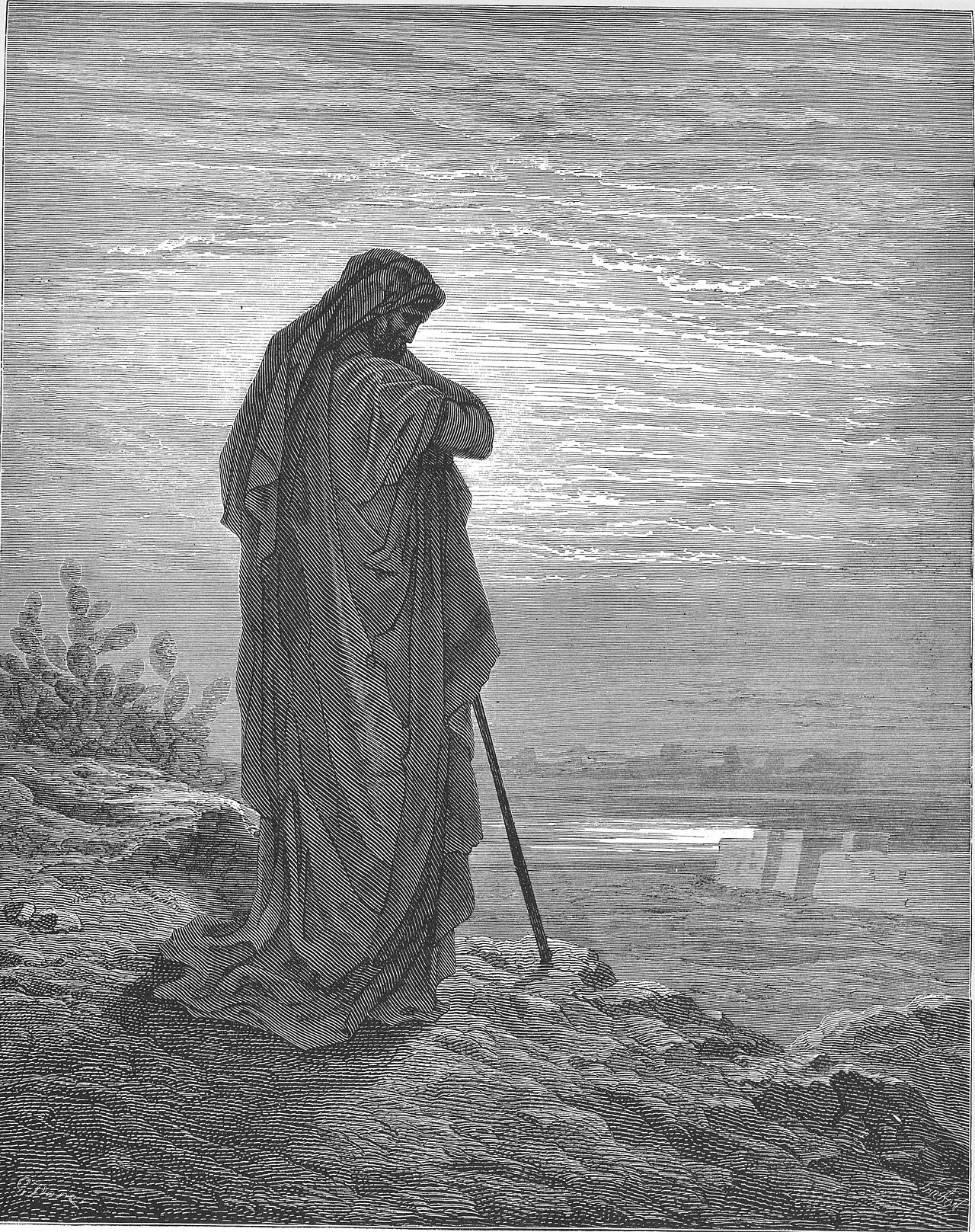
This page draws on Adam Clarke, Commentary on the Bible; Albert Barnes, Notes, Explanatory and Practical, on the Old and New Testaments (1832-1869); Carl Friedrich Keil, The Twelve Minor Prophets; Jamieson, Fausset & Brown, Commentary Critical and Explanatory on the Whole Bible; Jerome, Commentary on Amos; John Gill, Exposition of the Old Testament (1748-1763); John Wesley, Explanatory Notes upon the Old Testament and Matthew Henry, Commentary on the Whole Bible.