
2 Samuel 20:18
in 2 Samuel 20Then the woman said, “Long ago they used to say, ‘Seek counsel at Abel,’ and that is how disputes were settled.
BSB
The same verse in ASV and KJV ▾
ASV
Then she spake, saying, They were wont to speak in old time, saying, They shall surely ask counsel at Abel: and so they ended the matter.
KJV
Then she spake, saying, They were wont to speak in old time, saying, They shall surely ask counsel at Abel: and so they ended the matter.
⋯
This verse in 2 Samuel 20
Commentary
8 notes on this verseThey shall surely ask counsel at Abel - This is a proverb, but from what it originated we know not; nor can we exactly say what it means: much must be supplied to bring it to speak sense. Abel was probably famed for the wisdom of its inhabitants; and parties who had disputes appealed to their judgment, which appears to have been in such high reputation as to be final by consent of all parties.
This site's exposition
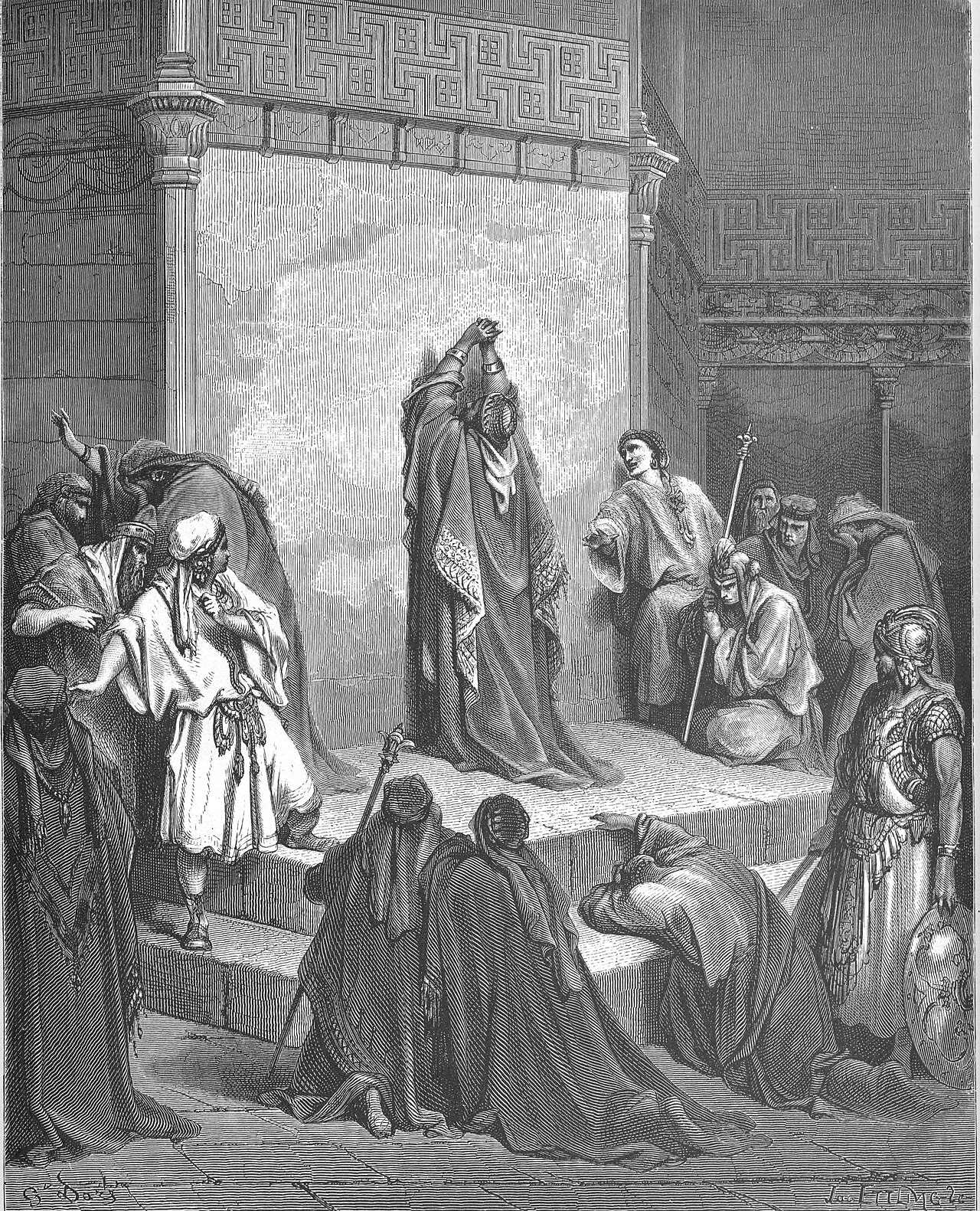
cried a wise woman out of the city
on 2 Samuel 20:16-19
An unnamed wise woman does what no man in the city attempted, calling Joab to the wall and negotiating before the first breach opens. She invokes the city's old reputation for settling disputes by counsel rather than the sword, and then names the city with a title that carries weight elsewhere in Scripture, a mother in Israel. Her question, why wilt thou swallow up the inheritance of the Lord, answers Sheba's own opening cry at verse 1 almost word for word, inheritance turned from a rebel's grievance into a plea for a city that belongs to God.
This site's exposition
Seek counsel at Abel
The wise woman says that long ago people used to seek counsel at Abel to settle disputes. Adam Clarke admits the origin of the saying is unknown, though its sense seems to be that the counsel of Abel settled disputes by consent of both sides. Albert Barnes ranks Abel with Teman as a city of wisdom.
The record, by era
The Puritans and the Awakening3 voices
Joab, though in a personal quarrel he had lately swallowed up and destroyed Amasa, yet, when he acts as a general, will by no means bear the imputation of delighting in bloodshed: " Far be it from me that I should delight to swallow up or destroy, or design it but when it is necessary for the public safety,
quarantine:debris (2026-07-29) — odd-straight-quotes
Then she spake, saying, they were wont to speak in old time,.... It was a common saying, a proverbial expression among the ancient sages: saying, they shall surely ask counsel at Abel, and so they ended the matter.
Their sentence was an oracle; let them be consulted and the matter is ended, all sides will acquiesce. Now shall such a city as this be laid in ashes and never treated with? [2.] That the inhabitants were generally peaceable and faithful in Israel,
The Nineteenth Century2 voices
A commentator
Jamieson, Fausset & Brown1802–1910
Commentary Critical and Explanatory on the Whole Bible (1871)
The answer of Joab brings out the character of that ruthless veteran as a patriot at heart, who, on securing the author of this insurrection, was ready to put a stop to further bloodshed and release the peaceable inhabitants from all molestation.
A commentator
Albert Barnes1798–1870
Notes, Explanatory and Practical, on the Old and New Testaments (1832-1869)
proposed
This was an old proverb. Abel, like Teman, and some other places, was once famous for the wisdom of its inhabitants 1Ki 4:30-31. The wise woman was herself a remnant of this traditional wisdom.
The words behind it
11 Hebrew wordsEvery Hebrew word of this verse in the order it stands, with what it means and the door to its own study. The last column counts the times a word stands in the whole Bible: the rarer the word, the more the places it appears belong together.
| Hebrew | Sound | Meaning | Word study | In the Bible |
|---|---|---|---|---|
| וַתֹּ֖אמֶר | vatomer | and she said | H559 → | 5305 times |
| לֵאמֹ֑ר | lemor | <to> saying | H559 → | 5305 times |
| דַּבֵּ֨ר | daber | surely <speak> | H1696 → | 1141 times |
| יְדַבְּר֤וּ | yedaberu | they spoke | H1696 → | 1141 times |
| בָרִֽאשֹׁנָה֙ | varishonah | at the former [time] | H7223 → | 182 times |
| לֵאמֹ֔ר | lemor | <to> saying | H559 → | 5305 times |
| שָׁאֹ֧ל | shaol | certainly <to ask> | H7592 → | 171 times |
| יְשָׁאֲל֛וּ | yeshaalu | they will ask | H7592 → | 171 times |
| בְּאָבֵ֖ל | beavel | at Abel | H59 → | |
| וְכֵ֥ן | vekhen | and thus | H3651 → | 771 times |
| הֵתַֽמּוּ׃ | hetamu | they ceased | H8552 → | 63 times |
וַתֹּ֖אמֶרand she said
vatomerH559 →5305 times
לֵאמֹ֑ר<to> saying
lemorH559 →5305 times
דַּבֵּ֨רsurely <speak>
daberH1696 →1141 times
יְדַבְּר֤וּthey spoke
yedaberuH1696 →1141 times
בָרִֽאשֹׁנָה֙at the former [time]
varishonahH7223 →182 times
לֵאמֹ֔ר<to> saying
lemorH559 →5305 times
שָׁאֹ֧לcertainly <to ask>
shaolH7592 →171 times
יְשָׁאֲל֛וּthey will ask
yeshaaluH7592 →171 times
בְּאָבֵ֖לat Abel
beavelH59 →
וְכֵ֥ןand thus
vekhenH3651 →771 times
הֵתַֽמּוּ׃they ceased
hetamuH8552 →63 times
A shaded row is a word that stands 400 times or fewer in the Bible.
About 2 Samuel
Who and where
1 name in this verse with a page on the site.
This page draws on Adam Clarke, Commentary on the Bible; Albert Barnes, Notes, Explanatory and Practical, on the Old and New Testaments (1832-1869); Jamieson, Fausset & Brown, Commentary Critical and Explanatory on the Whole Bible; John Gill, Exposition of the Old Testament; John Gill, Exposition of the Old Testament (1748-1763); John Wesley, Explanatory Notes upon the Old Testament and Matthew Henry, Commentary on the Whole Bible.