
2 Samuel 9:6
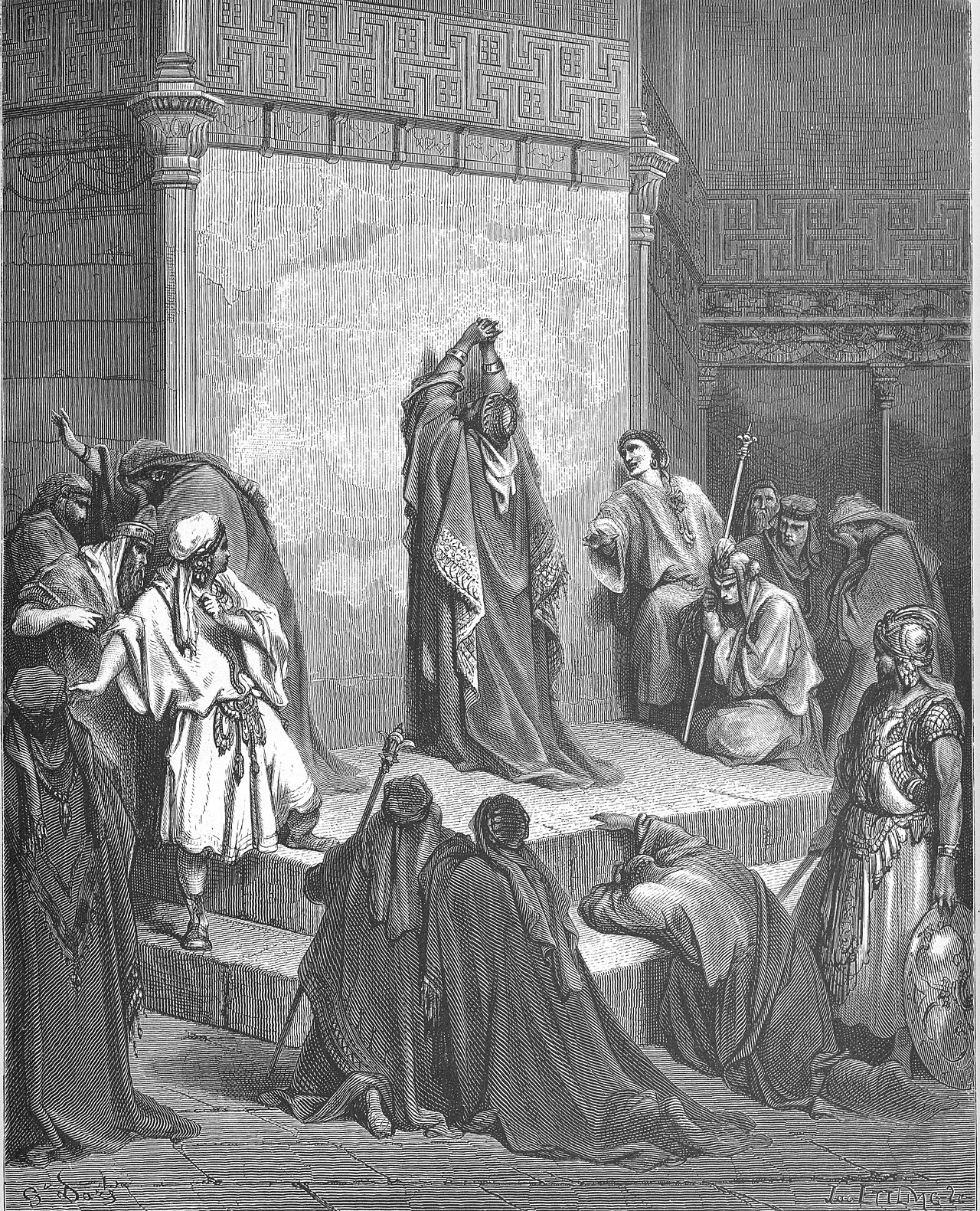
in 2 Samuel 9And when Mephibosheth son of Jonathan, the son of Saul, came to David, he fell facedown in reverence. Then David said, “Mephibosheth!” “I am your servant,” he replied.
BSB
The same verse in ASV and KJV ▾
ASV
And Mephibosheth, the son of Jonathan, the son of Saul, came unto David, and fell on his face, and did obeisance. And David said, Mephibosheth. And he answered, Behold, thy servant!
KJV
Now when Mephibosheth, the son of Jonathan, the son of Saul, was come unto David, he fell on his face, and did reverence. And David said, Mephibosheth. And he answered, Behold thy servant!
⋯
This verse in 2 Samuel 9
Commentary
6 notes on this verseA commentator
Albert Barnes1798–1870
Notes, Explanatory and Practical, on the Old and New Testaments (1832-1869)
Mephibosheth - Also called Merib-baal (and Meri-baal, probably by a clerical error, 1Ch 9:40). The two names seem to have the same meaning: Bosheth, shame, being the equivalent for Baal, and Mephi (scattering or destroying, being equivalent to Merib (contending with). Compare Ish-bosheth and Esh-baal, Jerub-baal and Jerub-besheth. He fell on his face - In fear. Such generosity to a fallen rival as David showed in restoring him his paternal property seemed to him scarcely credible.
This site's exposition
So King David had him brought
on 2 Samuel 9:5-6
David sends for Mephibosheth, and the young man “fell facedown in reverence” before a king with every political reason to fear him. Chronicles gives his name as Merib-baal and Ish-bosheth's as Esh-baal, and Albert Barnes explains the Samuel names as bosheth, shame, set in place of baal.
This site's exposition
he fell facedown in reverence
David greets him by name. Henry says David remembered the name, Jonathan's son having been born about the time of their friendship. Barnes says he fell facedown in fear and could scarcely believe such kindness to the house of Saul.
The record, by era
The Puritans and the Awakening2 voices
David received him with all the kindness that could be. (1.) He spoke to him as one surprised, but pleased to see him. Why, is there such a man living?" He remembered his name, for it is probable that he was born about the time of the intimacy between him and Jonathan.
quarantine:debris (2026-07-29) — odd-straight-quotes
Now when Mephibosheth, the son of Jonathan, the son of Saul,....
The Nineteenth Century1 voice
A commentator
Jamieson, Fausset & Brown1802–1910
Commentary Critical and Explanatory on the Whole Bible (1871)
David said, Is there yet any that is left of the house of Saul--On inquiry, Saul's land steward was found, who gave information that there still survived Mephibosheth, a son of Jonathan who was five years old at his father's death, and whom David, then wandering in exile, had never seen.
The words behind it
18 Hebrew wordsEvery Hebrew word of this verse in the order it stands, with what it means and the door to its own study. The last column counts the times a word stands in the whole Bible: the rarer the word, the more the places it appears belong together.
| Hebrew | Sound | Meaning | Word study | In the Bible |
|---|---|---|---|---|
| וַ֠יָּבֹא | vaiyavo' | and he came | H935 → | 2568 times |
| מְפִיבֹ֨שֶׁת | mefivoshet | Mephibosheth | H4648 → | 18 times |
| בֶּן־ | ben- | [the] son of | H1121 → | 4930 times |
| יְהוֹנָתָ֤ן | yehonatan | Jonathan | H3083 → | 81 times |
| בֶּן־ | ben- | [the] son of | H1121 → | 4930 times |
| שָׁאוּל֙ | shaul | Saul | H7586 → | 402 times |
| אֶל־ | ʾel- | to | H413 → | 5510 times |
| דָּוִ֔ד | david | David | H1732 → | 999 times |
| וַיִּפֹּ֥ל | vaiyipol | and he fell | H5307 → | 435 times |
| עַל־ | ʾal- | on | H5921 → | 5755 times |
| פָּנָ֖יו | panav | face his | H6440 → | 2123 times |
| וַיִּשְׁתָּ֑חוּ | vaiyishtachu | and he bowed down | H7812 → | 172 times |
| וַיֹּ֤אמֶר | vaiyomer | and he said | H559 → | 5305 times |
| דָּוִד֙ | david | David | H1732 → | 999 times |
| מְפִיבֹ֔שֶׁת | mefivoshet | O Mephibosheth | H4648 → | 18 times |
| וַיֹּ֖אמֶר | vaiyomer | and he said | H559 → | 5305 times |
| הִנֵּ֥ה | hineh | here! | H2009 → | 843 times |
| עַבְדֶּֽךָ׃ | ʾavdekha | [is] servant your | H5650 → | 799 times |
וַ֠יָּבֹאand he came
vaiyavo'H935 →2568 times
מְפִיבֹ֨שֶׁתMephibosheth
mefivoshetH4648 →18 times
בֶּן־[the] son of
ben-H1121 →4930 times
יְהוֹנָתָ֤ןJonathan
yehonatanH3083 →81 times
בֶּן־[the] son of
ben-H1121 →4930 times
שָׁאוּל֙Saul
shaulH7586 →402 times
אֶל־to
ʾel-H413 →5510 times
דָּוִ֔דDavid
davidH1732 →999 times
וַיִּפֹּ֥לand he fell
vaiyipolH5307 →435 times
עַל־on
ʾal-H5921 →5755 times
פָּנָ֖יוface his
panavH6440 →2123 times
וַיִּשְׁתָּ֑חוּand he bowed down
vaiyishtachuH7812 →172 times
וַיֹּ֤אמֶרand he said
vaiyomerH559 →5305 times
דָּוִד֙David
davidH1732 →999 times
מְפִיבֹ֔שֶׁתO Mephibosheth
mefivoshetH4648 →18 times
וַיֹּ֖אמֶרand he said
vaiyomerH559 →5305 times
הִנֵּ֥הhere!
hinehH2009 →843 times
עַבְדֶּֽךָ׃[is] servant your
ʾavdekhaH5650 →799 times
A shaded row is a word that stands 400 times or fewer in the Bible.
The walk
8 stopsEach card is a verse this one points to, and under it the verses that one points to in turn. Where several paths arrive at the same place, that place is listed first: the text keeps returning to it.
Through
1 Chronicles 8:34The son of Jonathan: Merib-baal, and Merib-baal was the father of Micah.
it leads to
- 2 Samuel 4:4
And Jonathan son of Saul had a son who was lame in his feet. He was five years old when the report about Saul and Jonathan came from Jezreel. His nurse picked him up…
Reached by 2 separate paths from here.
- 2 Samuel 9:12
And Mephibosheth had a young son named Mica, and all who dwelt in the house of Ziba were servants of Mephibosheth.
- 2 Samuel 4:4
Through
2 Samuel 16:4So the king said to Ziba, “All that belongs to Mephibosheth is now yours!” “I humbly bow before you,” said Ziba. “May I find favor in your eyes, my lord the king!”
it leads to
- Proverbs 18:17
The first to state his case seems right until another comes and cross-examines him.
- Proverbs 18:13
He who answers a matter before he hears it—this is folly and disgrace to him.
- Exodus 23:8
Do not accept a bribe, for a bribe blinds those who see and twists the words of the righteous.
- Proverbs 18:17
Through
1 Samuel 25:23When Abigail saw David, she quickly got off the donkey, fell facedown, and bowed before him.
it leads to
- 1 Samuel 20:41
When the young man had gone, David got up from the south side of the stone, fell facedown, and bowed three times. Then he and Jonathan kissed each other and wept together—though David wept…
- Judges 1:14
One day Acsah came to Othniel and urged him to ask her father for a field. When she got off her donkey, Caleb asked her, “What do you desire?”
- Joshua 15:18
One day Acsah came to Othniel and urged him to ask her father for a field. When she got off her donkey, Caleb asked her, “What do you desire?”
- 1 Samuel 20:41
Where this verse is studied
On this page
Studies4
On this chapter
About 2 Samuel
Who and where
3 names in this verse with a page on the site.
- PersonUnited MonarchyDavidSecond king of united Israel, shepherd-turned-monarch, ancestor of the Messiah, and traditional author of many Psalms.
- PersonUnited monarchySaulIsrael's first king, head and shoulders above the people; began in humility, ended in rejection — sparing what God devoted, consul…
- PersonEarly monarchyJonathanSon of King Saul who climbed a cliff to rout a garrison on the conviction that nothing restrains Jehovah; cut a covenant of steadf…
This page draws on Albert Barnes, Notes, Explanatory and Practical, on the Old and New Testaments (1832-1869); Albert Barnes, Notes on the Old Testament; Albert Barnes, Notes, Explanatory and Practical, on the Old and New Testaments; Jamieson, Fausset & Brown, Commentary Critical and Explanatory on the Whole Bible; John Gill, Exposition of the Old Testament (1748-1763) and Matthew Henry, Commentary on the Whole Bible.