
1 Samuel 6:16
in 1 Samuel 6And when the five rulers of the Philistines saw this, they returned to Ekron that same day.
BSB
The same verse in ASV and KJV ▾
ASV
And when the five lords of the Philistines had seen it, they returned to Ekron the same day.
KJV
And when the five lords of the Philistines had seen it, they returned to Ekron the same day.
⋯
This verse in 1 Samuel 6
Commentary
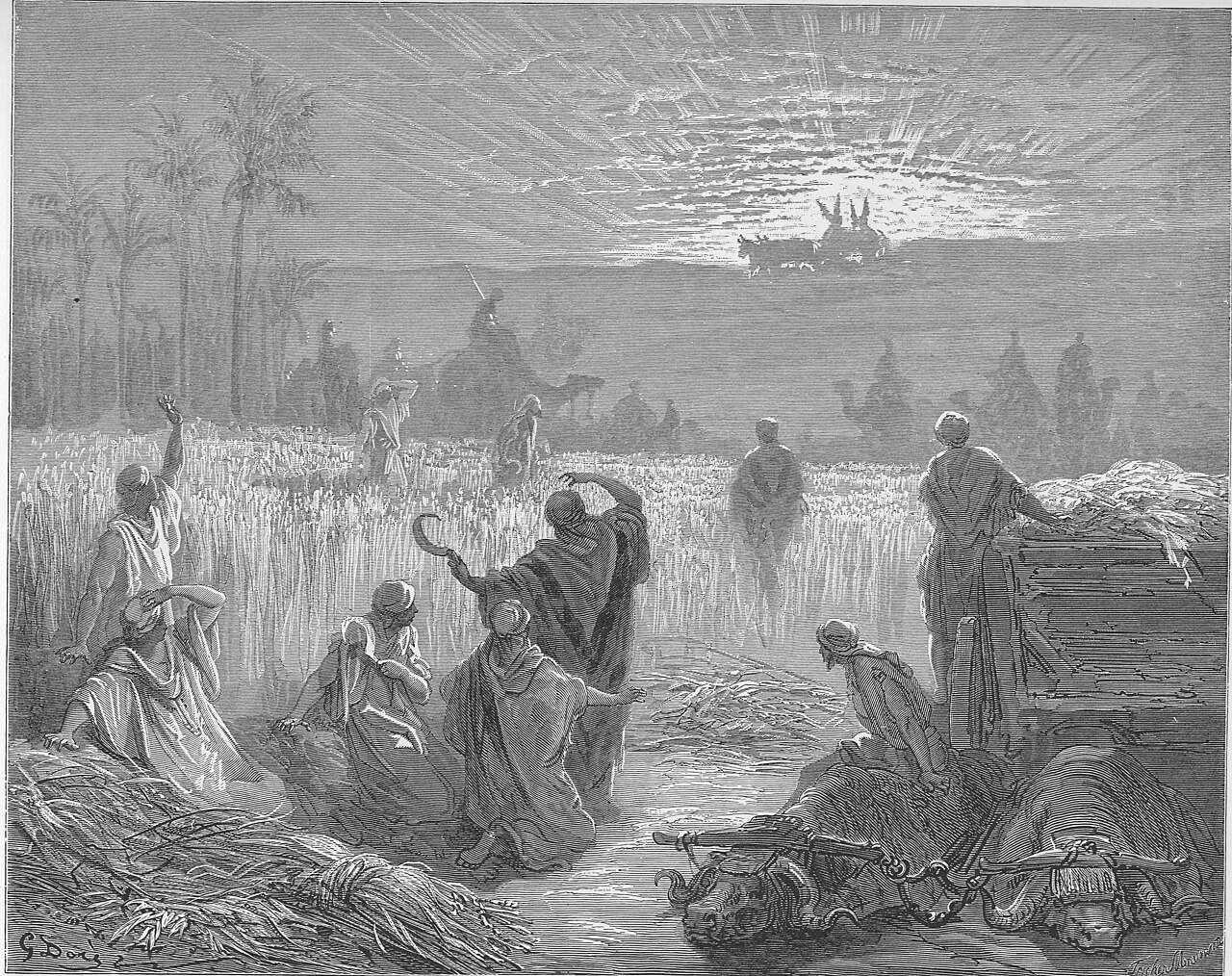
4 notes on this verseAnd when the five lords of the Philistines had seen it,.... Observed all that was done, how the kine performed their journey, drew the cart in which the ark was straight to Bethshemesh, stopped in a field near it, where it was received joyfully by the people, and sacrifices offered on account of it: they returned to Ekron the same day; as they might very well, since it was but twelve miles from Bethshemesh.
This site's exposition
Levites took down the ark
on 1 Samuel 6:15-16
Levites, not the Philistine drivers, are the ones who lift the ark and its coffer of gold down from the cart, since Beth-shemesh is a Levitical city and its own men can do lawfully what the Philistines never could. The five lords watch the whole scene, the burnt offerings, the sacrifices, the joy of the town, before they turn back to Ekron the same day, twelve miles behind them. Their errand is finished: they came to see whether the plague had truly been the hand of Israel's God, and they leave having seen it.
The record, by era
The Medieval Church2 voices
And the five lords of the Philistines saw, etc. All who have preceded in Christ, so long contemplate the faith and deeds of those succeeding them in Him as in a mirror, until they recognize them also as firm in faith and progressing well; and …
A commentator
Gregory the DialogistCommentary on 1 Kings, Book 3, Chapter 4 · Written before 604.
proposed
28. The satraps of the Philistines, as I have already said above, are chosen as preachers of the Gentiles. They are indeed contained in the number five, because they preside over those who are either still unlearned in the faith or are carnal, in order to restrain the five senses of the body. They indeed accompany the cart with the ark of God, because, passing over to the pursuit of the spiritual life, they follow their already instructed disciples with the care of their solicitude.
The words behind it
8 Hebrew wordsEvery Hebrew word of this verse in the order it stands, with what it means and the door to its own study. The last column counts the times a word stands in the whole Bible: the rarer the word, the more the places it appears belong together.
| Hebrew | Sound | Meaning | Word study | In the Bible |
|---|---|---|---|---|
| וַחֲמִשָּׁ֥ה | vachamishah | and five | H2568 → | 343 times |
| סַרְנֵֽי־ | sarnei- | [the] rulers of | H5633 → | 22 times |
| פְלִשְׁתִּ֖ים | felishtim | [the] Philistines | H6430 → | 287 times |
| רָא֑וּ | rau | they saw | H7200 → | 1300 times |
| וַיָּשֻׁ֥בוּ | vaiyashuvu | and they went back | H7725 → | 1056 times |
| עֶקְר֖וֹן | ekron | Ekron | H6138 → | 22 times |
| בַּיּ֥וֹם | baiyom | on the day | H3117 → | 2304 times |
| הַהֽוּא׃ ס | hahu' | <the> that | H1931 → | 1879 times |
וַחֲמִשָּׁ֥הand five
vachamishahH2568 →343 times
סַרְנֵֽי־[the] rulers of
sarnei-H5633 →22 times
פְלִשְׁתִּ֖ים[the] Philistines
felishtimH6430 →287 times
רָא֑וּthey saw
rauH7200 →1300 times
וַיָּשֻׁ֥בוּand they went back
vaiyashuvuH7725 →1056 times
עֶקְר֖וֹןEkron
ekronH6138 →22 times
בַּיּ֥וֹםon the day
baiyomH3117 →2304 times
הַהֽוּא׃ ס<the> that
hahu'H1931 →1879 times
A shaded row is a word that stands 400 times or fewer in the Bible.
The walk
8 stopsEach card is a verse this one points to, and under it the verses that one points to in turn. Where several paths arrive at the same place, that place is listed first: the text keeps returning to it.
Through
1 Samuel 6:4“What guilt offering should we send back to Him?” asked the Philistines. “Five gold tumors and five gold rats,” they said, “according to the number of rulers of the Philistines, since the same plague…
it leads to
- Joshua 13:3
All the territory of the Philistines and the Geshurites, from the Shihor east of Egypt to the territory of Ekron on the north (considered to be Canaanite territory)—that of the five Philistine rulers of…
Reached by 2 separate paths from here.
- Judges 3:3
the five rulers of the Philistines, all the Canaanites, the Sidonians, and the Hivites who lived in the mountains of Lebanon from Mount Baal-hermon to Lebo-hamath.
Reached by 2 separate paths from here.
- 1 Samuel 6:17–18
As a guilt offering to the LORD, the Philistines had sent back one gold tumor for each city: Ashdod, Gaza, Ashkelon, Gath, and Ekron.
- 1 Samuel 5:9
But after they had moved the ark to Gath, the LORD’s hand was also against that city, throwing it into great confusion and afflicting the men of the city, both young and old, with…
- 1 Samuel 5:6
Now the hand of the LORD was heavy on the people of Ashdod and its vicinity, ravaging them and afflicting them with tumors.
- Joshua 13:3
Through
Joshua 13:3All the territory of the Philistines and the Geshurites, from the Shihor east of Egypt to the territory of Ekron on the north (considered to be Canaanite territory)—that of the five Philistine rulers of…
it leads to
- Deuteronomy 2:23
And the Avvim, who lived in villages as far as Gaza, were destroyed by the Caphtorites, who came out of Caphtor and settled in their place.)
- Jeremiah 2:18
Now what will you gain on your way to Egypt to drink the waters of the Nile? What will you gain on your way to Assyria to drink the waters of the Euphrates?
- Deuteronomy 2:23
Through
1 Samuel 5:10So they sent the ark of God to Ekron, but as it arrived, the Ekronites cried out, “They have brought us the ark of the God of Israel in order to kill us and…
it leads to
- Amos 1:8
I will cut off the ruler of Ashdod and the one who wields the scepter in Ashkelon. I will turn My hand against Ekron, and the remnant of the Philistines will perish,” says the…
- Amos 1:8
Where this verse is studied
On this page
Studies1
About 1 Samuel
This page draws on Albert Barnes, Notes on the Old Testament; Bede, Commentary on Samuel; Gregory the Dialogist, Commentary on 1 Kings, Book 3, Chapter 4; John Gill, Exposition of the Old Testament (1748-1763) and John Gill, Exposition of the Old Testament.