
1 Samuel 6:13
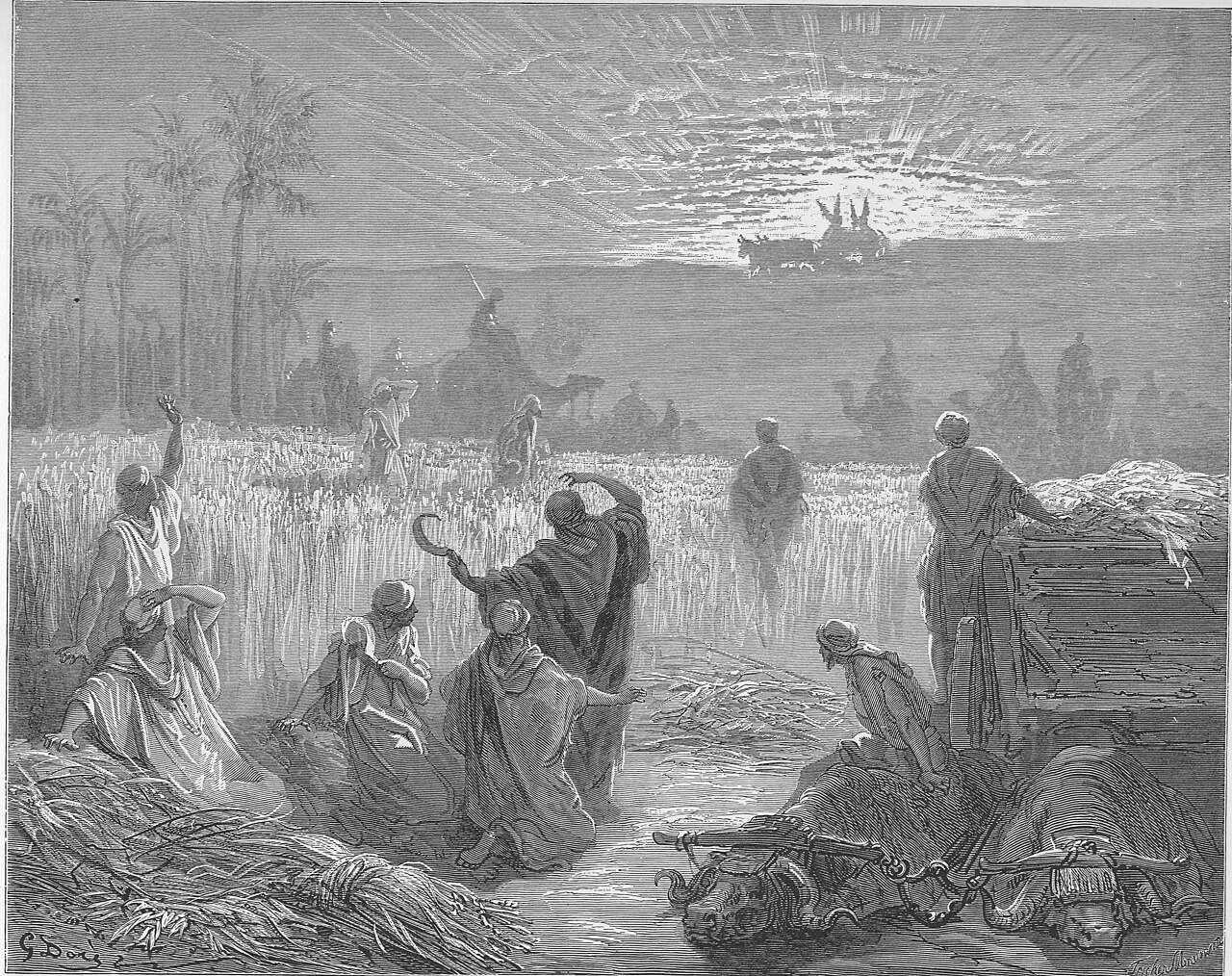
in 1 Samuel 6Now the people of Beth-shemesh were harvesting wheat in the valley, and when they looked up and saw the ark, they were overjoyed at the sight.
BSB
The same verse in ASV and KJV ▾
ASV
And they of Beth-shemesh were reaping their wheat harvest in the valley; and they lifted up their eyes, and saw the ark, and rejoiced to see it.
KJV
And they of Beth–shemesh were reaping their wheat harvest in the valley: and they lifted up their eyes, and saw the ark, and rejoiced to see it.
⋯
This verse in 1 Samuel 6
Commentary
8 notes on this verseYou are aware, then, that when the ark of the testimony was seized by the enemies of Ashdod, and a terrible and incurable malady had broken out among them, they resolved to place it on a cart to which they yoked cows that had recently calved, for the purpose of ascertaining by trial whether or not they had been plagued by God's power on account of the ark, and if God wished it to be taken back to the place from which it had been carried away.
This site's exposition
harvesting wheat in the valley
on 1 Samuel 6:13-14
The people of Beth-shemesh are “harvesting wheat in the valley” when the ark comes into view, and they are “overjoyed at the sight”. The cart stops at a large rock in Joshua's field, and they burn the cart and offer the cows, a departure from the law's ordinary altar that Henry reads as fitting while Shiloh lay empty. Nothing in their welcome yet hints at the judgment of verse 19.
The record, by era
The Medieval Church2 voices
A commentator
Gregory the DialogistCommentary on 1 Kings, Book 3, Chapter 4 · Written before 604.
proposed
19. For who can the Bethshemites be more rightly understood as than those who are already perfect men in the sublimity of contemplation? For they are as if from the house of the sun, who, having despised all earthly things, are illuminated by the splendors of the true light. They are indeed from the house of the sun, who, already buried to the whole world, burn with the flame of wondrous love to see the glory of their Creator.
Moreover, the Bethshemites were reaping wheat in the valley, etc. Furthermore, the citizens of eternal light, desirous to store the ripe fruits of virtues, which they produced with humble hearts, into the joys of the heavenly homeland; and with the eyes of their hearts lifted, …
The Puritans and the Awakening3 voices
Some observe that the returning ark found the men of Beth-shemesh, not idling or sporting in the streets of the city, but busy, reaping their corn in their fields, and well employed. Thus the tidings of the birth of Christ were brought to the shepherds when they were keeping their flock by night.
); their joy for that was greater than the joy of harvest, and therefore they left their work to bid it welcome. When the Lord turned again the captivity of his ark they were like men that dream; then was their mouth filled with laughter, Ps. cxxvi.
quarantine:debris (2026-07-29) — leading-punctuation+unbalanced-parens
And they of Bethshemesh were reaping their wheat harvest in the valley,....
1 more voice on this verse
The Nineteenth Century1 voice
A commentator
Albert Barnes1798–1870
Notes, Explanatory and Practical, on the Old and New Testaments (1832-1869)
proposed
The whole population was in the field. The harvest work was suspended in an instant, and all the workmen ran to where the ark was.
How the passage was read
What the Jewish commentators add
And they rejoiced to see. They were going to see how it came alone, and out of their joy, they behaved with levity, for they did not gaze at it with awe and respect.
This section is reception history: how the passage was read and kept in the Jewish tradition. Where a reading parts from an essential of the Christian faith, the section says so at that point.
Texts and citation data: Sefaria; each excerpt follows its version’s licence. 7 further sources are cited on this chapter that carry no English text this site may quote or only restate the verse.
The words behind it
14 Hebrew wordsEvery Hebrew word of this verse in the order it stands, with what it means and the door to its own study. The last column counts the times a word stands in the whole Bible: the rarer the word, the more the places it appears belong together.
| Hebrew | Sound | Meaning | Word study | In the Bible |
|---|---|---|---|---|
| וּבֵ֣ית | uveit | and Beth | H1053 → | 42 times |
| שֶׁ֔מֶשׁ | shemesh | Shemesh | H1053 → | 42 times |
| קֹצְרִ֥ים | kotzerim | [were] harvesting | H7114 → | |
| קְצִיר־ | ketzir- | [the] harvest of | H7105 → | 54 times |
| חִטִּ֖ים | chitim | wheat<s> | H2406 → | |
| בָּעֵ֑מֶק | baemek | in the valley | H6010 → | 69 times |
| וַיִּשְׂא֣וּ | vaiyisu | and they lifted up | H5375 → | 656 times |
| אֶת־ | ʾet- | <obj.> | H853 → | 10935 times |
| עֵינֵיהֶ֗ם | ʾeineihem | eyes their | H5869 → | 887 times |
| וַיִּרְאוּ֙ | vaiyiru | and they saw | H7200 → | 1300 times |
| אֶת־ | ʾet- | <obj.> | H853 → | 10935 times |
| הָ֣אָר֔וֹן | haaron | the ark | H727 → | 202 times |
| וַֽיִּשְׂמְח֖וּ | vaiyismechu | and they rejoiced | H8055 → | 155 times |
| לִרְאֽוֹת׃ | lirot | to see [it] | H7200 → | 1300 times |
וּבֵ֣יתand Beth
uveitH1053 →42 times
שֶׁ֔מֶשׁShemesh
shemeshH1053 →42 times
קֹצְרִ֥ים[were] harvesting
kotzerimH7114 →
קְצִיר־[the] harvest of
ketzir-H7105 →54 times
חִטִּ֖יםwheat<s>
chitimH2406 →
בָּעֵ֑מֶקin the valley
baemekH6010 →69 times
וַיִּשְׂא֣וּand they lifted up
vaiyisuH5375 →656 times
אֶת־<obj.>
ʾet-H853 →10935 times
עֵינֵיהֶ֗םeyes their
ʾeineihemH5869 →887 times
וַיִּרְאוּ֙and they saw
vaiyiruH7200 →1300 times
אֶת־<obj.>
ʾet-H853 →10935 times
הָ֣אָר֔וֹןthe ark
haaronH727 →202 times
וַֽיִּשְׂמְח֖וּand they rejoiced
vaiyismechuH8055 →155 times
לִרְאֽוֹת׃to see [it]
lirotH7200 →1300 times
A shaded row is a word that stands 400 times or fewer in the Bible.
Where this verse is studied
On this page
Studies1
About 1 Samuel
This page draws on Albert Barnes, Notes, Explanatory and Practical, on the Old and New Testaments (1832-1869); Bede, Commentary on Samuel; Gregory the Dialogist, Commentary on 1 Kings, Book 3, Chapter 4; John Gill, Exposition of the Old Testament; John Gill, Exposition of the Old Testament (1748-1763); Justin Martyr, Dialogue with Trypho, Chapter CXXXII and Matthew Henry, Commentary on the Whole Bible.