
1 Samuel 6:11
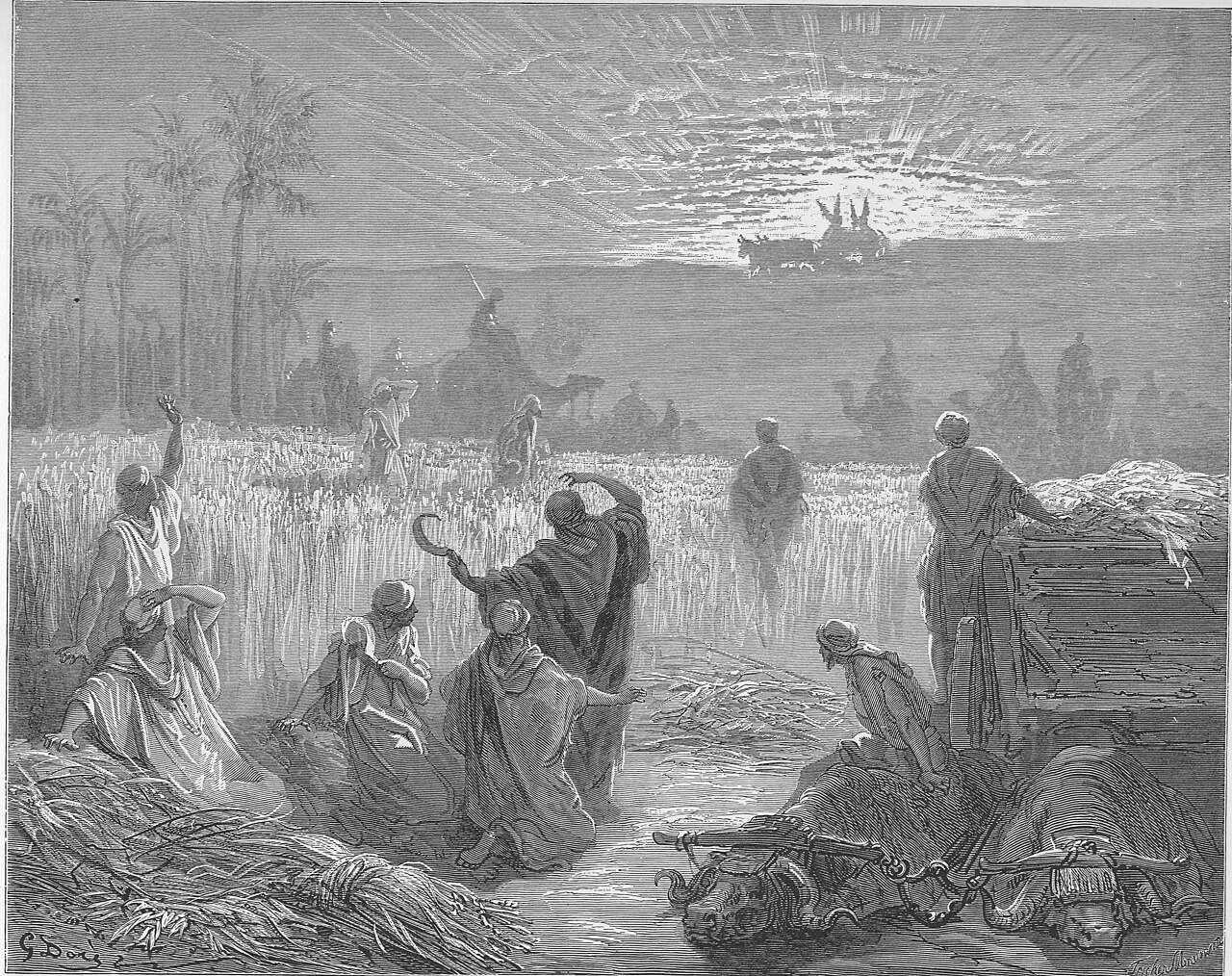
in 1 Samuel 6Then they put the ark of the LORD on the cart, along with the chest containing the gold rats and the images of the tumors.
BSB
The same verse in ASV and KJV ▾
ASV
and they put the ark of Jehovah upon the cart, and the coffer with the mice of gold and the images of their tumors.
KJV
And they laid the ark of the Lord upon the cart, and the coffer with the mice of gold and the images of their emerods.
⋯
This verse in 1 Samuel 6
Commentary
7 notes on this verseAnd they laid the ark of the Lord upon the cart,.... Perhaps the same men that made the cart; however they were the Philistines, yet were not punished for touching it, as Uzzah was, though an Israelite, 2Sa 6:6. and the coffer with the mice of gold, and the images of their emerods; which coffer was placed in a purse or bag hung at the side of the ark, with the golden mice and emerods in it.
This site's exposition
took two milch kine, and tied them to the cart
on 1 Samuel 6:10-12
The Philistines carry out the test exactly as their priests prescribed: two milch kine tied to the cart, their calves shut up at home, the ark and its coffer of golden images laid on top. Gill notes that Philistine workmen do the lifting here and are not struck down for touching it as Uzzah later was, because the law's prohibition bound Israel and not the nations who framed this trial. Once loosed, the kine ignore their calves' cries and hold a straight road to Beth-shemesh without turning aside, and the five lords who follow behind read that unnatural obedience as their own answer.
The record, by era
The Church Fathers1 voice
You are aware, then, that when the ark of the testimony was seized by the enemies of Ashdod, and a terrible and incurable malady had broken out among them, they resolved to place it on a cart to which they yoked cows that had recently calved, for the purpose of ascertaining by trial whether or not they had been plagued by God's power on account of the ark, and if God wished it to be taken back to the place from which it had been carried away.
The Medieval Church2 voices
A commentator
Gregory the Dialogist40 Homilies on the Gospels, Homily 37 · Written before 604.
proposed
We know that when the ark of the Lord was returned from the land of the Philistines to the land of the Israelites, it was placed on a cart. They yoked cows that had recently borne young to the cart, and shut up their calves at home. "And the cows went straight on over the way that leads to Beth-shemesh, keeping to the one road, lowing as they went; they turned neither to the right nor to the left." What do these cows represent but the faithful of the church? When they ponder the sacred precepts, it is as if they are carrying the ark of the Lord placed upon them. We should also notice that they are described as having recently borne young. Many who are inwardly set on the way toward God are externally bound by their unspiritual feelings, but they do not turn aside from the right road because they are carrying the ark of God in their hearts.The cows were going to Beth-shemesh, a name meaning "house of the sun." The prophet says, "For you who fear the Lord, the sun of righteousness shall rise." If we are moving on toward the dwelling place of the everlasting sun, we do right not to turn aside from the route toward God on account of our unspiritual feelings. We must consider with all our energy that the cows yoked to God's cart moan as they go, lowing from their depths, but do not turn aside from their road. So surely must God's preachers, so must all believers within holy church do. They must be compassionate toward their neighbors through their love, while not deviating from God's way through their compassion.
A commentator
Gregory the DialogistMorals on the Book of Job, Book 7.42 · Written before 604.
proposed
For it is not that holy people do not love their fleshly kin, to give them all things necessary, but they subdue this very fondness within themselves from love of spiritual things, in order so to temper it by the control of discretion, that they may be never led by it, even in a small measure and in the very least degree, to deviate from the straight path. And these are well conveyed to us by the representation of the cows, which going along towards the hilly lands under the ark of the Lord, proceed at one and the same time with fondness and with hardened feeling; as it is written, "And the men did so: and took two milk cows and tied them to the cart and shut up their calves at home; and they laid the ark of the Lord upon the cart." And soon after: "And the cows took the straight way to the way of Beth-shemesh, and they went along by one way, lowing as they went, and did not turn aside to the right hand or to the left." For observe, when the calves were shut up at home, the cows, which are fastened to the wagon bearing the ark of the Lord, moan and go their way, they give forth lowings from deep within, and yet [they] never alter their steps from following the path. They feel love indeed shown by compassion but never bend their necks behind. Thus, they must go on their way, who, being placed under the yoke of the sacred law, henceforth carry the Lord's ark in interior knowledge, so as never to deviate from the course of righteousness which they have entered upon, in order to take compassion on the necessities of relatives. For Beth-shemesh is rendered "the house of the sun." Thus to go to Beth-shemesh with the ark of the Lord placed on them is in company with heavenly knowledge to draw near to the seat of light eternal. […]
The Puritans and the Awakening1 voice
Thus the ark that was carried into the land of the Philistines, a trophy of their victory, carried back with it trophies of its own, and lasting monuments of the disgrace of the Philistines. Note, God will be no loser in his glory, at last, by the successes of the church's enemies against his ark, but will get himself honour from those that seek to do dishonour to him.
The Nineteenth Century1 voice
A commentator
Jamieson, Fausset & Brown1802–1910
Commentary Critical and Explanatory on the Whole Bible (1871)
Beth-shemesh--that is, "house of the sun," now Ain Shems [ROBINSON], a city of priests in Judah, in the southeast border of Dan, lying in a beautiful and extensive valley.
The words behind it
14 Hebrew wordsEvery Hebrew word of this verse in the order it stands, with what it means and the door to its own study. The last column counts the times a word stands in the whole Bible: the rarer the word, the more the places it appears belong together.
| Hebrew | Sound | Meaning | Word study | In the Bible |
|---|---|---|---|---|
| וַיָּשִׂ֛מוּ | vaiyasimu | and they put | H7760 → | 584 times |
| אֶת־ | ʾet- | <obj.> | H853 → | 10935 times |
| אֲר֥וֹן | ʾaron | [the] ark of | H727 → | 202 times |
| יְהוָ֖ה | yahweh | Yahweh | H3068 → | 6520 times |
| אֶל־ | ʾel- | into | H413 → | 5510 times |
| הָעֲגָלָ֑ה | haagalah | the cart | H5699 → | 25 times |
| וְאֵ֣ת | veet | and <obj.> | H853 → | 10935 times |
| הָאַרְגַּ֗ז | haargaz | the box | H712 → | 3 times |
| וְאֵת֙ | veet | and <obj.> | H853 → | 10935 times |
| עַכְבְּרֵ֣י | ʾakhberei | [the] mice of | H5909 → | 6 times |
| הַזָּהָ֔ב | hazahav | <the> gold | H2091 → | 389 times |
| וְאֵ֖ת | veet | and <obj.> | H853 → | 10935 times |
| צַלְמֵ֥י | tzalmei | [the] images of | H6754 → | 17 times |
| טְחֹרֵיהֶֽם׃ | techoreihem | tumors their | H2914 → | 8 times |
וַיָּשִׂ֛מוּand they put
vaiyasimuH7760 →584 times
אֶת־<obj.>
ʾet-H853 →10935 times
אֲר֥וֹן[the] ark of
ʾaronH727 →202 times
יְהוָ֖הYahweh
yahwehH3068 →6520 times
אֶל־into
ʾel-H413 →5510 times
הָעֲגָלָ֑הthe cart
haagalahH5699 →25 times
וְאֵ֣תand <obj.>
veetH853 →10935 times
הָאַרְגַּ֗זthe box
haargazH712 →3 times
וְאֵת֙and <obj.>
veetH853 →10935 times
עַכְבְּרֵ֣י[the] mice of
ʾakhbereiH5909 →6 times
הַזָּהָ֔ב<the> gold
hazahavH2091 →389 times
וְאֵ֖תand <obj.>
veetH853 →10935 times
צַלְמֵ֥י[the] images of
tzalmeiH6754 →17 times
טְחֹרֵיהֶֽם׃tumors their
techoreihemH2914 →8 times
A shaded row is a word that stands 400 times or fewer in the Bible.
The walk
7 stopsEach card is a verse this one points to, and under it the verses that one points to in turn. Where several paths arrive at the same place, that place is listed first: the text keeps returning to it.
Through
2 Samuel 6:3They set the ark of God on a new cart and brought it from the house of Abinadab, which was on the hill. Uzzah and Ahio, the sons of Abinadab, were guiding the new…
it leads to
- 1 Samuel 6:7
Now, therefore, prepare one new cart with two milk cows that have never been yoked. Hitch the cows to the cart, but take their calves away and pen them up.
Reached by 2 separate paths from here.
- Numbers 7:4–9
And the LORD said to Moses,
- Numbers 4:5–12
Whenever the camp sets out, Aaron and his sons are to go in, take down the veil of the curtain, and cover the ark of the Testimony with it.
- 1 Samuel 6:7
Through
1 Chronicles 13:7So they carried the ark of God from the house of Abinadab on a new cart, with Uzzah and Ahio guiding the cart.
it leads to
- Numbers 4:15
When Aaron and his sons have finished covering the holy objects and all their equipment, as soon as the camp is ready to move, the Kohathites shall come and do the carrying. But they…
- 1 Chronicles 15:13
It was because you Levites were not with us the first time that the LORD our God burst forth in anger against us. For we did not consult Him about the proper order.”
- 1 Chronicles 15:2
Then David said, “No one but the Levites may carry the ark of God, because the LORD has chosen them to carry the ark of the LORD and to minister before Him forever.”
- 2 Samuel 6:3
They set the ark of God on a new cart and brought it from the house of Abinadab, which was on the hill. Uzzah and Ahio, the sons of Abinadab, were guiding the new…
- Numbers 4:15
Where this verse is studied
On this page
Studies1
About 1 Samuel
This page draws on Adam Clarke, Commentary on the Bible; Gregory the Dialogist, 40 Homilies on the Gospels, Homily 37; Gregory the Dialogist, Morals on the Book of Job, Book 7.42; Jamieson, Fausset & Brown, Commentary Critical and Explanatory on the Whole Bible; John Gill, Exposition of the Old Testament (1748-1763); John Gill, Exposition of the Old Testament; Justin Martyr, Dialogue with Trypho, Chapter CXXXII and Matthew Henry, Commentary on the Whole Bible.