
1 Kings 7:16
in 1 Kings 7He also made two capitals of cast bronze to set on top of the pillars, each capital five cubits high.
BSB
The same verse in ASV and KJV ▾
ASV
And he made two capitals of molten brass, to set upon the tops of the pillars: the height of the one capital was five cubits, and the height of the other capital was five cubits.
KJV
And he made two chapiters of molten brass, to set upon the tops of the pillars: the height of the one chapiter was five cubits, and the height of the other chapiter was five cubits:
⋯
This verse in 1 Kings 7
Commentary
7 notes on this verseOr, more strictly, either for the pommels, as they are called, 2 Chron. iv, 12, or for the cornice or crown, and so it was but three cubits, to which the pomegranates being added make it four cubits, as it is below, ver. 19, and the other work upon it took up one cubit more, which in all made five cubits.
quarantine:anchor (2026-07-29) — cites-ver-19-anchored-16-16
This site's exposition
two pillars of bronze, each eighteen cubits high
on 1 Kings 7:15-22
The pillar to the south is Jachin, meaning he will establish, and the pillar to the north is Boaz, meaning in him is strength. Boaz is also the name of Ruth’s redeemer in David’s line. The book of 2 Kings 25:13-17 records these pillars broken and carried to Babylon.
This site's exposition
each capital five cubits high
Albert Barnes compares the great capitals, built in two distinct parts, to the pillars of Persian palaces, the closest match surviving from antiquity. Their ornament was far richer. John Wesley reconciles five cubits here with four at verse 19 by adding the ornaments in layers.
The record, by era
The Medieval Church1 voice
The tops of the pillars, that is, their highest part, are the hearts of faithful teachers whose God-centered thoughts guide all their actions and words as the head guides the members of the body. On the other hand, the two capitals that were placed on …
The Puritans and the Awakening1 voice
And he made two chapiters of molten brass, to set upon the tops of the pillars,....
The Nineteenth Century2 voices
A commentator
Jamieson, Fausset & Brown1802–1910
Commentary Critical and Explanatory on the Whole Bible (1871)
proposed
two pillars of brass of eighteen cubits high--They were made of the brass (bronze) which was taken from the king of Zobah (1Ch 18:8). In 2Ch 3:15 they are said to have been thirty-five cubits high. There, however, their joint lengths are given; whereas here the length of the pillars is given separately.
quarantine:debris (2026-07-29) — starts-lowercase
A commentator
Albert Barnes1798–1870
Notes, Explanatory and Practical, on the Old and New Testaments (1832-1869)
proposed
The general character of the “chapiters” or capitals, their great size in proportion to the shaft, which is as one to two, and their construction of two quite different members, remind us of the pillars used by the Persians in their palaces, which were certainly more like Jachin and Boaz than any pillars that have reached us from antiquity. The ornamentation, however, seems to have been far more elaborate than that of the Persian capitals.
How the passage was read
What the Jewish commentators add
On the verses either side of this one
The two columns. Which he placed at the entrance hall, 21 He placed them at the entrance to the Temple’s hall. See v. 21 below. Yachin and Bo’az.
This section is reception history: how the passage was read and kept in the Jewish tradition. Where a reading parts from an essential of the Christian faith, the section says so at that point.
Texts and citation data: Sefaria; each excerpt follows its version’s licence. 2 further sources are cited on this chapter that carry no English text this site may quote or only restate the verse.
The words behind it
19 Hebrew wordsEvery Hebrew word of this verse in the order it stands, with what it means and the door to its own study. The last column counts the times a word stands in the whole Bible: the rarer the word, the more the places it appears belong together.
| Hebrew | Sound | Meaning | Word study | In the Bible |
|---|---|---|---|---|
| וּשְׁתֵּ֨י | ushetei | and two | H8147 → | 768 times |
| כֹתָרֹ֜ת | khotarot | capitals | H3805 → | 24 times |
| עָשָׂ֗ה | ʾasah | he made | H6213 → | 2628 times |
| לָתֵ֛ת | latet | to put | H5414 → | 2011 times |
| עַל־ | ʾal- | on | H5921 → | 5755 times |
| רָאשֵׁ֥י | rashei | [the] tops of | H7218 → | 599 times |
| הָֽעַמּוּדִ֖ים | haamudim | the pillars | H5982 → | 111 times |
| מֻצַ֣ק | mutzak | casting of | H4165 → | 4 times |
| נְחֹ֑שֶׁת | nechoshet | bronze | H5178 → | 140 times |
| חָמֵ֣שׁ | chamesh | [was] five | H2568 → | 343 times |
| אַמּ֗וֹת | ʾamot | cubits | H520 → | 247 times |
| קוֹמַת֙ | komat | [the] height of | H6967 → | 45 times |
| הַכֹּתֶ֣רֶת | hakoteret | the capital | H3805 → | 24 times |
| הָאֶחָ֔ת | haechat | <the> one | H259 → | 971 times |
| וְחָמֵ֣שׁ | vechamesh | and [was] five | H2568 → | 343 times |
| אַמּ֔וֹת | ʾamot | cubits | H520 → | 247 times |
| קוֹמַ֖ת | komat | [the] height of | H6967 → | 45 times |
| הַכֹּתֶ֥רֶת | hakoteret | the capital | H3805 → | 24 times |
| הַשֵּׁנִֽית׃ | hashenit | <the> second | H8145 → | 156 times |
וּשְׁתֵּ֨יand two
usheteiH8147 →768 times
כֹתָרֹ֜תcapitals
khotarotH3805 →24 times
עָשָׂ֗הhe made
ʾasahH6213 →2628 times
לָתֵ֛תto put
latetH5414 →2011 times
עַל־on
ʾal-H5921 →5755 times
רָאשֵׁ֥י[the] tops of
rasheiH7218 →599 times
הָֽעַמּוּדִ֖יםthe pillars
haamudimH5982 →111 times
מֻצַ֣קcasting of
mutzakH4165 →4 times
נְחֹ֑שֶׁתbronze
nechoshetH5178 →140 times
חָמֵ֣שׁ[was] five
chameshH2568 →343 times
אַמּ֗וֹתcubits
ʾamotH520 →247 times
קוֹמַת֙[the] height of
komatH6967 →45 times
הַכֹּתֶ֣רֶתthe capital
hakoteretH3805 →24 times
הָאֶחָ֔ת<the> one
haechatH259 →971 times
וְחָמֵ֣שׁand [was] five
vechameshH2568 →343 times
אַמּ֔וֹתcubits
ʾamotH520 →247 times
קוֹמַ֖ת[the] height of
komatH6967 →45 times
הַכֹּתֶ֥רֶתthe capital
hakoteretH3805 →24 times
הַשֵּׁנִֽית׃<the> second
hashenitH8145 →156 times
A shaded row is a word that stands 400 times or fewer in the Bible.
The walk
2 stopsEach card is a verse this one points to, and under it the verses that one points to in turn. Where several paths arrive at the same place, that place is listed first: the text keeps returning to it.
Through
Exodus 36:38together with five posts and their hooks. He overlaid the tops of the posts and their bands with gold, and their five bases were bronze.
it leads to
- Exodus 27:10
with twenty posts and twenty bronze bases, and silver hooks and bands on the posts.
- Exodus 27:10
Through
Exodus 38:28With the 1,775 shekels of silver he made the hooks for the posts, overlaid their tops, and supplied bands for them.
it leads to
- Exodus 27:17
All the posts around the courtyard shall have silver bands, silver hooks, and bronze bases.
- Exodus 27:17
Where this verse is studied
About 1 Kings
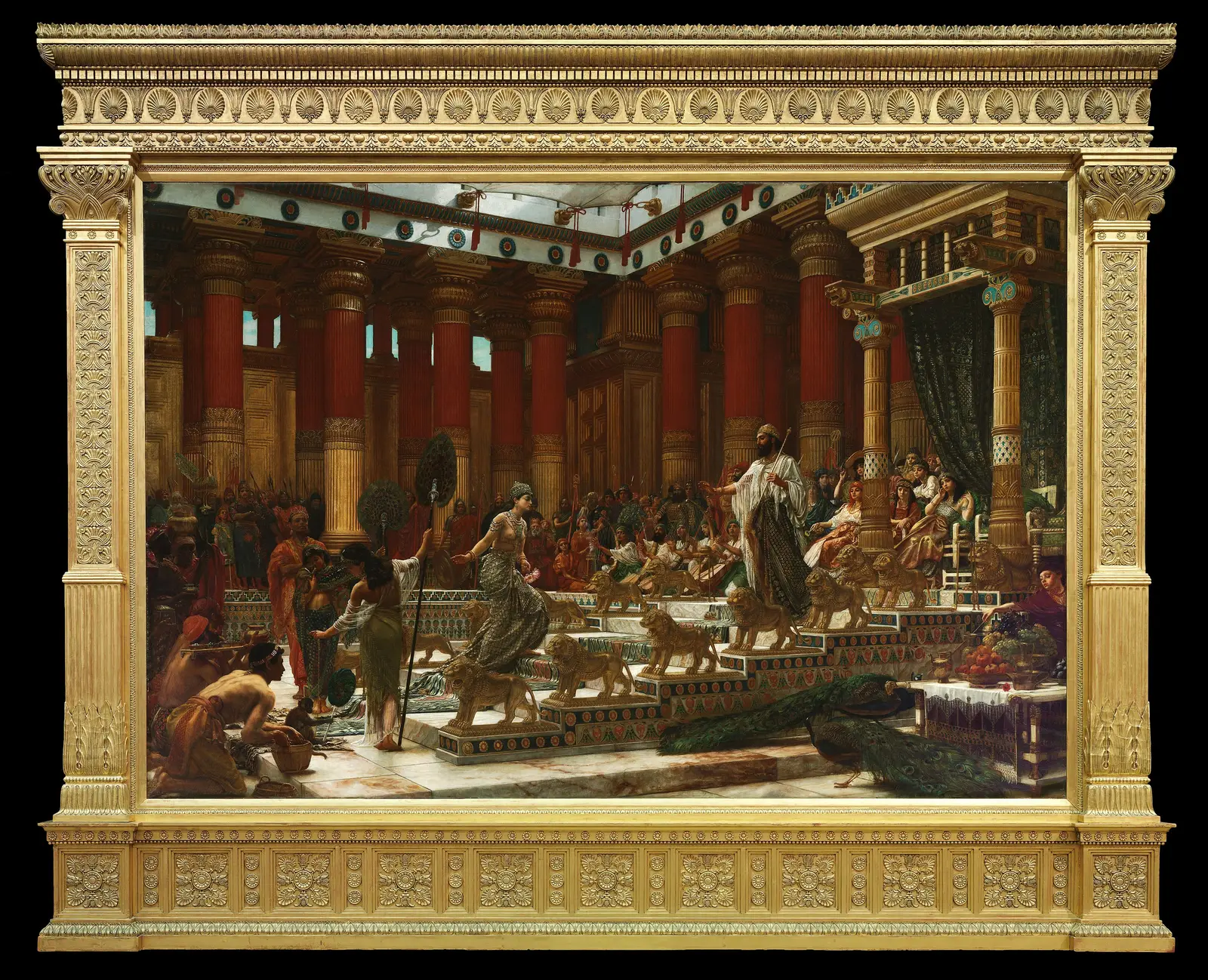
This page draws on Albert Barnes, Notes, Explanatory and Practical, on the Old and New Testaments (1832-1869); Bede, Of the Temple of Solomon 2.18.8; F. W. Farrar, The First Book of Kings (Expositor's Bible); Jamieson, Fausset & Brown, Commentary Critical and Explanatory on the Whole Bible; John Gill, Exposition of the Old Testament (1748-1763); John Wesley, Explanatory Notes upon the Old Testament and Keil, The Books of the Kings.